WebAssembly (Wasm) sandbox cloud security relies on strict linear memory isolation and capability-based access controls through the WebAssembly System Interface (WASI). By enforcing hardware-independent execution boundaries, Wasm prevents arbitrary host memory access and arbitrary system calls, delivering sub-millisecond cold starts and dense multi-tenant isolation across modern serverless, edge, and cloud-native infrastructure.
The Evolution of Cloud Isolation: Why WebAssembly Sandboxing Matters
Cloud infrastructure has long depended on hypervisor-based virtualization and kernel-level containerization to enforce security boundaries between multi-tenant workloads. Virtual Machines (VMs) provide strong isolation by virtualizing hardware via hypervisors like KVM or AWS Nitro, but they incur substantial memory overhead and cold-start latencies ranging from hundreds of milliseconds to several seconds. Operating system-level virtualization, popularized by Docker and Open Container Initiative (OCI) runtimes, reduced resource footprints by sharing the host OS kernel. However, sharing a kernel exposes a broad attack surface, requiring complex security mechanisms such as seccomp filters, AppArmor profiles, and Linux namespaces to prevent privilege escalation and container escape vulnerabilities.
WebAssembly fundamentally alters this trade-off by shifting the security boundary from the operating system or hypervisor layer down to the language runtime execution environment. Originally developed to execute high-performance code safely inside web browsers, WebAssembly has matured into a universal, architecture-agnostic binary instruction format suitable for backend, serverless, and edge compute workloads.
In server-side cloud architecture, a Wasm runtime—such as Wasmtime, Wasmer, WasmEdge, or V8—compiles WebAssembly bytecode into native machine code while embedding strict software-based fault isolation (SFI). Because Wasm modules execute inside isolated sandboxes with zero ambient access to system resources, cloud operators can run thousands of untrusted tenant workloads within a single operating system process. This architecture reduces startup times to sub-millisecond speeds and lowers memory overhead to kilobytes per instance, offering an efficient model for high-density multi-tenant cloud execution without compromising core security guarantees.
Core Security Primitives of the WebAssembly Sandbox
The security guarantees of WebAssembly are not retrofitted through external security profiles; they are designed directly into the binary execution specification and host integration interfaces. Understanding how Wasm isolates code requires examining its foundational security primitives: linear memory, control flow integrity, and capability-based interface boundaries.
Linear Memory Isolation
A WebAssembly module operates inside a continuous, untagged array of bytes known as linear memory. Unlike traditional binary execution, where a program shares the virtual memory address space of the host process and can potentially access arbitrary memory locations via pointer arithmetic, a Wasm module's memory space is strictly decoupled from the host process space.
- Sandboxed Pointers: Every memory access operation (reads, writes, loads, and stores) within WebAssembly uses an offset relative to the start of the module’s linear memory array. The runtime enforces bounds checking on every offset calculation.
- Out-of-Bounds Traps: If an instruction attempts to access an address outside the defined bounds of the linear memory array, the runtime immediately generates a hardware or software fault trap, terminating the module execution before memory corruption can spill into host memory.
- Opaque Host Structures: Host system memory, executable code pages, runtime data structures, and other tenant modules reside entirely outside the module's linear memory address space. A Wasm module cannot forge a pointer to reference host memory directly.
Control Flow Integrity (CFI)
WebAssembly mitigates classic code-execution exploits—such as Return-Oriented Programming (ROP) and Jump-Oriented Programming (JOP)—by enforcing strict, hardware-independent Control Flow Integrity (CFI).
- Structured Control Flow: Wasm does not permit arbitrary instruction jumps or arbitrary pointer dereferencing for code execution. Control flow is restricted to structured constructs such as
block,loop,if, andelse. - Type-Checked Indirect Calls: When dynamic call dispatch is required (such as virtual function calls or function pointers), Wasm uses the
call_indirectinstruction. This instruction checks the destination function against a typed table of allowed function signatures at runtime. If the caller's expected signature does not match the callee's type signature, execution halts immediately. - Separation of Code and Data: Executable code in a Wasm binary is stored separately from data in immutable code sections. A module cannot modify its own code section at runtime, preventing self-modifying code exploits and stack/heap code injection attacks.
Capability-Based Security via WASI
Outside the sandbox, a bare WebAssembly module can perform mathematical calculations and manipulate memory, but it cannot perform network I/O, access the file system, read environment variables, or query the system clock. To interact with host resources, Wasm relies on the WebAssembly System Interface (WASI).
WASI implements a capability-based security model:
- Wasm Guest Module (Module cannot access system calls directly)
- WASI Capability Interface Layer (Explicit Handle / Pre-opened File Descriptor required)
- Host Runtime Engine (Wasmtime / WasmEdge) (Host validates permissions against Security Policy)
- Operating System Kernel
Under this model:
- Zero Ambient Access: The guest module possesses no implicit privileges based on the operating system user account running the process.
- Explicit Handles: The host must explicitly pass fine-grained capabilities (such as pre-opened directory descriptors or specific socket handles) to the module during instantiation.
- WASI Component Model (WASI 0.2+): The modern component model introduces high-level, type-safe interfaces defined via WebAssembly Interface Type (WIT) files. Components import and export explicit interface contracts, preventing unauthorized module-to-module or module-to-host interactions.
Architectural Comparison: Wasm Sandboxes vs. MicroVMs vs. OCI Containers
Selecting the right cloud security isolation layer requires evaluating trade-offs across startup speed, memory footprint, security attack surface, and compatibility with existing workloads.
| Architecture Metric | WebAssembly Sandboxes (e.g., Wasmtime, Spin) | MicroVMs (e.g., Firecracker, AWS Nitro Enclaves) | OCI Containers (e.g., Docker, runc) |
|---|---|---|---|
| Primary Isolation Boundary | Software Fault Isolation (SFI) & Runtime Memory Bounds | Hardware-assisted Hypervisor Virtualization (KVM) | Linux Namespaces, cgroups, seccomp & AppArmor |
| Startup Latency | Sub-millisecond (<100 microseconds) | 50 – 500 milliseconds | 500 milliseconds – 5 seconds |
| Memory Footprint | Kilobytes to low Megabytes | 5 – 30 Megabytes per instance | 50 – 500 Megabytes per instance |
| Kernel Exposure | Zero direct syscall access; mediated via host runtime APIs | Virtualized guest kernel; isolated from host kernel | Direct shared host OS kernel access |
| Density (Instances/Host) | 10,000+ concurrently on standard host hardware | 1,000+ per host hardware limit | 100 – 500 per host hardware limit |
| Workload Ecosystem | Compiled languages (Rust, C/C++, Go, Zig, Componentized JS/Python) | Any standard OS binary / arbitrary Linux kernel | Any Linux OS distribution / container image |
| Attack Surface | Runtime JIT compiler & WASI host binding layer | Hypervisor device emulation & guest kernel vulnerabilities | Host kernel syscall surface & container escape vectors |
While OCI containers excel at legacy application compatibility and MicroVMs provide isolated guest kernel boundaries for untrusted arbitrary code execution, WebAssembly sandboxes deliver high multi-tenant density and rapid elasticity for event-driven functions, microservices, and edge computing environments.
Threat Vectors and Vulnerabilities in Server-Side WebAssembly
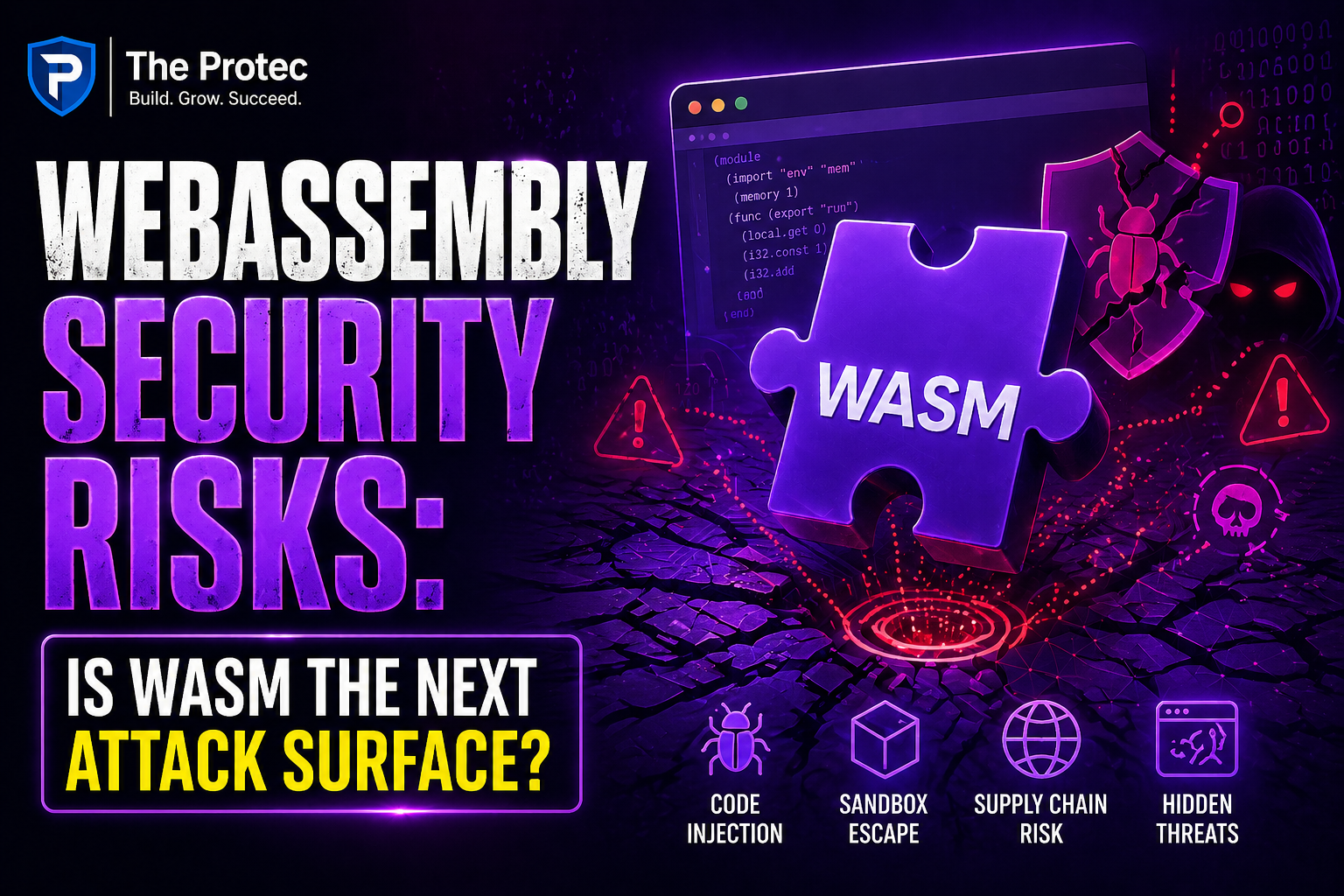
Despite its strong isolation guarantees, WebAssembly sandboxing is not immune to security threats. Securing cloud environments requires identifying and mitigating vulnerabilities specific to the Wasm architecture.
- Host System Vulnerabilities
- Host Binding Bugs, JIT Compiler Flaws, Resource Exhaustion
- Escalation pathway: Memory Leaks / Side-Channels
- Intra-Sandbox Memory Corruption
- Buffer Overflows inside Linear Memory, Logic & Data Flow Tampering
- Escalation pathway: Malicious Payloads
- Supply Chain & Module Risks
- Poisoned WIT Interfaces, Cryptographic Tampering, Compromised Dependencies
1. Host Binding Escapes and JIT Compilation Vulnerabilities
The security of a WebAssembly sandbox is bounded by the security of the host runtime engine (such as Wasmtime, Wasmer, V8, or WasmEdge).
- Just-In-Time (JIT) Compiler Bugs: Host runtimes translate WebAssembly bytecode into native machine instructions (x86_64, AArch64) at runtime. Vulnerabilities in the runtime's JIT compiler—such as incorrect bounds check optimization, register allocation errors, or instruction encoding flaws—can allow malicious Wasm bytecode to trigger arbitrary code execution on the host CPU, bypassing the sandbox entirely.
- Host Binding Faults: When host applications expose custom functions to the Wasm module via WASI or language bindings, unsafe pointer conversions, insufficient bounds validation on input parameters, or memory management bugs (e.g., double frees or use-after-free conditions in host Rust or C code) can create escape vectors.
2. Intra-Sandbox Memory Corruption
While linear memory isolation prevents a Wasm module from corrupting host memory, it does not prevent memory corruption within the module's own linear memory array.
- Buffer Overflows in Linear Memory: Languages without native memory safety guarantees (such as C or C++) compiled to WebAssembly remain vulnerable to classic stack or heap buffer overflows inside linear memory.
- Impact of Sandbox Memory Exploits: An attacker exploiting a buffer overflow inside a Wasm sandbox cannot escape to the host kernel automatically, but they can hijack the module's internal control flow, leak sensitive data stored in linear memory (such as cryptographic keys or API tokens), or manipulate business logic.
3. Side-Channel and Timing Attacks
Shared multi-tenant execution opens vectors for microarchitectural side-channel attacks, such as Spectre or Meltdown variants.
- High-Precision Clocks: If a Wasm host environment exposes high-resolution timers (e.g., sub-microsecond precision) through host bindings, a malicious Wasm component can measure cache hit/miss timing differences to infer sensitive data executing in adjacent CPU cores or memory structures.
- Shared Memory Constructs: WebAssembly threads utilizing SharedArrayBuffer and atomic instructions introduce potential concurrency-based timing channels if multi-threading host features are enabled without strict process isolation boundaries.
4. Supply Chain Security in the Wasm Component Ecosystem
As cloud developers consume pre-compiled Wasm modules and components from registries (such as Warg or OCI registries), software supply chain attacks present an operational vector:
- Dependency Poisoning: Malicious actors may publish compromised Wasm components that export valid WASI interfaces but contain logic intended to steal data, perform unauthorized external requests via permitted WASI sockets, or consume host resources.
- Interface Type Mismatches: Mismatches between WebAssembly Interface Type (WIT) declarations and underlying binary implementations can lead to unexpected host behavior or unhandled runtime traps that degrade host availability.
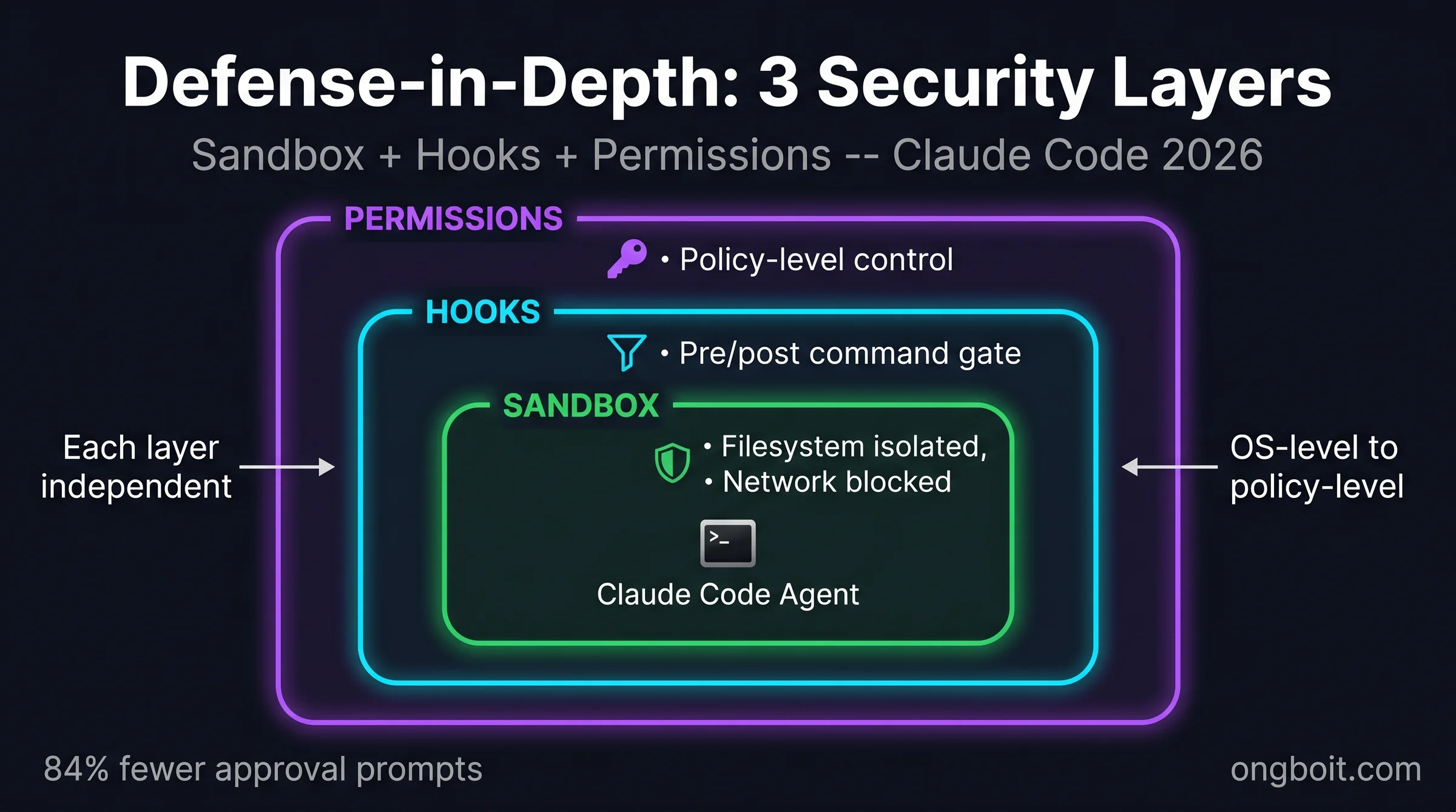
Designing a Defense-In-Depth Wasm Security Architecture
To mitigate known threat vectors, enterprise security engineers must adopt a multi-layered defense-in-depth strategy when deploying WebAssembly in cloud and multi-tenant platforms.
- Layer 1: Hardware & Kernel Isolation (cgroups, seccomp, microVM boundaries)
- Layer 2: Host Runtime Hardening (AOT compilation, Wasmtime security flags)
- Layer 3: Capability Restricting (Minimal WASI handles, WIT interface validation)
- Layer 4: Binary Verification (Static analysis, cryptographic signing)
- Layer 5: Operational Governance (Gas limit metering, memory quotas)
Layer 1: Container and Kernel Containerization Wrap
Do not rely solely on software fault isolation if running completely untrusted multi-tenant user code. Enclose the host WebAssembly runtime inside lightweight OS-level isolation primitives:
- Seccomp-BPF Filtering: Restrict the system calls that the Wasm host runtime process itself can issue to the host Linux kernel. Filter out unnecessary syscalls (e.g.,
ptrace,kexec_load,sys_ptrace). - Unprivileged Process Namespaces: Run the Wasm runtime binary under dedicated Linux user namespaces, cgroups, and read-only file system mounts.
- MicroVM Enclosures: For ultra-high-risk, multi-tenant untrusted execution, run the Wasm runtime inside lightweight microVMs (e.g., Firecracker). This ensures that even in the event of a zero-day JIT escape exploit, the attacker remains trapped within an isolated microVM.
Layer 2: Host Runtime Hardening and Ahead-Of-Time (AOT) Compilation
Avoid dynamic JIT compilation in production environments wherever possible:
- Prefer AOT Compilation: Pre-compile WebAssembly modules into native machine code during your CI/CD pipeline using verified AOT compilers (
wasmtime compile). Deploying pre-compiled modules eliminates the runtime JIT compiler from the production execution environment, neutralizing JIT compilation security vulnerabilities. - Disable Unused Runtime Features: Disable Wasm runtime features that are unnecessary for the target workload, such as WebAssembly threads, SIMD extensions, dynamic module linking, or high-precision timing functions.
Layer 3: Enforcing Least-Privilege WASI Capabilities
When configuring WASI environments for serverless or plugin architectures:
- Explicit Path Scope: Never grant broad directory access to a Wasm module. Map sub-directories explicitly with read-only flags where possible (e.g., mapping
/tmp/app_dataas read-only rather than mounting/). - Socket and Network Policy: Restrict network capability. Require Wasm modules to declare specific domain destinations or pre-established socket handles, preventing modules from opening arbitrary outbound connections or port scanning internal cloud networks.
Layer 4: Static Analysis and Binary Verification
Integrate automated binary checks into module ingestion pathways:
- Static Binary Scanners: Use static analysis tools to verify binary compliance, inspect imports/exports, and check for forbidden instructions or risky memory constructs before loading Wasm files into the production runtime.
- Cryptographic Attestation and Software Bill of Materials (SBOM): Require all WebAssembly components to be cryptographically signed using tools like Sigstore/Cosign. Validate component signatures against trusted transparency logs and store standardized SBOMs (e.g., CycloneDX) detailing component dependencies.
Layer 5: Resource Quotas and Execution Gas Limits
Protect cloud hosts against Denial of Service (DoS) and infinite loop attacks by enforcing runtime resource boundaries:
- Fuel/Gas Epoch Interrupts: Configure the runtime runtime engine to inject fuel metering or epoch-based interrupts into compiled Wasm bytecode. If an execution exceeds its allocated execution fuel or time quota, the runtime traps and cleanly terminates the module instance.
- Hard Linear Memory Limits: Define a strict maximum ceiling on linear memory growth (
maximummemory pages flag). Prevent malicious or bug-ridden modules from allocating excessive host RAM.
Real-World Enterprise Use Cases
WebAssembly sandboxing supports operational patterns across modern cloud-native environments:
1. High-Density Serverless and Edge Platforms
Major cloud edge networks (such as Cloudflare Workers, Fastly Compute, and AWS CloudFront Functions) leverage server-side Wasm runtime sandboxing to execute customer code within microseconds at the network edge. By placing thousands of tenant sandboxes into unified OS processes, operators eliminate container cold-start overheads while maintaining strict isolation guarantees.
2. Multi-Tenant Service Mesh and API Proxy Extensions
Modern API gateways and service meshes (such as Envoy Proxy) utilize WebAssembly plugins to implement custom request processing, authentication logic, rate-limiting, and header manipulation. Operators can allow internal teams or external vendors to upload dynamic Wasm filter modules directly to core proxy networks without risking main proxy process crashes or unauthorized host memory access.
3. Untrusted Code Execution in Database Runtimes
Cloud database architectures leverage Wasm sandboxes to support User-Defined Functions (UDFs) and custom trigger logic directly inside database nodes. Because the execution is strictly sandboxed via memory boundaries and lack of ambient system call access, database clusters can run complex user analytical functions without exposing raw file systems or local storage nodes to compromise.
Frequently Asked Questions
Can WebAssembly sandboxing completely replace OCI containers in cloud architecture?
WebAssembly sandboxing is complementary to OCI containers rather than a complete replacement. Wasm is optimized for ultra-fast startup, lightweight memory usage, and language-agnostic code isolation. However, full container solutions remain necessary for legacy software stacks, workloads requiring direct Linux kernel features, complex multi-process services, or applications reliant on specific non-ported OS binaries.
How does WASI 0.2 (The Component Model) improve cloud security over WASI 0.1?
WASI 0.2 introduces the Component Model, which replaces raw system call mappings with modular, interface-driven contracts defined via WebAssembly Interface Types (WIT). Instead of passing broad file descriptors or untyped memory buffers, WASI 0.2 enforces strict interface boundaries, object-oriented resource handles, and explicit import/export policies between distinct components. This prevents unauthorized inter-module communication and simplifies auditing.
Are memory corruption vulnerabilities like buffer overflows possible inside a Wasm sandbox?
Yes. If an application written in a memory-unsafe language like C or C++ is compiled to WebAssembly, it can still suffer from internal stack or heap buffer overflows within its assigned linear memory. However, the impact is strictly confined: the exploit cannot read or overwrite memory outside the module's linear memory array, nor can it execute unauthorized host system calls unless explicitly exposed via host WASI bindings.
How do cloud operators prevent timing-based side-channel attacks in shared Wasm runtimes?
Operators mitigate side-channel timing attacks by stripping or coarse-graining high-resolution system timers exposed to guest modules, randomizing thread scheduling, disabling raw shared memory access across untrusted tenant boundaries, and isolating distinct multi-tenant workloads onto separate physical CPU cores or execution threads.
What is the performance overhead of running WebAssembly sandboxes compared to native execution?
Native compilation of WebAssembly bytecode (via modern Ahead-Of-Time compilers like Cranelift or LLVM) typically yields execution speeds within 10% to 20% of natively compiled C/Rust code. The primary performance advantage of Wasm sandboxing lies in its sub-millisecond initialization speed and minimal baseline memory footprint, which significantly outpace traditional container runtime initialization overhead.
Implementation Roadmap for Cloud Security Engineers
To implement WebAssembly sandboxing securely in production cloud platforms, follow this sequence of operational actions:
- Select a Hardened Runtime Engine: Standardize on production-grade, audited WebAssembly runtimes such as Wasmtime (Bytecode Alliance) or WasmEdge (CNCF). Ensure runtime binaries are updated continuously to incorporate security patches for JIT compilers and runtime engines.
- Enforce AOT Compilation in Build Pipelines: Shift bytecode translation to build phase CI/CD steps using Ahead-Of-Time (AOT) compilation. Strip JIT compilation capabilities from production runtime environments to reduce runtime attack surfaces.
- Define Explicit WASI Capability Manifests: Audit every host interface exposed to Wasm applications. Implement explicit least-privilege capability configurations, restricting directory access, network capabilities, and environment variable passing.
- Wrap Runtimes in OS-Level Defense-in-Depth: Deploy host runtime processes inside unprivileged Linux user namespaces, filtered by strict seccomp-BPF profiles, cgroup resource limits, and read-only file systems. For untrusted code execution, enclose Wasm engines inside isolated microVM wrappers.
- Implement Fuel Metering and Memory Ceilings: Configure explicit runtime limits on memory allocations and inject execution fuel limits to cleanly terminate rogue, compromised, or infinite-looping Wasm instances.
- Establish Supply Chain Governance: Require cryptographic signing (via Sigstore/Cosign) and SBOM generation for all ingested
.wasmand.watartifacts before permitting deployment across internal cloud compute clusters.