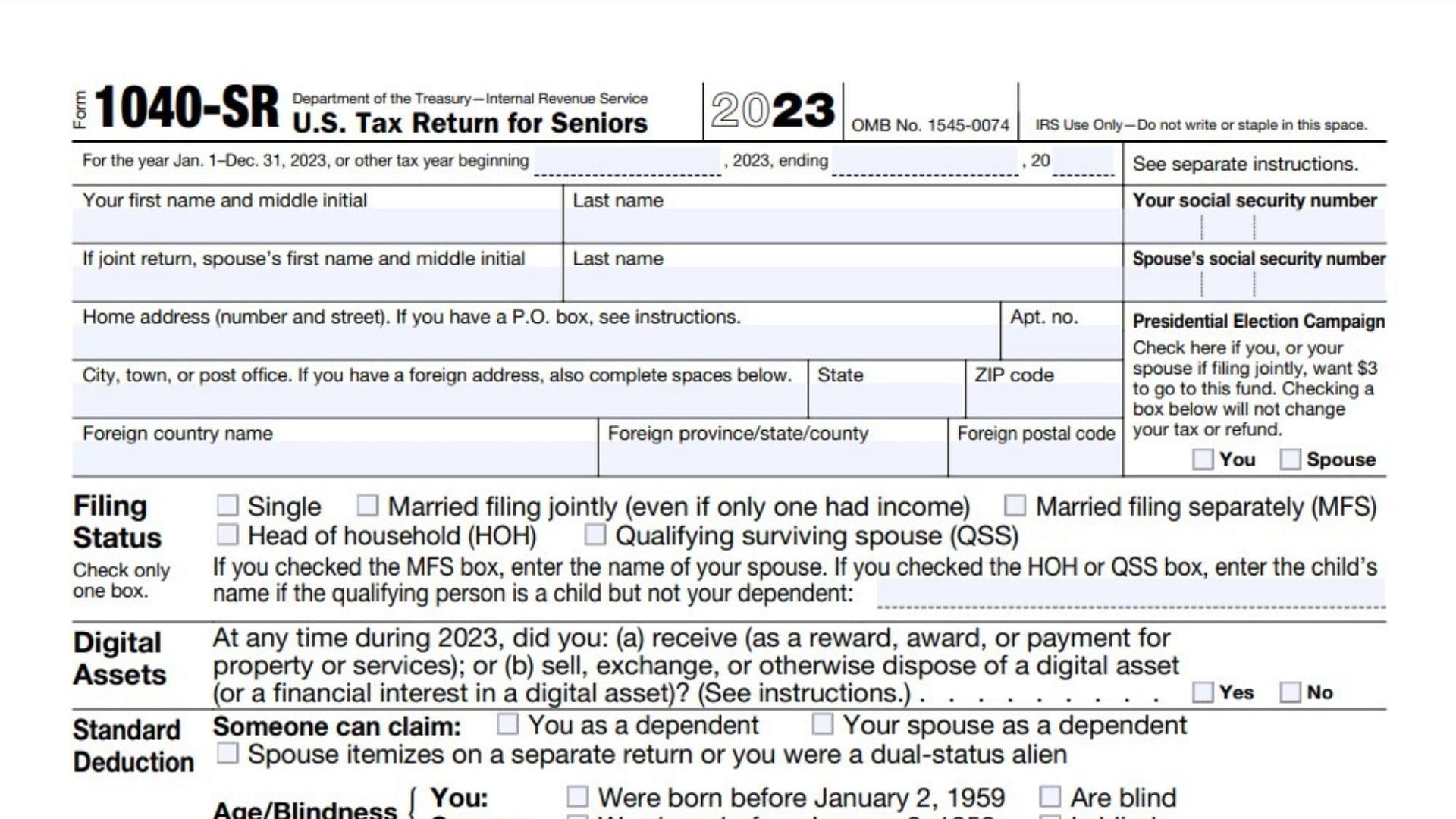
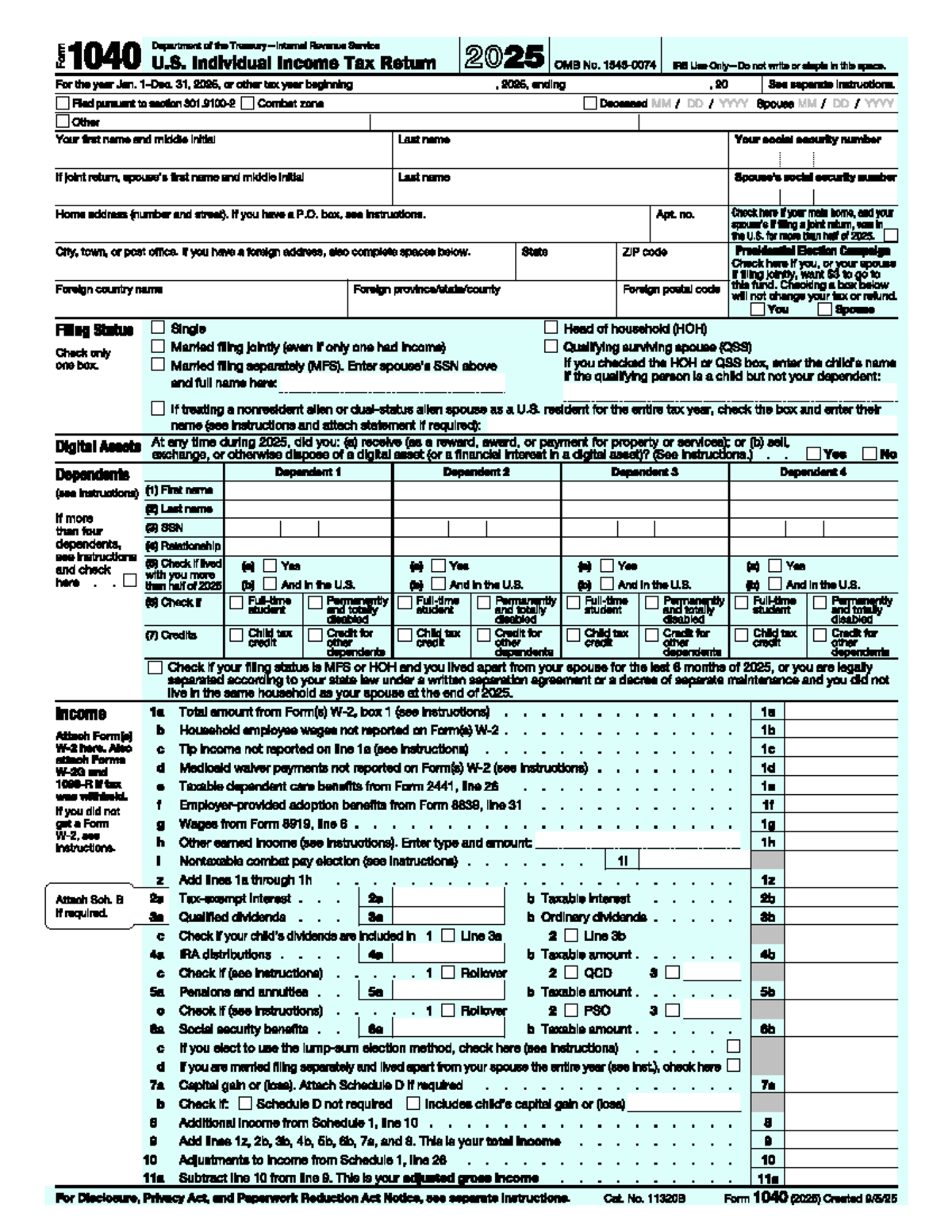
Under the IRS 2025 Form 1040-ES rules, taxpayers whose prior-year Adjusted Gross Income (AGI) exceeded $150,000 (or $75,000 if married filing separately) must satisfy a higher safe harbor threshold to avoid estimated tax penalties. To qualify for safe harbor protection, these higher-income earners must pay either 110% of their total tax liability from the prior year or 90% of their current year’s tax bill through quarterly estimated tax payments or wage withholding.
Understanding the IRS Estimated Tax System and Safe Harbors
The U.S. federal income tax system operates on a pay-as-you-go basis. Taxpayers are legally required to pay income tax as they earn or receive income throughout the tax year, rather than settling their bill in a single lump sum when filing their annual tax return. For wage earners, this obligation is generally met through employer payroll withholding reported on Form W-4. However, individuals receiving significant income from self-employment, business operations, dividends, interest, capital gains, alimony, or distribution from retirement accounts must make quarterly payments using IRS Form 1040-ES.
If a taxpayer does not pay enough tax throughout the year—either through withholding or estimated payments—they may face an underpayment penalty under Internal Revenue Code (IRC) § 6654. To prevent taxpayers from being penalized due to unexpected income spikes or tax law changes, Congress established "safe harbor" rules.
A safe harbor acts as an absolute legal defense against the underpayment penalty. If you meet the criteria for a safe harbor, the IRS cannot impose an underpayment penalty, even if you owe a substantial balance when you file your return.
The standard safe harbor rules allow most individual taxpayers to avoid penalties if their total payments (withholding plus estimated taxes) equal at least:
- 90% of the tax shown on the current year's tax return, or
- 100% of the tax shown on the prior year's tax return (covering a full 12-month period).
However, tax law imposes stricter requirements on higher-income taxpayers to prevent them from underpaying during high-growth years.
The 2025 Higher Income Rule Defined
The "Higher Income Rule" (often referred to as the 110% safe harbor rule) modifies the standard prior-year safe harbor calculation for high-earning individuals. Established under IRC § 6654(d)(1)(C), this provision elevates the required prior-year payment percentage from 100% to 110%.
Who Qualifies as a "Higher Income Taxpayer"?
Your income status for the 2025 tax year is determined by your Adjusted Gross Income (AGI) reported on your prior year tax return (the 2024 Form 1040, line 11). You are subject to the higher income rule for 2025 if your 2024 AGI exceeded:
- $150,000 for taxpayers filing as Single, Head of Household, or Married Filing Jointly.
- $75,000 for taxpayers who are Married Filing Separately.
It is crucial to note that these dollar thresholds are absolute and are not indexed for inflation annually. A single dollar over the threshold automatically triggers the 110% requirement.
| Taxpayer Category (Based on 2024 AGI) | Required Prior-Year Payment |
|---|---|
| Standard Earner (AGI ≤ $150,000 / MFS ≤ $75,000) | 100% of 2024 Total Tax |
| Higher Income (AGI > $150,000 / MFS > $75,000) | 110% of 2024 Total Tax |
The Dual Test: 90% Current Year vs. 110% Prior Year
To avoid an underpayment penalty for the 2025 tax year under the higher income rule, high earners must pay the lesser of:
- 90% of the total tax liability for 2025, or
- 110% of the total tax liability shown on the 2024 tax return.
The choice between these two metrics involves strategic tax planning:
- Using 110% of the Prior Year's Tax: This option offers certainty. Because your 2024 tax return is completed prior to or during the 2025 tax year, your total tax for 2024 is a fixed, known dollar amount. Paying 110% of that figure guarantees immunity from underpayment penalties, regardless of how high your 2025 income turns out to be.
- Using 90% of the Current Year's Tax: This option is preferable if your income drops significantly in 2025 compared to 2024. Relying on the 110% prior-year rule in a year with reduced earnings would mean overpaying your estimated taxes and providing the government with an interest-free loan until you claim your refund. However, using the 90% current-year rule requires precise real-time forecasting of your income, deductions, and credits.
How to Calculate Your 2025 Estimated Tax Under the Higher Income Rule
Calculating quarterly payments under the 110% safe harbor rule involves a step-by-step review of your previous return and your current earnings outlook.
Step 1: Identify Total Tax on the 2024 Return
Locate your total tax figure on your 2024 Form 1040 (specifically, the amount listed on line 24 of the 2024 Form 1040). Note that "total tax" includes self-employment tax, alternative minimum tax (AMT), and unearned income Medicare contribution tax (NIIT), minus any refundable credits. It does not mean your balance due when filing; it represents your total tax liability for the year.
Step 2: Apply the 110% Multiplier
Multiply the total 2024 tax by 1.10. For example, if your 2024 total tax was $50,000 and your 2024 AGI was $200,000: $$\text{Required Safe Harbor Amount} = $50,000 \times 1.10 = $55,000$$
Step 3: Account for W-2 Withholding
Subtract any tax that will be automatically withheld from wages, pensions, or social security in 2025. If you expect $35,000 to be withheld through payroll in 2025, subtract that from your total requirement: $$\text{Remaining Estimated Tax Obligation} = $55,000 - $35,000 = $20,000$$
Step 4: Divide into Four Quarterly Installments
Divide the remaining balance by four to determine your equal quarterly payment amounts: $$\text{Quarterly Payment} = \frac{$20,000}{4} = $5,000$$
2025 Form 1040-ES Payment Schedule and Deadlines
Estimated tax payments must be remitted on a quarterly schedule. The IRS operates under four uneven payment periods throughout the calendar year, not traditional three-month quarters.
The table below details the due dates for paying 2025 estimated taxes:
| Payment Period | Income Earned Between | Payment Due Date |
|---|---|---|
| 1st Installment | January 1, 2025 – March 31, 2025 | April 15, 2025 |
| 2nd Installment | April 1, 2025 – May 31, 2025 | June 16, 2025 (June 15 fell on a Sunday) |
| 3rd Installment | June 1, 2025 – August 31, 2025 | September 15, 2025 |
| 4th Installment | September 1, 2025 – December 31, 2025 | January 15, 2026 |
Note: Taxpayers who file their 2025 Form 1040 by January 31, 2026, and pay the entire remaining balance due with their return are not required to make the 4th installment due on January 15, 2026.
Payment Methods
Taxpayers can submit Form 1040-ES payments through several official IRS channels:
- Direct Pay: Free electronic transfer directly from a bank account via the IRS Direct Pay portal.
- EFTPS: The Electronic Federal Tax Payment System, ideal for businesses and individuals managing high-volume or scheduled payments.
- Debit/Credit Card: Processed through third-party payment processors (processing fees apply).
- Check or Money Order: Mailed alongside an official Form 1040-ES payment voucher to the designated IRS processing address for your state.
The Annualized Income Installment Method
A significant limitation of the standard equal-installment calculation is that it assumes income is earned evenly across all four payment periods. For high earners with seasonal businesses, non-recurring capital gains, or end-of-year bonuses, equal quarterly payments can cause cash flow problems early in the year.
In these situations, taxpayers can use the Annualized Income Installment Method. Authorized under IRC § 6654(d)(2), this method allows you to calculate each quarterly payment based on your actual income, deductions, and credits received during that specific period.
How Annualization Works
Instead of paying 25% of your annual estimated tax each quarter, you recalculate your tax obligation at the end of each period:
- Period 1 (3 months): Income through March 31 multiplied by 4.
- Period 2 (5 months): Income through May 31 multiplied by 2.4.
- Period 3 (8 months): Income through August 31 multiplied by 1.5.
- Period 4 (12 months): Actual annual income through December 31.
You then compute the tax on each annualized amount, apply the appropriate percentage (22.5% for Q1, 45% for Q2, 67.5% for Q3, and 90% for Q4), and pay the incremental difference due.
To utilize this option and eliminate penalties for lower early-quarter payments, taxpayers must complete and attach IRS Form 2210 (Underpayment of Estimated Tax by Individuals, Estates, and Trusts) Schedule AI to their final Form 1040 tax return.
Common Pitfalls and How to Avoid Underpayment Penalties
Navigating estimated taxes as a high income earner involves avoiding several financial and reporting mistakes.
1. Misidentifying "Total Tax"
A frequent calculation mistake is basing the 110% safe harbor on the net amount owed when filing the 2024 return, rather than the total tax burden (Form 1040, line 24). If your 2024 total tax was $80,000, but you had $75,000 withheld and paid $5,000 with your tax return, your 110% safe harbor calculation must be based on $80,000 ($88,000 total requirement), not the $5,000 remaining balance.
2. Underestimating State Tax Obligations
The 110% federal higher income rule applies strictly to federal income tax. However, many states (such as California, New York, and Massachusetts) enforce their own estimated tax rules, safe harbor percentages, and AGI thresholds. For instance, California's Franchise Tax Board mandates a 110% safe harbor for taxpayers with state AGI over $150,000 ($75,000 MFS), but completely eliminates the prior-year safe harbor option for individuals earning over $1,000,000 in California taxable income, requiring them to pay 90% of current-year tax.
3. Ignoring the Timing of Payments
The IRS evaluates underpayment penalties on a quarterly basis. Paying the entire year’s estimated tax burden in a single lump sum in the fourth quarter will not eliminate underpayment penalties accrued in quarters 1, 2, and 3. The IRS treats withholding differently than estimated payments: payroll tax withholding is legally treated as being paid evenly throughout the year, regardless of when it was actually withheld.
Strategic Planning Tip: High earners who realize late in the year that they have underpaid their estimated tax can increase their W-2 payroll withholding significantly on final year-end paychecks (or apply withholding to an end-of-year bonus). Because withholding is retroactively spread evenly over all four quarters, this strategy can clear early-quarter shortfalls and prevent estimated tax penalties.
4. Relying on Farmers and Fishermen Rules Incorrectly
Taxpayers who qualify as farmers or fishermen under IRS rules face a different safe harbor standard: they are only required to pay 66.67% of the current year’s tax, and the higher income 110% requirement does not apply to them. However, at least two-thirds of gross income must come from farming or fishing in either the current or preceding tax year to qualify for this rule.
Frequently Asked Questions
What happens if I underpay my estimated tax under the 110% rule?
If your withholding and estimated payments fail to hit either the 110% prior-year mark or the 90% current-year mark, the IRS will assess an underpayment penalty. The penalty functions as an interest charge on the underpaid amount for the specific period it was late. The penalty rate is updated quarterly based on the federal short-term interest rate plus three percentage points.
Does the $150,000 AGI threshold change based on inflation for 2025?
No. The $150,000 AGI threshold ($75,000 for married taxpayers filing separately) is set directly by statutory law (IRC § 6654) and is not indexed for inflation. It remains constant across tax years unless updated by federal tax legislation.
Is the 110% calculation based on my 2024 or 2025 income?
Your eligibility for the rule (the AGI test) is based on your 2024 Adjusted Gross Income. If your 2024 AGI exceeded $150,000, the safe harbor target you must hit to protect your 2025 tax payments is 110% of your 2024 total tax liability, unless 90% of your actual 2025 tax bill turns out to be a smaller number.
Can I change my quarterly payments mid-year if my income drops?
Yes. Estimated tax payments are not fixed contracts. If your projected 2025 earnings fall off during the year, you can recalculate your remaining estimated payments down to match 90% of your lower expected 2025 total tax bill. Alternatively, you can use the Annualized Income Installment Method on Form 2210 when filing your tax return to justify smaller payments made in later quarters.
How does W-2 withholding interact with the 110% estimated tax rule?
Tax withheld from wages directly counts toward your safe harbor target. For example, if your 110% safe harbor requirement is $44,000 and your W-2 wage withholding for 2025 totals $30,000, you only need to cover the remaining $14,000 through Form 1040-ES estimated payments ($3,500 per quarter).
Practical Action Plan for Taxpayers
To maintain compliance and protect your business or personal finances from unnecessary IRS penalties, follow this practical operational checklist:
- Review Your 2024 Return: Pull up your completed 2024 Form 1040. Look at Line 11 (AGI) to confirm if you crossed the $150,000 mark ($75,000 MFS). Next, note the value on Line 24 (Total Tax).
- Calculate Your Safe Harbor Base: Multiply Line 24 by 1.10. This dollar amount represents your guaranteed 2025 penalty-free payment ceiling.
- Audit Your Withholding: Estimate your total W-2 withholding for 2025. Subtract expected withholding from your safe harbor target.
- Establish Quarterly Remittances: Divide the remaining safe harbor balance by four and set calendar reminders for the official deadlines (April 15, June 16, September 15, and January 15).
- Monitor State Rules: Verify the safe harbor guidelines for your specific state of residence or state business footprint, noting any high-earner restrictions that override standard state percentages.
- Consult a Qualified Professional: Tax laws regarding estimated taxes involve complex interactions with pass-through business entities, capital gain timing, and alternative minimum tax adjustments. High income earners should review their quarterly calculations alongside a Certified Public Accountant (CPA) or Enrolled Agent (EA).
Disclaimer: This article is provided for informational and educational purposes only and does not constitute formal legal, accounting, or tax advice. Tax statutes, regulations, and administrative guidelines are subject to change and vary by jurisdiction. For specific guidance regarding your individual tax liability or estimated tax strategy, consult a licensed tax professional.