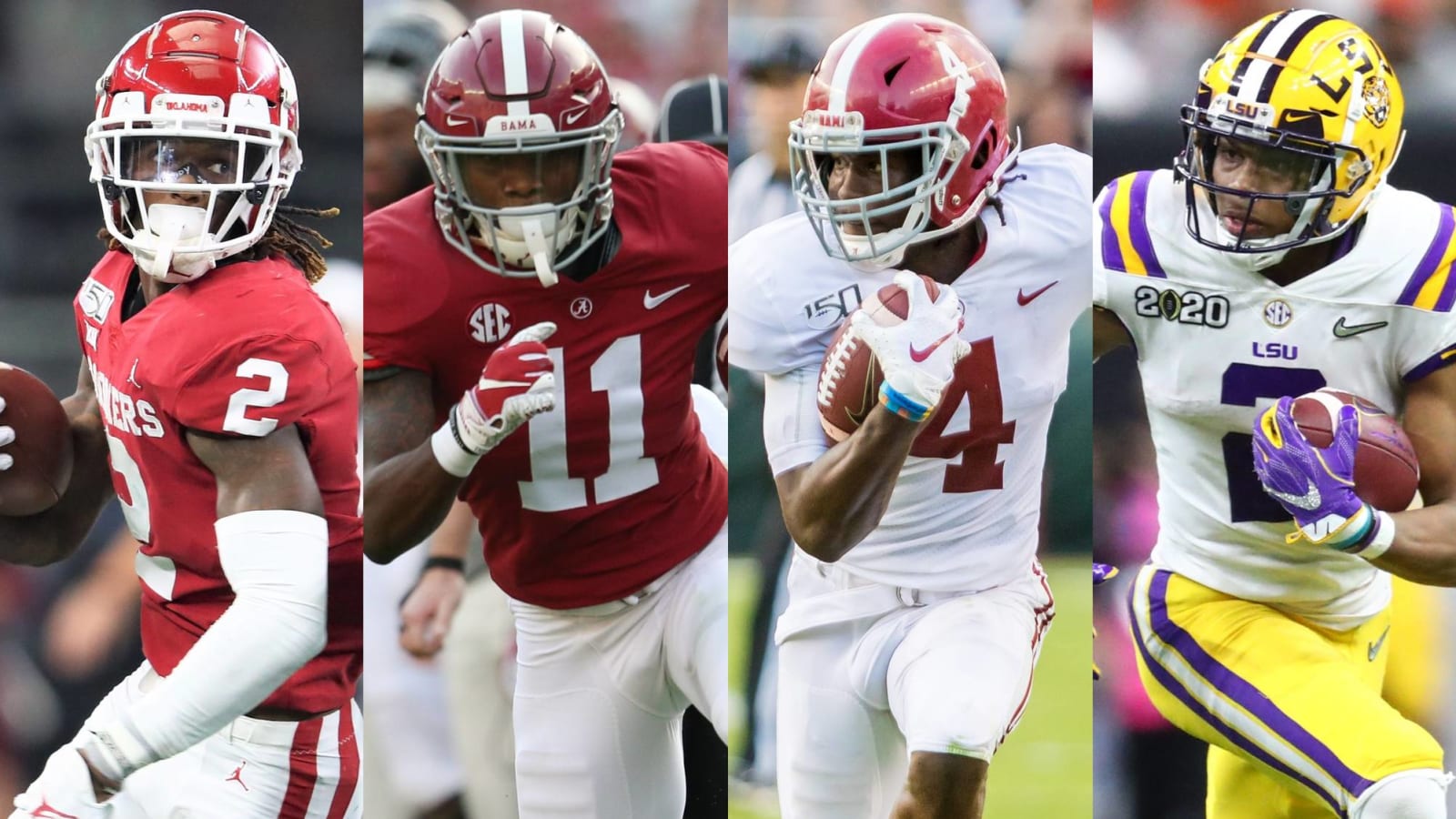
The 2021 wide receiver draft class is widely regarded as one of the most talented and productive groups in NFL history. Headlined by superstars like Ja'Marr Chase, Amon-Ra St. Brown, and DeVonta Smith, this cohort has redefined the wide receiver market. By 2026, the class has produced multiple All-Pros, established new benchmarks for rookie production, and secured some of the largest contracts at the position.
The 2021 NFL Draft was unique, occurring as the league emerged from the constraints of the COVID-19 pandemic. While the scouting process was unconventional, the results were undeniable. This class featured a rare blend of "blue-chip" prospects at the top of the first round and elite-level "steals" in the middle rounds. As we evaluate these players in 2026, it is clear that the 2021 group has largely lived up to its monumental hype, though it was not without its share of cautionary tales regarding injuries and team fit.
The Elite Trinity: Chase, Waddle, and Smith
At the top of the 2021 draft, three receivers were selected in the first ten picks. These three—Ja'Marr Chase, Jaylen Waddle, and DeVonta Smith—represented a shift in how NFL teams value the position, with all three being taken ahead of top-tier defensive talent and offensive linemen.
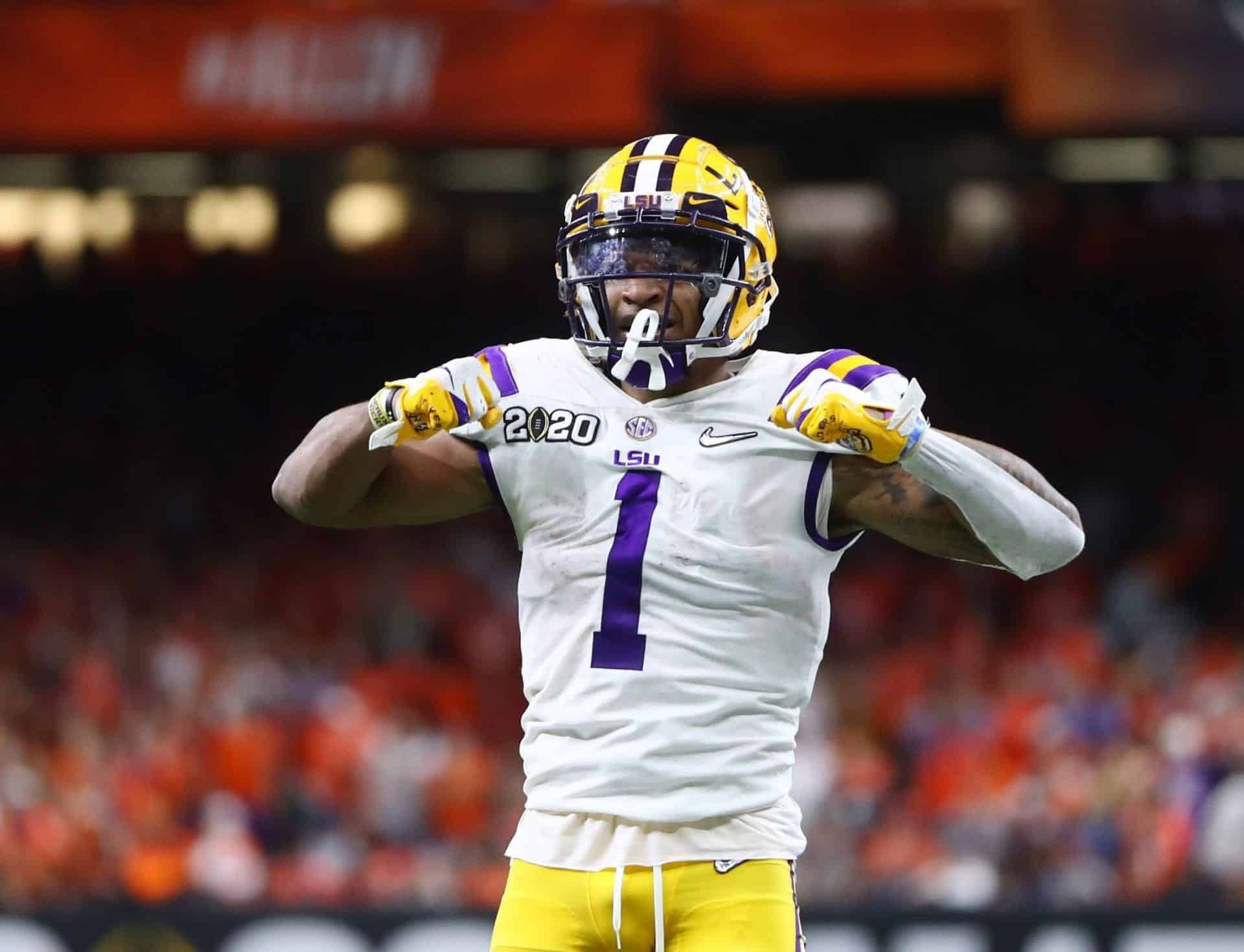
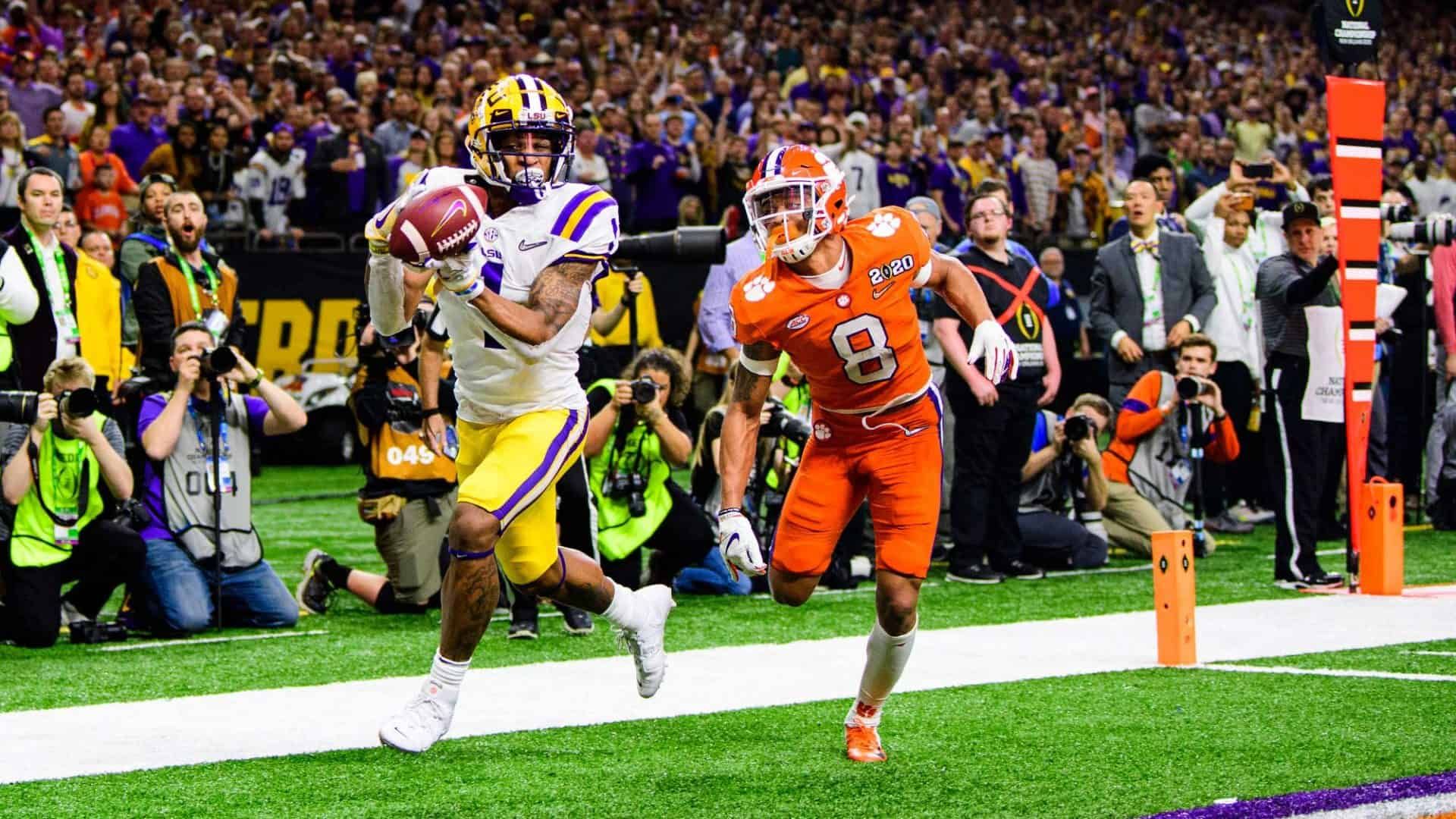
Ja'Marr Chase: The Alpha (Cincinnati Bengals, No. 5 Overall)
Ja'Marr Chase’s entry into the NFL was nothing short of historic. Despite opting out of the 2020 college season, his chemistry with college teammate Joe Burrow translated instantly to the professional level. In his rookie year, Chase set the NFL record for receiving yards by a rookie in the Super Bowl era (1,455 yards).
By 2026, Chase has solidified his status as a perennial top-five wide receiver in the league. His ability to win at every level of the field—contested catches, vertical routes, and yards after catch (YAC)—made him the focal point of the Bengals' offense. His contract extension, which was a major talking point throughout 2024 and 2025, eventually reset the market for wideouts, reflecting his indispensable value to Cincinnati’s championship window.
Jaylen Waddle: The Speed Merchant (Miami Dolphins, No. 6 Overall)
Selected immediately after Chase, Jaylen Waddle brought a different dimension to the Miami Dolphins. While Chase was the physical "X" receiver, Waddle was the quintessential "Z" and slot threat with world-class speed. In his debut season, he broke the then-NFL record for rookie receptions (104), proving that he was more than just a deep threat.
In the years following the arrival of Tyreek Hill in Miami, Waddle thrived as part of the most explosive receiving duo in the league. By 2026, his development into a refined route runner has allowed him to maintain elite production even as his pure sprint speed naturally faces the rigors of a multi-year NFL career. His 2024 contract extension ensured that the Dolphins' high-octane offense remained intact through the mid-2020s.
DeVonta Smith: The Slim Reaper (Philadelphia Eagles, No. 10 Overall)
Despite concerns about his slight frame (170 lbs) coming out of Alabama, DeVonta Smith silenced critics immediately. His technical proficiency, particularly his release at the line of scrimmage and his footwork, allowed him to dominate larger cornerbacks.
Smith’s role in Philadelphia’s ascent to a powerhouse cannot be overstated. Pairing with A.J. Brown, Smith provided the Eagles with a "1A/1B" receiving tandem that was nearly impossible to scheme against. In April 2024, the Eagles moved aggressively to sign Smith to a three-year, $75 million extension, a move that looks increasingly savvy in 2026 as receiver salaries have continued to skyrocket.
The Historic Steal: Amon-Ra St. Brown
While the first-rounders garnered the headlines on draft night, the most significant long-term story of the 2021 WR draft class is Amon-Ra St. Brown. Falling to the fourth round (No. 112 overall) to the Detroit Lions, St. Brown famously kept a list of the 16 wide receivers drafted ahead of him as motivation.
St. Brown’s rise is a masterclass in work ethic and "slot-plus" versatility. He became the heartbeat of the Lions' offense under Dan Campbell. By the time he signed his massive four-year, $120 million extension in early 2024, he had already established himself as one of the most reliable "chain-movers" in football. As of 2026, St. Brown remains a model of consistency, frequently ranking in the top three in the league for receptions and third-down conversions. His success forced NFL front offices to re-evaluate how they scout "undersized" receivers with elite competitive toughness.
The Late Bloomers: Nico Collins and the 2023-2024 Surge
Not every star from the 2021 class peaked in year one. Nico Collins (Houston Texans, Round 3) is perhaps the best example of a player whose career trajectory changed based on environment and quarterback play. After two modest seasons plagued by poor offensive infrastructure, Collins exploded in 2023 following the arrival of C.J. Stroud.
In 2026, we look back at Collins’ 2023 season—where he posted over 1,200 yards and 8 touchdowns—as the moment he joined the "Elite" tier of the class. His physical profile (6'4", 215 lbs) offered a contrast to the smaller, faster receivers of the 2021 group. Houston’s decision to extend him in May 2024 for $72.75 million was a pivotal moment in their franchise rebuild, cementing a cornerstone target for their young franchise quarterback.
Volatility in the First Round: Toney, Bateman, and Moore
The 2021 class also serves as a reminder of the inherent risks in drafting for "potential" over "production" or "health." While the top three picks succeeded, the latter half of the first round and the early second round saw significant volatility.
- Kadarius Toney (No. 20 overall, NY Giants): Toney’s career was a rollercoaster of elite flashes and frustrating setbacks. After a tumultuous stint in New York, he was traded to the Kansas City Chiefs, where he played a pivotal role in Super Bowl LVII. However, by 2026, his career is largely viewed through the lens of missed opportunities due to chronic injuries and lack of consistency.
- Rashod Bateman (No. 27 overall, Baltimore Ravens): Bateman’s talent was evident, but his early career was derailed by foot and groin injuries. While he remained a serviceable starter for Baltimore through his fifth-year option, he never quite reached the statistical heights of his 2021 peers.
- Elijah Moore (No. 34 overall, NY Jets): A high-profile prospect from Ole Miss, Moore struggled with team chemistry and quarterback stability in New York before being traded to Cleveland. Like Toney, Moore demonstrated that talent alone cannot overcome a lack of organizational stability or role clarity.
Comparative Performance: Top WRs of the 2021 Draft Class
The following table summarizes the career impact and current status (as of 2026) of the primary members of this draft class.
| Player | Team (Drafted) | Draft Spot | Key Attribute | 2026 Career Status |
|---|---|---|---|---|
| Ja'Marr Chase | CIN | 1.05 | Vertical Threat | Multi-time All-Pro; Franchise Pillar |
| Jaylen Waddle | MIA | 1.06 | Speed/YAC | High-End WR1; Extended |
| DeVonta Smith | PHI | 1.10 | Route Running | Elite Technical WR; Extended |
| Nico Collins | HOU | 3.89 | Size/Contested | Top-Tier Physical X Receiver |
| Amon-Ra St. Brown | DET | 4.112 | Reliability | Top 5 League Leader in Receptions |
| Rashod Bateman | BAL | 1.27 | Separation | Reliable Starter; Career hampered by injury |
| Josh Palmer | LAC | 3.77 | Size/Hands | High-level WR3 / Rotational Starter |
Financial Impact: The 2024 WR Market Explosion
The 2021 WR draft class reached its "payday" window during a historic period for NFL economics. In 2024, as these players became eligible for their second contracts (or extensions for first-rounders), the wide receiver market underwent a radical shift.
Amon-Ra St. Brown, DeVonta Smith, Jaylen Waddle, and Nico Collins all signed extensions within a single offseason (Spring 2024). This "2021 class wave" saw the floor for top-tier wideouts jump from $20 million per year to nearly $30 million. By 2026, these contracts—which initially seemed astronomical—are now viewed as standard, or even team-friendly, as the NFL salary cap has continued its post-pandemic rise.
This class essentially forced NFL teams to choose between paying a premium for homegrown talent or risking a trade for draft picks, a dilemma that defined the 2024 and 2025 offseasons. The Pro Football Reference databases from this era highlight how this specific class dominated the "Value Over Replacement" metrics during their rookie deals.
Historical Significance: Where Does 2021 Rank?
In the annals of NFL history, certain wide receiver classes stand out: 1996 (Keyshawn Johnson, Marvin Harrison, Terrell Owens), 2014 (Mike Evans, Odell Beckham Jr., Davante Adams), and 2020 (Justin Jefferson, CeeDee Lamb).
As of 2026, the 2021 class is firmly in the conversation for the top three of all time. What distinguishes 2021 is its "Hit Rate." While many classes have one or two Hall of Fame-level talents, the 2021 class produced five legitimate "WR1" targets (Chase, Waddle, Smith, St. Brown, and Collins) within the first four rounds. Furthermore, the 2021 class was the vanguard of the "Positionless Football" era, where receivers like St. Brown and Waddle were utilized across the formation, blurring the lines between traditional X, Y, and Z roles.
Frequently Asked Questions
Who was the best value pick in the 2021 WR draft class?
Amon-Ra St. Brown is the consensus best value. Selected 112th overall in the 4th round, he has outperformed almost every receiver taken ahead of him. His production matches that of top-five picks, providing the Detroit Lions with elite performance at a fraction of the initial draft capital cost.
How many receivers from the 2021 class have made a Pro Bowl?
By 2026, five receivers from this class have earned Pro Bowl honors: Ja'Marr Chase, Amon-Ra St. Brown, Jaylen Waddle, DeVonta Smith, and Nico Collins. This high concentration of elite talent from a single draft year is rare in NFL history.
Why did Nico Collins take longer to break out than Chase or Waddle?
Collins’ delayed breakout was primarily due to the offensive environment in Houston. Between 2021 and 2022, the Texans struggled with inconsistent quarterback play and coaching turnover. It wasn't until the 2023 season, with the arrival of offensive coordinator Bobby Slowik and quarterback C.J. Stroud, that Collins was used in a system that maximized his physical advantages.
Were there any major busts in the 2021 WR class?
"Bust" is a relative term, but Kadarius Toney is often cited due to his first-round pedigree. While he contributed to a Super Bowl win with the Chiefs, his inability to stay on the field or maintain a consistent role with the team that drafted him (the Giants) makes him the biggest disappointment relative to his draft position.
How did the 2021 WR class affect the 2024 salary cap?
The 2021 class was responsible for a massive surge in the wide receiver market. Because so many of them were eligible for extensions at the same time (Spring 2024), it created a "domino effect." Once Amon-Ra St. Brown and DeVonta Smith set the new price points, other teams were forced to follow suit to keep their star targets, leading to a period where wide receiver was the second-highest-paid position in football after quarterback.
Final Recommendation for Fans and Analysts
For those looking to understand the modern NFL offense, studying the 2021 WR draft class is essential. This group exemplifies the transition toward high-volume passing attacks and the importance of versatile, technical route running. If you are analyzing team building, the 2021 class proves that while first-round talent is vital, identifying "competitive greatness" in the middle rounds—as the Lions did with St. Brown—is the fastest way to accelerate a franchise turnaround. As we move further into the 2020s, the 2021 class will remain the gold standard for evaluating incoming rookie talent.