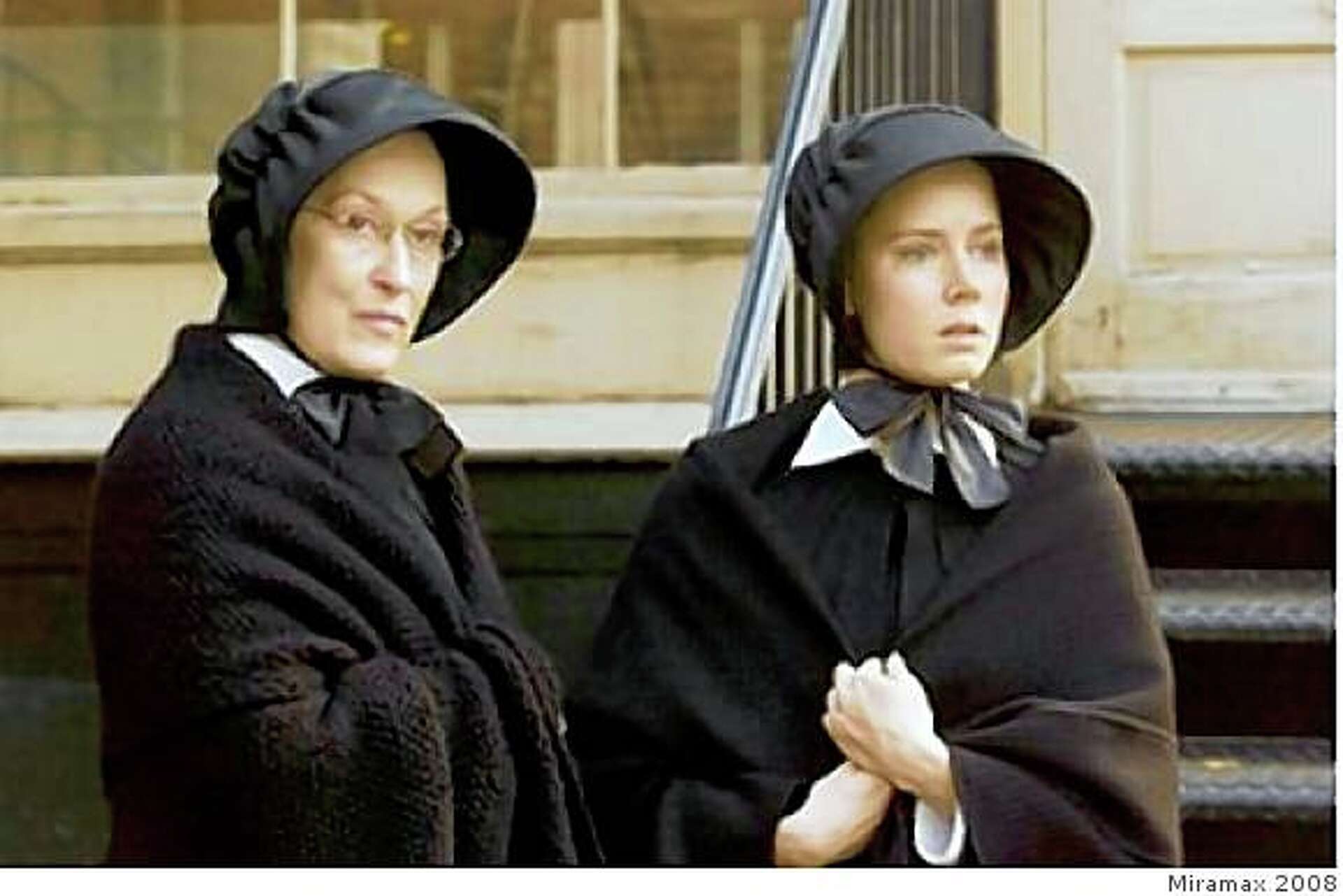
The 2008 film Doubt, written and directed by John Patrick Shanley and adapted from his Pulitzer Prize-winning play, is set in a rigid Catholic school environment in the Bronx in 1964. The narrative unfolds over a period of approximately two months—from late fall to early winter—centering on the psychological confrontation between Sister Aloysius Beauvier and Father Brendan Flynn regarding the potential misconduct of the priest toward a student, Donald Miller.
Historical and Narrative Setting: The Bronx, 1964
To understand the timeline of Doubt, one must first contextualize its specific historical placement. The year 1964 is vital to the film's thematic resonance. It was a period of transition within the American Catholic Church, occurring in the immediate wake of the Second Vatican Council and the assassination of President John F. Kennedy. This atmosphere of change is mirrored within the walls of St. Nicholas Church and School.
The film relies heavily on the tension between tradition and modernity. Sister Aloysius represents the hard-line, dogmatic past of the institution, while Father Flynn represents the more progressive, informal, and approachable future. The timeline of events is compressed, forcing these two opposing ideologies into a collision course that feels both inevitable and claustrophobic.
The Temporal Progression of the Plot
The narrative structure of Doubt is not defined by external action, but by an internal, investigative timeline. While there is no explicit onscreen calendar, the progression of scenes suggests a period of roughly eight weeks.
The Initial Suspicion
The film begins with Father Flynn’s sermon on the nature of "doubt," which serves as the thematic anchor. Shortly thereafter, Sister Aloysius observes a suspicious interaction between Father Flynn and the school's only Black student, Donald Miller. This moment acts as the "inciting incident." Sister Aloysius’s skepticism is rooted in her role as the school principal, a position that grants her the authority to scrutinize the behavior of the clergy, despite the inherent power imbalance favoring the male priesthood.
The Escalation
The middle portion of the film covers the weeks of investigation. Sister Aloysius enlists the help of the naive and idealistic Sister James. This segment is characterized by a series of quiet, tactical moves:
- The Interrogation of Sister James: Sister Aloysius probes her younger colleague for details about Father Flynn’s behavior, turning Sister James into an unwilling informant.
- The Closet Incident: A pivotal moment occurs involving a smell of alcohol on Donald Miller’s breath, which Sister Aloysius connects to Father Flynn.
- The Confrontation: The central scene in the office between Sister Aloysius and Father Flynn constitutes the climax of the narrative. It is here that the timeline collapses into a single, high-tension dialogue where accusations are made and defenses are launched.
The Resolution and Aftermath
The final act of the film takes place as the seasons transition deeper into winter. The resolution does not provide a definitive timeline of the truth, but rather a timeline of the consequences. Father Flynn is transferred to another parish, and Sister Aloysius faces the emotional toll of her crusade.
Key Events and Temporal Markers
While the film does not utilize date cards, researchers and viewers have reconstructed the approximate sequence of events based on school cycles and weather patterns shown on screen.
| Event | Approximate Period | Significance |
|---|---|---|
| Introductory Sermon | Early Fall | Establishes the thematic tension between certainty and doubt. |
| Donald Miller's Breath | Mid-Season | The first concrete piece of evidence identified by Sister Aloysius. |
| Sister James's Realization | Mid-Season | The shift of the younger nun from innocence to suspicion. |
| The Rectory Confrontation | Late Fall | The primary clash of ideologies and the turning point of the plot. |
| Father Flynn’s Transfer | Early Winter | The resolution of the immediate crisis with lingering moral ambiguity. |
The Role of Ambiguity in the Timeline
A crucial element of the Doubt experience is that the timeline of the alleged incident involving Father Flynn and Donald Miller is never fully established by the filmmakers. We do not see "when" the abuse may have happened, or even if it happened. Instead, the audience is placed in a timeline of suspicion.
The narrative is structured to mimic the experience of someone observing from the outside. We see only what Sister Aloysius sees, and we are privy only to what she chooses to believe. This creates a specific, subjective timeline for the viewer: the time it takes for a doubt to metastasize into a conviction, and the time it takes for that conviction to dismantle a person’s life.
Comparison: Play vs. Film
When discussing the timeline, it is important to distinguish between John Patrick Shanley’s stage play and the 2008 film. The stage play is inherently more minimalist, relying on the audience's imagination to fill the gaps in the timeline. The 2008 film, however, utilizes the visual medium to provide concrete temporal markers—the falling leaves, the biting cold of the Bronx winter, and the interior lighting of the school.
The film adaptation adds scenes that exist outside of the school walls, which serve to stretch the perception of time. By showing Father Flynn in his private quarters or interacting with the wider community, the film allows the audience to witness facets of his personality that exist outside of Sister Aloysius's observation. This expansion of the setting naturally lengthens the perceived duration of the conflict, making the final confrontation feel more weighted.
Common Misconceptions Regarding the Timeline
A frequent point of confusion for viewers is whether the story occurs over a school year or a shorter term. Given the atmospheric changes—moving from crisp autumn days to snowy, freezing conditions—the story is clearly confined to a single autumn-into-winter semester. This period is the classic "testing" time in a school environment, heightening the pressure on both teachers and students.
Another misconception involves the timeline of the transfer. Some viewers assume the transfer of Father Flynn happens immediately following the confrontation. However, the narrative implies a "cooling off" period where the Church hierarchy deliberates, illustrating the bureaucratic, slow-moving nature of the institution—a stark contrast to the impulsive, moral fervor of Sister Aloysius.
Analytical Perspective: Why the Timeline Matters
The compressed timeline of Doubt is essential to its genre as a chamber drama. By keeping the events within a short, two-month span, Shanley ensures that the pressure on the characters remains at a fever pitch. If the timeline were extended to a full year, the sense of urgency—the need for Sister Aloysius to protect the students—would dissipate.
The story is not about the long-term history of the parish; it is about a singular crisis. In this context, the timeline acts as a device to isolate the characters. They are trapped in their roles, in their school, and in their moment in history, unable to look beyond the immediate boundaries of their suspicion.
Frequently Asked Questions
Does the 2008 film show flashbacks to the incident?
No. The film strictly maintains the perspective of the present timeline. There are no flashbacks depicting any potential misconduct, which reinforces the film’s central theme that doubt is a state of mind rather than a proven historical fact.
How long is the duration of the story in the film?
The events take place over roughly two months. This is evidenced by the progression from early autumn foliage to the onset of the first major snowfalls of winter in New York.
Is the timeline of the film different from the Broadway play?
While the plot remains the same, the film provides a more explicit visual timeline. The play relies on dialogue to suggest the passage of time, while the film uses seasonal changes and location shifts to ground the narrative in a specific, unfolding reality.
Why is the 1964 setting important to the timeline?
The 1964 setting is crucial because it represents a period of institutional fragility. The timeline of the movie benefits from the tension of a Church in transition, where established authority figures like Sister Aloysius were beginning to fear the loss of their traditional influence.
Does the ending resolve the timeline of truth?
No. The ending is intentionally ambiguous. The timeline of the mystery remains unresolved, forcing the audience to grapple with their own interpretation of the events long after the final credits have rolled.
Recommendation for Further Exploration
To truly grasp the impact of the Doubt timeline, it is recommended to view the film alongside the original play script. While the film’s visual markers (the weather, the school calendar) provide a concrete sense of time, reading the play highlights how the author intended the sense of urgency to be felt through dialogue and character interaction alone. For researchers or film students, comparing these two mediums offers a masterclass in how temporal structure can be manipulated to serve a thematic purpose.