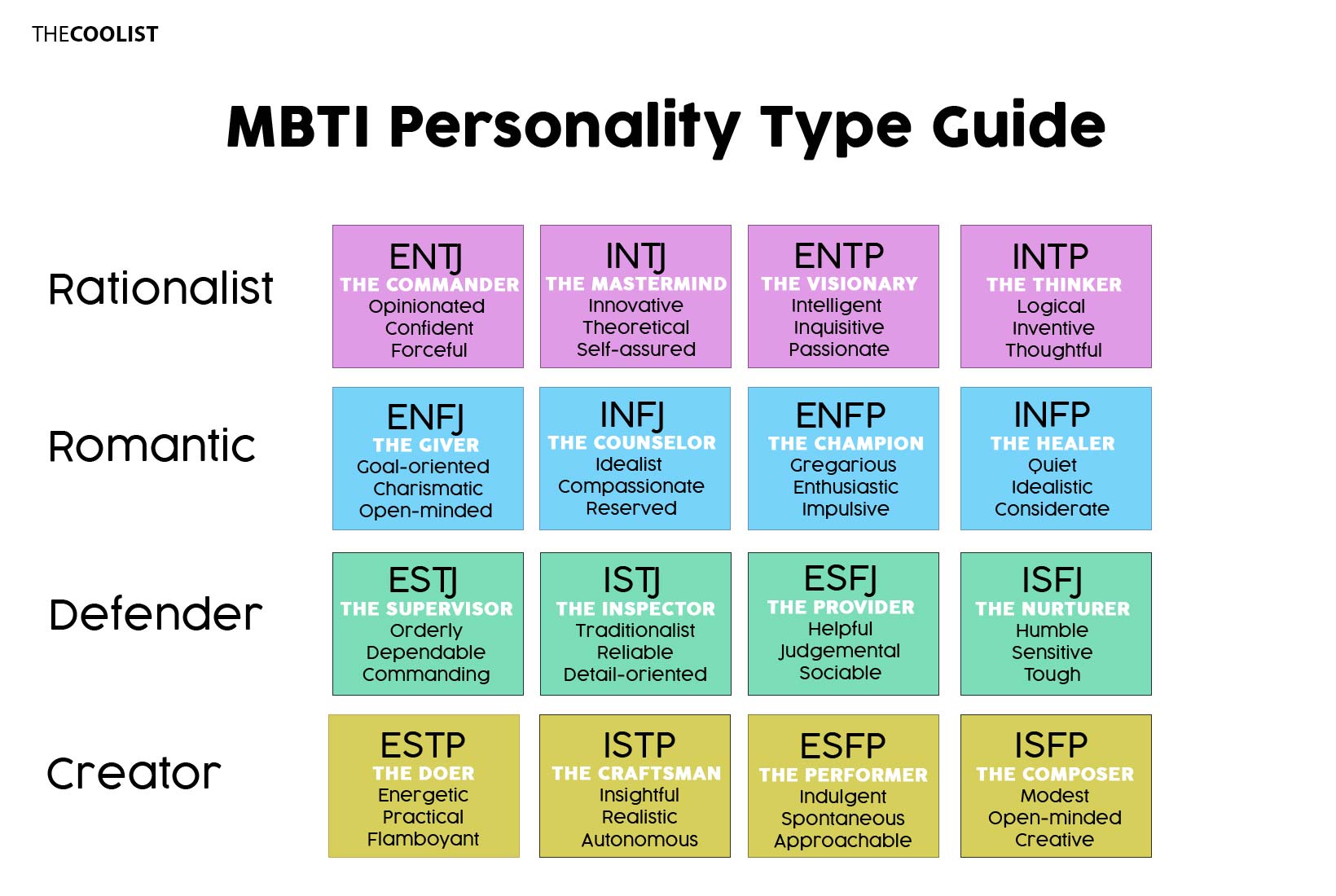
The 16 personality types quiz is a psychometric self-assessment designed to categorize individuals into one of sixteen distinct psychological profiles based on the Myers-Briggs Type Indicator (MBTI) framework. By measuring preferences in how people perceive the world and make decisions, the quiz provides a framework for understanding personal motivations, strengths, communication styles, and potential career paths.
Understanding the Framework: Origins and Evolution
The 16 personality types quiz is rooted in the work of Swiss psychiatrist Carl Jung, who published "Psychological Types" in 1921. Jung proposed that humans experience the world using four principal psychological functions: sensation, intuition, feeling, and thinking. He further suggested that one of these four functions is typically dominant for an individual most of the time.
Building on Jung’s theories, Katharine Cook Briggs and her daughter, Isabel Briggs Myers, developed the Myers-Briggs Type Indicator during the mid-20th century. Their goal was to make Jung's complex theories accessible and useful for the general population, particularly to help women entering the workforce during World War II identify jobs that would best suit their natural inclinations.
In 2026, the quiz has evolved into various digital formats, ranging from the official MBTI assessment managed by The Myers-Briggs Company to popularized, free versions like 16Personalities. While the free versions often incorporate modern psychological traits like the Big Five’s "Neuroticism" (often labeled as Turbulent vs. Assertive), they all trace their lineage back to the fundamental four-letter code system.
The Four Dichotomies Explained
The 16 personality types are derived from four "dichotomies," or pairs of opposing traits. Every individual has a preference for one side of each pair, though everyone uses both sides to some degree.
1. Extraversion (E) vs. Introversion (I)
This scale measures where you direct your energy and how you are "recharged."
- Extraverts are energized by social interaction, external activities, and collaboration. They tend to process thoughts out loud and prefer a fast-paced environment.
- Introverts gain energy from solitary time and internal reflection. They often prefer to process ideas internally before speaking and thrive in quieter, more focused settings.
2. Sensing (S) vs. Intuition (N)
This dichotomy focuses on how you gather and process information from the world around you.
- Sensing individuals focus on the "here and now." They are practical, detail-oriented, and rely on their five senses and past experiences to understand reality.
- Intuition-led individuals look at the "big picture." They are more interested in possibilities, patterns, and future potential than in concrete data.
3. Thinking (T) vs. Feeling (F)
This scale determines how you make decisions and evaluate information.
- Thinking types prioritize logic, objective data, and consistency. They aim to be "fair" by applying the same rules to everyone and often excel at impersonal analysis.
- Feeling types prioritize values, harmony, and the impact of decisions on people. They aim to be "kind" by considering individual circumstances and subjective feelings.
4. Judging (J) vs. Perceiving (P)
This final scale describes how you orient yourself toward the outside world and manage your life.
- Judging types prefer structure, schedules, and clear plans. They feel most comfortable when matters are settled and tasks are "checked off" the list.
- Perceiving types prefer flexibility, spontaneity, and keeping their options open. They are often more adaptable to change and may find strict routines stifling.
The 16 Personality Profiles
By combining the four preferences, we arrive at the 16 unique types. In the modern landscape of 2026, these are often grouped into four "temperament" categories to help users better understand their overarching roles in society and teams.
The Analysts (NT Types)
- INTJ (The Architect): Strategic thinkers with a plan for everything. They are highly independent and value competence.
- INTP (The Logician): Innovative inventors with an unquenchable thirst for knowledge and abstract logic.
- ENTJ (The Commander): Bold, imaginative, and strong-willed leaders, always finding a way—or making one.
- ENTP (The Debater): Smart and curious thinkers who cannot resist an intellectual challenge or a complex problem.
The Diplomats (NF Types)
- INFJ (The Advocate): Quiet and mystical, yet very inspiring and tireless idealists. Often considered the rarest type.
- INFP (The Mediator): Poetic, kind, and altruistic people, always eager to help a good cause.
- ENFJ (The Protagonist): Charismatic and inspiring leaders, able to mesmerize their listeners and foster growth.
- ENFP (The Campaigner): Enthusiastic, creative, and sociable free spirits who can always find a reason to smile.
The Sentinels (SJ Types)
- ISTJ (The Logistician): Practical and fact-minded individuals, whose reliability cannot be doubted.
- ISFJ (The Defender): Very dedicated and warm protectors, always ready to defend their loved ones.
- ESTJ (The Executive): Excellent administrators, unsurpassed at managing things—or people.
- ESFJ (The Consul): Extraordinarily caring, social, and popular people, always eager to help and maintain social order.
The Explorers (SP Types)
- ISTP (The Virtuoso): Bold and practical experimenters, masters of all kinds of tools and physical crafts.
- ISFP (The Adventurer): Flexible and charming artists, always ready to explore and experience something new.
- ESTP (The Entrepreneur): Smart, energetic, and very perceptive people, who truly enjoy living on the edge.
- ESFP (The Entertainer): Spontaneous, energetic, and enthusiastic people—life is never boring around them.
Comparing the 16 Types: Strengths and Roles
To choose the right path or understand a team dynamic, it is helpful to see how these types interact. The following table highlights key attributes for comparison.
| Personality Type | Core Motivation | Primary Strength | Common Challenge |
|---|---|---|---|
| INTJ | Competence & Logic | Strategic Planning | Emotional Sensitivity |
| INFP | Personal Values | Empathy & Creativity | Practical Execution |
| ESTJ | Order & Tradition | Organizational Efficiency | Flexibility |
| ENFP | Exploration & Connection | Enthusiastic Innovation | Following Through |
| ISTJ | Duty & Reliability | Attention to Detail | Adapting to Change |
| ENTJ | Achievement & Impact | Decisive Leadership | Impatience with Inefficiency |
| ISFJ | Service & Harmony | Supportive Nature | Overextending Themselves |
| ISTP | Mastery & Problem Solving | Practical Troubleshooting | Long-term Planning |
The Mechanics of Taking the Quiz
As of 2026, taking a personality quiz is more accessible than ever, but the quality of results depends heavily on the user's approach. To ensure the most accurate output, several factors must be considered.
Choosing the Right Assessment
There is a distinction between the "official" MBTI and "MBTI-inspired" quizzes. The official assessment involves a fee and often includes a debrief with a certified practitioner. This is generally preferred for executive coaching or high-stakes organizational development. Free versions are excellent for self-reflection and general interest but may lack the rigorous psychometric validation of the official tool.
Optimal Testing Conditions
To get an accurate result, you should take the quiz in a neutral state of mind. Avoid taking it immediately after a particularly stressful day at work or a major life event, as these can temporarily skew your preferences toward "shadow" traits (behaviors you exhibit only under stress). Answer questions based on who you truly are, not who you want to be or who your job requires you to be.
Avoiding the "Work Persona" Bias
One of the most common mistakes is answering based on professional requirements. For example, an ENFP might answer like an ESTJ because their job as an accountant requires them to be detail-oriented and scheduled. Try to think about how you behave in your "natural state"—the way you act when no one is making demands on your time.
Scientific Validity and Limitations
It is important to approach the 16 personality types quiz with a balanced perspective. In the scientific community, the MBTI framework faces criticism for its lack of "test-retest reliability" (people sometimes get different results a few weeks apart) and its "binary" nature (it forces people into one of two boxes, even if they are in the middle).
However, its utility in 2026 remains significant for several reasons:
- Vocabulary for Communication: It provides a common language for teams to discuss their differences without personal attacks.
- Self-Reflection: It forces individuals to think about their habits and preferences, often revealing blind spots.
- Career Guidance: While it shouldn't be the sole factor, knowing you are an "Intuitive" type can explain why you feel stifled in a highly repetitive, detail-heavy role.
The framework is best used as a "starting point" for self-discovery rather than a definitive, unchangeable label. Personality is dynamic, and while your core preferences tend to remain stable, your ability to use your non-preferred traits (e.g., an Introvert learning to lead a meeting) grows as you mature.
Practical Applications in 2026
Personal Development
Once you identify your type, you can seek out targeted growth strategies. An INTJ might focus on developing their "Feeling" side to improve interpersonal relationships, while an ESFP might work on "Judging" skills to better manage their finances and long-term goals.
Team Building and Leadership
Organizations use these quizzes to build "balanced" teams. A team composed entirely of "Analysts" might be brilliant at strategy but struggle with the social cohesion provided by "Diplomats" or the practical implementation managed by "Sentinels." Leaders who understand the types of their subordinates can tailor their management style—giving an ISTJ clear, written instructions while giving an ENFP the creative freedom to brainstorm.
Relationship Compatibility
While any type can have a successful relationship with any other type, understanding the 16 types helps partners navigate conflict. Understanding that a partner's need for a strict schedule (Judging) isn't an attempt to control, but a way to reduce anxiety, can foster empathy and compromise.
Frequently Asked Questions
Can my personality type change over time?
While your fundamental "type" or core preferences are generally thought to remain stable throughout adulthood, your behavior and the way you express your traits can change significantly. As people age, they often become more proficient at using their "inferior" functions. For example, a "Thinking" type may become more empathetic and value-driven as they grow older, a process Jung called "individuation."
Which is the rarest personality type in 2026?
Historically, the INFJ (Introverted, Intuitive, Feeling, Judging) has been cited as the rarest type, making up approximately 1-2% of the population. However, recent data from 2025 and 2026 suggest that ENTJ and INTJ are also among the least common, particularly among certain demographics. Rarity can vary significantly by region and culture.
Is the 16 personality types quiz used by employers for hiring?
Many modern companies use these quizzes as part of the onboarding and team-integration process. However, using them as a "pass/fail" filter for hiring is generally discouraged and, in some jurisdictions, legally restricted. The assessments are designed for development and communication, not for measuring job-specific aptitude or skills.
How does this quiz differ from the "Big Five" personality test?
The Big Five (Openness, Conscientiousness, Extraversion, Agreeableness, and Neuroticism) is currently the gold standard in academic psychology because it measures traits on a spectrum rather than as binary types. The 16 personality types quiz is often preferred in corporate and personal growth settings because its "type-based" descriptions are more intuitive and easier for non-psychologists to apply to daily life.
What should I do if I feel I fit into two different types?
It is very common to feel like a "hybrid," especially if your scores on a particular dichotomy (like Thinking vs. Feeling) are close to 50/50. In these cases, it is helpful to look at "Cognitive Functions"—the deeper layer of the theory that explains the hierarchy of how each type processes information. Often, reading the detailed descriptions of both types will reveal that one resonates more deeply with your core motivations, even if your behaviors are flexible.
Final Recommendation
If you are looking to take a 16 personality types quiz in 2026, start with a reputable, high-quality assessment like 16Personalities for a free overview or MBTIOnline for a more formal, data-driven report. Use your results as a tool for curiosity, not a cage. The true value of the quiz lies not in the four-letter code itself, but in the subsequent reflection on how you interact with others and how you can leverage your natural strengths to build a more fulfilling life.