Securing 10 year term life insurance for a 31 year old at 50 000 of coverage provides an affordable, targeted financial safety net to cover specific short-term liabilities, final expenses, or income replacement gaps during your early thirties. At age 31, healthy applicants generally qualify for exceptionally low monthly premiums because mortality risk is statistically minimal. Choosing a modest policy face value of $50,000 keeps baseline costs minimal while delivering essential protection for individuals who do not require a massive multi-million-dollar estate planning tool, but rather need a straightforward solution to manage immediate monetary obligations.
Understanding Term Life Insurance Fundamentals
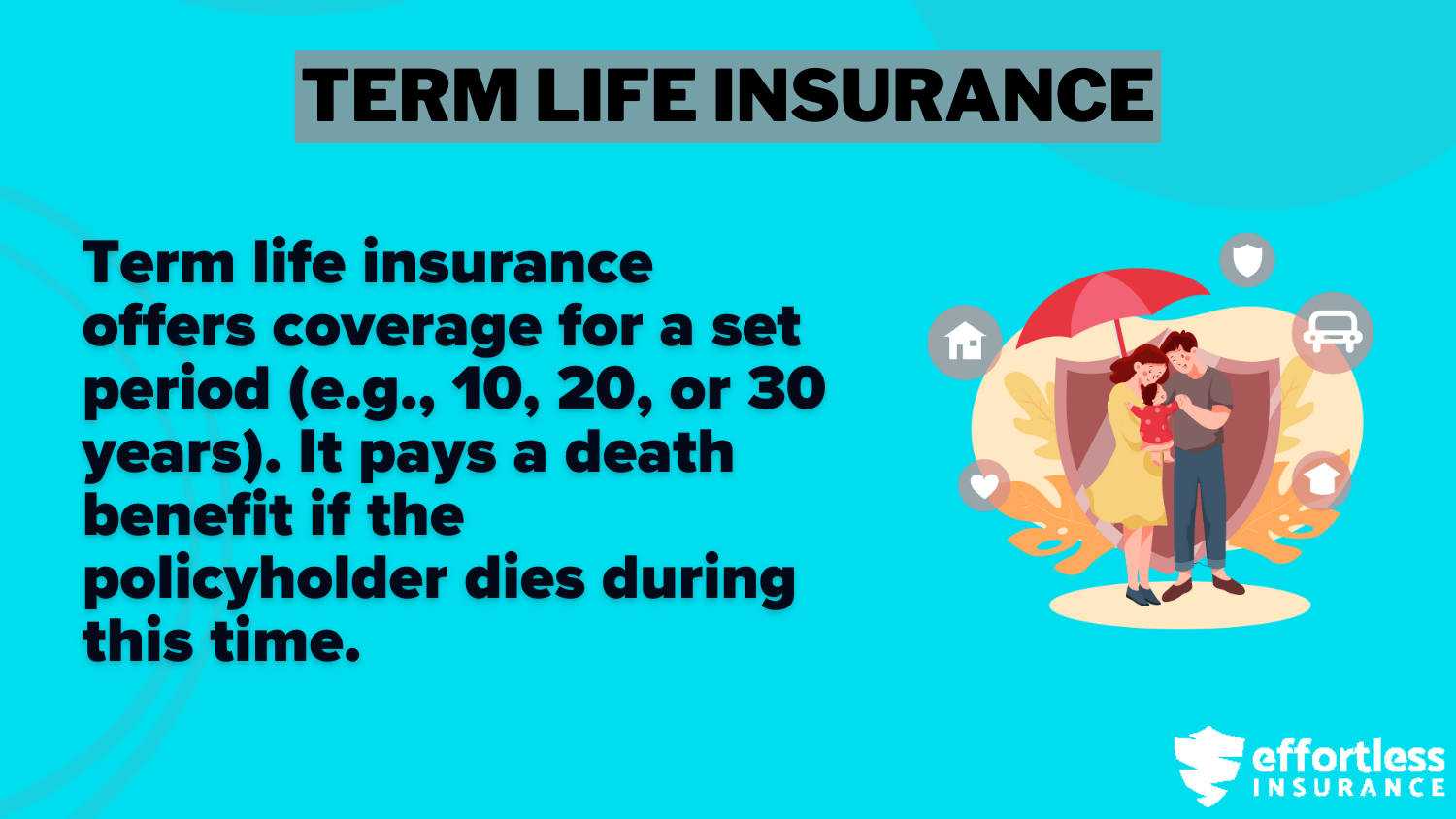
Term life insurance operates on a simple principle: it provides coverage for a specific period, known as the term, and pays out a tax-free death benefit to your designated beneficiaries if you pass away while the policy is active. Unlike permanent life insurance policies, such as whole or universal life, term insurance does not build cash value or investment components. This structural simplicity is precisely what makes term life insurance the most cost-effective way to secure high amounts of financial protection.
When you purchase a 10-year term policy at age 31, your coverage remains locked in place until you reach age 41. During this decade, your insurance company cannot raise your premium rates or cancel your policy as long as you pay your premiums on time. This predictability is vital for young adults managing shifting household budgets, student loans, early mortgages, and growing families. A 10-year duration acts as a bridge, covering you through a specific window of financial vulnerability when your debts are highest and your savings may still be accumulating.
Why Choose a $50,000 Coverage Amount?
A coverage amount of $50,000 is often categorized as a small-face-amount or final expense policy, though it functions exceptionally well as a standalone income-replacement or debt-elimination tool for young adults on a strict budget. While many financial advisors traditionally recommend coverage equal to 10 to 12 times your annual income, a $50,000 policy serves distinct, practical purposes for a 31-year-old policyholder.
First, $50,000 is often more than enough to cover final expenses, funeral costs, medical bills associated with a final illness, and minor probate or estate settlement fees. This ensures that surviving family members are not forced to shoulder sudden out-of-pocket expenses during an emotional crisis. Second, this face value can completely wipe out lingering unsecured debts, such as credit cards, personal loans, or private student loans that might otherwise become the legal or moral burden of a spouse or co-signer. Finally, for a 31-year-old working part-time, staying at home to raise children, or earning a modest income, a $50,000 policy provides a vital cushion that buys surviving dependents several years of breathing room to adjust their financial footing.
Cost Expectations and Affordability at Age 31
Age is one of the single most influential factors in determining life insurance premiums. At 31 years old, you are in a prime demographic for insurance underwriting. Because actuarial tables show that the statistical probability of mortality over the next decade is very low for a healthy individual, insurance carriers pass these favorable odds on to the consumer in the form of low monthly payments.
For a 10-year term policy with a $50,000 death benefit, a healthy non-smoker can typically expect to pay anywhere from $10 to $20 per month, depending on gender, exact health history, and lifestyle factors. Smokers, or individuals with pre-existing medical conditions such as controlled hypertension or mild asthma, will face higher rates due to increased underwriting risk. However, because the total face value is modest at $50,000, even higher risk tiers often find the premiums manageable compared to larger $250,000 or $500,000 policies.
| Health Classification | Estimated Monthly Premium (Male, Age 31) | Estimated Monthly Premium (Female, Age 31) |
|---|---|---|
| Preferred Plus (Optimal Health) | $9 - $12 | $8 - $11 |
| Standard (Average Health) | $13 - $18 | $11 - $15 |
| Tobacco / Smoker | $25 - $35 | $20 - $30 |
Note: Premium estimates are illustrative averages for standard underwriting guidelines in 2026 and vary based on carrier, state regulations, and individual medical underwriting.
The Underwriting Process and Eligibility Requirements
Securing a 10-year term policy requires going through the insurance underwriting process. For a $50,000 policy, the application journey is frequently streamlined compared to larger policies. Many insurance companies offer simplified issue or accelerated underwriting pathways for face values under $100,000, meaning you might not even be required to complete a physical paramedical exam involving blood draws and urine samples.
Instead, the carrier will evaluate your application based on answers to a detailed health questionnaire, prescription database checks, motor vehicle records, and historical data from organizations like the Medical Information Bureau (MIB). If you choose a fully underwritten path, a nurse may visit your home or workplace to take a quick health snapshot, measuring your height, weight, blood pressure, and collecting minor biological samples.
To maximize your chances of securing the lowest possible rate at age 31, honesty on your application is paramount. Insurers cross-reference your medical history meticulously; failing to disclose a chronic condition or tobacco use can result in a denied claim later. Maintaining stable vital signs, avoiding tobacco products, and managing chronic conditions proactively will keep you eligible for top-tier health classifications.
Evaluating Alternatives: Term vs. Permanent and Higher Face Values
Before finalizing a 10-year term policy at $50,000, it is wise to evaluate whether this specific structure aligns with your long-term financial strategy. Life insurance is not a one-size-fits-all product, and understanding your alternatives ensures you do not outgrow your policy too quickly.
- Longer Term Lengths (20 or 30 Years): If you have young children who will depend on your income for the next two decades, a 10-year term will expire when your children are only 11 years old. A 20- or 30-year term locks in your low 31-year-old rates for a longer duration, ensuring protection until your dependents reach financial independence.
- Higher Coverage Amounts ($250,000+): If you carry a modern mortgage, support a full family, and earn a standard salary, $50,000 may fall short of replacing your economic value. Running a comprehensive human life value calculation can help determine if a higher face value is necessary.
- Permanent Life Insurance: Whole life or universal life policies provide lifelong coverage and build cash value. However, they are significantly more expensive than term insurance and are rarely recommended for young adults whose primary goal is maximum income protection on a tight budget.
Frequently Asked Questions
Can I convert my 10-year term policy into a permanent policy later?
Many term life insurance policies include a conversion rider that allows you to switch your term policy into a permanent life insurance policy without undergoing a new medical exam. This is a valuable feature if your health declines during the 10-year term and you want permanent coverage later in life, though your new premiums will be based on your age at the time of conversion.
What happens when the 10-year term expires at age 41?
When your 10-year term ends, the coverage terminates, and your level premium guarantee expires. You can typically renew the policy on a year-to-year renewable basis, but the rates will increase dramatically each year based on your attained age of 41 and older. If you still need coverage, the most cost-effective approach is to purchase a new policy before your current term expires, provided your health remains stable.
Do I need a medical exam for a $50,000 policy?
Not always. Because $50,000 is a relatively low face value, many insurance carriers offer accelerated underwriting or simplified issue policies that rely entirely on your application, prescription history, and medical databases, allowing you to bypass the traditional nurse visit and lab work entirely.
Can I buy multiple small policies instead of one large policy?
Yes, this strategy is known as laddering. However, for a single modest need like final expenses or a small debt, a single $50,000 policy is usually more efficient. Laddering is typically deployed when combining different term lengths to match fluctuating financial liabilities over time.
Are the payouts from a 10-year term life insurance policy taxable?
In the vast majority of cases, life insurance death benefits paid to a designated individual beneficiary are entirely income tax-free. This provides your loved ones with the full $50,000 cash payout immediately upon claim approval without reducing the funds for federal or state income taxes.
Next Actions and Recommendations
Securing a 10-year term life insurance policy at age 31 with a $50,000 death benefit is a prudent, budget-friendly step for locking in low insurance rates while covering essential short-term obligations. To move forward, review your current financial liabilities, calculate whether $50,000 fully addresses your immediate safety net needs, and obtain quotes from multiple reputable, financially stable insurance carriers. Comparing independent quotes ensures you secure the optimal balance of affordable pricing and reliable protection tailored to your exact life stage.