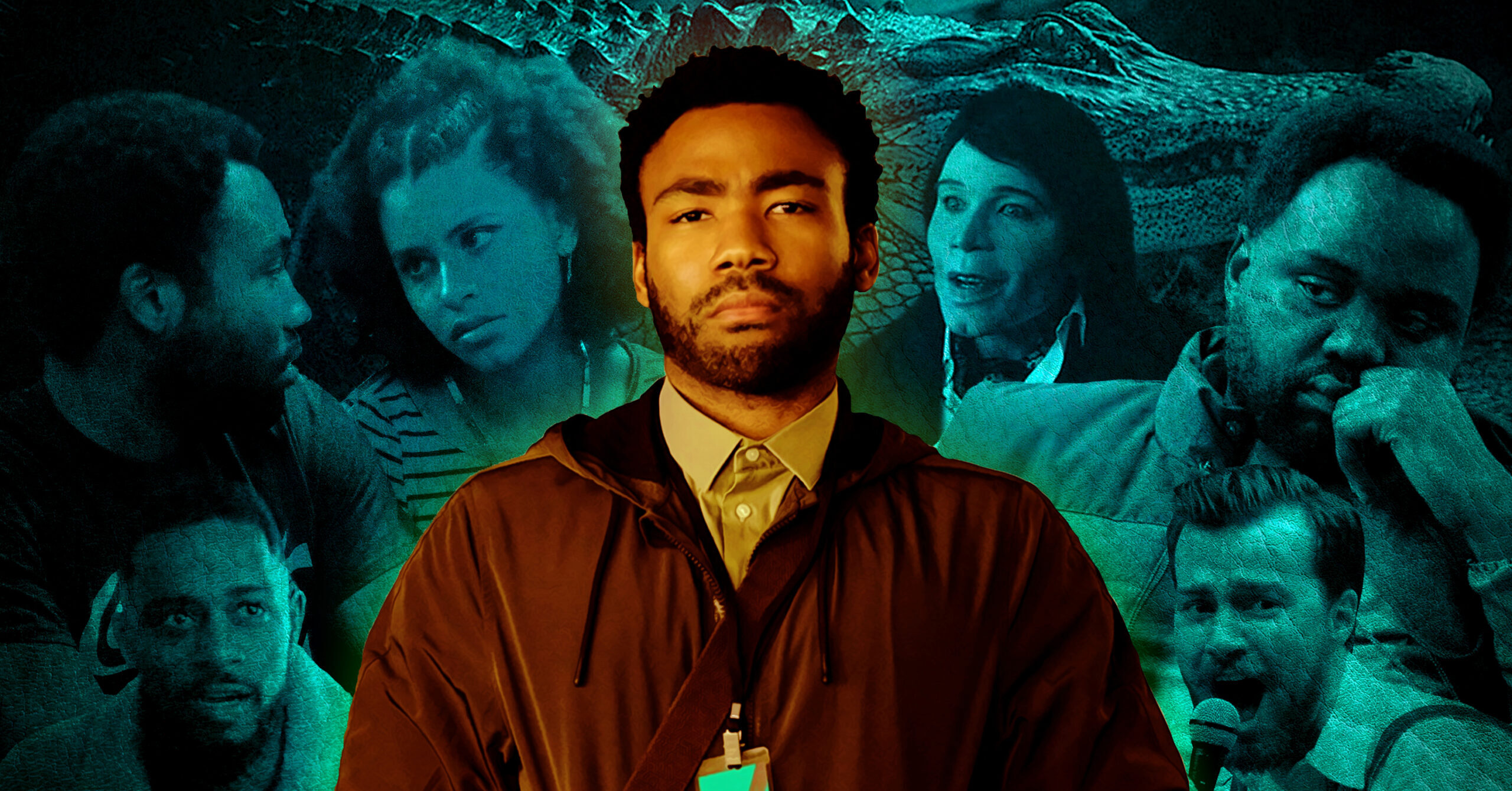
Atlanta, the surrealist comedy-drama created by and starring Donald Glover, premiered on FX in 2016, immediately establishing itself as a unique exploration of the rap scene, black identity, and the socioeconomic absurdities of contemporary urban life. Season 1 serves as an atmospheric, non-linear introduction to Earnest “Earn” Marks, an ambitious but struggling young man attempting to manage his cousin Alfred “Paper Boi” Miles’ burgeoning hip-hop career.
The Genesis of Atlanta: Establishing the Premise
When Atlanta arrived on FX, it arrived not as a standard musical rags-to-riches story, but as a deliberate subversion of the trope. The premise is anchored by Earnest “Earn” Marks, a Princeton dropout who has returned to his hometown of Atlanta with few prospects and a strained relationship with Van, the mother of his daughter, Lottie.
The central conflict arises when Earn realizes his cousin, Alfred, has inadvertently become a local sensation under the stage name "Paper Boi" after a viral YouTube video of a shooting incident. Earn sees an opportunity for salvation, aiming to manage Alfred to secure a future for himself and his family. However, the show rarely focuses on the "grind" of the music business in the traditional sense. Instead, it uses Paper Boi’s status as a vessel to investigate the bizarre cultural landscape of Atlanta.
Key Characters and Their Dynamic
The narrative engine of Atlanta Season 1 is driven by its four main characters, each providing a distinct lens through which to view the city:
- Earnest “Earn” Marks: The protagonist who occupies a space of perpetual negotiation. He is an outsider looking in, constantly trying to navigate societal systems that seem designed to exclude him.
- Alfred “Paper Boi” Miles: The reluctant celebrity. Alfred is grounded, cynical, and largely uninterested in the performative aspects of fame. His arc in Season 1 is one of adjusting to his newfound notoriety while trying to maintain his authenticity.
- Darius Epps: Alfred’s right-hand man and the show’s philosopher-trickster. Darius provides the surrealist humor that defines the series. His detached, off-kilter outlook often acts as a mirror for the absurdity of the situations the group encounters.
- Van (Vanessa Keefer): Earn’s on-again-off-again partner. She provides the necessary grounding for the show, showcasing the day-to-day pressures of parenthood and societal expectations on young professional women.
The Structure of Season 1: Episodic Realism and Surrealism
Season 1 is noted for its experimental storytelling. While a serialized element exists—Earn’s pursuit of success—the episodes often function as standalone vignettes. This approach allows the creators to dive deep into specific themes ranging from police brutality and the nature of "keeping it real" to the isolation of celebrity.
A defining characteristic of the first season is its "Southern Gothic" tone. The show does not portray Atlanta as a shiny metropolis; rather, it highlights the mundane, the desperate, and the occasionally nightmarish aspects of the city. The direction, primarily led by Hiro Murai, utilizes long, lingering shots and a muted color palette to emphasize the atmosphere over frantic plot progression.
Core Themes Explored in Season 1
| Theme | Representation in Season 1 |
|---|---|
| Identity | The contrast between who the characters want to be and how the public perceives them. |
| Socioeconomics | The constant financial struggle and the "poverty tax" on living in an urban environment. |
| Absurdity | Strange, unexplained events treated with mundane acceptance by characters. |
| The Music Industry | The commodification of black trauma and the fickleness of internet fame. |
Notable Episodes and Turning Points
While the entire season is cohesive, several episodes stand out as foundational to the series’ identity. "B.A.N." (Black American Network) serves as a hallmark of the season’s daring narrative style. Presented as a satirical news program, it breaks the show's reality to provide a biting commentary on media representation and the politics of identity.
Another critical moment is the pilot, which establishes the tone immediately. The introduction of the Paper Boi shooting incident sets the stage for a series that refuses to shy away from the darker side of fame. Meanwhile, episodes like "The Club" and "Value" explore the performative nature of success—showing that even when Earn or Alfred achieve what they think they want, the system finds ways to diminish that win.
The "Atlanta" Aesthetic: Sound and Visuals
The music in Atlanta is not just background noise; it is an active participant in the story. Curated by Donald Glover and his brother Stephen, the soundtrack bridges the gap between mainstream trap music and the show’s more avant-garde sensibilities. The "Paper Boi" track serves as an earworm that underscores the entire season, representing the viral nature of modern success.
Visually, the show’s commitment to a cinematic look separates it from the multi-camera sit-coms common on network television during its debut. The use of natural light and real-world locations in Atlanta gives the show a documentary-like intimacy, which makes the moments of pure surrealism—like an invisible car or a haunted house—all the more jarring and effective.
Audience Reception and Cultural Impact
Upon its release, Atlanta was hailed by critics as a masterpiece of modern television. It was praised for its refusal to explain its surrealist elements, instead trusting the audience to lean into the discomfort and confusion. The show became a defining cultural artifact of the mid-2010s, earning numerous awards, including Golden Globes and Emmys.
For viewers approaching the series today, it is important to understand that Atlanta does not follow a linear, high-stakes trajectory. If a viewer is looking for a traditional drama with clear-cut wins and losses, they may find the pacing unconventional. However, for those interested in character-driven pieces that double as social critique, the first season is a foundational text.
Practical Guidance for New Viewers
If you are starting Atlanta for the first time, it is recommended to watch the episodes in order, even if the narratives are often standalone. The character development is subtle and relies on the cumulative effect of small, seemingly insignificant interactions.
Common Questions About Season 1
Does the show focus solely on the music industry? No. While the music industry is the catalyst for the premise, it is merely one of many systems the show explores. It is equally concerned with family dynamics, mental health, and the absurdity of social status.
Is the humor traditional? No. The show is frequently described as a surrealist dramedy. The humor is often dark, dry, and situational, relying on the audience's recognition of the absurd rather than traditional punchlines.
What is the significance of the “surreal” moments? The surrealism is usually used to externalize the internal feelings of the characters. When something strange happens, it is often a manifestation of the anxiety, confusion, or isolation the characters are experiencing in their real-world environment.
Is it necessary to have prior knowledge of Atlanta, Georgia? Not at all. While the show is deeply rooted in the geography and culture of the city, it provides enough context that a viewer unfamiliar with the region can still grasp the themes of alienation and opportunity.
How does the show handle social issues? The show approaches social issues with nuance, often through satire rather than direct didacticism. It places characters in uncomfortable systemic situations and observes how they react, allowing the audience to draw their own conclusions.
Does Season 1 end on a cliffhanger? It does not end on a traditional cliffhanger. The season finale provides a sense of closure to the initial arc of the characters' situations while leaving the door open for the evolution of their relationships in subsequent seasons.
Next Steps for the Viewer
If you have completed the first season and are looking for what comes next, the natural progression is to move directly into Season 2, titled Atlanta: Robbin' Season. While Season 1 is about establishing the characters and the world, Season 2 shifts into a more claustrophobic and tense atmosphere, reflecting the "robbin' season" (the holiday period in Atlanta known for increased crime).
As you continue through the series, keep an eye on how the characters’ definitions of success evolve. The journey that begins in Season 1 is one of personal discovery, and by the end of the full series, the characters are transformed in ways that reflect the changing nature of the world they inhabit. If you find the show compelling, consider revisiting specific episodes, as the dense layering of symbols and subtext often yields new insights upon a second viewing.