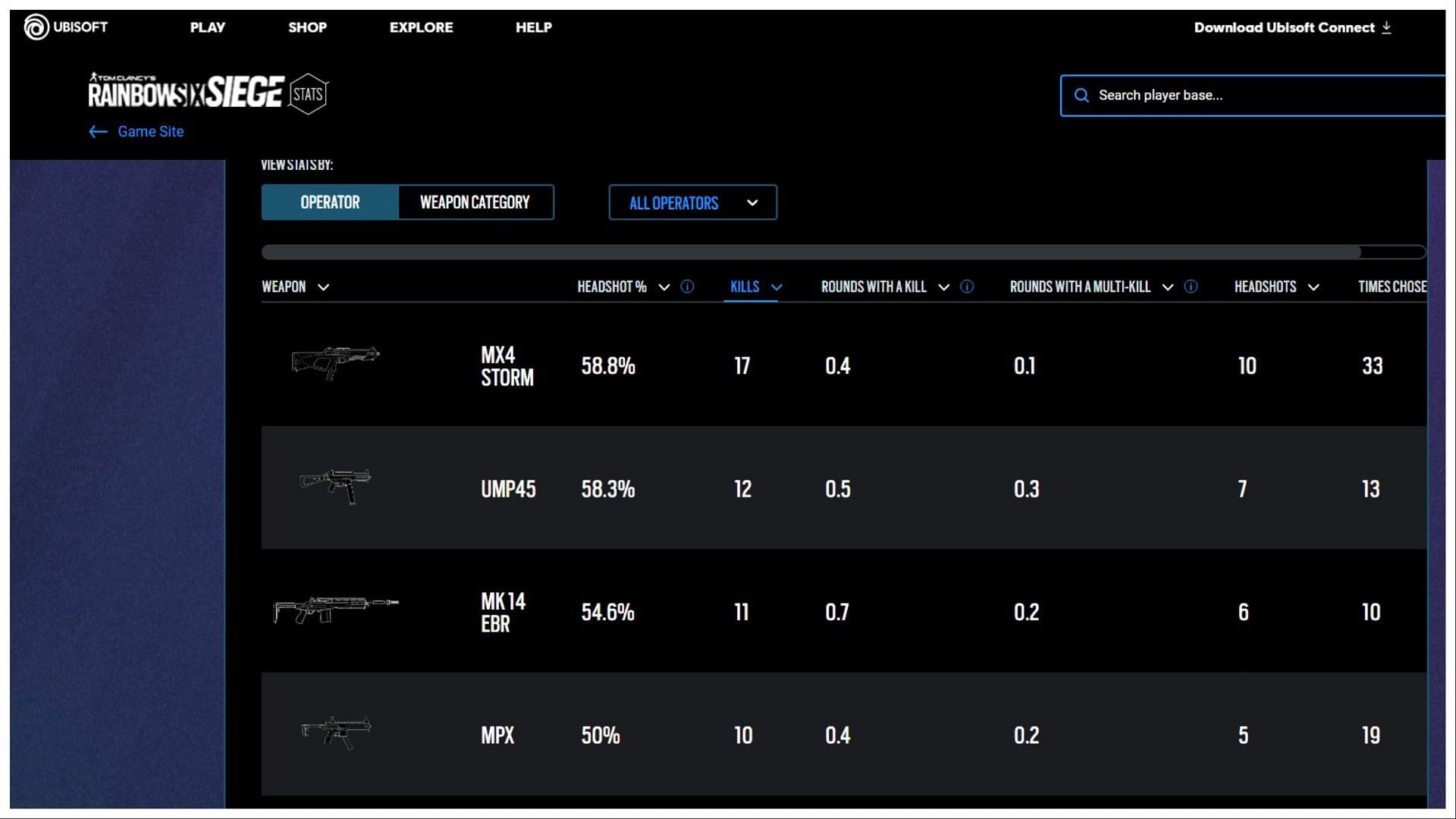
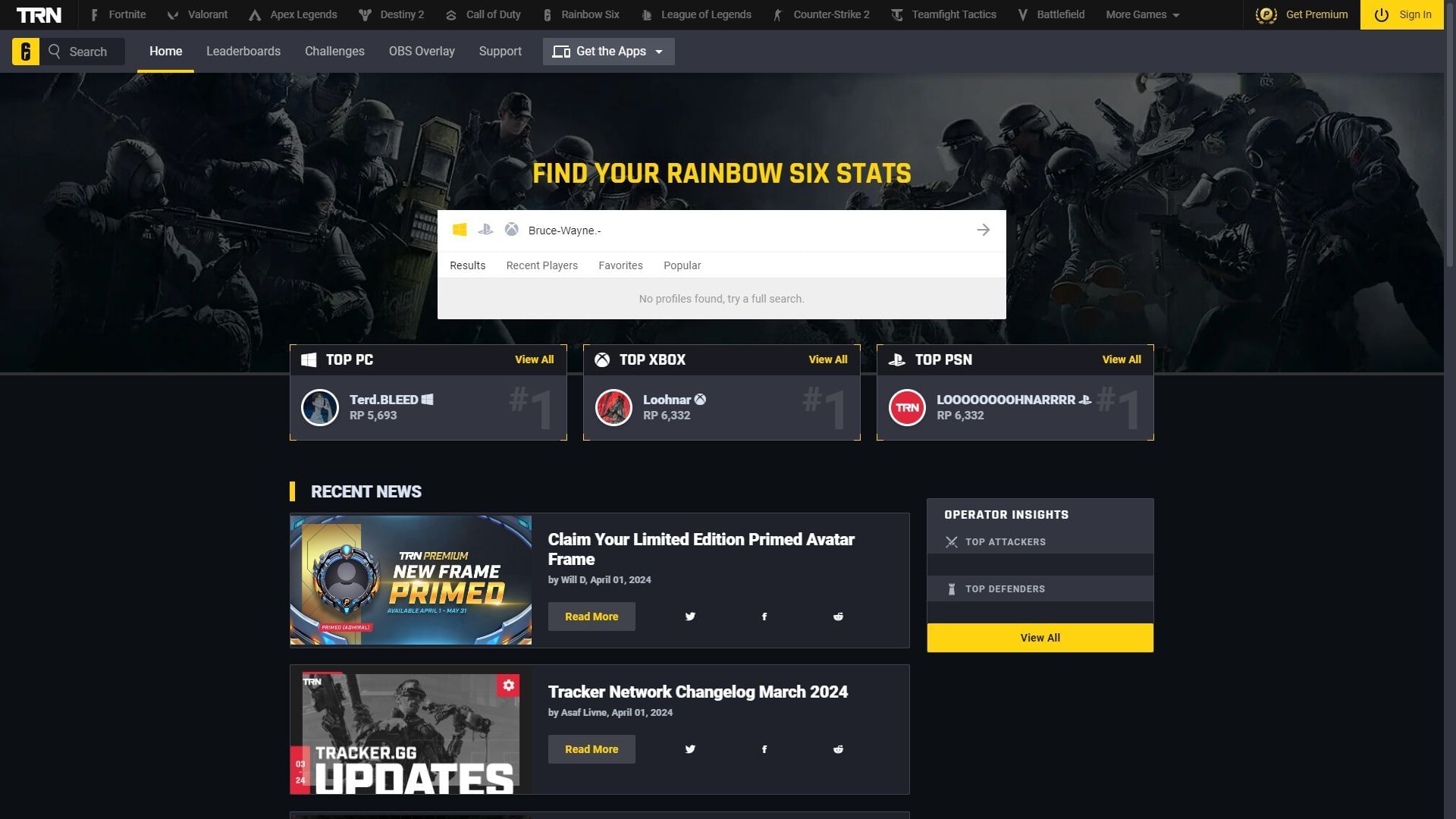
A Rainbow Six Siege stat tracker is a specialized analytical tool that aggregates in-game performance data—such as kill-death ratios, win rates, and operator proficiency—to provide players with actionable insights. These platforms, often integrated via official Ubisoft APIs, allow users to monitor their competitive progress, identify areas for mechanical improvement, and track seasonal rank fluctuations across various game modes.
Understanding the Mechanics of Stat Tracking
Rainbow Six Siege stat trackers function by interfacing with the game’s backend through official APIs. When you search for a player profile, the tracker queries Ubisoft’s servers for historical match data. This data is then parsed, organized, and visualized through web-based dashboards or dedicated desktop applications.
The primary value proposition of these tools lies in the granularity of the data provided. While the in-game UI offers a basic look at your current rank and perhaps a summary of your total kills, a dedicated tracker reveals trend lines. For instance, you can observe whether your performance on specific maps or with specific operators has improved or declined over the current seasonal update. By visualizing these trends, players move beyond mere guesswork and begin to understand which tactical adjustments are yielding positive results in ranked play.
Essential Metrics for Competitive Growth
To effectively use a tracker, one must understand the core metrics that define competitive performance. Most trackers aggregate the following data points:
- Kill/Death (K/D) Ratio: The fundamental measure of individual gunplay efficiency. While it is not the sole indicator of skill in a tactical game like Siege, it remains a critical baseline.
- Win/Loss (W/L) Ratio: A better indicator of how effectively a player contributes to the overall objective. A high K/D with a low W/L may indicate a "fragger" who struggles to close out round objectives.
- Operator Efficiency: Data regarding your most played operators, including their specific win percentages and K/D ratios. This helps identify which characters align best with your playstyle.
- Map-Specific Performance: A breakdown of how you perform on specific maps (e.g., Clubhouse vs. Oregon). This is vital for isolating weaknesses in your map knowledge or tactical execution.
- Seasonal Progression: Tracking your MMR (Matchmaking Rating) and rank movement over the course of the season, which provides context for your current competitive standing.
Selecting a Reliable Stat Tracker
In 2026, the ecosystem for Rainbow Six Siege tools is mature. When selecting a tracker, the most critical factor is the reliability of data synchronization. A reputable tracker should be updated frequently to account for the latest seasonal patches, balancing changes, and new operator additions.
| Feature | Primary Use | Why It Matters |
|---|---|---|
| Real-time API Sync | Accuracy | Ensures your latest matches appear without manual delays. |
| Operator Analytics | Self-Improvement | Reveals which operators correlate with your highest win rates. |
| Trend Visualization | Long-term Progress | Shows if you are genuinely improving over weeks or months. |
| Platform Compatibility | Cross-play Tracking | Vital if you toggle between console and PC environments. |
When you evaluate a service, verify that it adheres to privacy standards. Most established trackers require you to log in via your Ubisoft account or simply enter your username. Be cautious of platforms that request your account password directly, as official Ubisoft integrations usually use OAuth tokens, meaning they never see your actual credentials.
Prerequisites and Getting Started
Before you can begin tracking, ensure your Ubisoft account privacy settings are configured to allow data sharing. If you have "private" profile settings enabled in your Ubisoft account, stat trackers will be unable to retrieve your information.
- Configure Ubisoft Account: Access your account settings on the official Ubisoft website. Check the "Privacy and Security" section to ensure data sharing is permitted.
- Verify Platform Identity: If you play on multiple platforms (e.g., PlayStation and PC), ensure your accounts are linked under a single Ubisoft Connect ID. This allows the tracker to aggregate data across your entire ecosystem.
- Search by Username: Navigate to your chosen tracker's dashboard and enter your precise Ubisoft Connect username. Be mindful of case sensitivity or special characters that may be part of your handle.
- Review Sample Data: Upon your first search, the site will cache your data. Subsequent visits usually feature a "Refresh" button; use this after playing several games to update your statistics.
Troubleshooting Common Tracking Issues
Even with a stable setup, you may occasionally encounter discrepancies. The most common issue is a delay in data propagation. Because these trackers rely on API calls, they may not update the second a match ends. It is common to experience a 15- to 30-minute lag between the conclusion of a match and the appearance of those stats on the leaderboard.
If your data remains stagnant for several days, consider the following:
- Check the API Status: Occasionally, the Ubisoft server-side API undergoes maintenance. If the tracker's own social media or support page indicates an outage, wait until services are restored.
- Profile Visibility: Re-verify your Ubisoft privacy settings. Sometimes, updates to the Ubisoft interface may inadvertently reset your privacy permissions to "private."
- Refresh Strategy: Avoid spamming the refresh button, as this can lead to temporary API rate-limiting, which may cause the tracker to lock your profile temporarily to save bandwidth.
The Role of Data in Strategic Improvement
Tracking stats is not merely about boasting about high kill counts; it is a strategic exercise in identifying "leaks" in your gameplay. For example, if you notice your win rate on "Defense" is significantly lower than on "Attack," you can use this information to specifically dedicate your practice sessions to defensive site setups or anchor positioning.
Similarly, if you see that your K/D ratio is high on entry-fragger operators (like Ash or Iana) but your overall win rate is poor, it suggests that you may be securing kills that do not lead to round victories. This data-driven realization allows you to shift your playstyle toward team-oriented utility, which is often the key to climbing higher ranks in competitive environments.
Balancing Data with Intuition
While stat trackers are powerful, they should not replace intuitive gameplay. A common mistake among players is "analysis paralysis," where a player becomes so obsessed with their K/D or W/L ratio that they stop taking calculated risks during matches.
The most successful players use trackers as a diagnostic tool after their gaming sessions—not as a scorecard to judge their performance in real-time. Use the numbers to identify patterns, but rely on your internal "game sense" to make split-second decisions during a match. The numbers can tell you that you are losing a specific site frequently, but they cannot tell you why (e.g., poor communication, bad utility placement). You must combine the objective data from your tracker with your subjective experience from the match to form a complete picture of your performance.
Frequently Asked Questions
1. Is it safe to use a third-party Rainbow Six Siege stat tracker? Yes, provided the service uses the official Ubisoft Connect login system via OAuth. This method provides the service with a secure token to access your public profile data without ever having access to your account password or payment information. Avoid any site that asks for your actual Ubisoft password.
2. Can I track my performance in every game mode? Most trackers prioritize "Ranked" and "Standard" modes because these are where competition is most rigorous. Casual/Quick Match data is often tracked with less granularity. Check the FAQ section of your specific tracking platform to see which playlists they support for detailed breakdown.
3. Why is my K/D ratio different on the tracker compared to in-game? In-game counters sometimes include stats from limited-time modes or training grounds, whereas dedicated trackers typically filter for specific competitive playlists. Furthermore, trackers often calculate "seasonal" K/D versus "all-time" K/D. Always ensure you are comparing the same time-period metrics.
4. Does the tracker provide stats for operators I don't own? Stat trackers only display data for operators you have actually played. If you haven't unlocked or played a specific operator, they will not appear in your usage statistics.
5. Will using a stat tracker get me banned? Using a web-based or desktop stat tracker that simply pulls public data from the Ubisoft API is perfectly safe and compliant with Ubisoft’s terms of service. You are not modifying game files, and you are not injecting code into the game client. You will not be banned for viewing your own performance data.
Next Actions for Players
To take control of your competitive journey, start by choosing one reputable, widely recognized tracker and bookmarking your profile page. Commit to reviewing your performance stats once per week rather than daily; this allows enough match volume to build a representative sample size of your progress. Compare your current operator usage against your win rates, and select one operator you want to improve with for the coming week. By focusing on one variable at a time, you can turn raw data into a tangible competitive advantage.