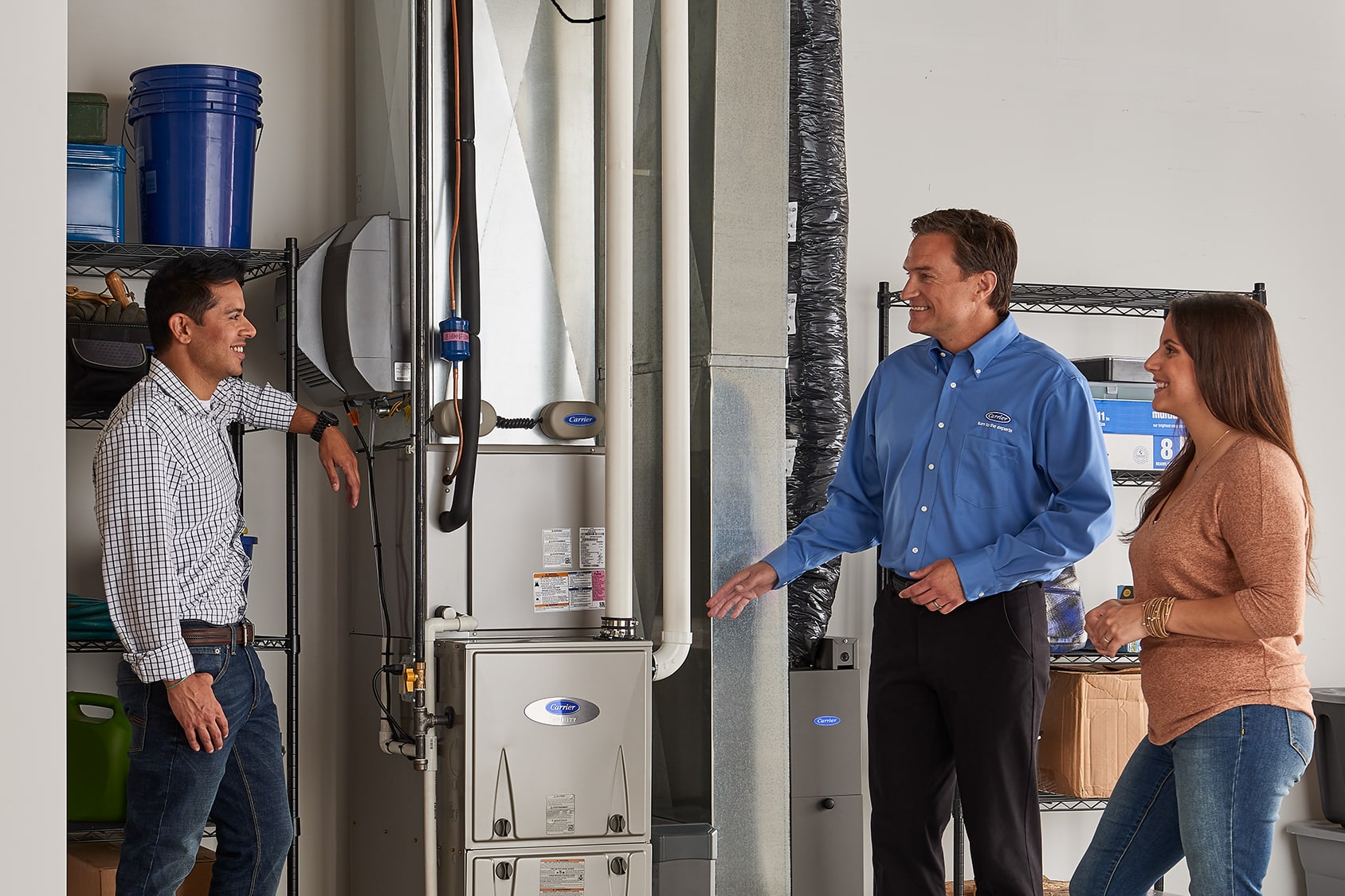
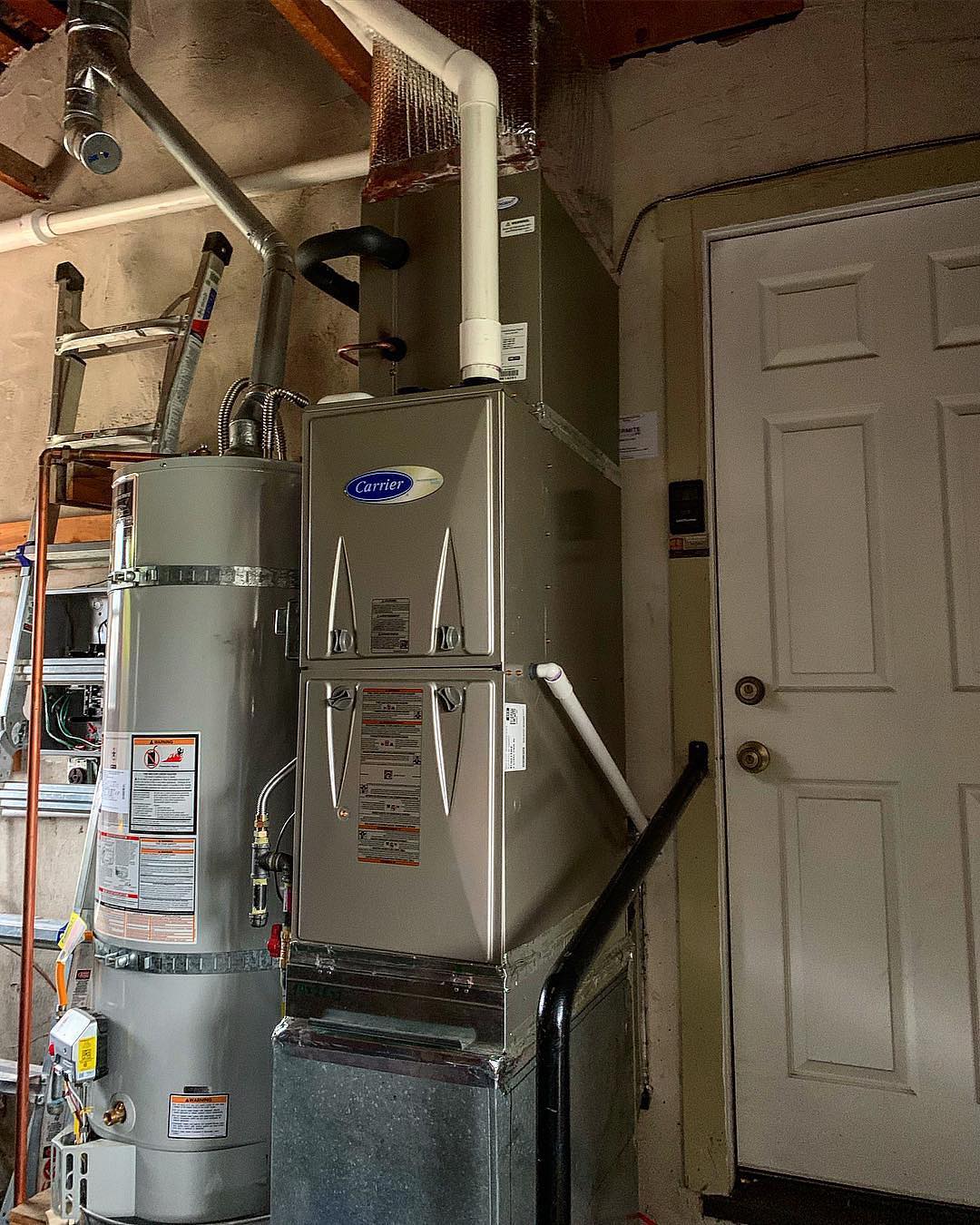
The Carrier Infinity 98 Gas Furnace (Model 59MN7) is a top-tier, modulating condensing gas furnace designed for maximum energy efficiency and precise climate control. Utilizing Greenspeed Intelligence, it achieves up to 98.5% AFUE, significantly reducing utility costs while providing exceptionally quiet operation and consistent indoor temperatures throughout the year.
Understanding the Carrier Infinity 98 (59MN7)
The Infinity 98 represents the pinnacle of Carrier’s gas furnace engineering. In the landscape of 2026 residential HVAC, it remains a benchmark for homeowners seeking to minimize their carbon footprint without sacrificing comfort. Unlike standard furnaces that operate on an "all-or-nothing" basis, or even two-stage units that have high and low settings, the Infinity 98 is a fully modulating system.
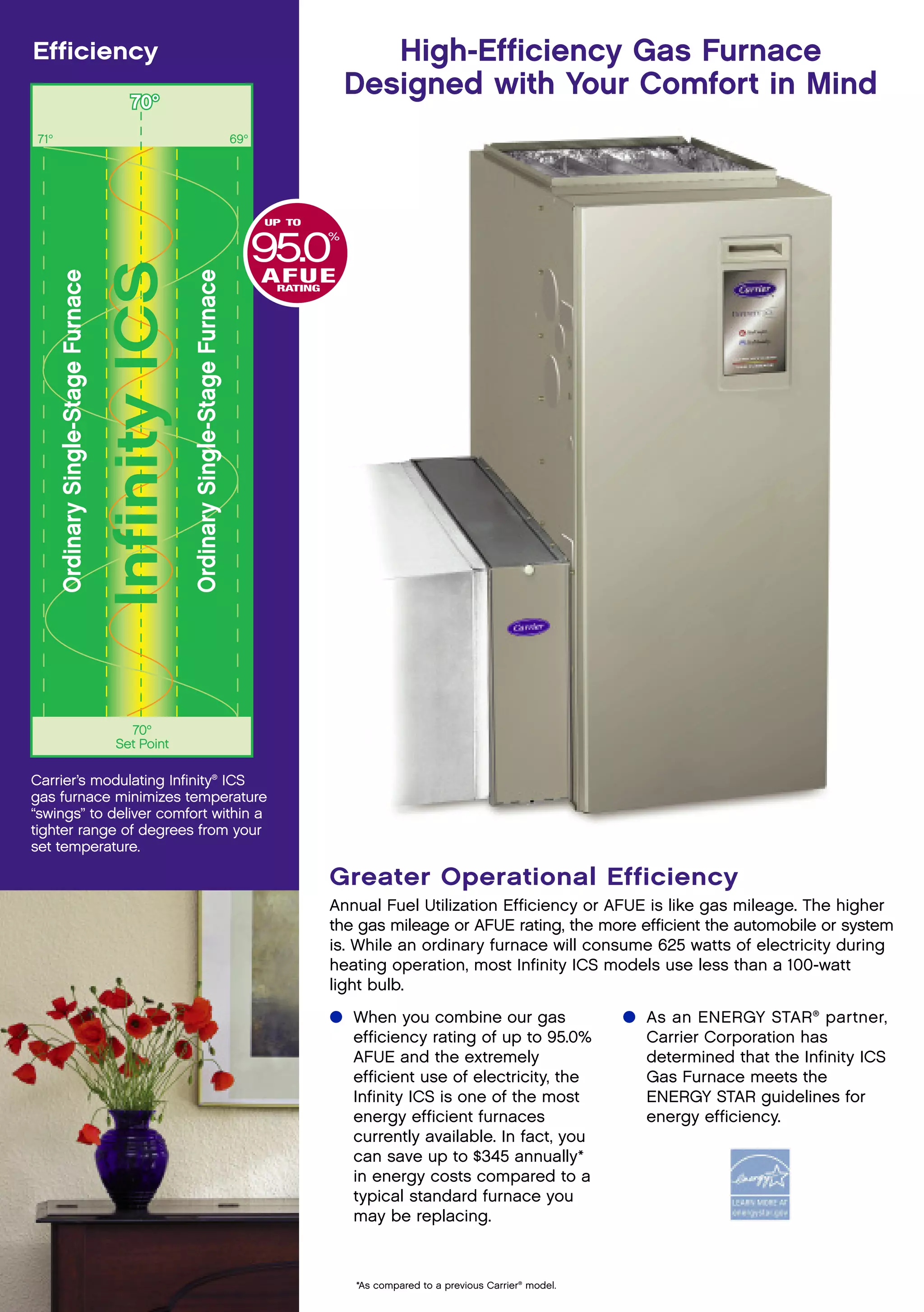
This modulation allows the furnace to adjust its heating output in tiny increments, typically between 40% and 100% capacity. By running for longer periods at lower speeds, the unit maintains a steady temperature within a fraction of a degree of the thermostat setting. This behavior eliminates the "cold blows" often associated with single-stage furnaces that blast hot air and then shut off, allowing the room to cool down significantly before restarting.
The Role of Greenspeed Intelligence
Greenspeed Intelligence is the proprietary integration of Carrier’s variable-speed technology and the Infinity System Control. It is not merely a marketing term but a technical framework that coordinates the inducer motor, the blower motor, and the modulating gas valve.
When the Infinity System Control (the specialized thermostat required for these features) communicates with the furnace, it calculates exactly how much heat is needed to maintain the set point based on outdoor temperatures and indoor humidity. The furnace then selects the lowest possible output to meet that demand. This precision is what allows the unit to achieve such high Efficiency Ratings (AFUE) while remaining whisper-quiet.
Technical Specifications and Design Architecture
To understand why the Infinity 98 performs at such a high level, one must look at the internal components and materials used in its construction.
- Primary Heat Exchanger: Constructed from 20-gauge aluminized steel with a "clamshell" design. This component handles the initial combustion heat.
- Secondary Heat Exchanger: This is where the "condensing" happens. Made from high-grade stainless steel, it captures the latent heat from exhaust gases that would otherwise be vented out of the chimney in older, non-condensing units.
- Variable-Speed ECM Blower Motor: The Electronically Commutated Motor (ECM) is the heart of the airflow system. It can adjust its speed to compensate for static pressure in the ductwork, ensuring that the correct volume of air reaches every room.
- Modulating Gas Valve: Unlike a solenoid valve that is either open or closed, this valve can precisely meter gas flow to match the heating demand.
- Fully Insulated Cabinet: The cabinet features a thermal-lined design that traps heat and dampens sound. In 2026, noise pollution is a significant consideration for homeowners, and the Infinity 98 is among the quietest models available, often operating at decibel levels comparable to a soft conversation.
AFUE Ratings and Environmental Impact
The Annual Fuel Utilization Efficiency (AFUE) rating of 98.5% means that for every dollar spent on natural gas, 98.5 cents are converted into usable heat for the home. Only 1.5 cents are lost through the exhaust. For homeowners upgrading from an older 80% AFUE furnace, this represents a nearly 20% reduction in fuel consumption. In 2026, as energy prices and environmental regulations continue to evolve, this level of efficiency is vital for long-term property value and operational savings.
Comparative Analysis: Infinity 98 vs. Other Models
When selecting a furnace, it is helpful to see how the flagship model compares to its siblings in the Carrier lineup.
| Feature | Infinity 98 (59MN7) | Infinity 96 (59TN6) | Performance 96 (59TP6) |
|---|---|---|---|
| Gas Valve Type | Modulating (40–100%) | Two-Stage | Two-Stage |
| Max AFUE | Up to 98.5% | Up to 96.7% | Up to 96.5% |
| Blower Motor | Variable-Speed ECM | Variable-Speed ECM | Multi-Speed ECM |
| Greenspeed Tech | Yes | No | No |
| Humidity Control | Ideal Humidity System | Enhanced | Standard |
| Quiet Level | Ultra-Low | Low | Moderate |
| Primary Use Case | Maximum Comfort/Efficiency | High Efficiency/Value | Budget Efficiency |
Installation Requirements and Prerequisites
The Infinity 98 is a sophisticated machine that requires precise installation to reach its rated efficiency. Homeowners should be aware of several critical factors before proceeding with a purchase.
The Infinity System Control Requirement
To unlock the modulating capabilities and Greenspeed Intelligence, this furnace must be paired with an Infinity System Control (such as the Infinity® 26 or similar models available in 2026). While the furnace can technically run on a standard 24V thermostat, it will lose its modulating functionality and revert to behaving like a basic furnace, effectively wasting the premium paid for the technology.
Venting and Condensate Management
As a condensing furnace, the Infinity 98 produces water (condensate) during operation. This requires a dedicated drain line, often involving a condensate pump if a floor drain is not nearby. Furthermore, the exhaust is "cool" enough that it must be vented through PVC pipe via a side wall or roof, rather than through a traditional brick chimney or B-vent metal pipe.
Ductwork Evaluation
Because the variable-speed blower is designed to maintain specific airflow (CFM), it is sensitive to "static pressure." If the existing ductwork in a home is undersized or poorly designed, the motor will work harder to push air, which can lead to increased noise and premature motor failure. A professional Manual J and Manual D calculation is highly recommended during the quoting process to ensure the furnace is sized correctly for the home's infrastructure.
Comfort Features: More Than Just Heat
While the primary job of a furnace is to provide warmth, the Infinity 98 excels at overall indoor air quality and comfort.
Ideal Humidity System Technology
In the winter, indoor air often becomes uncomfortably dry. When paired with a compatible humidifier and the Infinity Control, the furnace can manage moisture levels actively. Conversely, during the "shoulder seasons" (spring and fall), the variable-speed blower can assist in dehumidification by running at lower speeds to pull more moisture out of the air if the system is paired with an Infinity Air Conditioner or Heat Pump.
Air Filtration Integration
The Infinity 98 cabinet is designed to work seamlessly with the Infinity Air Purifier. This is a whole-home filtration system that uses captive-and-kill technology to deactivate bacteria, viruses, and mold spores. By utilizing the constant fan mode on the variable-speed motor, homeowners can circulate and clean the air in their homes 24/7 with very low electricity usage.
Cost Considerations and ROI in 2026
The initial investment for a Carrier Infinity 98 is higher than standard models. In 2026, homeowners can expect to pay between $6,500 and $11,000 for a full installation, depending on the unit size (BTU), local labor rates, and the complexity of the venting requirements.
Financial Incentives and Tax Credits
Under the federal Energy Efficient Home Improvement Credit (25C), highly efficient furnaces like the Infinity 98 typically qualify for significant tax credits. Additionally, many local utility companies offer rebates for installing "Energy Star Most Efficient" rated equipment. These incentives can often offset $1,000 to $2,000 of the initial cost, shortening the "break-even" period.
Long-Term Maintenance
Maintaining a high-efficiency modulating furnace is more complex than maintaining a basic unit. The Infinity 98 requires annual professional inspections to ensure the secondary heat exchanger remains clear of debris and the condensate lines are not clogged. Ignoring maintenance can lead to acidic condensate backing up into the heat exchanger, causing premature corrosion.
Potential Limitations and Troubleshooting
Despite its advanced features, the Infinity 98 is not the right choice for every situation.
- Complexity: With more sensors and a modulating gas valve, there are more potential points of failure compared to a simple single-stage furnace.
- Part Availability: Because it uses proprietary communicating technology, repairs often require OEM (Original Equipment Manufacturer) parts, which can be more expensive and may have longer lead times than generic components.
- Initial Cost: For a small home in a mild climate, the fuel savings may never fully recover the higher upfront cost of the Infinity 98. In such cases, an 80% or 92% AFUE unit might be more financially sound.
Common Diagnostic Codes
The Infinity System Control will display specific error codes if the furnace malfunctions. Common issues include:
- Limit Circuit Lockout: Usually indicates restricted airflow, often due to a very dirty air filter.
- Ignition Proving Failure: Often related to a dirty flame sensor or an issue with the gas supply.
- Pressure Switch Issues: Frequently caused by a blocked vent pipe (e.g., snow or a bird's nest) or a clogged condensate drain.
Frequently Asked Questions
Is the Carrier Infinity 98 worth the extra cost?
For homeowners in cold climates who plan to stay in their homes for 10+ years, the Infinity 98 is generally worth the investment. The combination of lower monthly gas bills, superior comfort (no temperature swings), and extremely quiet operation provides a level of luxury and savings that standard furnaces cannot match. In 2026, the added benefit of qualifying for the highest tier of federal tax credits further improves the value proposition.
How long does a Carrier Infinity 98 furnace last?
With proper annual maintenance, the Infinity 98 has an expected lifespan of 15 to 20 years. Carrier provides a lifetime heat exchanger limited warranty and a 10-year parts limited warranty (assuming timely registration), which offers significant peace of mind regarding the unit's longevity.
Can I use a Nest or Ecobee thermostat with this furnace?
Technically, yes, but it is highly discouraged. Using a third-party thermostat requires a conversion kit that turns the furnace into a basic 2-stage unit. You would lose the Greenspeed Intelligence, the 1% incremental modulation, and the advanced diagnostic capabilities. To get the performance you are paying for, you must use the Infinity System Control.
Does the Infinity 98 require a special air filter?
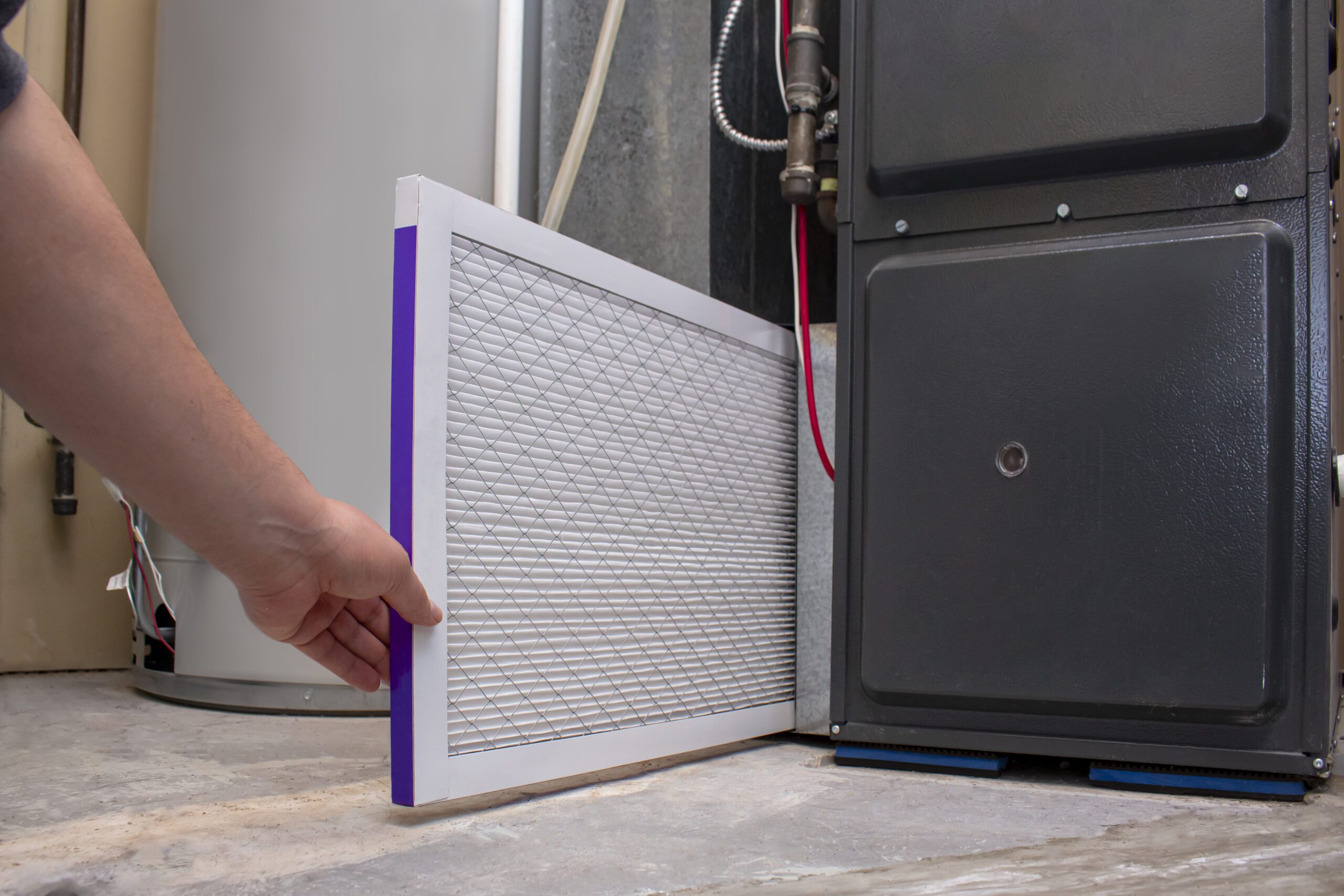
While it doesn't require a specific brand, the high-performance blower motor works best with high-surface-area media filters (4 or 5 inches thick). Thin 1-inch filters tend to clog quickly and can create high static pressure, which reduces the efficiency of the variable-speed motor and increases wear.
How quiet is the Infinity 98 during operation?
It is one of the quietest furnaces on the market. Because it spends most of its time operating at the lowest capacity (40%), the blower and inducer motors run at very low RPMs. The fully insulated cabinet further reduces sound, making it almost imperceptible from another room.
Final Recommendation: Is This Furnace Right for You?
The Carrier Infinity 98 with Greenspeed Intelligence is an ideal choice for homeowners who prioritize maximum energy efficiency, precise humidity control, and silent operation. It is particularly well-suited for larger homes where temperature imbalances are common or for residents in regions with long, harsh winters where gas consumption is a major household expense.
If you are looking for the most budget-friendly option for a rental property or a home you intend to sell shortly, the Infinity 98 may be more furnace than you need. However, for a "forever home" in 2026, it represents a forward-thinking investment in comfort and sustainability. Before purchasing, ensure you receive a load calculation from a qualified HVAC contractor to verify that your ductwork and home size are a perfect match for this high-performance machine.