The primary ICD-10-CM code used to report pain in the right buttock is M79.604 (Pain in right leg). While "buttock" is not always explicitly named in the code title, the gluteal region is anatomically classified within the lower limb sections of the ICD-10 manual. For nerve-related pain radiating to the right buttock, M54.31 (Sciatica, right side) is the appropriate specific diagnosis.
Clinical coding for right buttock pain requires navigating a hierarchical structure where the "best" code depends entirely on the underlying etiology and the precise anatomical location of the discomfort. In the 2026 medical landscape, specificity is the cornerstone of both clinical documentation and insurance reimbursement. Using a general "pain" code when a more specific diagnosis like bursitis or sciatica is available can lead to claim denials or audits.
The Hierarchy of Coding Gluteal Pain in 2026
To understand why M79.604 is the standard starting point, one must look at how the International Classification of Diseases, 10th Revision, Clinical Modification (ICD-10-CM) organizes the human body. The gluteal region—comprising the gluteus maximus, medius, and minimus muscles—is considered part of the "lower limb."
When a clinician documents "right buttock pain" without a more specific diagnosis (such as a muscle strain or a nerve impingement), the coder must look to the M79 series. The breakdown for this specific code is as follows:
- M79: Other and unspecified soft tissue disorders, not elsewhere classified.
- M79.6: Pain in limb, hand, foot, fingers, and toes.
- M79.60: Pain in unspecified limb.
- M79.604: Pain in right leg.
In clinical practice, "leg" serves as the umbrella term for the entire lower extremity, starting from the hip/buttock region down to the ankle. However, relying solely on a general pain code is often insufficient for high-level diagnostic reporting in 2026.
Differential Diagnosis and Specific Coding Variations
Right buttock pain is rarely an isolated symptom without a cause. To ensure accurate billing and patient records, the diagnosis must reflect the suspected or confirmed pathology. Below are the most common specific codes that supersede the general "pain in leg" code.
Sciatica and Nerve-Related Pain (M54.31)
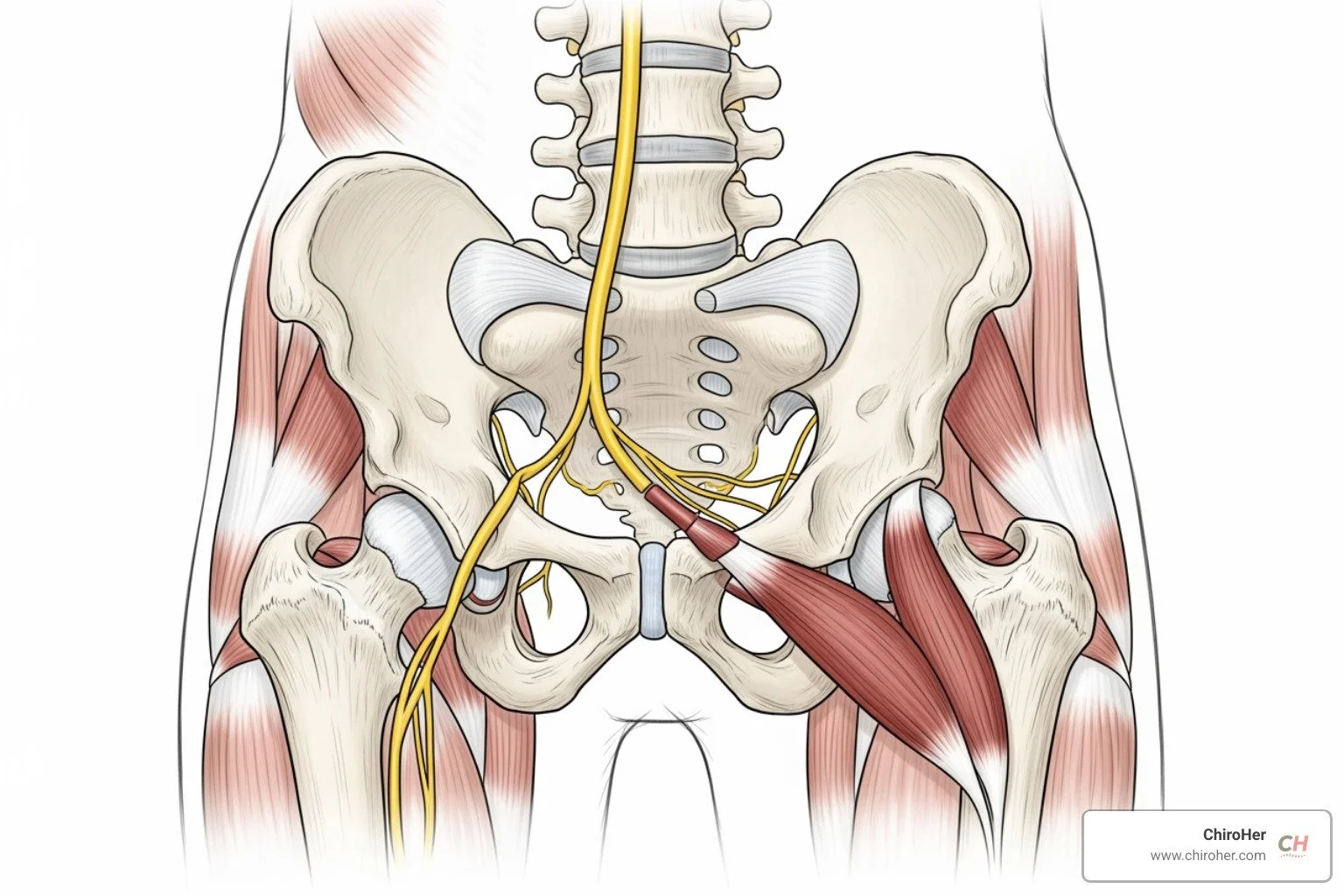
If the pain in the right buttock is described as sharp, shooting, or radiating down the back of the thigh, it is frequently attributed to the sciatic nerve. In these instances, M54.31 (Sciatica, right side) is the mandatory code. Sciatica is a symptom of an underlying condition, such as a herniated disc or spinal stenosis, but when the pain is the primary reason for the encounter, M54.31 provides the necessary laterality (specifying the right side).
Hip-Related Buttock Pain (M25.551)
Frequently, pain felt in the buttock is actually referred pain from the hip joint. If the physician determines that the pain originates within the joint itself—perhaps due to osteoarthritis or labral tears—the code M25.551 (Pain in right hip) is more accurate than a soft tissue pain code. This distinction is vital because it shifts the focus from the muscles (soft tissue) to the skeletal joint structure.
Gluteal Tendinitis and Bursitis (M76.01)
For localized pain over the bony prominence of the hip or the upper gluteal muscles, the issue may be inflammatory. M76.01 (Gluteal tendinitis, right hip) covers conditions like "dead butt syndrome" or gluteus medius tendinopathy. If the inflammation is within the bursa (the fluid-filled sacs that cushion the joint), codes like M70.61 (Trochanteric bursitis, right hip) might be used, although this is technically on the lateral side of the buttock/hip.
The Role of Laterality in 2026 Billing Standards
ICD-10-CM utilizes "laterality" to provide a clear picture of which side of the body is affected. This is not merely a clerical detail; it is a legal and financial requirement. As of 2026, the Centers for Medicare & Medicaid Services (CMS) and private insurers heavily scrutinize "unspecified" codes.
A code ending in '1' or '4' typically denotes the right side, while '2' or '5' denotes the left. For example:
- M79.604: Right leg/buttock pain.
- M79.605: Left leg/buttock pain.
- M79.606: Unspecified leg (avoid this in 2026).
Failure to specify the side of the body can result in a "Code to Highest Level of Specificity" error, which is one of the leading causes of automated claim rejections in modern electronic health record (EHR) systems.
Comparative Table of ICD-10 Codes for Right Buttock Pain
The following table serves as a quick reference for clinicians and medical billers to differentiate between common codes associated with discomfort in the right gluteal region.
| ICD-10 Code | Description | Clinical Context |
|---|---|---|
| M79.604 | Pain in right leg | General, non-specific pain in the right gluteal or leg region. |
| M54.31 | Sciatica, right side | Pain radiating from the lower back through the right buttock and down the leg. |
| M25.551 | Pain in right hip | Pain perceived in the buttock that originates from the hip joint. |
| M76.01 | Gluteal tendinitis, right hip | Inflammation of the tendons in the right gluteal muscles. |
| S33.6XXA | Sprain of sacroiliac joint, initial | Traumatic injury causing pain in the lower back/buttock junction. |
| M54.50 | Low back pain, unspecified | Used when buttock pain is a secondary symptom of general lumbar strain. |
| R10.31 | Right lower quadrant pain | Used if the pain is deep/pelvic and potentially organ-related. |
Documentation Requirements for Medical Necessity
In 2026, simply stating "patient has pain" is no longer sufficient to justify many physical therapy or orthopedic interventions. Documentation must support the chosen ICD-10 code through the following details:
- Onset and Nature: Was the pain sudden (acute) or long-standing (chronic)? Is it dull, sharp, or burning?
- Exact Anatomical Site: The notes should specify "right gluteal region" or "right ischial tuberosity" to support the use of M79.604 or more specific tendon codes.
- Radiation: Does the pain stay in the buttock, or does it move? If it moves down the leg, the documentation must support a sciatica diagnosis (M54.31).
- Associated Symptoms: Are there signs of muscle weakness, numbness, or tingling? This helps distinguish between muscle strain and nerve entrapment (like Piriformis Syndrome).
Piriformis Syndrome: A Coding Challenge
Piriformis Syndrome occurs when the piriformis muscle in the buttock compresses the sciatic nerve. Interestingly, there is no single, unique ICD-10 code for "Piriformis Syndrome." Most experts recommend coding it as G57.01 (Lesion of sciatic nerve, right lower limb) or using M79.604 in conjunction with a muscle disorder code. Accurate documentation of the piriformis involvement is essential for justifying specialized treatments like Botox injections or deep tissue release.
Common Mistakes in Buttock Pain Coding
Even experienced coders can encounter pitfalls when dealing with the gluteal region. Awareness of these common errors can prevent revenue cycle disruptions.
- Using "Unspecified" Codes: In 2026, using M79.603 (Pain in leg, unspecified) when the notes clearly state "right side" is a primary reason for audits.
- Confusing Hip Pain with Buttock Pain: While they are anatomically close, the ICD-10 chapters distinguish between "Joint" (M25) and "Soft Tissue" (M79). If the problem is muscular, do not use the hip joint code.
- Ignoring "Excludes1" Notes: The ICD-10 manual contains "Excludes1" notes, which mean "not coded here." For example, if a patient has a traumatic injury (like a fall), you should use an "S" category code (Injuries) rather than an "M" category code (Musculoskeletal).
- Overlooking Secondary Causes: If the buttock pain is caused by a pressure ulcer (common in sedentary or elderly patients), the primary code must be from the L89 (Pressure ulcer) category, not a simple pain code.
Patient Impact: Why the Correct Code Matters
For the patient, the ICD-10 code on their "Explanation of Benefits" (EOB) affects more than just the doctor's payment. It dictates the type of follow-up care that insurance will authorize.
For instance, if a doctor uses M79.604 (General pain), an insurance company might require a period of "conservative management" (like rest and over-the-counter anti-inflammatories) before approving an MRI. However, if the doctor uses M54.31 (Sciatica) and documents neurological deficits, the path to advanced imaging or specialist referrals may be significantly shorter.
Furthermore, in 2026, many health systems use these codes to track "population health" metrics. Accurate coding ensures that patients with chronic gluteal pain are correctly identified for wellness programs or specialized orthopedic pathways.
Frequently Asked Questions
Is there a specific code for Piriformis Syndrome in 2026?
No, there is no dedicated "Piriformis Syndrome" code in the ICD-10-CM 2026 set. It is typically coded as G57.01 (Lesion of sciatic nerve, right lower limb) because the syndrome involves the sciatic nerve, or as M79.604 if the nerve involvement is not yet confirmed.
Can I use M54.5 (Low back pain) for buttock pain?
While buttock pain often accompanies low back pain, M54.50 should only be used if the primary site of discomfort is the lumbar region. If the pain is localized strictly to the right buttock, M79.604 is more precise. If both are present, both codes may be reported, provided they are supported by the clinical note.
What is the difference between M79.604 and M25.551?
M79.604 is used for pain in the soft tissues (muscles, fat, skin) of the right leg/buttock. M25.551 is specifically for pain within the right hip joint itself. Use M25.551 if the pain is aggravated by moving the hip joint in its socket, and M79.604 if the pain is closer to the surface or related to muscle use.
Why does my bill say "Pain in Right Leg" when my buttock hurts?
This is due to the anatomical classification of the ICD-10 manual. The manual groups the gluteal region under the "limb" category. Therefore, "Pain in right leg" is the formal descriptor for pain anywhere from the right hip/buttock down to the foot when a more specific structure (like a specific tendon) isn't named.
Does the code change if the pain is caused by an injury?
Yes. If the right buttock pain is the result of a recent injury (like a fall or a sports accident), you should use a code from the "S" section, such as S39.012A (Strain of muscle, fascia and tendon of lower back and pelvis, initial encounter).
Practical Recommendation for 2026
When documenting or coding right buttock pain, the most effective strategy is to move from the general to the specific. Start by confirming the laterality (Right). Next, determine if the pain is Muscular/Soft Tissue (M79.604), Neurological (M54.31), or Joint-related (M25.551).
For patients, if you see a code on your medical record that seems "off"—such as "pain in leg" when your hip is the issue—ask your provider’s billing department for a review. Accurate coding in 2026 ensures that your medical history is precise and that your insurance coverage for physical therapy or specialist consultations is processed without unnecessary delays.
Note: This information is intended for educational purposes and reflects ICD-10-CM guidelines for the 2026 fiscal year. For legal or professional medical billing advice, consult the latest official CMS guidelines or a certified professional coder.