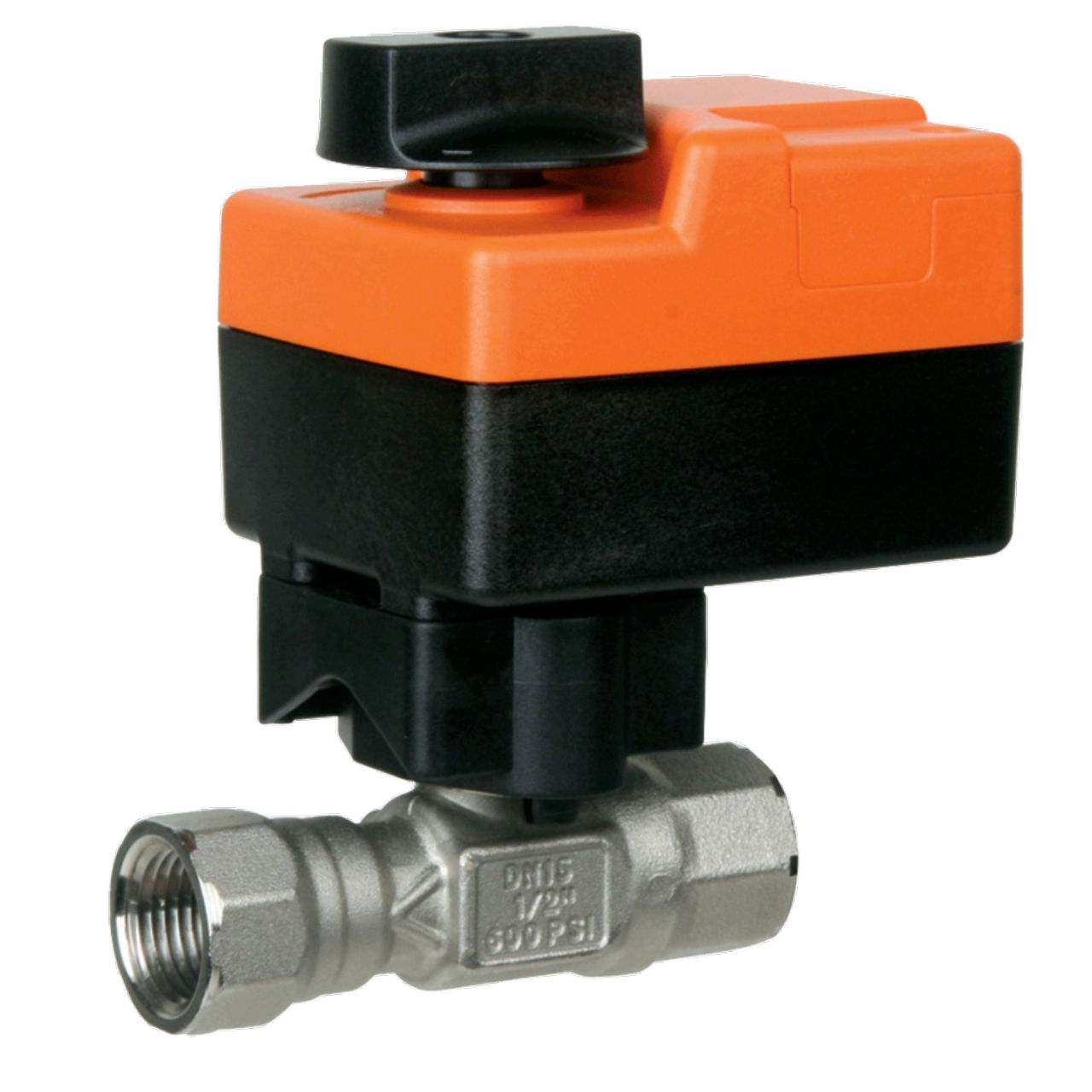
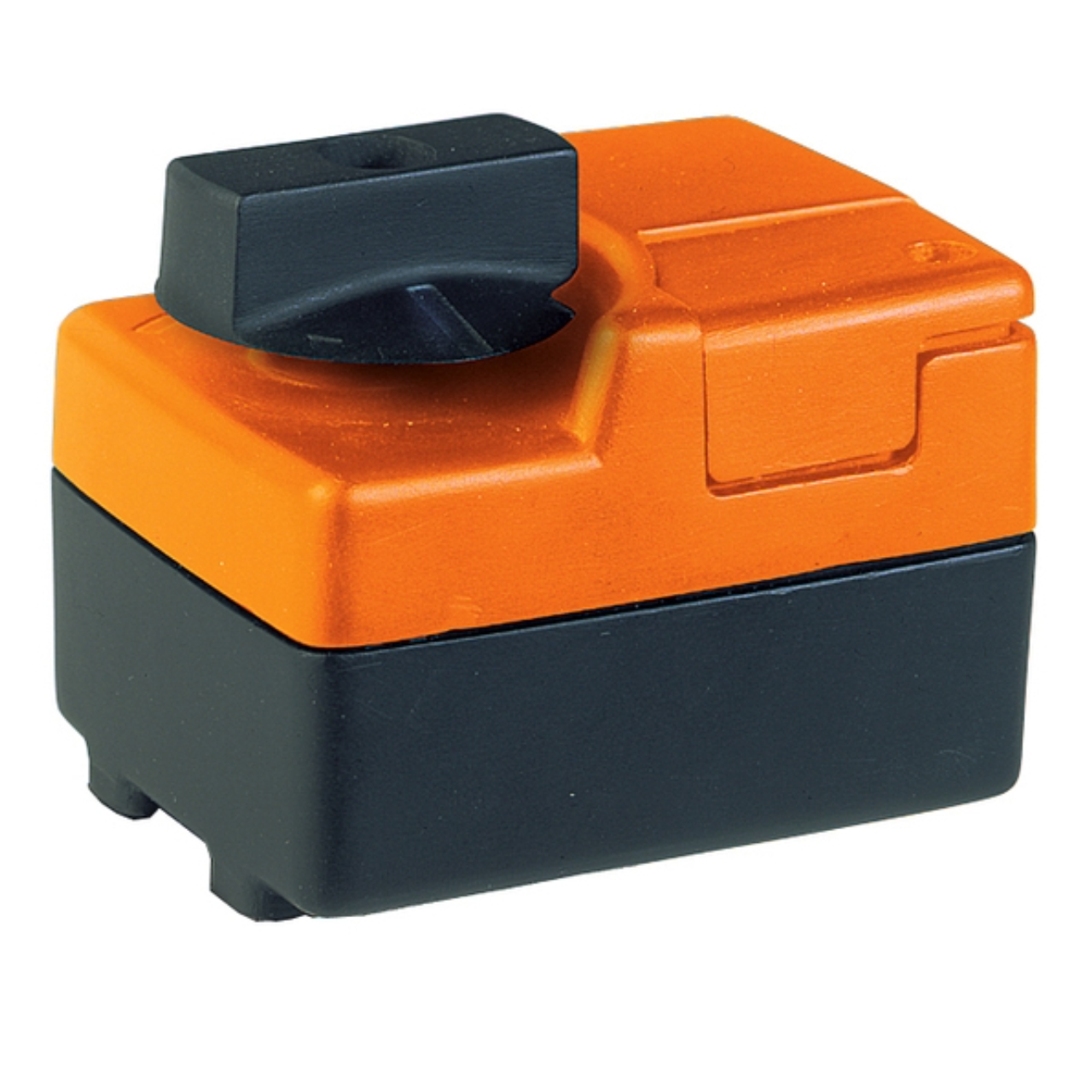
The Belimo TR24-3 is a sub-compact, non-spring return electronic actuator designed specifically for HVAC applications requiring on/off or floating point control. Operating on a 24V AC/DC power supply, it delivers 18 in-lb (2 Nm) of torque, making it an ideal solution for small dampers and zone valve assemblies in tight mechanical spaces.
As of 2026, the TR24-3 remains a cornerstone of the Belimo sub-compact lineup, prized for its reliability, ease of installation, and electronic stall protection. While larger actuators in the Belimo family handle massive air handling units, the TR series is the precision workhorse for terminal units and zone-level control. This overview examines the technical architecture, wiring configurations, and practical implementation of the TR24-3 to ensure optimal performance in modern building automation systems.
Understanding the Belimo TR Series: Sub-Compact Design Philosophy
The TR (Top-Run) series was engineered to bridge the gap between heavy-duty industrial actuators and the need for miniature, precise control in light-commercial and residential HVAC environments. The TR24-3, specifically, is a non-spring return (NSR) model. In the context of 2026 building standards, NSR actuators are frequently selected for applications where "fail-in-place" logic is preferred over a mechanical spring-return safety cycle.
The physical footprint of the TR24-3 is one of its most significant advantages. In modern construction, mechanical plenums and VAV (Variable Air Volume) boxes are increasingly crowded. The TR24-3’s low profile allows it to be mounted on valve linkages or damper shafts where traditional actuators simply would not fit. Despite its small size, it maintains the same robust build quality and 5-year warranty standards that have made Belimo a market leader.
Key Technical Specifications of the TR24-3
To properly integrate the TR24-3 into a Control System, engineers and technicians must adhere to its electrical and mechanical boundaries. Below is a breakdown of the core parameters as defined by current technical documentation.
Electrical Requirements and Consumption
The TR24-3 is designed for 24V systems. Specifically, it accepts an input voltage of 24V AC at 50/60 Hz or 24V DC. The power consumption is remarkably low, which is a critical factor when calculating the load on a 24V transformer for a large-scale building project.
- Power Consumption (Running): 1 W
- Power Consumption (Holding): 0.2 W
- Transformer Sizing: 1 VA (Class 2 power supply)
Mechanical Performance
The torque output is fixed at 18 in-lb [2 Nm]. This is sufficient for dampers up to approximately 4.5 square feet (assuming a standard low-torque damper), though actual sizing depends on the damper's seal construction and air pressure.
- Angle of Rotation: Max 95°, adjustable with mechanical stops.
- Running Time: Typically 90 seconds for a full 90-degree stroke. This provides a steady, predictable response for floating control loops.
- Direction of Rotation: Reversible via a physical switch on the actuator housing.
Environmental Limits
- Enclosure Rating: NEMA 1 / IP40. This indicates the unit is protected against solid objects larger than 1mm but has no specific protection against water ingress. It is strictly an indoor-rated actuator.
- Ambient Temperature Range: -22°F to +122°F [-30°C to +50°C].
- Noise Level: Less than 35 dB(A), making it virtually silent in occupied spaces.
Electrical Configuration and Wiring Protocols
The "3" in TR24-3 signifies its control type: 3-point or "floating" control. It can also be wired for standard on/off operation. Understanding the wiring terminals is essential for avoiding damage to the internal microprocessor.
Wiring for Floating Point Control
Floating control is often used when a thermostat or controller provides two digital outputs—one to drive the actuator clockwise (CW) and one to drive it counter-clockwise (CCW).
- Terminal 1 (Black): Common / Negative.
- Terminal 2 (Red): Hot / Positive. Applying power here drives the actuator in one direction.
- Terminal 3 (White): Hot / Positive. Applying power here drives the actuator in the opposite direction.
If power is removed from both Terminal 2 and Terminal 3, the actuator remains in its current position. This "float" capability allows the controller to position a damper or valve at any percentage of its stroke by timing the duration of the pulses.
Wiring for On/Off Control
For simple on/off applications, Terminal 1 is connected to Common, and Terminal 2 is connected to a constant 24V source. A control switch is then placed on the wire leading to Terminal 3. When the switch closes, the actuator moves to one end of its stroke; when it opens, the actuator moves back to the starting position.
Control Modes: Floating Point vs. On/Off Explained
In the 2026 HVAC landscape, the distinction between these control modes is vital for energy efficiency.
On/Off Control is binary. The actuator is either fully open or fully closed. This is common in simple zone heating or cooling where precise modulation isn't required. For example, a TR24-3 might be mounted on a ball valve that controls hot water flow to a radiant floor loop.
Floating Point Control (also known as Tri-state control) allows for a pseudo-proportional response without the cost of a 0-10VDC modulating actuator. The Building Automation System (BAS) calculates how long it takes the actuator to move from 0% to 100%. If the system needs 50% airflow, it will send a signal to Terminal 2 for exactly 45 seconds (assuming a 90-second run time). The internal brushless DC motor ensures that these timings remain consistent over years of operation.
Installation Guidelines for HVAC Systems
Proper installation of the TR24-3 prevents premature mechanical failure and ensures accurate control. Belimo provides several mounting options, often involving the "Universal Spindle" or specific valve linkages.
Damper Mounting
When mounting directly to a damper shaft, the TR24-3 uses a universal clamp that can accommodate shafts ranging from 1/4" to 5/8" in diameter.
- Orientation: The actuator can be mounted in any orientation, but it is best practice to avoid mounting it upside down in areas where condensation might drip from pipes.
- Anti-Rotation: A small "Z-style" anti-rotation strap must be secured to the ductwork. This prevents the body of the actuator from spinning while it attempts to turn the damper shaft.
Valve Mounting
The TR24-3 is frequently paired with Belimo’s B2 or B3 series Pressure Independent Characterized Control Valves (PICCV) or standard Characterized Control Valves (CCV). In these cases, the actuator snaps onto a linkage (like the WNV or ZG-TR series) without the need for specialized tools.
Manual Override
One of the most useful features for field technicians is the manual override button located on the top of the housing. When pressed, it disengages the gear train, allowing the technician to manually position the damper or valve for testing and commissioning. It is important to ensure the button is fully released before returning the unit to automatic control.
Performance Advantages and Limitations
While the TR24-3 is a high-quality component, it is designed for specific use cases. Understanding its limits is as important as understanding its strengths.
Advantages
- Stall Protection: The TR24-3 is electronically protected against overload. It does not require end switches to stop the motor. When it reaches the end of its stroke or hits a mechanical obstruction, it automatically stops and holds its position. This prevents the motor from burning out.
- Longevity: Using a brushless motor significantly increases the MTBF (Mean Time Between Failures) compared to cheaper brushed motor alternatives found in some residential-grade equipment.
- Silent Operation: At under 35 decibels, it is ideal for installation in hotel rooms, classrooms, and offices where mechanical noise is a concern.
Limitations
- Torque Constraints: With only 18 in-lb of torque, it cannot be used on large multi-blade dampers or high-pressure steam valves. Using it on an oversized load will lead to "hunting" or failure to reach the end-stop.
- Non-Spring Return: Because there is no internal spring, the actuator requires power to move in either direction. If the building loses power, the damper or valve will stay in its current position. For "fail-safe" requirements (such as preventing a coil from freezing), a spring-return model like the TF or LF series should be used instead.
Actuator Comparison Table
| Feature | TR24-3 (Floating) | TR24-SR (Modulating) | LM24-3 (Standard) |
|---|---|---|---|
| Control Type | Floating / On-Off | 2-10V DC / 4-20mA | Floating / On-Off |
| Torque | 18 in-lb [2 Nm] | 18 in-lb [2 Nm] | 45 in-lb [5 Nm] |
| Power Supply | 24V AC/DC | 24V AC/DC | 24V AC/DC |
| Running Time | 90 Seconds | 90 Seconds | 150 Seconds |
| Power (Running) | 1 W | 0.5 W | 1.5 W |
| Manual Override | Push-button | Push-button | Push-button |
| Size Category | Sub-Compact | Sub-Compact | Compact |
Maintenance, Manual Override, and Troubleshooting
In the year 2026, predictive maintenance is standard, but the TR24-3 remains a "low-maintenance" device. It does not require lubrication or periodic adjustment of internal gears.
Common Troubleshooting Steps
- Actuator does not move: Verify 24V at Terminal 1 and either Terminal 2 or 3. If voltage is present but there is no movement, check if the manual override button is stuck in the "down" position.
- Actuator moves in the wrong direction: This is usually a wiring error or a misconfiguration of the direction switch. Simply flip the "Direction of Rotation" switch on the actuator rather than rewiring the terminals.
- Actuator makes a clicking noise: This usually indicates a stripped gear or a mechanical obstruction in the damper/valve that exceeds the 18 in-lb torque limit. Inspect the linkage for debris or corrosion.
- Inconsistent positioning in Floating Control: This is often caused by a "time-sync" issue in the BAS controller. Ensure the controller's runtime setting matches the 90-second runtime of the TR24-3.
Practical Applications in HVAC
The TR24-3's versatility allows it to be used in various scenarios across commercial and residential sectors.
- VAV Terminal Units: Small VAV boxes often use TR actuators to adjust the air damper based on room temperature.
- Baseboard Heating: Used on zone valves to control the flow of hot water to individual rooms in residential complexes.
- Fan Coil Units (FCUs): The TR24-3 is the standard choice for controlling the heating and cooling valves inside small fan coil units located in ceiling plenums.
- Bypass Dampers: In small residential zoned systems, the TR24-3 can manage a bypass damper to relieve static pressure when only one zone is calling for air.
Frequently Asked Questions
Can I use the TR24-3 with a 120V power supply?
No. The TR24-3 is strictly a 24V AC/DC device. Connecting it directly to 120V line voltage will result in immediate and permanent damage to the electronic components. You must use a step-down transformer (Class 2) to provide the correct 24V power.
Is the TR24-3 suitable for outdoor use?
Standard TR24-3 actuators are NEMA 1 / IP40 rated, meaning they are not protected against rain, snow, or heavy moisture. For outdoor applications, the actuator must be placed inside a NEMA 4X rated weather shield or replaced with a model specifically designed for outdoor environmental conditions.
What is the difference between TR24-3 and TR24-3-S?
The "-S" suffix in Belimo nomenclature typically denotes the presence of an auxiliary switch. An auxiliary switch allows the actuator to send a dry-contact signal back to the controller or to another device (like a pump or fan) once it reaches a certain point in its stroke. Standard TR24-3 models do not include this switch unless specified.
How do I reverse the rotation of a TR24-3?
There is a small slide switch located on the housing of the actuator. Moving this switch will reverse the internal logic of the actuator, changing which terminal (2 or 3) corresponds to clockwise and counter-clockwise movement. This can be done while the unit is powered, though it is best to do it while the actuator is stationary.
Can the TR24-3 be used for smoke or fire safety applications?
No. The TR24-3 is a "control" actuator, not a "safety" actuator. Fire and smoke dampers require specialized actuators (like the Belimo FSLF or FSNF series) that are UL555S rated and feature high-temperature internal components and specific spring-return speeds.
Recommendation for 2026 Implementations
When selecting an actuator for small-scale zone control in 2026, the Belimo TR24-3 remains the gold standard for reliability in non-safety-critical applications. For engineers, its low power consumption (1 VA sizing) allows for more actuators per transformer, reducing total installation costs. For technicians, the tool-free mounting on compatible valve linkages and the simple 3-wire control scheme make it one of the easiest components to service in the field.
If your application requires the actuator to return to a "closed" or "safe" position during a power outage, you should opt for the TF24 series instead. However, for standard VAV and zone valve modulation where fail-in-place is acceptable, the TR24-3 offers the best balance of cost, size, and longevity.