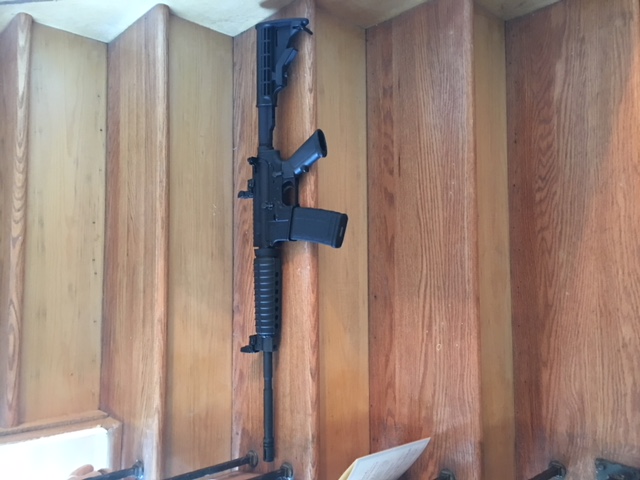
The AR-15 is not an assault rifle because it lacks the selective-fire capability required for that classification. While it shares a visual lineage with military platforms, the civilian AR-15 functions exclusively as a semi-automatic firearm, firing only one round per trigger pull. Understanding this distinction requires navigating complex technical terminology, historical development, and legal definitions that define modern firearm classification.
Defining the Assault Rifle Classification
To understand why the AR-15 is categorized differently than an assault rifle, one must examine the industry-standard definition of an assault rifle. The term "assault rifle" is a technical designation developed during the mid-20th century, specifically identifying a firearm that meets four critical engineering criteria:
- Selective Fire: The firearm must be capable of switching between semi-automatic fire (one round per trigger pull) and automatic fire (continuous fire while the trigger is depressed) or burst fire.
- Intermediate Cartridge: It must fire a round that is smaller and less powerful than traditional full-power battle rifle cartridges (such as .30-06 or .308 Winchester) but more powerful than handgun ammunition.
- Detachable Magazine: The rifle must utilize a high-capacity detachable magazine for rapid reloading.
- Effective Range: It must be designed for an effective range of roughly 300 meters or more.
The military version of the AR-15 platform, officially designated the M16, meets these criteria because it features a selector switch allowing for full-automatic or burst capability. In contrast, the civilian-market AR-15 is mechanically incapable of automatic fire. Its trigger group is designed strictly for semi-automatic operation, meaning the user must physically release and pull the trigger again to fire each subsequent round.
The Evolution of the Platform
The term "AR-15" originated in the late 1950s when the ArmaLite division of Fairchild Engine and Airplane Corporation developed the platform. The "AR" in the name does not stand for "Assault Rifle," as is commonly misunderstood by the public; it stands for "ArmaLite Rifle." The company originally designed the rifle as a lightweight, small-caliber weapon system for military and law enforcement use.
In 1959, ArmaLite sold the rights to the design to Colt’s Patent Firearms Manufacturing Company. Colt eventually developed the M16 for the United States military, which saw extensive service starting in the 1960s. Recognizing the commercial potential for a sporting version, Colt introduced the semi-automatic-only AR-15 to the civilian market. Over the decades, the patent expired, allowing various manufacturers to produce their own versions of the rifle. Today, the platform has become one of the most modular and popular firearm designs in the United States, used for competitive shooting, hunting, and personal defense.
Distinguishing Mechanics: Semi-Automatic vs. Automatic
The fundamental difference between a civilian AR-15 and an assault rifle lies in the "fire control group"—the set of parts inside the receiver that regulates the hammer's movement.
Semi-Automatic Operation
In a semi-automatic AR-15, each trigger pull releases the hammer to strike the firing pin. The energy from the ignited cartridge cycles the bolt carrier group back, which ejects the spent casing, cocks the hammer, and strips a new round from the magazine. The hammer is then caught by a "disconnector," which prevents it from dropping again until the trigger is released and pulled a second time. This physical constraint is built into the design to ensure the rifle cannot fire in a continuous, automatic string.
Automatic Operation
An assault rifle, such as the M16 or the M4 carbine, includes additional components—specifically an "auto sear"—that override the disconnector. When the fire selector is set to "auto," the auto sear keeps the hammer released until the bolt carrier group is fully locked, allowing for rapid, continuous cycling as long as the trigger is held. Modifying a civilian AR-15 to function in this manner is a violation of the National Firearms Act (NFA) of 1934 and the Firearm Owners Protection Act of 1986, which heavily restricts civilian ownership of machine guns.
Technical Comparison Table
| Feature | Civilian AR-15 | Military M16/M4 |
|---|---|---|
| Fire Mechanism | Semi-Automatic | Selective Fire (Full-Auto/Burst) |
| Trigger Pull | One round per pull | Multiple rounds per pull (if selected) |
| Internal Parts | Standard Semi-Auto Group | Auto Sear/Full-Auto Group |
| Legal Status | Standard Firearm | NFA Controlled (Machine Gun) |
| Primary Use | Sport/Hunting/Defense | Military/Law Enforcement |
Common Misconceptions and Nomenclature
The confusion surrounding the "assault rifle" label stems largely from the similarity in external appearance. Because the AR-15 shares its silhouette, materials, and ergonomic profile with the military M16, observers often conflate the two. This phenomenon is frequently exacerbated by the popular, though imprecise, term "assault weapon."
"Assault weapon" is a political and legal term, not a technical one. It originated in legislative efforts to regulate certain firearms based on cosmetic features—such as pistol grips, collapsible stocks, or threaded barrels. These features relate to the ergonomics or customization of the rifle rather than its lethality or mechanical function. Because the AR-15 possesses several of these aesthetic characteristics, it is often swept into "assault weapon" legislation, leading to the broader public perception that the rifle itself is an assault rifle.
Regulatory Landscape and Legal Status
In the United States, federal law differentiates strictly between semi-automatic firearms and machine guns. The Bureau of Alcohol, Tobacco, Firearms and Explosives (ATF) classifies the civilian AR-15 as a rifle. Ownership of a rifle does not require the same rigorous federal background check, tax stamp, and registration process required for Title II weapons (which include machine guns and short-barreled rifles).
While specific states may impose their own restrictions on the purchase or sale of semi-automatic rifles based on state-level definitions of "assault weapons," these laws do not change the technical classification of the firearm itself. The AR-15 remains, by definition, a semi-automatic rifle. Efforts to regulate these firearms often center on their modularity, which allows owners to easily swap parts and accessories, further fueling the debate over their classification compared to traditional hunting rifles.
Why Technical Accuracy Matters
Maintaining accurate terminology is essential for both public safety discourse and legal clarity. When experts, legislators, and the public use incorrect terms, it creates friction in policy development and public understanding.
- Legal Precision: Laws are interpreted based on specific definitions. If a statute defines an "assault rifle" as a machine gun, but the public uses the term to describe any black rifle, it can lead to confusion in the court system and among law enforcement officials who must enforce these regulations.
- Safety Education: Understanding how a firearm functions is a core component of firearm safety. By identifying the AR-15 accurately as a semi-automatic platform, users can better understand the responsibilities associated with its operation, recoil, and cycle of fire.
- Constructive Policy: Meaningful discussion regarding firearm policy requires a shared vocabulary. By clarifying that the AR-15 lacks the selective-fire capabilities of military-grade assault rifles, policymakers can focus on the specific attributes of the platform that are relevant to current discussions on public safety and ownership rights.
Frequently Asked Questions
Is the AR in AR-15 short for Assault Rifle?
No. The "AR" stands for "ArmaLite Rifle," named after the original manufacturer, ArmaLite. The "15" refers to the model number of the project developed by the company in the 1950s.
Why do some people call the AR-15 an assault rifle?
The confusion stems from the visual similarity between the civilian AR-15 and the military M16. Because they share a design heritage and aesthetic features, the public often incorrectly applies the "assault rifle" label to the civilian version.
Can an AR-15 be converted to a machine gun?
No, not legally or easily. Federal law strictly prohibits the modification of semi-automatic firearms into automatic weapons. Civilian AR-15 receivers are designed differently than military receivers to prevent the installation of components like the auto sear.
What is the difference between an "assault rifle" and an "assault weapon"?
"Assault rifle" is a technical term for a selective-fire military weapon. "Assault weapon" is a political and legal term used in various jurisdictions to categorize certain firearms, often based on cosmetic features rather than mechanical function.
Does the AR-15 fire faster than a hunting rifle?
The cyclic rate of fire is generally irrelevant for a semi-automatic firearm, as it is limited by the speed at which the user can pull the trigger. Most modern sporting rifles, regardless of their aesthetic, operate on the same semi-automatic principles and do not differ significantly in their rate of fire.
Moving Forward with Informed Understanding
The debate surrounding the AR-15 is complex, involving legal, historical, and technical factors. By recognizing that the AR-15 is a semi-automatic rifle and not a selective-fire assault rifle, individuals can participate in more accurate and productive conversations regarding its role, its regulation, and its classification. For those seeking to understand the platform further, the best next step is to consult the official documentation provided by manufacturers or engage with certified firearm instructors who provide education on the mechanical operation and safe handling of modern sporting rifles.