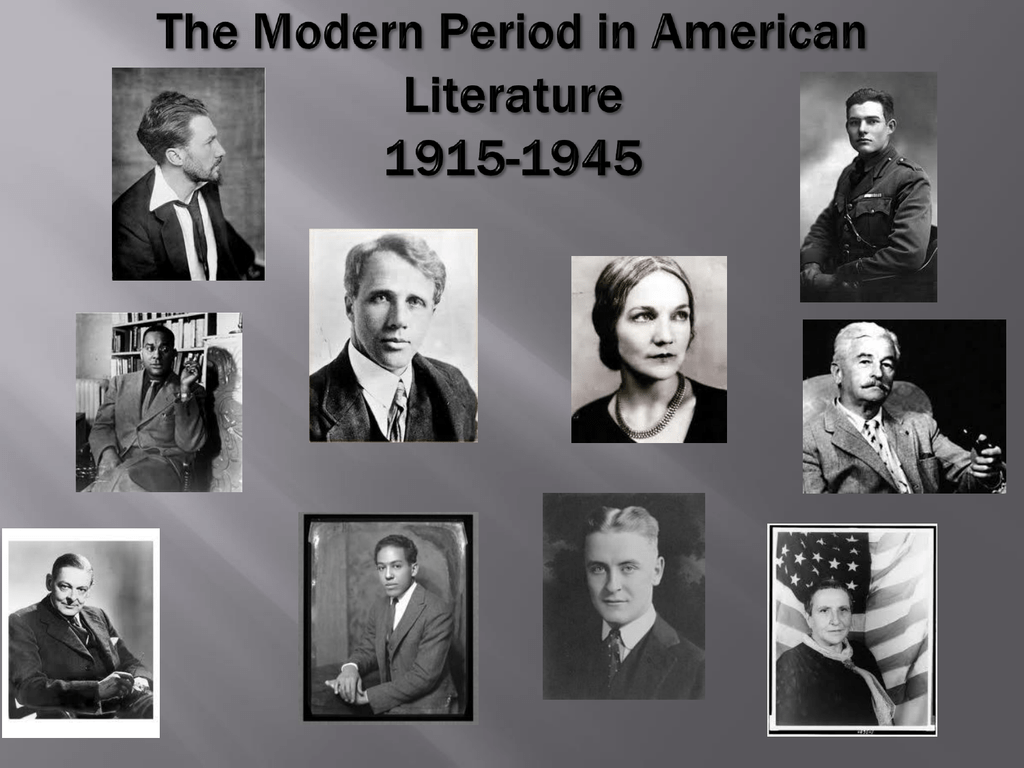
American literature poetry encompasses a vast, evolving tradition of verse that reflects the unique cultural, historical, and sociopolitical shifts of the United States. To engage with this field effectively, readers must distinguish between the varying movements—from the Transcendentalists of the 19th century to the Confessional poets of the 20th—while utilizing archival resources, academic databases, and critical anthologies to locate primary texts and scholarly commentary.
Defining the Scope of American Poetry
American literature poetry is not a monolithic entity but a collection of distinct voices and stylistic revolutions. To understand it, one must first identify the primary eras and movements that shaped the canon. The trajectory of American verse typically begins with the formal constraints of early colonial poetry, shifts into the bold, individualistic innovations of Walt Whitman and Emily Dickinson, and transitions into the experimental modernism of the 20th century.
When approaching this subject, it is helpful to categorize works not just by chronology, but by thematic intent. Poetry in America has historically functioned as a record of the national consciousness, addressing themes such as the frontier, industrialization, racial identity, and the struggle for personal autonomy within a democratic framework. Recognizing these thematic currents allows a researcher to move beyond superficial reading and engage in deeper literary analysis.
Core Movements and Essential Figures
Understanding the landscape of American poetry requires familiarity with key historical movements. These movements provide the necessary context for why specific poets utilized certain forms, metaphors, and structures.
The 19th Century: Transcendentalism and Individualism
The mid-1800s saw a departure from European models. Walt Whitman, particularly with Leaves of Grass, introduced free verse as a standard for American expression, emphasizing the "common man." Simultaneously, Emily Dickinson operated in near-total isolation, utilizing compressed syntax and unconventional punctuation to explore the interiority of the human soul. These two figures established the foundational dialectic of American poetry: the outward-facing democratic voice and the inward-facing meditative voice.
The 20th Century: Modernism and Beyond
Modernism sought to "make it new," breaking away from Victorian sentimentality. T.S. Eliot and Ezra Pound were instrumental in shifting the focus toward complex, often fragmented, imagery and intellectual density. Later in the century, the Harlem Renaissance brought a vital surge of African American voices, such as Langston Hughes and Gwendolyn Brooks, who redefined the American experience by centering the Black perspective. By mid-century, the Confessional movement—represented by Sylvia Plath and Robert Lowell—shifted the lens back to personal trauma and domestic psychological landscape.
Essential Resources for Study and Research
Accessing reliable versions of American literature poetry is a critical step for both students and scholars. Because poetry relies on specific line breaks, indentation, and punctuation, poor-quality digital scans can fundamentally alter a poem's meaning.
Navigating Academic Databases
For those conducting formal research, academic repositories provide the most stable versions of texts. The following resources are standard in the field:
- The Poetry Foundation: Offers an extensive, searchable archive of poets and poems, often accompanied by critical introductions.
- Library of Congress (American Folklife Center): Contains digitized audio recordings and manuscripts that provide historical context for the oral traditions within American poetry.
- JSTOR and Project MUSE: These databases provide access to peer-reviewed literary criticism, which is essential for understanding how a poem’s interpretation has evolved over decades.
Selecting Anthologies
When purchasing physical collections, prioritize anthologies that include editorial notes on the provenance of the texts. A high-quality anthology will explicitly state whether it is using the "author’s preferred edition" or a "definitive critical edition."
| Feature | Scholarly Anthology | General Trade Anthology |
|---|---|---|
| Editorial Notes | Extensive, explaining textual variants | Minimal or absent |
| Chronology | Strictly organized by period/movement | Often thematic or arbitrary |
| Contextual Essays | Peer-reviewed historical analysis | Introductory biographical sketches |
| Intended Use | University-level research | Casual reading and reference |
Methodology for Analyzing American Verse
Effective analysis of a poem requires a structured approach. Without a system, readers often fall into the trap of subjective interpretation without grounding their conclusions in the text.
The Formalist Approach (Close Reading)
- Syntactic Structure: Identify the poem's syntax. Does the poet use enjambment (carrying a line over without a punctuation break) to create speed, or end-stopped lines to create a sense of finality?
- Diction: Analyze the vocabulary. Is the language colloquial, archaic, or academic? In American poetry, the use of vernacular is often a political choice intended to legitimize a specific region or social class.
- Imagery and Symbolism: Identify recurring motifs. In American literature, symbols such as the "highway," "the bird," or "the city" frequently carry specific cultural connotations that have evolved over two centuries.
The Historicist Approach
Consider the year the poem was published and the social climate of that moment. For example, reading Allen Ginsberg’s Howl (1956) requires an understanding of the post-WWII cultural conformity in America. The poem’s form—long, breathless lines—acts as a direct rejection of the conservative, mid-century social order.
Common Challenges and How to Troubleshoot Them
Researchers often face difficulties when encountering archaic language or obscure cultural references. If you find a poem impenetrable, consider the following troubleshooting steps:
- Consult Annotated Editions: If you are reading T.S. Eliot or Ezra Pound, an annotated edition is non-negotiable. These editions provide the cultural keys to deciphering the poet’s extensive use of allusion.
- Listen to Audio Recordings: Poetry is fundamentally an oral art. Listening to a reading by the author, if available, can reveal the intended rhythm, stress, and pace that might not be immediately obvious on the page.
- Look for Critical Conversations: If a poem seems to have a contradictory meaning, search for literary criticism published in different decades. You may find that the meaning of the poem is not static; it changes as the cultural context of the reader changes.
Practical Steps for Engaging with the Subject
If you are beginning your study of American literature poetry, start by building a foundational reading list. Do not attempt to cover everything at once. Select one specific movement, such as the Transcendentalists or the Black Arts Movement, and read at least three major poets from that period.
- Define your objective: Are you looking to understand a specific era, or are you seeking to improve your own craft as a reader?
- Acquire reliable editions: Use the sources mentioned in the "Essential Resources" section. Avoid relying on unverified internet blogs for critical analysis.
- Cross-reference: When you read a poem, try to find one piece of scholarship written about it. This will help you see how experts approach the text and help you refine your own reading strategy.
Frequently Asked Questions
What is the best way to distinguish between different poetic movements? Look at the form and the subject matter. Modernist poetry often features fragmented structures and urban themes, while earlier 19th-century poetry typically adhered to stricter metrical patterns and favored nature as a primary subject.
Why are some American poems written in such unusual ways? American poets often utilize unconventional formatting, such as irregular line breaks or capitalization, to convey a specific rhythm or to force the reader to experience the poem’s "voice" in a non-traditional manner. These choices are rarely accidental.
How can I verify the accuracy of a poem I found online? Cross-reference the text with the Poetry Foundation or a recognized university digital archive. Many websites hosting poetry do not preserve the original lineation or punctuation, which can fundamentally change the poem's meaning.
Is American literature poetry distinct from British poetry? Yes. While American poetry has roots in British tradition, it developed a unique emphasis on the American landscape, democratic ideals, and an experimental linguistic style that sought to break away from the "old world" structures.
How does 2026 academic research differ from previous decades? In 2026, researchers have access to massive, AI-assisted corpus linguistics tools that can track the evolution of specific words and phrases across thousands of poems, allowing for a more data-driven approach to literary history than was previously possible.
Final Recommendation
To master American literature poetry, commit to a "close reading" practice. Select a single, challenging poem by a foundational author and commit to reading it daily for one week. Pair this with one piece of scholarly criticism. By moving from the text itself to the historical context provided by experts, you will gain a profound understanding of how this art form functions as the cultural record of the United States.