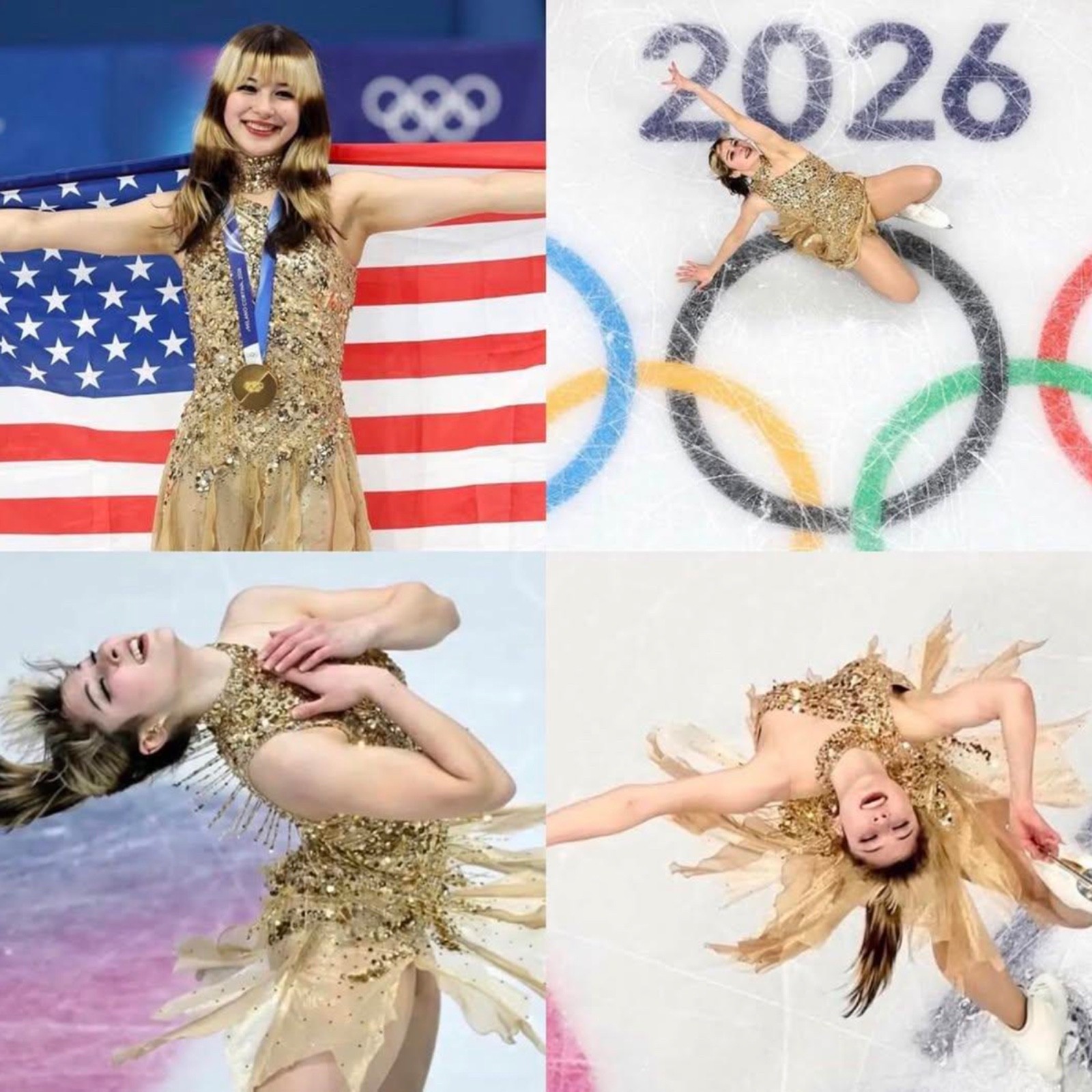
Alysa Liu enters the 2026 competitive season as a high-probability podium contender for the Milano Cortina Winter Olympics. Following her strategic return to the sport, Liu’s medal outlook depends on her Triple Axel consistency, her improved program component scores (PCS), and the shifts in international age eligibility requirements.
The Comeback: From Retirement to Milano Cortina 2026
The journey to the 2026 Winter Olympics for Alysa Liu is one of the most compelling narratives in modern figure skating. After announcing her retirement in April 2022 at the age of 16—immediately following a bronze medal win at the World Championships—Liu spent nearly two years away from the high-pressure environment of elite competition. Her return, announced in early 2024, signaled a shift in her approach to the sport, prioritizing mental well-being and a renewed passion for performing.
In 2026, we are seeing a different version of Alysa Liu. The "prodigy" label that followed her after she became the youngest U.S. Women’s Champion at age 13 has been replaced by the "veteran" label. This transition is critical for her medal outlook. Unlike the 2022 Beijing cycle, where she was chasing the technical ceiling of a rapidly evolving field, her 2026 campaign is built on stability, artistic maturity, and a strategic understanding of the International Skating Union (ISU) judging system.
Her training under coaches like Phillip DiGuglielmo in San Francisco has focused on sustainable technique. By stepping away and returning, Liu avoided the burnout that often plagues skaters in their late teens. This "freshness" is a tangible advantage as she faces competitors who have been in the grueling international circuit without a break for the entire quadrennial.
Technical Arsenal: The Role of the Triple Axel and Base Value
To understand Alysa Liu’s medal outlook for 2026, one must analyze her technical content (TES). Liu was the first American woman to land a quad Lutz in international competition and the first to land both a triple Axel and a quad in the same program. However, the 2026 landscape has shifted.
The Triple Axel Factor
In the current 2025-2026 season, the triple Axel remains the "great equalizer." While many skaters can execute clean triple-triple combinations, the triple Axel provides a base value (BV) boost that can bridge the gap between a fourth-place finish and a podium spot. Liu’s ability to stabilize this jump is the primary variable in her medal potential.
The scoring for the triple Axel in the 2025-2026 ISU handbook rewards not just the rotation but the quality of the "out-run" and the height. If Liu lands a clean triple Axel in the short program, she can realistically expect a score in the mid-70s, keeping her within striking distance of the leaders heading into the free skate.
Jump Consistency and Under-rotations
A historical challenge for Liu was the technical panel’s scrutiny of her jump rotations. In her earlier years, she occasionally struggled with "q" (quarter under-rotated) or "<" (under-rotated) calls, which significantly bleed points from the base value and result in negative Grade of Execution (GOE). Her 2026 outlook is heavily dependent on the "revised technique" her coaching team has implemented, which emphasizes a higher take-off trajectory to ensure full rotation before landing.
The Impact of ISU Age Eligibility Changes
One of the most significant factors benefiting Alysa Liu’s medal outlook in 2026 is the ISU’s decision to raise the minimum age for senior competition to 17. This rule change, which was phased in following the 2022 Olympics, has fundamentally altered the competitive field.
Historically, Liu faced a "revolving door" of younger skaters capable of multiple quadruple jumps. The age limit has slowed this cycle, favoring skaters who have more physically mature bodies and higher levels of skating skills (SS) and performance (PR). As a 20-year-old in 2026, Liu is now in the "sweet spot" of the new eligibility era. She is no longer the youngest on the ice, but she possesses a level of international experience and "program maturity" that younger debutants lack.
This shift moves the focus from pure technical "fireworks" to a balanced score. For Liu, this is a major advantage. Her Program Component Scores (PCS) have historically trended upward as she matured, and in a field where quad jumps are less ubiquitous than they were in 2022, her triple-triple combinations and artistry carry more weight.
Competitive Analysis: Team USA and the Global Field
Liu’s path to a 2026 medal requires her to first navigate a deep domestic field and then face international powerhouses from Japan, Korea, and Europe.
The U.S. National Context
The battle for the top spot in the United States is fierce. Competitors like Amber Glenn and Isabeau Levito have pushed the technical and artistic boundaries of the sport during Liu’s absence.
- Amber Glenn: Known for her powerful triple Axel and high-energy programs.
- Isabeau Levito: Noted for her exceptional consistency and balletic quality.
Liu’s medal outlook is bolstered by her "big event" experience. Having already competed in an Olympic Games and won a World Bronze medal, she understands the pressure of the final flight—a psychological edge that is difficult to quantify but essential for a podium finish.
The International Powerhouses
The 2026 Olympic podium will likely be decided by the narrowest of margins. The Japanese women, including world-class talents like Kaori Sakamoto and Mone Chiba, remain the gold standard for speed and flow. Sakamoto, in particular, sets a high bar for PCS. For Alysa Liu to medal, she must not only land her jumps but also match the ice coverage and power of the Japanese skaters.
The absence or limited presence of Russian skaters (depending on the prevailing international rulings in 2026) also dramatically shifts the "medal math." In a field without the high-BV quadruple jumps seen in 2022, Liu’s triple Axel becomes one of the most potent weapons in the competition.
2022 vs. 2026: A Comparative Performance Metric
The following table compares Liu's technical and artistic profile during her first Olympic run in 2022 versus her status and outlook for the 2026 Milano Cortina Games.
| Metric | 2022 Beijing Status | 2026 Milano Cortina Outlook |
|---|---|---|
| Primary Goal | Top 10 Finish (Achieved 7th) | Podium/Medal Contender |
| Technical Focus | Triple Axel / Triple-Triple | Triple Axel / High GOE Execution |
| Average PCS | 33.00 - 34.00 (Short Program) | 36.00 - 38.00 (Short Program) |
| Jump Stability | High (mostly clean rotations) | Moderate-High (Focus on power over quantity) |
| Experience Level | Olympic Debutant | Two-Time Olympian / Veteran Leader |
| International Rank | Top 10 | Top 5 |
| Key Advantage | Youthful energy | Mature artistry and mental resilience |
Strategic Roadmap to the Podium
For Alysa Liu to secure a medal in 2026, her strategy must focus on three specific areas:
- Short Program Placement: In the modern scoring system, a medal is often lost in the short program. Liu needs to ensure she is in the top five heading into the free skate. This requires a clean "3A" (triple Axel) or a very high-GOE "3F-3T" (triple Flip-triple Toeloop).
- Spin Levels and Steps: Liu has always been a strong spinner, frequently earning Level 4s. In 2026, she must maximize the levels on her Step Sequence (StSq4). These "non-jump" elements are where podiums are decided when jump scores are tied.
- The "Second Mark" (PCS): She must continue to work with top-tier choreographers to ensure her programs look sophisticated. The judges in 2026 favor "complete" skaters who can transition seamlessly between technical elements and the musical narrative.
Frequently Asked Questions
How old is Alysa Liu in 2026?
Alysa Liu turned 20 in August 2025, making her 20 years old during the 2026 Winter Olympics. This puts her in the category of a mature senior skater, which aligns with the new ISU age requirements emphasizing longevity in the sport.
Did Alysa Liu change coaches for her 2026 run?
Yes, after her return from retirement, Liu shifted her primary training base. While she worked with various coaches earlier in her career, her 2026 preparation has been characterized by a stable environment in the San Francisco Bay Area, focusing on a holistic approach that balances physical training with recovery.
What are Alysa Liu's chances of winning Gold in 2026?
While a gold medal is possible if the favorites falter, Liu’s most realistic medal outlook is for Silver or Bronze. The international field, particularly from Japan, remains incredibly strong in terms of raw power and skating skills. However, figure skating is a sport of "on the day" performance; if Liu skates two clean programs with a triple Axel, she is mathematically in the hunt for the top prize.
Is the Quad jump part of Liu's 2026 strategy?
As of the current 2026 season, the focus for Liu has been the Triple Axel rather than the Quad Lutz. Given the high risk of injury and the diminishing returns of quads under the current "age-mature" judging style, her team has prioritized a high-quality triple Axel, which offers a better risk-to-reward ratio for her current physical frame.
How did the 2024 comeback announcement affect her ranking?
Initially, Liu had to rebuild her world standing points. By competing in smaller ISU Challenger Series events in late 2024 and 2025, she earned the necessary points to secure favorable "late-flight" draw positions for major championships in 2026.
Practical Recommendation for Fans and Analysts
When watching Alysa Liu in 2026, focus on the opening jump of her Free Skate. If she successfully lands the Triple Axel with a positive GOE, it serves as a reliable barometer for her overall podium chances. Additionally, keep an eye on her Component Scores relative to her peers. If she is consistently scoring within 1-2 points of the leaders in "Composition" and "Presentation," her path to an Olympic medal is highly viable.
The most significant action for those tracking her progress is to monitor the ISU World Standings and the results of the 2026 U.S. Figure Skating Championships. These events provide the final data points on her consistency and the judges' reception of her current programs before the Milano Cortina Games.