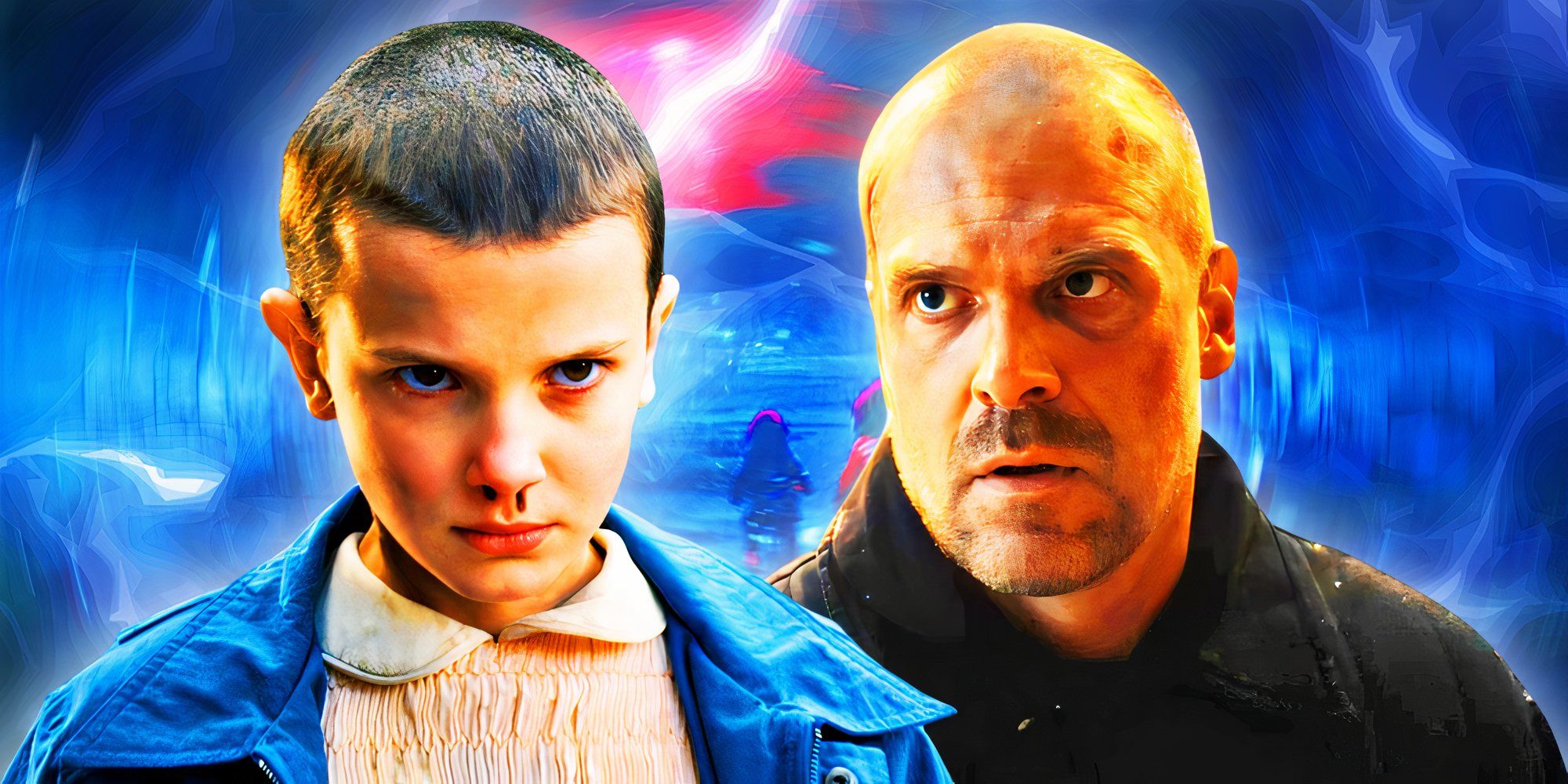
Since its debut, Stranger Things has balanced 1980s nostalgia with a high-stakes supernatural horror that spares few. From innocent bystanders to beloved fan favorites, the deaths in Hawkins serve as pivotal emotional anchors and catalysts for the plot. This guide provides a complete, chronological analysis of every significant death across the series' history.
The mortality rate in Hawkins, Indiana, is remarkably high for a small Midwestern town. Over the course of five seasons, the series evolved from a mystery about a missing boy into an all-out war between Earth and the Upside Down. Each death has been carefully crafted by the Duffer Brothers to heighten the stakes, ensuring that the audience understands that no one—regardless of their popularity—is truly safe from the reach of Vecna or the Mind Flayer.
Season 1: The Disappearance and the Demogorgon
The first season of Stranger Things established the rules of the world: the Upside Down is lethal, and the government will go to any lengths to keep its secrets. The body count began small but included one of the most culturally significant deaths in modern television history.
Benny Hammond
Benny Hammond, the kind-hearted owner of Benny’s Burgers, was the first human casualty of the series. After finding a terrified Eleven in his kitchen, he showed her compassion by feeding her and calling social services. Unfortunately, "social services" was a front for Hawkins National Laboratory. Agent Connie Frazier executed Benny to ensure Eleven’s location remained a secret, framing it as a suicide. His death signaled that the human antagonists were just as dangerous as the monsters.
Barbara "Barb" Holland
Perhaps no death in the series sparked more online discourse than that of Barb Holland. While waiting for Nancy Wheeler at Steve Harrington’s pool, Barb was dragged into the Upside Down by the Demogorgon. Her death was confirmed later in the season when Eleven discovered her corpse, infested with slug-like organisms. The "Justice for Barb" movement became a cultural phenomenon, forcing the show to address the lack of urgency the town felt regarding her disappearance compared to Will Byers.
The Hawkins Lab Personnel and Shepherd
Throughout Season 1, several unnamed scientists and guards were slaughtered by the Demogorgon. Notably, a scientist named Shepherd was sent into the rift on a tether; only his bloodied harness returned. During the finale at Hawkins Middle School, Eleven used her telekinetic powers to crush the brains of several Hawkins Lab agents, and the Demogorgon finished off many more, including Connie Frazier.
Season 2: The Rise of the Mind Flayer
Season 2 shifted the focus to a "shadow monster" later known as the Mind Flayer. While the body count of named characters remained relatively low, the emotional impact of the primary death was devastating to the core cast.
Bob Newby
Bob Newby, played by Sean Astin, was the quintessential "hero" of Season 2. As Joyce Byers’ boyfriend, he provided a sense of normalcy and stability. During the containment breach at Hawkins Lab, Bob used his computer programming skills to reset the security systems, allowing Joyce, Hopper, Will, and Mike to escape. Just as he reached safety, he was tackled and mauled by Demo-dogs. His death remains one of the most heartbreaking moments of the series, as he died a "superhero" in the eyes of the Byers family.
Mews the Cat
While not a human character, the death of Dustin’s cat, Mews, served a narrative purpose. It demonstrated that the "pollywog" Dustin was raising (Dart) was an apex predator from the Upside Down. Mews’ death was the turning point that forced Dustin to realize his "pet" was a Demogorgon in the making.
The Hawkins Lab Guards
Much like the first season, the second season featured a mass casualty event at the laboratory. The Demo-dogs, acting as a hive mind for the Mind Flayer, systematically wiped out the security force and medical staff, leaving Sam Owens as one of the few survivors.
Season 3: The Flayed and the Starcourt Massacre
Season 3 introduced a new type of horror: body horror. The Mind Flayer began "flaying" residents of Hawkins, turning them into a biological slurry to build a physical manifestation of itself.
The Flayed (Bruce Lowe, Tom Holloway, Heather Holloway, and Others)
The Mind Flayer possessed dozens of Hawkins residents, including the Hawkins Post reporters Bruce and Tom, and lifeguard Heather Holloway. These individuals were forced to consume chemicals and eventually "melted" down to join the Mind Flayer’s physical form. Their deaths were horrific and represented the loss of autonomy in the face of the Upside Down’s influence.
Alexei
Alexei, the Russian scientist who loved cherry Slurpees and Looney Tunes, became an instant fan favorite. His death at the hands of the Russian assassin Grigori during the Fourth of July fair was a sudden, cruel blow. Alexei’s death occurred just as he had defected to help the American protagonists, emphasizing the cold-blooded nature of the Soviet military presence in Hawkins.
Grigori
Grigori served as the "Terminator" archetype of Season 3. He was eventually killed by Jim Hopper during the final confrontation in the underground Russian base. Hopper threw Grigori into the machinery of the "Key" (the device used to open the gate), shredding him instantly.
Billy Hargrove
Billy’s death was the emotional climax of Season 3. After being the Mind Flayer’s primary vessel for the entire season, Billy regained control of his mind thanks to Eleven’s intervention. He sacrificed himself to protect Eleven and his sister, Max, standing directly in the path of the Mind Flayer’s avatar. His final words, an apology to Max, completed a complex redemption arc.
Season 4: The Curse of Vecna
Season 4 raised the stakes by introducing Vecna, a sentient antagonist who targeted individuals with deep-seated psychological trauma. This season featured the most graphic and personal deaths in the series.
Chrissy Cunningham, Fred Benson, and Patrick McKinney
These three teenagers were Vecna’s initial victims. Each was haunted by past trauma (eating disorders, guilt over an accident, and domestic abuse, respectively). Vecna used a psychic "curse" to telepathically mutilate them, breaking their bones and gouging their eyes while they were in a trance state. These deaths served to show the terrifying power of Henry Creel (One).
The Hawkins Lab Subjects (Flashback)
In a major reveal, it was shown that in 1979, Henry Creel (Number One) murdered all the other children in Dr. Brenner’s program. This massacre was initially blamed on Eleven, but the truth showed that One had systematically eliminated his peers before Eleven managed to banish him to the Upside Down.
Dr. Martin Brenner ("Papa")
After surviving the Demogorgon attack in Season 1, Dr. Brenner finally met his end in the Nevada desert. While trying to move Eleven to safety during a military raid on the NINA project, Brenner was shot multiple times by snipers in a helicopter. He died in the dirt, seeking a forgiveness from Eleven that she refused to grant, marking the end of one of the show's most complex antagonistic figures.
Eddie Munson
Eddie Munson became the breakout star of Season 4, and his death is widely considered the most painful for the fanbase. To buy more time for Nancy, Steve, and Robin to attack Vecna, Eddie and Dustin distracted the "Demobat" swarm. Instead of running away—as he felt he always did—Eddie stayed behind to fight. He was overwhelmed by the bats and died in Dustin’s arms. Because he was still the prime suspect in the Hawkins murders, the town never knew he died a hero.
Jason Carver
The leader of the Hawkins basketball team and a secondary antagonist, Jason Carver was literally ripped in half when the gate to the Upside Down opened across Hawkins. His death was a direct result of his own hubris and refusal to believe the supernatural truth.
Season 5: The Final Stand
As the series reached its conclusion in 2025 and 2026, the final war for Hawkins resulted in several more high-profile casualties. While the core "Party" members fought to preserve their world, the finality of the series meant that not everyone made it to the end.
The Fate of Max Mayfield
Max's status was the biggest cliffhanger leading into the final chapters. After being clinically dead for over a minute at the end of Season 4, Max remained in a coma, blind and with shattered limbs. The final season explored the "shards" of her consciousness held within Vecna. While her physical body survived for a time, her narrative arc dealt heavily with the concept of spiritual and mental death.
| Character | Season | Killer/Cause of Death | Significance |
|---|---|---|---|
| Benny Hammond | 1 | Connie Frazier (Gunshot) | First human victim; showed Lab's ruthlessness. |
| Barb Holland | 1 | Demogorgon | Sparked the "Justice for Barb" movement. |
| Bob Newby | 2 | Demo-dogs | The heroic sacrifice of the "ordinary man." |
| Alexei | 3 | Grigori (Gunshot) | The loss of an innocent defector. |
| Billy Hargrove | 3 | Mind Flayer (Impaled) | A redemptive sacrifice for Max and Eleven. |
| Eddie Munson | 4 | Demo-bats | The "freak" who died saving a town that hated him. |
| Dr. Brenner | 4 | Military Snipers | The end of Eleven's psychological tormentor. |
| Jason Carver | 4 | Upside Down Rift | Represented the dangers of human ignorance. |
The Mechanics of Death in the Upside Down
Understanding how characters die in Stranger Things requires looking at the technical aspects of the creatures involved. Each antagonist has a specific "method of operation" that has evolved over time.
- The Demogorgon (Season 1): Operates as a physical predator. It hunts by scent (blood) and drags prey back to its lair to consume or use as a host for larvae. Death is usually the result of physical trauma or infestation.
- The Mind Flayer (Season 2-3): Operates as a hive mind. It either kills through proxy (Demo-dogs) or by absorbing organic matter. The "Flayed" do not die immediately; they are biologically repurposed until their consciousness is extinguished.
- Vecna/One (Season 4-5): Operates psychically. Vecna does not need to be physically present to kill. He establishes a psychic link, uses the victim's trauma to weaken them, and then "consumes" them from the inside out, manifesting as physical bone-breaking and eye trauma in the real world.
Impact on the Survivors
The deaths in Stranger Things are rarely forgotten by the surviving characters. Nancy Wheeler’s entire character arc from Season 2 onwards was fueled by the guilt of Barb’s death. Similarly, Dustin Henderson’s transformation into a more somber, hardened leader was a direct result of witnessing Eddie Munson’s final moments.
The show uses death not just for shock value, but to force the characters to grow. The loss of parental figures (like Hopper's "death" and Brenner's actual death) forced Eleven to find her own identity. The loss of peers (like Billy and Eddie) forced the younger cast to confront the reality of their own mortality.
Frequently Asked Questions
Did Jim Hopper actually die in Season 3?
No. While the Season 3 finale made it appear that Hopper was vaporized by the explosion of the Russian machine, a mid-credits scene and the Season 4 teaser confirmed he had been captured by the Russians. He spent most of Season 4 in a Siberian gulag before reuniting with Joyce and Eleven.
Is Max Mayfield officially dead?
As of the beginning of the final season, Max is in a state of "brain death" or a deep coma. Eleven was able to restart her heart at the end of Season 4, but her consciousness was missing. Her "death" was technically what allowed the four gates to open, as she was Vecna's fourth victim, even if her heart was eventually restarted.
Who has the highest kill count in the series?
In terms of direct kills, Henry Creel (Vecna/One) has the highest body count. Between the massacre at Hawkins Lab in 1979 and his psychic murders in 1986, he is responsible for dozens of deaths. However, if counting the "Flayed" as casualties of the Mind Flayer, the Mind Flayer’s total body count in Season 3 is significantly higher.
Why was Eddie Munson's death so controversial?
Fans were frustrated by Eddie's death because it felt like a "disposable" character trope where a new, likable character is introduced only to be killed off to protect the main cast. Additionally, the fact that he died a villain in the eyes of the public added a layer of tragedy that many viewers found unsatisfying.
Are there any characters who died and came back?
Eleven (S1) and Hopper (S3) both had "fake-out" deaths where the audience was led to believe they were gone, only for them to return. Max Mayfield is the only character to have actually "died" (her heart stopped) and then been revived by supernatural means, though with severe physical and mental consequences.
Final Summary of the Series' Mortality
By the time the credits rolled on the series finale in 2026, Stranger Things had cemented its legacy as a show that wasn't afraid to hurt its audience. The deaths served as a reminder that the battle against the Upside Down had real, permanent costs. For viewers looking to revisit the series, paying attention to the foreshadowing of these deaths—such as Eddie's "I am not a hero" speech or Bob's "superhero" jokes—reveals the meticulous planning the Duffer Brothers put into the show's most tragic moments.