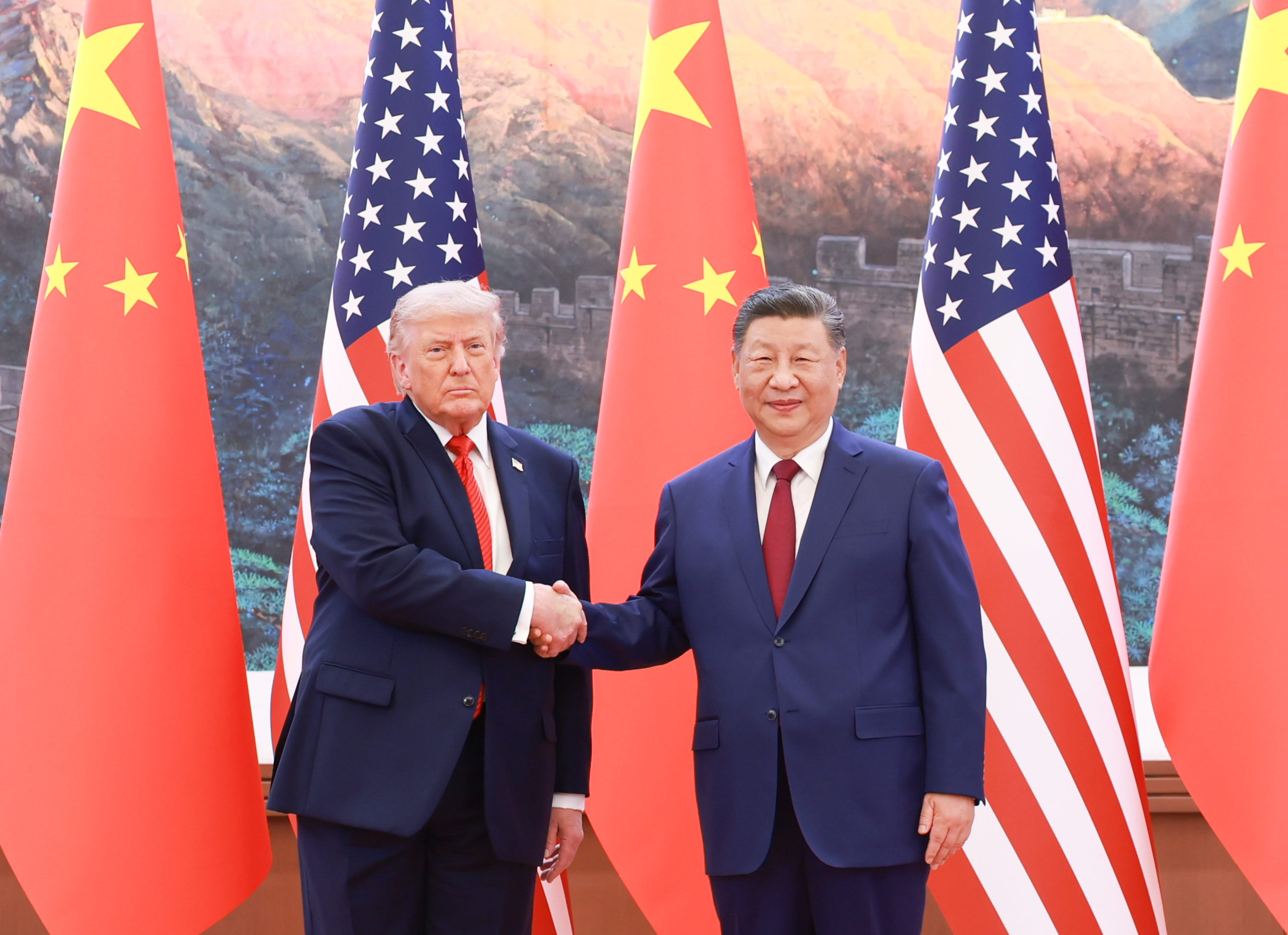
The People's Republic of China (PRC) has had seven official Presidents (and several acting or honorary heads of state) since its founding in 1949. As of 2026, the current President is Xi Jinping, who has held the office since 2013. The role of the President has transformed significantly over the decades, moving from a powerful executive chairmanship under Mao Zedong to a ceremonial role in the 1980s, and eventually becoming the cornerstone of the "trinity" of power that defines modern Chinese governance.
Understanding the lineage of Chinese presidents requires a distinction between the state office and the leadership of the Communist Party of China (CPC). While the President serves as the head of state, the true political authority in China traditionally resides with the General Secretary of the CPC and the Chairman of the Central Military Commission (CMC). In the current political landscape of 2026, these three roles remain unified under a single leader, a practice that became standard in the 1990s to ensure political stability and administrative efficiency.
The Evolution of the Office of the President
The office of the "President of the People's Republic of China" (中华人民共和国主席, Zhōnghuá Rénmín Gònghéguó Zhǔxí) was established by the 1954 Constitution. Previously, the functions of the head of state were carried out by the Central People's Government Council. Throughout the history of the PRC, the title has been translated into English as both "Chairman" (during the Mao era) and "President" (from 1982 onwards), though the Chinese term Zhǔxí has remained the same.
The office has not always existed. Between 1968 and 1983, the position was either vacant, abolished, or replaced by acting figures due to the internal political turmoil of the Cultural Revolution. It was the 1982 Constitution—often referred to as the "Current Constitution"—that officially restored the office and defined its modern parameters, although it initially imposed a two-term limit that was later removed in 2018.
Constitutional Requirements and Powers
According to the Constitution of the PRC, a candidate for the presidency must be a citizen of the People's Republic of China who has the right to vote and stand for election and has reached the age of 45. Presidents are technically elected by the National People's Congress (NPC), China's highest organ of state power.
The powers of the President include:
- Promulgating statutes passed by the NPC.
- Appointing and removing the Premier, Vice-Premiers, and Ministers (following NPC decisions).
- Granting state medals and honors.
- Issuing pardons and declaring a state of emergency or war.
- Representing the PRC in foreign affairs and receiving foreign diplomatic envoys.
Chronological List of Chinese Presidents (1949–2026)
The following leaders have held the title of President (or Chairman of the PRC). This list focuses on the heads of state of the People's Republic of China.
1. Mao Zedong (Term: 1954–1959)
Mao Zedong was the inaugural Chairman of the People's Republic of China. While he had led the country since 1949 as Chairman of the Central People's Government, he officially became the State Chairman under the new 1954 Constitution. Mao’s tenure as President was focused on consolidating the socialist state and launching early industrialization efforts, such as the First Five-Year Plan. He stepped down from the state presidency in 1959, though he remained the Chairman of the Communist Party—the position where his primary power resided—until his death in 1976.
2. Liu Shaoqi (Term: 1959–1968)
Liu Shaoqi succeeded Mao and was a key architect of China's economic recovery following the Great Leap Forward. Liu was seen as a more pragmatic, institution-focused leader compared to Mao’s revolutionary fervor. However, this ideological divide led to his downfall during the Cultural Revolution. He was denounced as a "capitalist roader," stripped of all positions in 1968, and died in custody in 1969. Following his removal, the office remained officially vacant for years.
The Interregnum (1968–1983)
During this period, the office of the President was functionally defunct. State duties were performed by the Chairman of the Standing Committee of the National People's Congress (Zhu De) or by acting figures.
- Dong Biwu (Acting): Served as Acting Chairman from 1972 to 1975.
- Soong Ching-ling (Honorary): The widow of Sun Yat-sen, she was named Honorary President of the PRC in 1981, shortly before her death, as a tribute to her lifelong service to the nation.
3. Li Xiannian (Term: 1983–1988)
With the adoption of the 1982 Constitution, the office was formally restored. Li Xiannian, a veteran revolutionary and economic planner, was the first to hold the title of "President" in the modern era. During his term, the real "Paramount Leader" was Deng Xiaoping, who held the chairmanship of the Military Commission but never the state presidency. Li’s role was largely ceremonial, focusing on state visits and diplomatic functions.
4. Yang Shangkun (Term: 1988–1993)
Yang Shangkun served as President during a period of significant social and economic transition. Like his predecessor, he was one of the "Eight Elders" of the Communist Party. His presidency coincided with the 1989 Tiananmen Square protests and the subsequent diplomatic isolation China faced. Yang was the last President who did not also hold the position of CPC General Secretary simultaneously.
5. Jiang Zemin (Term: 1993–2003)
Jiang Zemin’s presidency marked a major shift in Chinese governance. He was the first leader since Mao to hold the three most powerful titles: General Secretary of the CPC, Chairman of the CMC, and President of the PRC. This "trinity" of roles ensured that the head of state also held the actual reins of military and party power. Jiang oversaw the return of Hong Kong (1997) and Macau (1999), and China’s entry into the World Trade Organization (WTO) in 2001.
6. Hu Jintao (Term: 2003–2013)
Hu Jintao followed the precedent set by Jiang, holding all three leadership roles. His presidency was characterized by a focus on "Scientific Development" and the "Harmonious Society." During his ten-year tenure, China experienced unprecedented economic growth, becoming the world’s second-largest economy and successfully hosting the 2008 Beijing Olympics.
7. Xi Jinping (Term: 2013–Present/2026)
Xi Jinping assumed the presidency in March 2013. His leadership has been defined by the "Chinese Dream" of national rejuvenation, an assertive foreign policy (the Belt and Road Initiative), and a significant anti-corruption campaign. In 2018, the NPC passed a constitutional amendment removing the two-term limit for the presidency, allowing Xi to be re-elected for a third term in 2023. As of 2026, he continues to lead the nation, emphasizing technological self-reliance and "Common Prosperity."
Summary Table of PRC Presidents
| Name | Term Start | Term End | Key Historical Context |
|---|---|---|---|
| Mao Zedong | 1954 | 1959 | Establishment of the PRC and 1954 Constitution. |
| Liu Shaoqi | 1959 | 1968 | Economic pragmatism; purged during Cultural Revolution. |
| Vacant/Abolished | 1968 | 1983 | Period of political instability and acting roles. |
| Li Xiannian | 1983 | 1988 | Restoration of the office; Reform and Opening-up. |
| Yang Shangkun | 1988 | 1993 | Transition era; 1989 political crisis. |
| Jiang Zemin | 1993 | 2003 | Integration of the "Trinity" of roles; WTO entry. |
| Hu Jintao | 2003 | 2013 | Rapid economic expansion; "Peaceful Rise." |
| Xi Jinping | 2013 | 2026* | National rejuvenation; removal of term limits. |
The Concept of the "Paramount Leader"
A point of confusion for many observers is the term "Paramount Leader." Because the President of China was historically a ceremonial role, the most powerful person in the country did not always hold that specific title.
For example, Deng Xiaoping was the undisputed leader of China from the late 1970s until the early 1990s. However, he was never President, Premier, or General Secretary. His power came from his seniority in the Party and his chairmanship of the Central Military Commission. Since the mid-1990s, the political system has evolved to ensure the Paramount Leader holds the state presidency to provide a clear, singular point of contact for international diplomacy.
Pre-1949: Presidents of the Republic of China (ROC)
Before the establishment of the People's Republic of China in 1949, the country was governed as the Republic of China (ROC). While the PRC considers itself the successor state, the ROC government moved to Taiwan in 1949 and continues to hold elections for its own president.
Key figures from the pre-1949 period include:
- Sun Yat-sen: The Provisional President in 1912, regarded as the "Father of the Nation."
- Yuan Shikai: The first formal President of the ROC, who later unsuccessfully attempted to declare himself Emperor.
- Chiang Kai-shek: The leader of the Kuomintang (KMT) who served as President during the Second Sino-Japanese War and the Chinese Civil War.
For most researchers, "Chinese Presidents" refers to the PRC leaders listed in the previous sections, but historical context requires acknowledging the ROC era as the origin of the modern presidential title in the Chinese language.
Selection Process and Political Structure
The selection of the President in 2026 follows a highly structured, top-down process within the Communist Party.
- Party Selection: The CPC Central Committee identifies the candidate, who is invariably the General Secretary of the Party.
- Presidium Nomination: During the National People's Congress session, the Presidium officially nominates the candidate.
- NPC Vote: The nearly 3,000 delegates of the NPC cast ballots. While technically an election, there is usually only one candidate, and the vote serves as a formal confirmation of the Party's choice.
This process ensures that the state apparatus remains firmly aligned with the Party's strategic goals. The stability of this system is a central theme in Chinese political science, often contrasted with the more volatile electoral cycles of Western democracies.
Frequently Asked Questions
Is the President of China the same as the Premier?
No. The President is the head of state and focuses on foreign policy, national symbols, and overall strategic direction. The Premier (currently Li Qiang in the mid-2020s) is the head of government, presiding over the State Council. The Premier is responsible for implementing policy, managing the national economy, and overseeing the various government ministries.
How long is a President's term in China?
Each term is five years, coinciding with the term of the National People's Congress. Prior to 2018, there was a two-term limit (10 years total). Following the 2018 constitutional amendment, there are no longer any term limits for the office of the President.
Who was the only female President of China?
Soong Ching-ling is the only woman to have held the title of "President" (specifically, Honorary President) of the People's Republic of China. She was appointed in 1981 just days before her death in recognition of her historical significance and contribution to the revolution.
Why is the President also the head of the military?
In the Chinese system, the President typically also serves as the Chairman of the Central Military Commission. This ensures "the Party commands the gun," meaning the military is an arm of the state and party leadership rather than an independent entity. This unified command structure is considered essential for national security.
What happened to the office during the Cultural Revolution?
The office was effectively paralyzed. After Liu Shaoqi was purged in 1968, Mao Zedong chose not to appoint a successor. The 1975 Constitution officially abolished the post of the State Chairman, transferring its remaining ceremonial powers to the Chairman of the NPC Standing Committee. It was not until the post-Mao reforms that the office was deemed necessary for modern governance.
Conclusion and Further Study
The history of China's presidents mirrors the country’s journey from a revolutionary state to a global superpower. From the foundational years of Mao Zedong to the institutionalization under Jiang Zemin and Hu Jintao, and finally to the "New Era" of Xi Jinping, the presidency has evolved into a symbol of national unity and centralized authority.
For those looking to understand Chinese politics in 2026, it is vital to look beyond the title of "President" and examine how that role interacts with the Communist Party and the Military Commission. To stay informed on current leadership developments, readers should consult official releases from the Xinhua News Agency or the English portal of the Chinese Government.