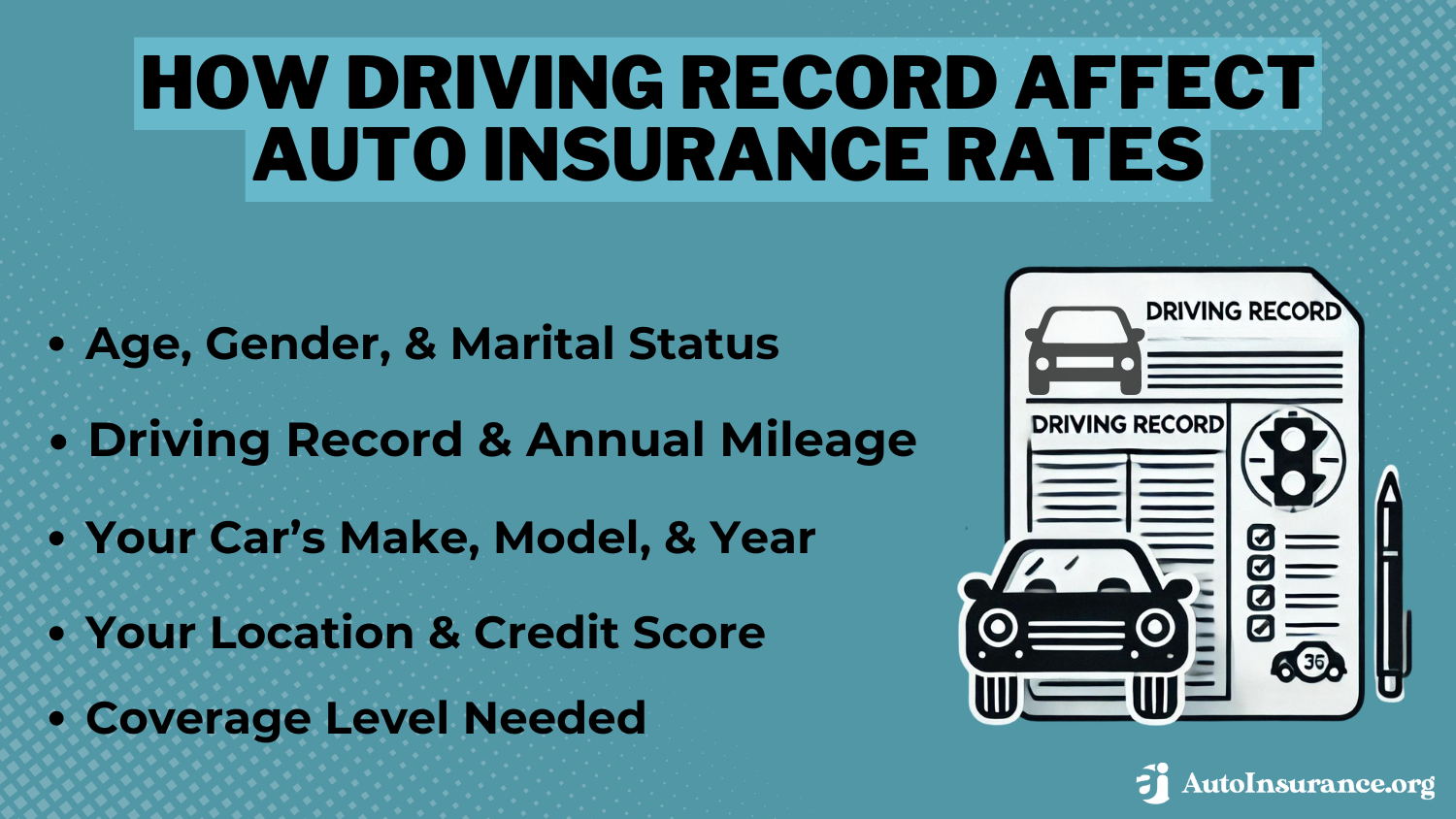
In Alberta, your driving record is the primary factor used by insurance companies to determine your risk profile and calculate your premiums. It serves as a historical blueprint of your behavior behind the wheel, documenting every conviction, at-fault accident, and license suspension. For drivers in 2026, maintaining a clean record is the most effective way to secure affordable coverage in a market that prioritizes long-term safety data.
What is an Alberta Driver Abstract?
A driver abstract is an official document issued by the Government of Alberta that provides a summarized history of a person's driving record. While many people use the terms "driving record" and "abstract" interchangeably, the abstract is the physical or digital evidence of that record. In the context of auto insurance, this document is the "source of truth" for underwriters.
There are two primary types of abstracts available to Alberta drivers: the Standard Driver Abstract and the Commercial Driver Abstract. For the vast majority of personal auto insurance applications, the Standard Driver Abstract is the requirement. It lists your personal information, license class, and status, but more importantly, it details:
- Moving violations and convictions.
- Demerit points accumulated.
- License suspensions and reinstatements.
- Terms and conditions (such as a requirement for corrective lenses).
In 2026, insurance companies typically request a three-year abstract for standard renewals and quotes. However, for higher-risk policies or specific endorsements, an insurer might ask for a five-year or even a ten-year history. It is important to note that while demerits might disappear from your record after two years, the conviction itself—the fact that you were found guilty of a traffic violation—stays on your abstract for three years from the date of conviction.
The Role of the Grid Rating System
Alberta utilizes a unique "Grid" system designed to set a maximum premium for basic third-party liability and accident benefits coverage. The Grid system ensures that even drivers with less-than-perfect records have access to insurance at a price that is regulated by the Alberta Automobile Insurance Rate Board (AIRB).
Your position on the Grid is determined by your driving history. A new driver starts at a "Grid Step 0." For every year of clean driving (no at-fault accidents), you move down the grid (to the left), resulting in lower premiums. Conversely, at-fault accidents move you up the grid.
However, most Alberta drivers do not actually pay "Grid prices." In 2026, private insurance companies continue to offer "market rates," which are frequently lower than the Grid maximums for drivers with clean records. The Grid serves as a "safety net" or ceiling; if an insurer’s calculated market rate for you is higher than the Grid maximum for your specific step, they must charge you the Grid price instead.
How Convictions Affect Your Premiums
Insurance companies categorize traffic violations into three main groups: minor, major, and criminal. The categorization is not based on the number of demerits, but on the severity of the risk the violation represents to the insurer.
Minor Convictions
These are the most common infractions and include things like failing to signal, following too closely, or speeding (typically under 50 km/h over the limit). While one minor conviction might result in a small surcharge or the loss of a "claims-free" discount, multiple minor convictions within a three-year period can lead to significant premium increases.
Major Convictions
Major convictions represent a significant lapse in judgment or safety. These include distracted driving (using a cell phone), failing to stop for a school bus, or speeding in a construction zone. In 2026, distracted driving remains one of the most heavily penalized infractions in Alberta, often resulting in a 25% or higher surcharge on premiums immediately upon the first offense.
Criminal Code Convictions
These are the most severe and include impaired driving (DUI), dangerous driving, or failing to remain at the scene of an accident. A single Criminal Code conviction will often move a driver into the "high-risk" category, making them ineligible for standard market rates and forcing them into the Facility Association or specialized high-risk insurers, where premiums can be triple or quadruple the provincial average.
At-Fault Accidents and Your Record
While tickets and demerits are important, at-fault accidents have the most substantial impact on your insurance rates in Alberta. An at-fault accident stays on your insurance record for six years for rating purposes, even if it only appears on your government abstract for a shorter duration.
When you are involved in an accident, your insurer investigates to determine the degree of fault, ranging from 0% to 100%. If you are found more than 25% at fault, the accident is considered "at-fault" for insurance rating.
- First At-Fault Accident: Many insurers offer "Accident Forgiveness" endorsements. If you have this coverage, your first at-fault accident will not cause your premium to rise. However, the accident is still recorded.
- Subsequent Accidents: Without forgiveness, an at-fault accident can lead to a 20% to 50% increase in premiums.
- The Six-Year Rule: Most Alberta insurers use a "star rating" system (e.g., 6-star for six years accident-free). Every year you go without an at-fault accident, your star rating increases, and your premium decreases.
How to Obtain Your Driving Record in 2026
To understand exactly what an insurer sees, you should periodically pull your own abstract. You can obtain your Alberta Driver Abstract through several channels:
- In-Person at a Registry Agent: This is the most common method. You must provide valid identification and pay a service fee (approximately $25–$30 depending on the registry's service charges).
- Online via MyAlberta eServices: If you have a verified Alberta.ca Account, you can request and download a digital copy of your 3, 5, or 10-year abstract.
- By Mail: If you are currently outside of Alberta, you can apply by mail, though this requires a notarized request and takes significantly longer.
It is a best practice to review your abstract before shopping for new insurance. Errors on a driving record—such as a conviction that should have fallen off or an incorrect accident fault determination—can cost you hundreds of dollars in unnecessary premiums.
Summary of Conviction Impacts on Premiums
The following table outlines the estimated impact of different violations on auto insurance premiums in Alberta. Note that these are averages; specific insurer surcharges vary.
| Violation Category | Examples | Typical Surcharge (1st Offense) | Impact Duration |
|---|---|---|---|
| Minor | Speeding (<15km over), Improper turn, Seatbelt | 0% - 10% | 3 Years |
| Major | Distracted driving, School zone speeding | 25%+ | 3 Years |
| Criminal | Impaired driving, Racing, Hit and Run | 100% - 300% | 3 - 10 Years |
| At-Fault Accident | Rear-ending a vehicle, Failure to yield | 20% - 50% | 6 Years |
Steps to Improve Your Record and Lower Costs
If your driving record is currently affecting your ability to find affordable insurance, there are proactive steps you can take in 2026 to mitigate the damage.
1. Complete a Government-Approved Defensive Driving Course
In Alberta, completing an approved defensive driving course can remove up to three demerit points from your license (if you have at least two but fewer than 15). While insurance companies look at the convictions rather than the demerit points, many insurers provide a specific discount for drivers who have recently completed a recognized safety course.
2. Increase Your Deductible
If your record has caused your premiums to spike, you can offset the cost by increasing your deductible (the amount you pay out-of-pocket for a claim). Moving from a $500 deductible to a $1,000 or $2,500 deductible can significantly lower your monthly payments, though you must ensure you have the funds available in the event of an accident.
3. Usage-Based Insurance (Telematics)
Many Alberta insurers in 2026 offer telematics programs. By installing an app or device that monitors your driving in real-time, you can prove to the insurer that your current driving habits are safer than your past record suggests. High scores in braking, acceleration, and cornering can lead to discounts of up to 25%, effectively bypassing some of the penalties of an older conviction.
4. Shop Around During the Renewal Window
The "Market" in Alberta is competitive. Different insurers have different "appetites" for risk. One company might penalize a speeding ticket heavily, while another might be more lenient. Always obtain at least three quotes before your policy renews, especially if a conviction is about to reach its three-year expiration date.
Frequently Asked Questions
Does a photo radar ticket go on my Alberta driving record?
No. In Alberta, photo radar tickets and red-light camera tickets are issued to the vehicle owner, not the driver. Because the authorities cannot prove who was driving, no demerits are issued, and these tickets do not appear on your driver abstract. Consequently, they do not impact your insurance premiums.
How long does a speeding ticket stay on my insurance record?
A speeding ticket (conviction) stays on your Alberta driver abstract for three years from the date you paid the fine (which is considered the conviction date). Insurance companies will generally charge a surcharge for that ticket for the entire three-year period.
Can I remove an at-fault accident from my record?
You cannot remove a legitimate at-fault accident. However, if you believe the fault was determined incorrectly, you can dispute the finding with your insurer’s ombudsman or the Alberta Insurance Council. If the fault is revised to 25% or less, it will no longer count as an at-fault accident for rating purposes.
What happens if I drive with a suspended license?
Driving while unauthorized is a serious offense in Alberta. It is considered a major/criminal conviction by insurers. If caught, your vehicle can be seized, and you will likely be moved to the high-risk insurance market, where obtaining any coverage at all becomes difficult and extremely expensive.
Do out-of-province tickets show up on my Alberta record?
Yes. Alberta participates in the Canadian Driver Licence Compact, an agreement between provinces to share information regarding traffic violations. If you receive a ticket in British Columbia or Ontario, it will be reported back to Alberta and added to your driving record, affecting your insurance just as a local ticket would.
Final Recommendation
If you are concerned about your "alberta auto insurance driving record," the most important step is transparency. When applying for a quote, disclose all tickets and accidents accurately. Insurers use the CGI Autoplus system to verify your insurance history and will pull your abstract before finalizing a policy. Discrepancies can lead to a "non-disclosure" cancellation, which is far more damaging to your insurance prospects than a few speeding tickets.
Check your abstract today via MyAlberta eServices to ensure your history is accurate and begin the process of shopping for a rate that reflects your current driving habits.