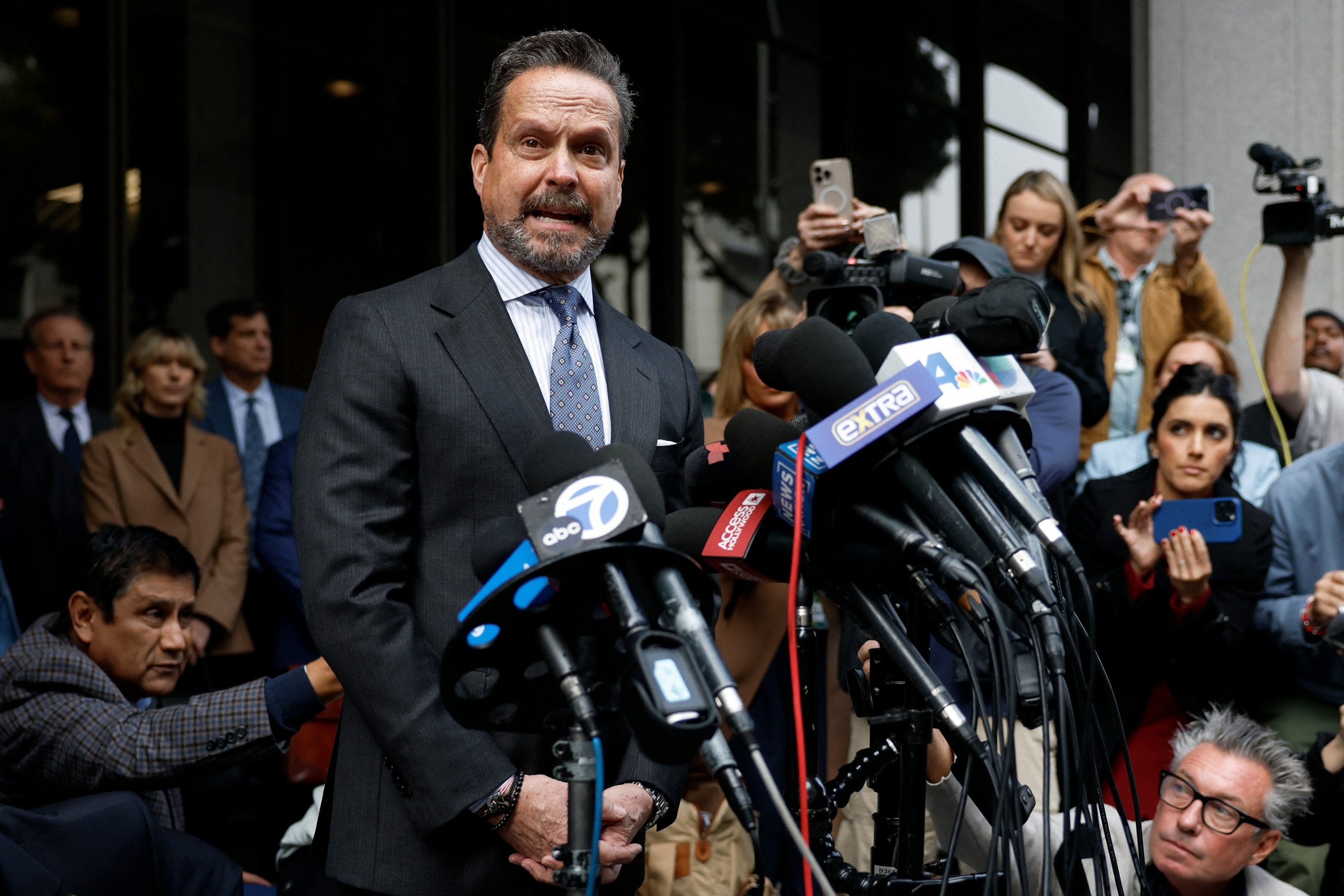
Alan Jackson is a prominent American criminal defense attorney and former veteran prosecutor, recognized globally for his representation of high-profile clients including Kevin Spacey and Karen Read. As a partner at Werksman Jackson & Quinn LLP, he specializes in navigating complex, high-stakes litigation using a meticulous, evidence-driven approach cultivated during his eighteen years at the Los Angeles County District Attorney’s Office.
The Dual Perspective: From Prosecutor to Defense Powerhouse
To understand the legal efficacy of Alan Jackson, one must first examine his foundational years as a prosecutor. Unlike many defense attorneys who begin their careers in public defense, Jackson spent nearly two decades on the "other side of the aisle." As a high-ranking member of the Los Angeles County District Attorney’s (LADA) office, specifically within the elite Major Crimes Division, Jackson handled some of the city's most challenging and scrutinized homicides.
This background provides Jackson with a distinct tactical advantage: he understands the internal mechanics of a state’s investigation. He is intimately familiar with how police reports are drafted, how forensic evidence is processed by state labs, and how prosecutors build their narratives. In the legal field, this is often referred to as having the "prosecutor’s playbook," allowing a defense attorney to anticipate the prosecution’s next moves and identify structural weaknesses in a case before they are even presented in court.
The Landmark Prosecution: The Phil Spector Trial
Jackson’s national reputation was cemented during the prosecution of legendary music producer Phil Spector for the murder of Lana Clarkson. This case was a landmark in legal history due to the defendant's celebrity status and the complex forensic evidence involved. Jackson’s performance was characterized by a meticulous attention to bloodstain pattern analysis and ballistics, which he used to dismantle the defense's theory of a self-inflicted wound.
The Spector trial highlighted Jackson’s ability to translate dense, technical forensic data into a compelling narrative for a jury. This skill—the ability to bridge the gap between high-level science and common-sense storytelling—has become the hallmark of his legal practice in 2026.
The Transition to Private Practice
After leaving the LADA’s office, Jackson joined the private sector, eventually becoming a founding partner at Werksman Jackson & Quinn LLP. His transition was not merely a change in employer but a strategic pivot to defending individuals against the very system he once represented.
The firm quickly became a destination for white-collar defendants, celebrities, and individuals facing serious felony charges where the stakes include life imprisonment. The philosophy of the firm mirrors Jackson's own: "Aggressive, ethical, and exhaustive preparation." In the world of high-profile defense, where the "court of public opinion" often reaches a verdict before the jury is even seated, Jackson’s experience with the media is as valuable as his experience with the law.
High-Profile Defense: High Stakes and Media Scrutiny
Alan Jackson’s defense career is defined by cases that dominate the news cycle. His approach in these matters often involves a "scorched earth" discovery process, where every piece of digital, physical, and testimonial evidence is re-vetted by independent experts.
Representing Kevin Spacey
In 2019, Jackson represented actor Kevin Spacey in a high-profile case involving allegations of indecent assault and battery in Nantucket, Massachusetts. The case was a technical triumph for the defense. Jackson focused heavily on the digital evidence—specifically a mobile phone that the prosecution claimed contained incriminating messages.
By challenging the integrity of the evidence and the complaining witness’s refusal to testify regarding the contents of the phone (citing the Fifth Amendment), Jackson effectively forced the prosecution to drop the charges. This case serves as a prime example of his "digital-first" defense strategy, acknowledging that in 2026, a person's digital footprint is often more telling than eyewitness testimony.
The Karen Read Case and the "Third-Party Culprit" Defense
Perhaps the most significant case in Jackson’s defense career was the representation of Karen Read in Massachusetts. Read was accused of the second-degree murder of her boyfriend, Boston Police Officer John O’Keefe. The case garnered international attention due to Jackson’s bold assertion of a "third-party culprit" defense and allegations of a widespread law enforcement cover-up.
Jackson’s strategy in the Read case involved several technical layers:
- Digital Forensics: Analyzing the "celebrated" 2:27 AM search for "ho[w] long to die in cold" performed on a witness's phone, which the defense argued occurred before the body was discovered.
- Accident Reconstruction: Hiring independent experts to prove that the damage to Read's Lexus was inconsistent with a high-speed impact with a human body.
- Cross-Examination of Experts: Systematically breaking down the state’s forensic pathologists and chemists to show that the physical injuries on the victim were more consistent with a physical altercation and dog bites than a vehicle strike.
By 2026, the Karen Read case remains a case study in how a defense attorney can shift the burden of suspicion from the defendant back onto the investigative process itself.
Technical Strategy: The "Jackson Style" of Litigation
What differentiates Alan Jackson from his peers is a specific, methodological approach to the courtroom. Legal analysts often point to three pillars of his style:
1. The Granular Cross-Examination
Jackson does not rely on "gotcha" moments. Instead, he uses a technique of incremental admissions. During cross-examination, he leads a witness through a series of undeniable facts, slowly boxing them into a corner where their previous testimony becomes logically unsustainable. This is particularly effective with expert witnesses, such as medical examiners or digital forensic analysts.
2. Narrative Control through Media
Understanding that high-profile cases are tried in the media simultaneously with the courtroom, Jackson is adept at communicating with the press. He provides clear, digestible "soundbites" that explain the defense’s theory of the case, ensuring that his client’s side is represented in evening news cycles and legal podcasts.
3. Exhaustive Pre-Trial Motion Practice
Many cases are won or lost before a jury is ever empaneled. Jackson is known for aggressive motion practice—filing motions to suppress evidence, motions for discovery sanctions, and motions to dismiss based on prosecutorial misconduct. By narrowing the scope of what the prosecution can present, he tilts the playing field in favor of the defense.
Comparative Overview: Alan Jackson’s Career Phases
| Feature | Prosecution Phase (LADA) | Defense Phase (Private Practice) |
|---|---|---|
| Primary Goal | Conviction and Public Safety | Protection of Rights and Acquittal |
| Key Resource | State Investigative Agencies (LAPD/FBI) | Independent Private Investigators/Experts |
| Defining Case | Phil Spector Murder Trial | Karen Read / Kevin Spacey |
| Focus Area | Violent Crimes / Major Homicides | White-Collar / High-Stakes Felonies |
| Strategic Edge | Narrative Building for Juries | Forensic/Digital Evidence Deconstruction |
Identifying the "Right" Lawyer: When is Alan Jackson Needed?
In the legal market of 2026, Alan Jackson represents the pinnacle of "boutique" high-stakes defense. Hiring an attorney of this caliber is generally reserved for situations where the defendant faces:
- Media Saturation: Cases that are likely to be covered by national news outlets.
- Complex Forensics: Cases involving disputed DNA, digital data, or accident reconstruction.
- Systemic Conflict: Cases where the defense involves challenging the integrity of the police department or the District Attorney’s office.
For the average citizen, Jackson serves as a benchmark for what "zealous advocacy" looks like in the modern era. His career trajectory suggests that the most effective defenders are often those who have spent significant time understanding how the government builds its cases.
Frequently Asked Questions
Is Alan Jackson currently practicing law in 2026?
Yes, Alan Jackson is an active partner at the law firm of Werksman Jackson & Quinn LLP. He continues to take on high-profile criminal defense cases across the United States, often appearing pro hac vice (for a specific case) in jurisdictions outside of California, such as Massachusetts or Nevada.
What is Alan Jackson’s success rate?
In criminal law, "success" is defined in multiple ways: acquittals (not guilty verdicts), dismissals of charges before trial, or favorable plea agreements that avoid prison time. While no attorney can guarantee a specific outcome, Jackson has a documented history of securing "not guilty" verdicts and dismissals in cases that the public initially deemed "unwinnable."
How much does it cost to hire Alan Jackson?
As one of the top criminal defense attorneys in the nation, Jackson’s fees are commensurate with his experience and the resources of his firm. High-profile defense typically involves a substantial initial retainer and hourly rates that reflect the complexity of the litigation and the size of the legal team required.
Does Alan Jackson handle civil cases?
While his primary focus is criminal defense, Jackson and his firm do handle select civil matters, particularly those involving "crossover" issues such as civil rights violations, professional malpractice defense, or high-stakes civil litigation where criminal charges may be a factor.
What was the outcome of the Karen Read case?
Following a mistrial in the summer of 2024 due to a hung jury, the legal battle continued into 2025 and 2026 with a series of appeals regarding double jeopardy and the disclosure of jury deliberations. Jackson remained the lead counsel throughout these proceedings, asserting that the jury had actually reached a unanimous "not guilty" verdict on the most serious charges which was not properly recorded.
Practical Next Actions for Legal Researchers
For those looking to follow Alan Jackson’s current cases or study his methods, the following steps are recommended:
- Monitor Court Dockets: Use PACER for federal cases or specific state court portals (like the Massachusetts Trial Court Electronic Case Access) to read his latest motions.
- Review Trial Transcripts: Legal students should analyze the transcripts of his cross-examinations in the Spector or Read trials to understand his "incremental admission" technique.
- Follow Legal Analysis: Outlets like Law & Crime or The Boston Globe provide ongoing coverage of his high-profile appearances, offering insight into how he manages the "media-legal" intersection.
Professional Disclaimer: The information provided in this article is for educational and informational purposes only and does not constitute legal advice. If you are facing criminal charges, you should consult with a qualified attorney licensed in your jurisdiction.