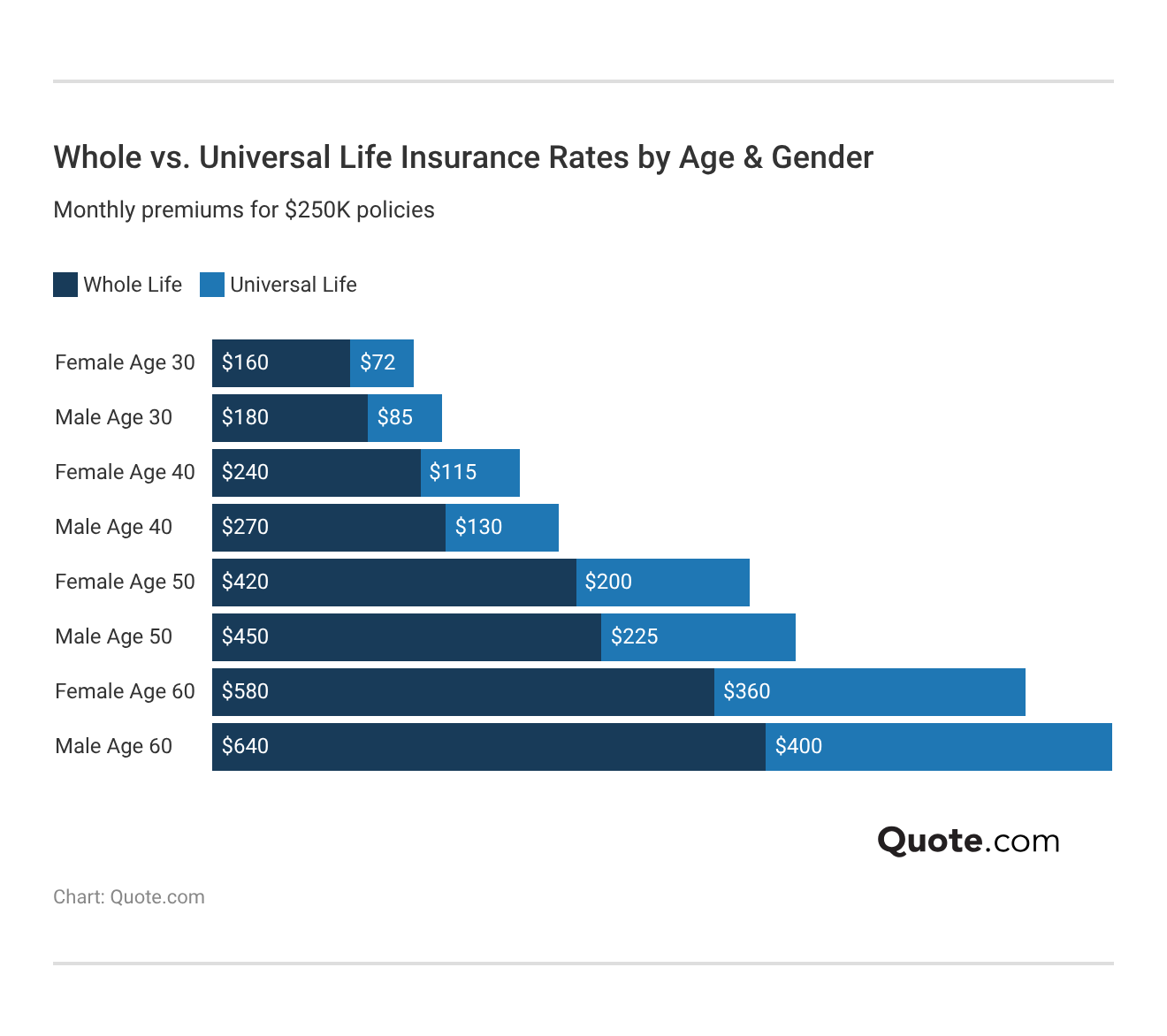
Life insurance premiums increase with age because the statistical probability of a claim—mortality risk—rises as you get older. While costs generally climb by 8% to 12% for every year you delay purchasing a policy, significant price "jumps" typically occur at milestone ages such as 30, 40, 50, and 60, or during five-year intervals like 35, 45, and 55.
In 2026, life insurance remains a fundamental pillar of financial planning, yet many consumers are caught off guard by the non-linear nature of premium increases. Understanding the specific ages where life insurance costs spike is essential for securing the lowest possible rates and ensuring long-term financial stability for your beneficiaries.
The Actuarial Logic Behind Age-Related Cost Increases
To understand why premiums jump at specific ages, one must first understand the role of the actuary. Actuaries use complex mortality tables to predict the likelihood of death within a specific population. As you transition from one age bracket to another, the mathematical risk of the insurance company paying out a death benefit increases significantly.
Insurance companies do not view aging as a steady, smooth slope. Instead, they view it in blocks of risk. For instance, the difference in health risks between a 24-year-old and a 25-year-old is statistically negligible. However, the difference between a 49-year-old and a 50-year-old is viewed through a much wider lens, as age 50 often correlates with an increase in chronic conditions like hypertension, high cholesterol, and cardiovascular disease.
Age Nearest Birthday vs. Age Last Birthday
It is a common misconception that your insurance age only changes on your calendar birthday. In 2026, most major carriers still utilize two primary methods for calculating your "insurance age":
- Age Last Birthday (ALB): This is the straightforward method where your insurance age matches your current legal age.
- Age Nearest Birthday (ANB): This is the more common industry standard. If you are six months and one day past your last birthday, the insurer considers you to be a year older for pricing purposes.
This means if you are 34 and six months old, you may effectively be quoted at 35-year-old rates. If 35 is a "jump" year for that specific carrier, you could be paying significantly more just by waiting six months to apply.
The 30s: The First Noticeable Shift
For most individuals, the 20s offer the "floor" of life insurance pricing. However, once you hit age 30, and more specifically age 35, the first significant pricing jump occurs.
In your early 30s, carriers generally view you as a low-risk applicant. However, by age 35, the industry begins to factor in the very early onset of lifestyle-related health issues. Furthermore, age 35 is often the cutoff for "non-medical" or "accelerated" underwriting for higher coverage amounts. Once you cross this threshold, you may be required to undergo a full paramedical exam (blood work, physical) to qualify for the best rates, whereas a 29-year-old might have qualified with just a digital health questionnaire.
The jump at 35 is often subtle—perhaps a 15% to 20% increase over age 30—but it sets the stage for more aggressive pricing shifts in the following decade.
The 40s: The Health Risk "Wall"
Age 40 is widely considered the most critical milestone for life insurance. For many applicants, this is the decade where premiums stop being "cheap" and start becoming a significant monthly line item.
By age 40, the statistical risk of developing chronic health conditions increases. Even if you are in perfect health, the insurer must account for the fact that you are now closer to the average age of a first cardiac event or cancer diagnosis.
Between age 40 and 45, it is common to see premium jumps of 30% to 50% compared to rates in your late 30s. This is also the period where "Preferred Plus" ratings become harder to achieve. An individual who could easily secure the top tier of health ratings at 38 might find themselves in a "Standard" or "Standard Plus" tier at 42 simply due to a slight rise in blood pressure or BMI, compounding the age-related price increase with a less favorable health rating.
The 50s: The Threshold of High Mortality Risk
If the 40s represent a "wall," the 50s represent a "cliff." At age 50, and again at age 55, life insurance premiums experience their most dramatic jumps for standard term policies.
Actuarially, the 50s are the decade where mortality rates begin to accelerate. Insurers are aware that a 20-year term policy issued to a 55-year-old will carry that individual to age 75—an age where the likelihood of a claim is high. Consequently, the "cost of insurance" (the internal expense of the risk) rises sharply.
For those looking to purchase a 30-year term policy, age 50 or 55 is often the maximum age allowed by many carriers. Beyond this point, the availability of long-term coverage diminishes, and the cost of the remaining options (10 or 15-year terms) skyrockets. It is not uncommon for a 50-year-old to pay double what a 40-year-old pays for the exact same coverage amount.
The 60s and Beyond: The Prohibitive Zone
By the time an applicant reaches age 60, life insurance transitions from a standard financial tool to a high-cost luxury. The jumps at age 60 and 65 are often 100% or more.
At this stage, insurers are primarily focused on "Simplified Issue" or "Final Expense" products because traditional fully underwritten term insurance becomes prohibitively expensive for the average consumer. Furthermore, the health requirements become much more stringent. Minor ailments that were ignored in your 30s are now scrutinized as potential indicators of terminal decline.
Comparative Cost Analysis by Age Milestone
The following table illustrates the approximate monthly premium for a $500,000, 20-year level term policy for a healthy, non-smoking male in 2026. Note: These are industry averages provided for illustrative comparison; actual rates depend on individual underwriting.
| Age at Purchase | Approximate Monthly Premium | % Increase from Previous Milestone |
|---|---|---|
| 25 | $22.00 | — |
| 30 | $25.50 | 16% |
| 35 | $31.00 | 21% |
| 40 | $44.00 | 42% |
| 45 | $62.00 | 41% |
| 50 | $98.00 | 58% |
| 55 | $155.00 | 58% |
| 60 | $275.00 | 77% |
Factors That Exacerbate Age Jumps
While age is the primary driver, other factors can make these specific age milestones even more expensive.
Term Policy Renewals (The "Rate Cliff")
If you purchased a 20-year term policy at age 30, it will expire when you are 50. If you still need coverage at that point, you are facing a "double jump." Not only are you purchasing insurance as a 50-year-old (which is inherently more expensive), but you are also 20 years older than your original underwriting.
Many people opt for "Annually Renewable Term" (ART) after their initial level period ends. This is often a mistake, as ART rates jump every single year and are designed to be prohibitively expensive to encourage the policyholder to drop the coverage or convert it to a permanent policy.
The Decline of the "Preferred" Rating
As mentioned previously, your health rating and your age are inextricably linked. It is statistically easier to be "Preferred Plus" at age 25 than at age 55. If you wait until 55 to buy insurance and you have developed a "Standard" health profile, you are paying the 55-year-old rate plus a surcharge for your health status. This can result in premiums that are 3 to 4 times higher than what you would have paid had you locked in a rate a decade earlier.
Strategies to Mitigate Age-Related Premium Spikes
Waiting to buy life insurance is almost always a losing financial strategy. However, if you find yourself at one of these milestone ages, there are ways to manage the cost.
- Laddering Policies: Instead of one large $1 million policy at age 45, you might buy a $500,000 20-year term and a $500,000 10-year term. This provides maximum coverage while your mortgage and children's expenses are high, but reduces the total premium cost as you age and your needs decrease.
- Lock in Level Premiums Early: The most effective way to avoid age jumps is to purchase a "Level Term" policy. This means your premium is guaranteed to stay the same for 10, 20, or 30 years, regardless of how much your age or health changes during that time.
- Use the "Buy Now, Convert Later" Strategy: Many term policies come with a conversion rider. This allows you to convert your term policy into a permanent (Whole Life or Universal Life) policy without a new medical exam. If you develop a health condition at age 48, you can convert your policy using the health rating you had when you were younger, effectively bypassing the health-related jumps that usually occur in your 50s.
- Backdating the Policy: Some insurers allow you to "backdate" a policy by up to six months. If you recently had a birthday that pushed you into a higher age bracket, backdating allows you to pay the premium based on your previous age. You will have to pay the "missing" premiums for those months, but the long-term savings of locking in a younger age can be thousands of dollars.
Financial Advice Limitation: This article is provided for informational purposes only and does not constitute professional financial, legal, or medical advice. Life insurance regulations and pricing vary by jurisdiction and individual carrier guidelines. Always consult with a licensed insurance professional or financial advisor before making significant changes to your insurance portfolio.
Frequently Asked Questions
Does life insurance jump every year or only at milestone ages?
Life insurance premiums for new policies increase every year. However, the rate at which they increase accelerates at specific milestones. A jump from age 24 to 25 might only cost an extra dollar per month, whereas the jump from 49 to 50 could be a $20 to $30 monthly increase for the same coverage amount.
Why is 35 often cited as a major jump for life insurance?
Age 35 is a transition point for many actuarial tables. It is often the age where "non-medical" limits are lowered, meaning you have to provide more medical evidence to get a good rate. Furthermore, it marks the end of the "young adult" risk pool for many insurers, moving you into the "adult" pool where health risks like hypertension start to appear in the data.
Can I avoid the age 50 jump if I am in perfect health?
While being in perfect health will allow you to qualify for the best "underwriting class" (like Preferred Plus), you cannot avoid the base age-related increase. Even a triathlete at age 50 will pay significantly more than a triathlete at age 40 because the statistical likelihood of death—regardless of current fitness—is higher.
What happens if my term policy ends when I'm 60?
If your term policy ends when you are 60, you will face the most significant price jump possible. Purchasing a new policy at 60 is often 300% to 500% more expensive than the policy you bought at 30 or 40. To avoid this, it is recommended to look into "Term Conversion" options or "Laddering" before the original policy expires.
Does gender affect which ages have the biggest jumps?
Yes. Historically, women have longer life expectancies than men. Consequently, the significant "jumps" for women often happen a few years later than they do for men. For example, a man might see a massive spike at age 50, whereas a woman might not see that same level of acceleration until age 53 or 55, depending on the carrier's specific mortality data.
Final Recommendation
If you are approaching a milestone age—particularly 35, 40, 50, or 60—the time to act is immediately. Due to the "Age Nearest Birthday" rule used by many insurance carriers, your insurance age may already be higher than your calendar age. To secure the most affordable rates, prioritize locking in a level-term policy before your next "insurance birthday." Doing so allows you to bypass the compounding costs of both aging and the inevitable health changes that occur as you move into later decades.