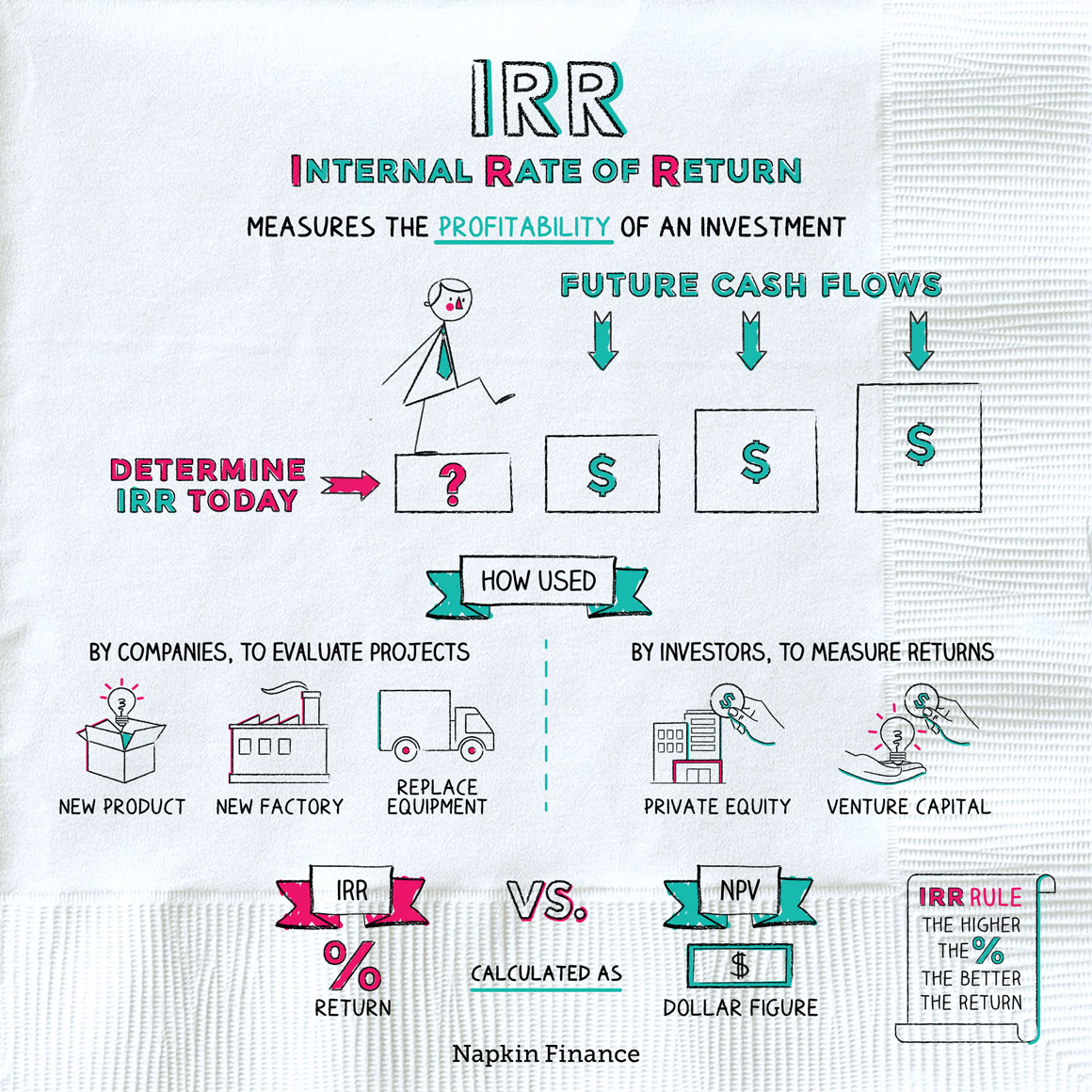
The primary advantage of the internal rate of return (IRR) is its ability to provide a single, easy-to-understand percentage that represents the expected annual growth rate of an investment. By accounting for the time value of money, IRR allows decision-makers to compare the profitability of diverse projects regardless of their scale or initial capital requirements.
The Internal Rate of Return (IRR) remains a cornerstone of corporate finance and investment analysis in 2026. As businesses navigate increasingly complex global markets, the ability to distill multifaceted cash flow projections into a single, comparable figure is invaluable. While other metrics like Net Present Value (NPV) provide the absolute dollar impact of a project, IRR offers a relative measure of efficiency. This distinction is crucial for capital budgeting, where the goal is often to maximize the return on limited resources.
Understanding the advantages of IRR requires looking beyond simple arithmetic. It involves recognizing how this metric bridges the gap between raw data and executive decision-making. By focusing on the "yield" of a project, IRR aligns investment analysis with the way most stakeholders perceive financial success: as a percentage return on capital employed.
Core Advantages of Internal Rate of Return
Integration of the Time Value of Money
One of the most significant advantages of IRR is its inherent consideration of the time value of money (TVM). In financial theory, a dollar received today is worth more than a dollar received in the future due to its potential earning capacity. Unlike simpler methods such as the accounting rate of return or the basic payback period, IRR discounts future cash flows back to their present value.
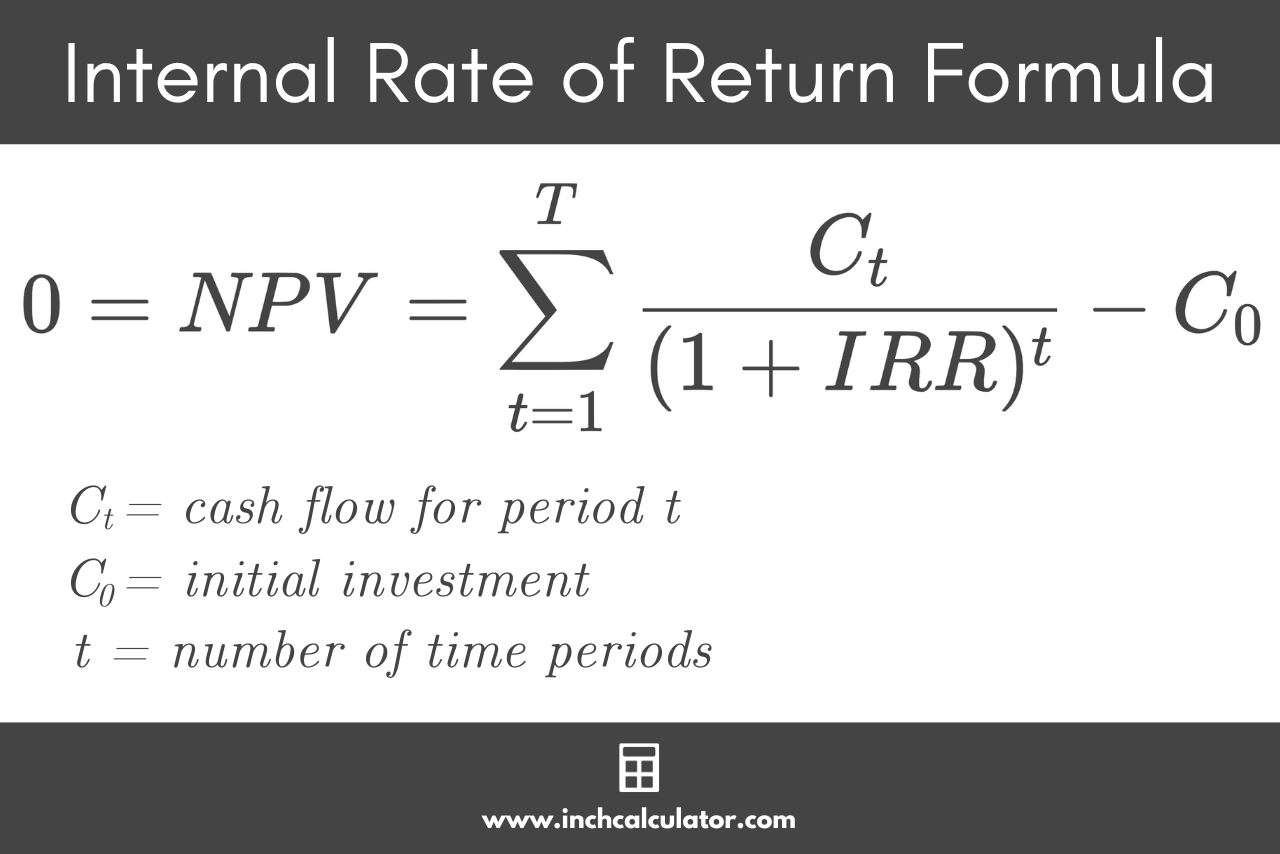
By solving for the discount rate that makes the net present value of all cash flows equal to zero, IRR ensures that the timing of receipts and payments is central to the evaluation. This is particularly beneficial for long-term infrastructure projects or research and development initiatives where the heaviest cash outflows occur early, and the inflows are delayed by years. IRR accurately penalizes projects that defer returns too far into the future, providing a more realistic picture of investment quality.
Simplicity and Intuitiveness of the Percentage Format
In the boardroom, clarity often trumps complexity. One of the pragmatic advantages of internal rate of return is that it expresses the result as a percentage. Executives and investors are naturally accustomed to thinking in terms of interest rates, yields, and growth percentages.
When a project is described as having an "IRR of 18%," the implication is immediately clear to most stakeholders: for every dollar invested, the project is expected to generate a compound annual return of 18 cents. Comparing this to a project with a 12% IRR is intuitive. In contrast, comparing two projects based on NPV—where one might be $2 million and another $5 million—can be misleading if the initial investments differ significantly. IRR levels the playing field by focusing on the efficiency of the capital rather than just the volume of the return.
Direct Comparison with Hurdle Rates and WACC
IRR provides a definitive benchmark for decision-making through the use of "hurdle rates." A hurdle rate is the minimum acceptable rate of return an organization requires before committing to a project. Most firms set this rate based on their Weighted Average Cost of Capital (WACC), adjusted for the specific risk profile of the investment.
The decision rule for IRR is straightforward: if the IRR exceeds the hurdle rate, the project is considered financially viable. If it falls below, the project is rejected. This clear "Go/No-Go" signal simplifies the screening process for large portfolios of potential investments. It allows management to rank projects by their margin of safety—the spread between the IRR and the cost of capital—ensuring that the firm prioritizes the most "profitable" uses of its money.
Independence from External Discount Rate Estimates
While NPV requires the analyst to pre-determine an exact discount rate (which can be highly subjective and fluctuate with market conditions), IRR is calculated using only the project's internal cash flows. This "internal" nature is a distinct advantage when the future cost of capital is uncertain or volatile.
By calculating the IRR first, an analyst can determine the project's inherent "break-even" discount rate. Only after this rate is established does the team need to debate whether the firm’s cost of capital is likely to stay below that threshold. This separates the project's intrinsic performance from external macroeconomic assumptions, allowing for a more focused analysis of the project's operational risks and rewards.
Practical Applications in Portfolio Management
The advantages of internal rate of return extend into the broader strategy of portfolio management. In 2026, many private equity firms and venture capitalists rely on IRR as the primary metric for reporting performance to limited partners. This is because IRR effectively captures the impact of the "J-curve"—the period of initial losses followed by significant gains—that is common in start-up and buyout environments.
Furthermore, IRR is highly effective for comparing investments across different asset classes. An institutional investor can use IRR to compare the expected performance of a real estate development project against a fleet of new cargo aircraft or a software-as-a-service (SaaS) expansion. Because the metric is agnostic to the type of asset, it facilitates a "best-of-breed" capital allocation strategy.
IRR vs. Other Financial Metrics
To fully appreciate the strengths of IRR, it must be viewed in context with other common capital budgeting tools. Each metric serves a specific purpose, but IRR often remains the preferred choice for initial screening and comparative ranking.
| Metric | Primary Use Case | Key Advantage | Major Limitation |
|---|---|---|---|
| Internal Rate of Return (IRR) | Ranking and Efficiency | Intuitive percentage; accounts for TVM. | Assumes reinvestment at the IRR rate. |
| Net Present Value (NPV) | Wealth Maximization | Provides absolute dollar value of the project. | Difficult to compare projects of different scales. |
| Payback Period | Liquidity Assessment | Simple to calculate; focuses on risk duration. | Ignores all cash flows after the payback date. |
| Profitability Index (PI) | Resource Constraints | Shows the ratio of payoff to investment. | Does not indicate the total scale of the project. |
| Modified IRR (MIRR) | Accurate Reinvestment | Uses a realistic reinvestment rate. | Slightly more complex to calculate and explain. |
Specialized Variations: XIRR and MIRR
In sophisticated financial modeling, the standard IRR formula is often supplemented by variations that address specific real-world scenarios. These variations maintain the advantages of the percentage-based approach while adding layers of precision.
The Advantage of XIRR for Irregular Intervals
The standard IRR assumes that cash flows occur at regular annual or monthly intervals. However, in most business operations, investments and returns happen on specific, irregular dates. XIRR (Extended Internal Rate of Return) is a function used in modern financial software that incorporates specific dates for each cash flow. This provides a much more accurate annual yield, especially in industries like construction or venture capital where cash calls and distributions are unpredictable.
The Advantage of MIRR for Reinvestment Realism
A common academic critique of IRR is the "reinvestment assumption"—the math assumes that all interim cash inflows are reinvested at the same high IRR. In reality, a company might have a project with a 30% IRR but only be able to reinvest the cash it generates at a 6% market rate.
The Modified Internal Rate of Return (MIRR) solves this by allowing the user to specify a "reinvestment rate." Even though MIRR is a separate calculation, it is essentially an enhancement of the IRR philosophy. It keeps the intuitive percentage format while providing a more conservative and realistic outlook on long-term wealth accumulation.
Strategic Decision Making: Why IRR Persists in 2026
Despite the rise of artificial intelligence and automated "black box" financial models, the human element of decision-making keeps IRR relevant. Strategic planning involves more than just numbers; it involves persuasion and consensus-building.
Communication with Non-Financial Stakeholders
A major advantage of IRR is its role as a "universal language." Marketing directors, operations managers, and engineering leads may not fully grasp the nuances of a discounted cash flow (DCF) model or the intricacies of the WACC calculation. However, they almost certainly understand what an "18% return" means. Using IRR allows the finance department to communicate project value to the entire organization, ensuring that everyone is aligned on the project's goals and expectations.
Identifying Margin of Safety
IRR is an excellent tool for sensitivity analysis. A common practice in 2026 is to calculate how much a project's costs could increase—or how much its revenues could decrease—before the IRR drops below the hurdle rate. This "margin of safety" analysis is much easier to conceptualize with percentages. For example, if a project has an IRR of 25% and the cost of capital is 10%, management knows they have a 15% "cushion" to absorb unexpected shocks.
Common Pitfalls and How They Highlight IRR's Strengths
Critics often point to the "multiple IRR" problem (where unconventional cash flows result in more than one mathematical solution) or the "scale problem" (where a high IRR project is actually less valuable than a lower IRR project with a massive total return). However, these limitations actually drive deeper analysis.
When a project displays multiple IRRs, it signals to the analyst that the cash flow structure is complex and requires a closer look at the timing of outflows. When the scale problem arises, it forces a comparison with NPV. In this way, the "weaknesses" of IRR act as flags, ensuring that financial professionals do not rely on a single number but rather use a suite of tools to understand the full investment picture. The primary advantage here is that IRR is sensitive enough to these variables to trigger necessary investigative due diligence.
Frequently Asked Questions
Does a higher IRR always mean a better investment?
Not necessarily. While a higher IRR indicates better capital efficiency, it does not account for the absolute size of the return. A 50% IRR on a $1,000 investment is only $500, whereas a 15% IRR on a $1,000,000 investment is $150,000. For firms looking to maximize total wealth, NPV should be used alongside IRR to ensure that the scale of the project justifies the effort.
How does IRR handle inflation in 2026?
IRR is typically calculated using "nominal" cash flows, meaning they include expected inflation. Therefore, the resulting IRR is also a nominal rate. To find the "real" rate of return, one must adjust the IRR for the expected inflation rate using the Fisher equation. This is a vital step for long-term investments where inflation can significantly erode the purchasing power of future cash flows.
Why do some investors prefer IRR over NPV?
Investors often prefer IRR because it is a measure of "yield." In private equity and real estate, performance is traditionally benchmarked against other annualised returns (like the S&P 500 or bond yields). IRR allows for this direct comparison. Additionally, IRR is easier to use when the exact cost of capital is unknown or debated among stakeholders.
Can IRR be used for projects with negative cash flows in the middle?
Yes, but this can lead to the "multiple IRR" problem mentioned earlier. When a project has alternating positive and negative cash flows (e.g., a mine that requires a massive mid-life overhaul), the mathematical formula may yield two or more IRRs. In these cases, it is standard practice to use the Modified Internal Rate of Return (MIRR) or rely more heavily on NPV for the final decision.
Is IRR useful for personal finance?
Absolutely. IRR is the math behind the "annualized return" on your retirement account or a rental property. By treating your initial investment as an outflow and your dividends/rent/final sale as inflows, you can calculate your personal IRR to see how your investments are performing compared to a standard savings account or the stock market.
Final Recommendation for Financial Analysts
For the modern financial analyst in 2026, the internal rate of return should remain a primary tool for initial project screening and comparative ranking. To maximize its advantages, always use IRR in conjunction with NPV. Use IRR to determine the efficiency and "yield" of the capital, and use NPV to confirm the total wealth created for the organization. For projects with irregular cash flows or highly variable reinvestment opportunities, prioritize XIRR and MIRR to provide a more accurate and conservative reflection of the investment's true potential.