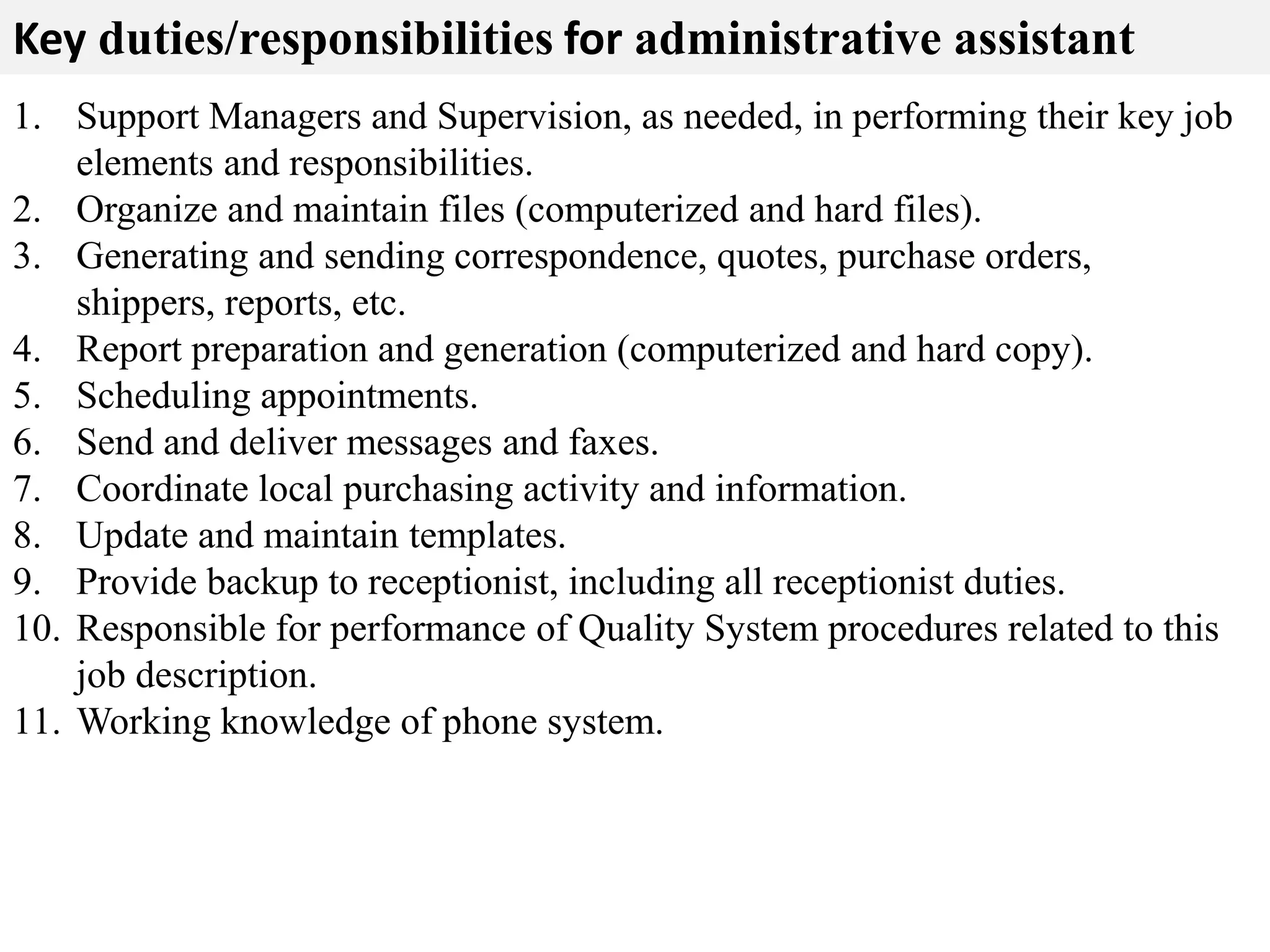
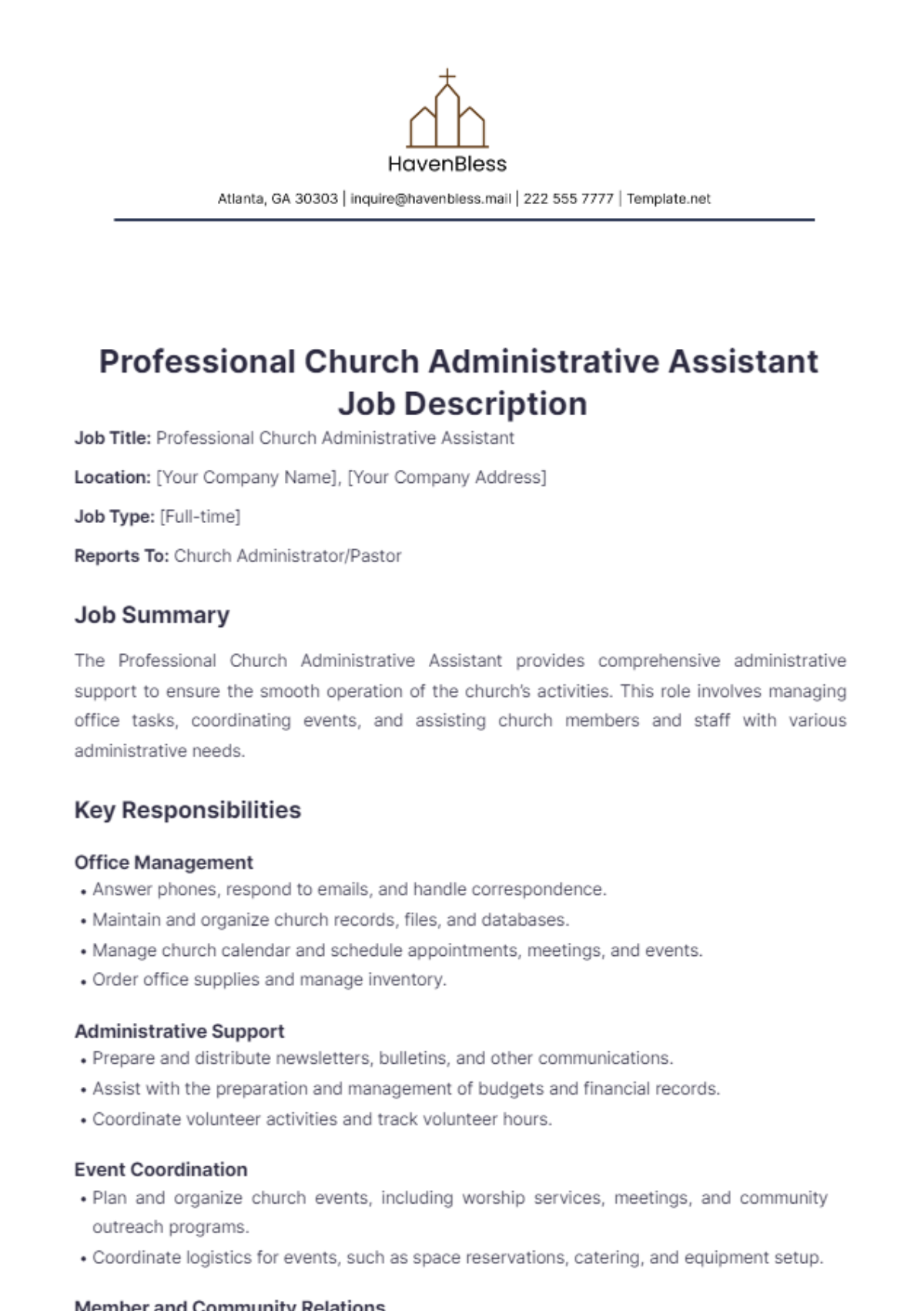
An administrative assistant duties description in the workplace focuses on coordinating organizational operations, managing complex digital communications, and providing high-level logistical support. In 2026, these professionals serve as critical operational hubs, utilizing advanced AI tools and project management software to ensure workflow efficiency, data integrity, and seamless collaboration across diverse corporate departments.
The Evolution of Administrative Assistant Duties in 2026
The landscape of office administration has undergone a significant transformation. No longer confined to traditional clerical tasks, the modern administrative assistant duties description in the workplace reflects a shift toward strategic partnership and systems management. This evolution is driven by the integration of automated workflows and the necessity for high-level digital literacy.
Administrative assistants are now expected to be the masters of the "hybrid workspace." They bridge the gap between physical office requirements and virtual collaboration needs. This means the role demands a dual focus: maintaining the physical infrastructure of an office while simultaneously managing the cloud-based ecosystems where work actually happens. The focus has moved from mere "data entry" to "data curation" and "process optimization."
Furthermore, as organizations prioritize agility, the administrative assistant is often the first line of defense against operational friction. They identify bottlenecks in communication, suggest improvements to software stacks, and ensure that executive priorities are translated into actionable schedules. This strategic layer makes the role indispensable to both small businesses and multinational corporations.
Core Daily Responsibilities and Workflow Management
At the heart of the administrative assistant duties description in the workplace lies the management of daily operations. While the tools have changed, the fundamental goal remains the same: ensuring the organization runs smoothly.
Calendar and Schedule Coordination
In 2026, calendar management involves more than just booking appointments. It requires a deep understanding of time-blocking, priority alignment, and "buffer" management. Administrative assistants must coordinate across multiple time zones, manage automated scheduling software, and resolve conflicting priorities without constant supervision. They are responsible for protecting the time of the team or executive they support, ensuring that meetings are purposeful and that there is adequate time for "deep work."
Document Management and Content Curation
Traditional filing has been replaced by sophisticated digital asset management. An assistant is responsible for maintaining the integrity of the company’s digital library. This includes version control for important contracts, ensuring that all internal documentation is accessible yet secure, and utilizing AI-driven tools to summarize lengthy reports for executive review. They must be proficient in cloud platforms like Google Workspace, Microsoft 365, and specialized enterprise resource planning (ERP) systems.
Communication Triage
The volume of communication in the modern workplace—spanning email, Slack, Teams, and video conferencing—is immense. A primary duty of the administrative assistant is communication triage. They filter incoming requests, respond to routine inquiries autonomously, and escalate critical issues. This requires an exceptional command of professional tone and the ability to represent the organization’s brand in every interaction.
Technical Competencies and the AI-Integrated Workspace
The technical requirements for an administrative assistant in 2026 are rigorous. The "description in the workplace" now mandates proficiency in several high-level technological areas.
AI and Automation Implementation
Administrative assistants are the primary users of generative AI and robotic process automation (RPA) within the office environment. Duties include prompting AI to draft initial correspondence, using automation tools like Zapier or Power Automate to link disparate software applications, and managing AI-driven meeting transcription and action-item extraction. By automating repetitive tasks, the assistant frees up time for more complex project support.
Virtual Meeting Facilitation
With the continued prevalence of hybrid work, the assistant is the "producer" of the virtual workspace. This involves setting up secure video conference links, managing digital whiteboards during brainstorming sessions, and troubleshooting technical issues in real-time. They ensure that remote participants are just as engaged and informed as those in the physical office.
Data Privacy and Cybersecurity Awareness
As assistants handle sensitive company data, they are on the front lines of cybersecurity. Their duties include enforcing password protocols, identifying phishing attempts, and ensuring that document sharing adheres to current data protection regulations (such as GDPR or CCPA updates relevant in 2026). They must understand the basics of encrypted communication and secure cloud storage.
Logistical and Operational Oversight
The physical and logistical aspects of the office remain a cornerstone of the administrative assistant duties description in the workplace. Even in a digital-first world, the physical environment must be maintained.
Facility and Supply Chain Management
The assistant oversees the procurement of office supplies, but in 2026, this is often handled through automated inventory systems. They manage relationships with vendors—ranging from cleaning services to hardware providers—and ensure that the office environment remains conducive to productivity. This also includes managing the logistics of "hot-desking" or flexible seating arrangements in hybrid offices.
Event Planning and Travel Coordination
Whether it is an internal team-building event or an international board meeting, the administrative assistant handles the end-to-end logistics. This involves venue sourcing, catering coordination, and complex travel itineraries. In 2026, travel coordination also includes navigating fluctuating travel regulations and ensuring that sustainable, eco-friendly travel options are prioritized in accordance with corporate social responsibility (CSR) goals.
Financial Administration and Expense Tracking
Basic bookkeeping and expense management are standard duties. Assistants use fintech platforms to track departmental spending, process invoices, and manage reimbursement requests. They must ensure that all financial activities align with the company’s budget and tax compliance standards.
Professional Soft Skills and Emotional Intelligence
While technical skills are essential, the "human" element of the administrative assistant role is what provides the most value. These "power skills" are often the deciding factor in career advancement.
- Problem-Solving: The ability to think on one's feet when a flight is canceled, a server goes down, or a meeting is double-booked.
- Discretion and Confidentiality: Handling sensitive information regarding personnel, finances, and corporate strategy with absolute integrity.
- Adaptability: The modern workplace is characterized by rapid change. An assistant must be able to pivot between tasks and learn new software tools with minimal friction.
- Cultural Intelligence: In a globalized economy, assistants frequently interact with people from diverse backgrounds. Understanding cultural nuances in communication is vital for maintaining professional relationships.
Education, Training, and Certification Requirements
The path to becoming a high-level administrative assistant in 2026 typically involves a combination of formal education and specialized certifications.
- Formal Education: While a high school diploma is a minimum, many employers now prefer an Associate's or Bachelor's degree in Business Administration, Communications, or a related field.
- Professional Certifications: Credentials from the International Association of Administrative Professionals (IAAP) remain the gold standard. The Certified Administrative Professional (CAP) designation demonstrates a high level of competency.
- Technical Training: Certifications in specific software suites, such as the Microsoft Office Specialist (MOS) program, are highly valued.
- Continuous Learning: Due to the pace of technological change, assistants are expected to engage in ongoing professional development, particularly in the areas of AI and data management.
Comparative Overview of Administrative Roles
The following table outlines how duties vary based on the level of the position within the organization.
| Duty Category | Junior Administrative Assistant | Senior Administrative Assistant | Executive Assistant (EA) |
|---|---|---|---|
| Primary Focus | Daily clerical tasks and reception. | Workflow optimization and team support. | Strategic partnership and executive time management. |
| Tech Level | Standard office software and email. | Advanced AI tools and project management. | High-level data analytics and CRM systems. |
| Decision Making | Limited; follows established protocols. | Moderate; manages vendors and small budgets. | High; often makes decisions on behalf of the executive. |
| Meeting Roles | Scheduling and basic minute-taking. | Facilitation and action-item tracking. | Strategic planning and board liaison. |
| Communication | Internal team coordination. | External vendor and client relations. | Stakeholder management and public relations support. |
Frequently Asked Questions
What are the top 3 most important duties of an administrative assistant today?
In 2026, the three most critical duties are calendar and time management, digital workflow automation, and high-level communication triage. These tasks ensure that the organization remains productive despite the complexities of hybrid work and high information volume. By mastering these areas, an assistant becomes an essential asset to their team.
Is the role of administrative assistant being replaced by AI?
No, the role is being augmented by AI, not replaced. While AI handles repetitive data entry and scheduling, it cannot replace the emotional intelligence, ethical judgment, and complex problem-solving skills of a human assistant. The administrative assistant duties description in the workplace has shifted to include AI management, making the human professional more efficient and strategically valuable.
What software should a modern administrative assistant know?
Proficiency is required in comprehensive suites like Microsoft 365 and Google Workspace. Additionally, knowledge of project management tools like Asana or Monday.com, communication platforms like Slack, and AI-assisted tools like Notion or ChatGPT Enterprise is essential for maintaining a modern workflow.
Can an administrative assistant work remotely in 2026?
Yes, many administrative roles are now "virtual" or "remote-first." However, the duties description in the workplace often depends on the nature of the industry. While tech and professional services allow for remote work, roles in healthcare or manufacturing may still require a physical presence to manage facilities and on-site logistics.
What is the typical career path for an administrative assistant?
Many start as junior assistants and move into senior or executive assistant roles. From there, the skills gained—such as project management, financial oversight, and operations—frequently lead to roles like Office Manager, Operations Manager, or even Project Coordinator. The role serves as an excellent foundation for understanding how a business functions from the ground up.
Practical Recommendations for Employers and Candidates
For employers, when drafting an administrative assistant duties description in the workplace, it is vital to be specific about the technical stack used in your office. Don't just list "computer skills"; specify the need for AI literacy and experience with specific project management methodologies. This ensures you attract candidates who can hit the ground running in a fast-paced environment.
For candidates, emphasize your ability to solve problems independently. While listing your technical skills is important, providing examples of how you improved a process or managed a crisis will differentiate you in the job market. Focus on building a portfolio that demonstrates your proficiency in both the "soft" and "hard" skills required for the 2026 workplace.
To stay competitive, professionals should regularly consult the Bureau of Labor Statistics for updated occupational outlooks and wage data, and engage with professional bodies like SHRM to stay informed about workplace trends and HR standards.