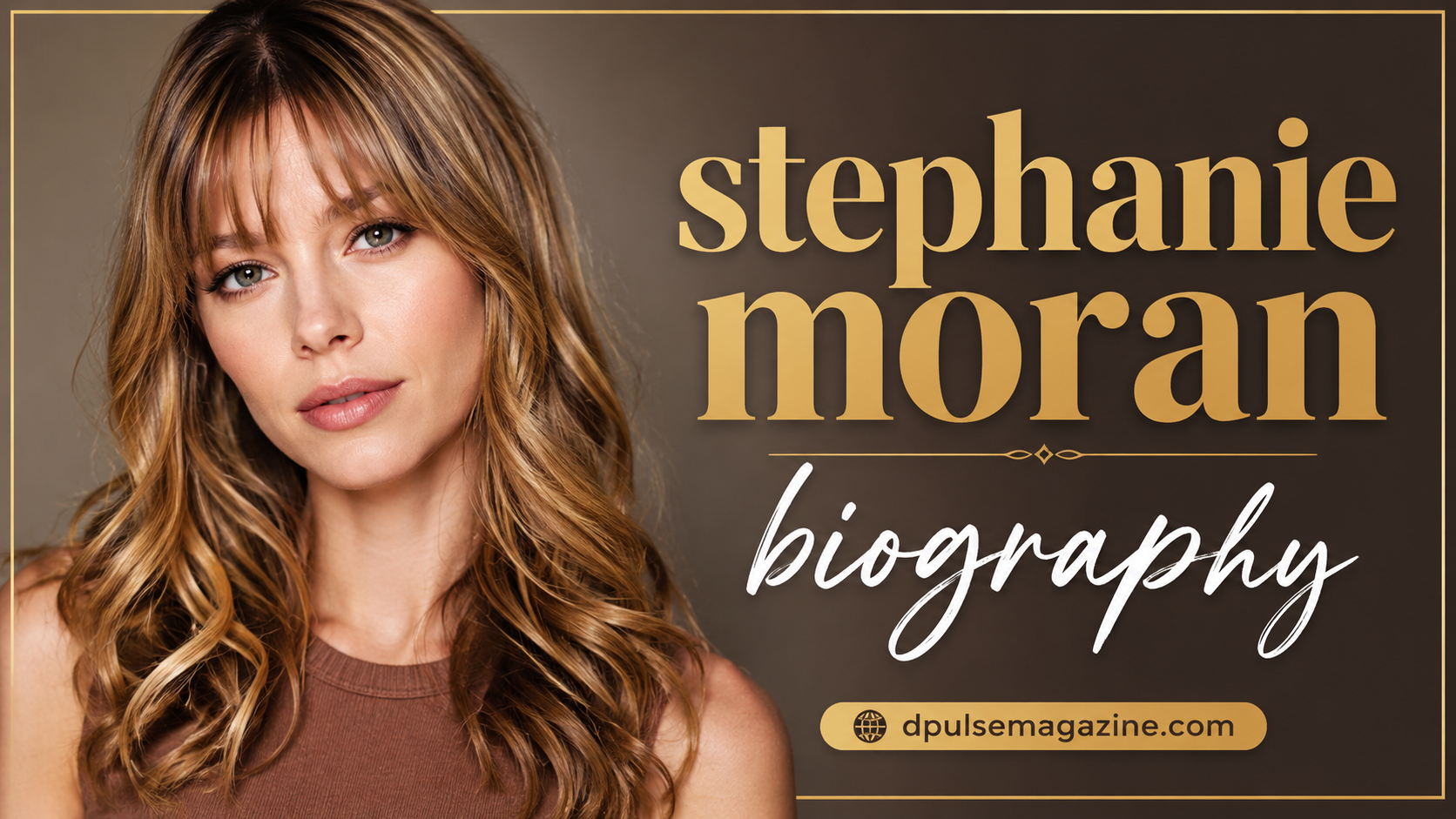
The career of actress Moran is characterized by a deliberate transition from foundational character work in regional theater and independent cinema to a sophisticated, nuanced approach in later, more complex screen projects. Her trajectory reflects a mastery of craft that spans decades, marked by a commitment to character-driven storytelling rather than fleeting trends.
The Formative Years: Building a Foundation
Every accomplished actor’s career begins with a period of accumulation—the gathering of tools, experiences, and failures that eventually define their professional range. For actress Moran, the early years were not defined by high-profile blockbusters or overnight stardom, but by the rigorous demands of stage performance and small-scale film productions.
During this initial stage, Moran focused on the mechanics of acting: voice projection, emotional accessibility, and the ability to disappear into a role. Working in independent theater allowed her to experiment with various genres, from classical drama to experimental avant-garde pieces. These years were crucial for developing her professional discipline. In the industry, this period is often referred to as the "developmental phase," where an actor learns how to maintain consistency across multiple takes and how to navigate the collaborative nature of a film set.
The early career of Moran was also defined by a willingness to accept roles that required physical and emotional vulnerability. By choosing projects that demanded high output for relatively low visibility, she cultivated a reputation among casting directors and peers as a "workhorse"—someone reliable, prepared, and deeply invested in the script’s subtext. This reputation proved to be the most valuable asset during her transition into mid-career, as it opened doors to more prestigious projects that required a lead capable of anchoring a complex narrative.
Mid-Career Transitions and Market Integration
As Moran transitioned out of her early phase, her career began to reflect the broader changes in the entertainment industry. This period saw her move from experimental theater into mainstream independent film, where her previous training allowed her to navigate tighter budgets and shorter filming schedules with efficiency.
Her selection process became more discerning. Rather than seeking volume, she began to prioritize "impact roles"—characters that allowed for a clear arc, moral ambiguity, or high-stakes emotional performance. This phase is characterized by a shift in perception: she was no longer seen as a character actor looking for work, but as a lead capable of carrying a film's emotional weight.
Technically, this involved mastering the "close-up economy." Acting for the camera differs significantly from stage acting in that the internal process must be visible to the lens without the aid of broad physical gestures. Moran’s ability to communicate complex thoughts through subtle facial micro-expressions became her signature during this time, separating her from contemporaries who relied on more overt dramatic techniques.
Later Work: Refinement and Legacy
In her more recent projects, Moran has gravitated toward roles that explore themes of aging, institutional power, and the complexities of human relationships. This later work is defined by an economy of motion and speech. There is a sense of "less is more" in her performances; she understands that by 2026, audience tastes have shifted toward realism and understated, authentic portrayals.
Her later projects often involve collaborations with auteur directors who value her ability to interpret dense, literary screenplays. While she maintains a selective approach to her work, the roles she accepts are consistently layered, often requiring extensive historical or psychological research. This shift toward "prestige" projects reflects a deliberate effort to curate a career that prioritizes longevity and artistic contribution over fame.
| Phase | Primary Objective | Performance Style | Key Focus |
|---|---|---|---|
| Early Career | Skill acquisition | Expansive, stage-based | Versatility & endurance |
| Mid-Career | Reputation building | Refined, cinematic | Emotional nuance |
| Later Work | Artistic legacy | Minimalist, authoritative | Narrative complexity |
Technical Considerations for Performance Analysis
To understand Moran’s evolution, one must examine the technical shift in how her performances are captured. Early works often utilized broader lighting and wider framing, which necessitated a performance that could bridge the gap between the audience and the character. Modern filmmaking, characterized by high-definition, 8K-ready digital sensors and intricate lighting rigs, demands a completely different approach.
Moran’s later work exhibits a "cinematic intimacy." She has adapted her process to account for the proximity of modern camera equipment, allowing her to convey intimacy or malice with the slightest tilt of the head or a shift in focus. This is a technical requirement of 2026-era filmmaking, where the camera serves as an intrusive observer. Her success in this environment is a testament to her adaptability and her refusal to stagnate.
Common Misconceptions Regarding Professional Evolution
One frequent misunderstanding regarding actors with long careers like Moran is the assumption that their "later work" is a result of industry privilege or name recognition alone. In reality, the professional landscape of 2026 is hyper-competitive; an actor of her standing must continue to audition, research, and refine their craft just as rigorously as a newcomer.
Another misconception is that the quality of work necessarily improves with age. While experience brings wisdom, it also brings the risk of mannerisms. Moran’s career is an excellent case study in how to avoid such traps. By periodically taking on roles that force her outside her "comfort zone"—such as voice acting or smaller, supporting roles in high-concept genre films—she prevents her acting style from becoming predictable.
Related Questions and Contextual Insights
1. How does an actor like Moran maintain relevance in a changing industry? Relevance is maintained through adaptability. By embracing new distribution models, such as streaming platforms, and being willing to engage with diverse storytelling formats, Moran ensures that her work remains visible to contemporary audiences without compromising her artistic standards.
2. What role does theater experience play in the later work of screen actors? Theater experience provides a baseline for script analysis and character continuity. In film, scenes are often shot out of order; the discipline learned in theater allows actors to track a character's emotional arc regardless of the filming schedule.
3. Is the "early career" phase distinct from "later work" in terms of salary? Yes, but not just in terms of numbers. Early career work is often paid in "experience" and industry networking. Later work is characterized by higher day rates and, more importantly, creative control and backend participation, allowing the actor to function as a creative partner rather than just an employee.
4. Why is character-driven work prioritized over commercial blockbusters in a later career? For many actors, once financial stability is achieved, the primary goal shifts toward building a body of work that will be remembered for its quality. Character-driven roles offer more substantial material that can showcase the actor's range, which is often stifled by the rigid structures of commercial blockbusters.
Professional Next Steps and Guidance
For those interested in studying the progression of actress Moran, the most effective approach is to view her filmography in reverse chronological order. Start with her 2026-era performances to see the technical culmination of her skills, then move backward to observe the building blocks.
If you are an aspiring actor or student of film, focus on the "why" of her choices during her transition periods. Pay attention to how she altered her cadence, her physical presence, and her approach to silence in the scenes. Her career is not merely a collection of roles, but a series of calculated steps toward a specific level of performance, suggesting that the most sustainable path to a long career is the constant, humble pursuit of craft.