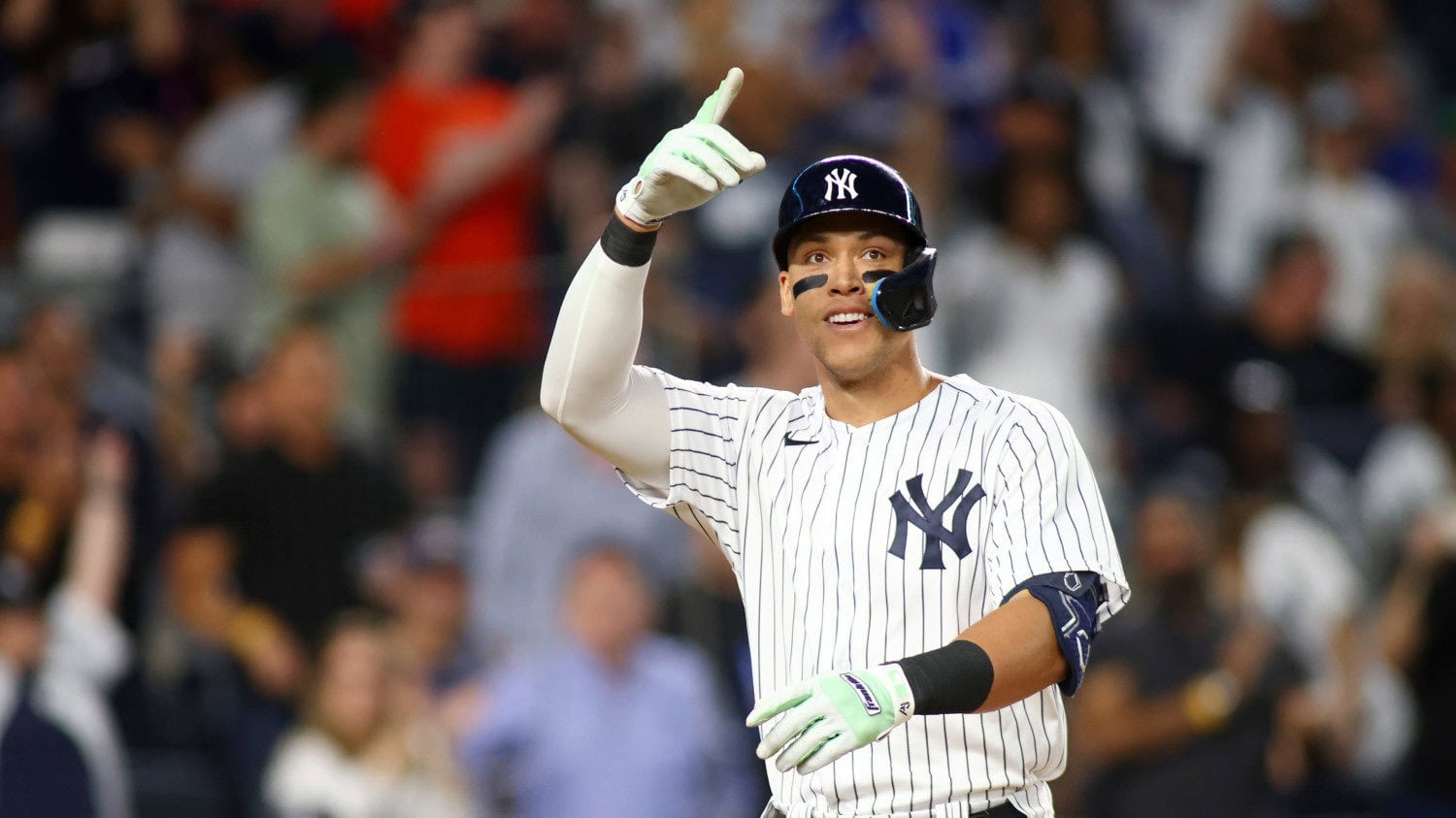
Aaron Judge is currently playing under a nine-year, $360 million contract with the New York Yankees, which pays him an average annual value (AAV) of $40 million. This deal, signed in December 2022, serves as the cornerstone of his professional earnings and remains one of the most significant contractual agreements in Major League Baseball (MLB) history, reflecting his status as an elite outfielder and team captain.
The Anatomy of the Nine-Year Agreement
The contract signed by Aaron Judge is a comprehensive financial instrument that guarantees him $360 million over the life of the deal. To understand how this impacts the New York Yankees' payroll and Judge's actual take-home pay, it is essential to distinguish between the Average Annual Value (AAV) and the specific cash payouts for any given season.
For the purposes of the MLB Competitive Balance Tax (CBT), commonly referred to as the "luxury tax," the league utilizes the AAV of $40 million. This figure is constant throughout the nine years of the contract, regardless of how the actual cash is distributed. This mechanism prevents teams from front-loading or back-loading contracts to artificially manipulate their tax thresholds in specific, high-spending seasons. The $40 million AAV is calculated by taking the total value of the guaranteed money and dividing it by the total years of the contract term.
Cash Flow and Seasonal Compensation
While the AAV is fixed for luxury tax purposes, the actual cash flow follows a different schedule. Judge’s annual base salary provides the liquidity that defines his yearly earnings. Understanding this distinction is vital for those tracking the team’s cash commitments against their budgetary limits.
The structure of the deal ensures that Judge remains one of the highest-paid players in the sport annually. Because this is a guaranteed contract, the player is protected against injury or performance decline, ensuring that the total $360 million is paid out over the term provided he remains on the active roster or under contract according to the terms of the Collective Bargaining Agreement (CBA).
Historical Context of the Contract Negotiation
The path to this contract was marked by significant speculation during the 2022 season, a year in which Judge famously set the American League single-season home run record with 62. After turning down an extension offer prior to the 2022 season—an offer that would have been worth significantly less than his final haul—Judge entered free agency following an MVP-caliber performance.
The negotiation period highlighted the tension between market value and historical payroll constraints. By the time the ink dried in December 2022, the contract had set a new precedent for position players in terms of total dollar amount and yearly salary. This negotiation serves as a primary case study for modern MLB contract discussions, balancing longevity with a high annual salary to secure a franchise cornerstone.
Comparative Analysis: Aaron Judge vs. MLB Salary Standards
To understand the significance of the $40 million AAV, it is helpful to place it in the context of the broader MLB financial landscape as of 2026. The following table illustrates the categories of salary structure in professional baseball.
| Salary Metric | Purpose | Impact on Team |
|---|---|---|
| Average Annual Value (AAV) | Luxury Tax Calculation | Impacts payroll flexibility |
| Base Salary | Annual Cash Payout | Determines cash flow requirements |
| Signing Bonus | Immediate Compensation | Distributed over contract life for tax |
| Performance Incentives | Reward for specific milestones | Typically counts toward total payout |
Unlike league-minimum salaries, which are set by the CBA and adjust based on the current economic standards of the sport, contracts like Judge’s are negotiated based on market demand. The $40 million threshold places him in the top tier of earners, alongside elite starting pitchers and other transformative hitters. This salary range is generally reserved for players who possess significant "marketability," meaning they drive attendance, merchandise sales, and television ratings beyond their raw on-field production.
Taxation and Legal Considerations
Professional athletes like Aaron Judge are subject to complex tax laws, primarily due to the "jock tax" system in the United States. Because Judge plays for the New York Yankees, he is subject to New York state and city taxes on income earned within the state. However, because MLB teams travel across various states to play, athletes must pay taxes in each jurisdiction where they earn income, based on the number of days spent working in those specific locations.
This means that a significant portion of his gross salary is directed toward state and federal income taxes, as well as contributions to the MLB Players Association (MLBPA) pension fund and other professional dues. While the contract headline figure is $360 million, the net income is significantly impacted by these multi-jurisdictional obligations. Financial planning for athletes at this level usually involves professional tax counsel to ensure compliance with the varied requirements of every state hosting an MLB franchise.
The Role of the Collective Bargaining Agreement (CBA)
The salary structure of any MLB player is governed by the Collective Bargaining Agreement between the MLB and the MLBPA. The CBA dictates the minimum salary, the luxury tax thresholds, and the rules surrounding free agency. When Aaron Judge negotiated his contract, the terms had to fall within the parameters set by the prevailing CBA at that time.
Changes in the CBA can affect how future contracts are structured, but existing contracts generally remain binding under the rules that were in effect at the time of signing, unless otherwise specified. For fans and analysts, tracking the "salary" often involves looking at how these labor agreements have allowed for the inflation of player salaries over the last decade. As the sport generates more revenue through broadcasting rights and digital engagement, the baseline for "star" salaries continues to move upward, making a $40 million AAV more common for elite-tier talent today than it was in previous years.
Performance and Salary Correlation
A common inquiry regarding such massive contracts is the correlation between salary and on-field output. In professional sports, "value" is often measured using metrics such as Wins Above Replacement (WAR). While the front office evaluates salary based on long-term projections and marketing value, the analytical community frequently assesses the "cost per win."
For the Yankees, Aaron Judge's contract is viewed as an investment in a franchise pillar. His leadership as team captain and his ability to influence game outcomes provide intangible value that often exceeds the raw statistics found on a spreadsheet. However, the salary does limit the team's ability to sign other high-cost free agents, as the total payroll must stay within reasonable limits to avoid penalties associated with exceeding the Competitive Balance Tax thresholds.
Frequently Asked Questions
What is the duration of Aaron Judge’s current contract? Aaron Judge is under contract for nine years. The deal commenced with the 2023 season and is scheduled to run through the 2031 season.
How does Judge’s salary impact the Yankees' luxury tax? The luxury tax (Competitive Balance Tax) is calculated using the Average Annual Value (AAV) of $40 million. This amount is applied to the team's total payroll each year for tax calculation purposes.
Is Aaron Judge’s salary guaranteed if he gets injured? Yes. In Major League Baseball, standard player contracts are fully guaranteed. As long as Judge is under contract and adheres to the terms of the agreement, he is entitled to the full amount of his salary regardless of injury.
Are there performance bonuses in his contract? While the base salary is the primary component of his earnings, MLB contracts often include specific incentives for awards such as the MVP, Silver Slugger, or All-Star selections. These are supplementary to the core $360 million agreement.
How do taxes affect his take-home pay? Judge is subject to federal income tax, state income tax, and the "jock tax." Because he plays for a New York team and travels across the country, he must pay taxes in each state where he plays games, significantly reducing the gross salary amount to a net total.
Next Actions for Financial Analysis
For those interested in tracking the financial trajectory of MLB players, the most reliable next step is to consult the annual payroll data provided by official resources such as the MLB official website or the MLBPA salary databases. These portals provide updated breakdowns of team payrolls and player-specific contract statuses. Readers looking to understand the broader implications of these figures should monitor changes in the Collective Bargaining Agreement, as these rules set the ceiling and floor for future talent compensation in professional baseball.