Converting 8.1 kilometers to miles results in approximately 5.033 miles. This calculation is derived using the standard international conversion factor where one kilometer is defined as exactly 0.621371 miles. Whether you are planning a route, calibrating fitness equipment, or working with international engineering specifications, understanding this relationship is essential for accurate distance reporting.
Understanding the Relationship Between Kilometers and Miles
The necessity of converting 8.1 kilometers into miles arises from the global divergence in measurement systems. The kilometer is a unit of length in the metric system (SI), defined as 1,000 meters. Conversely, the mile is a unit of length in the Imperial and United States Customary systems. Because these two systems rely on different historical definitions, a standard conversion factor is required to ensure mathematical consistency.
To perform the conversion for 8.1 kilometers accurately, you must multiply the kilometer value by the conversion factor of approximately 0.62137119.
Calculation: 8.1 km × 0.62137119 miles/km = 5.0331066 miles
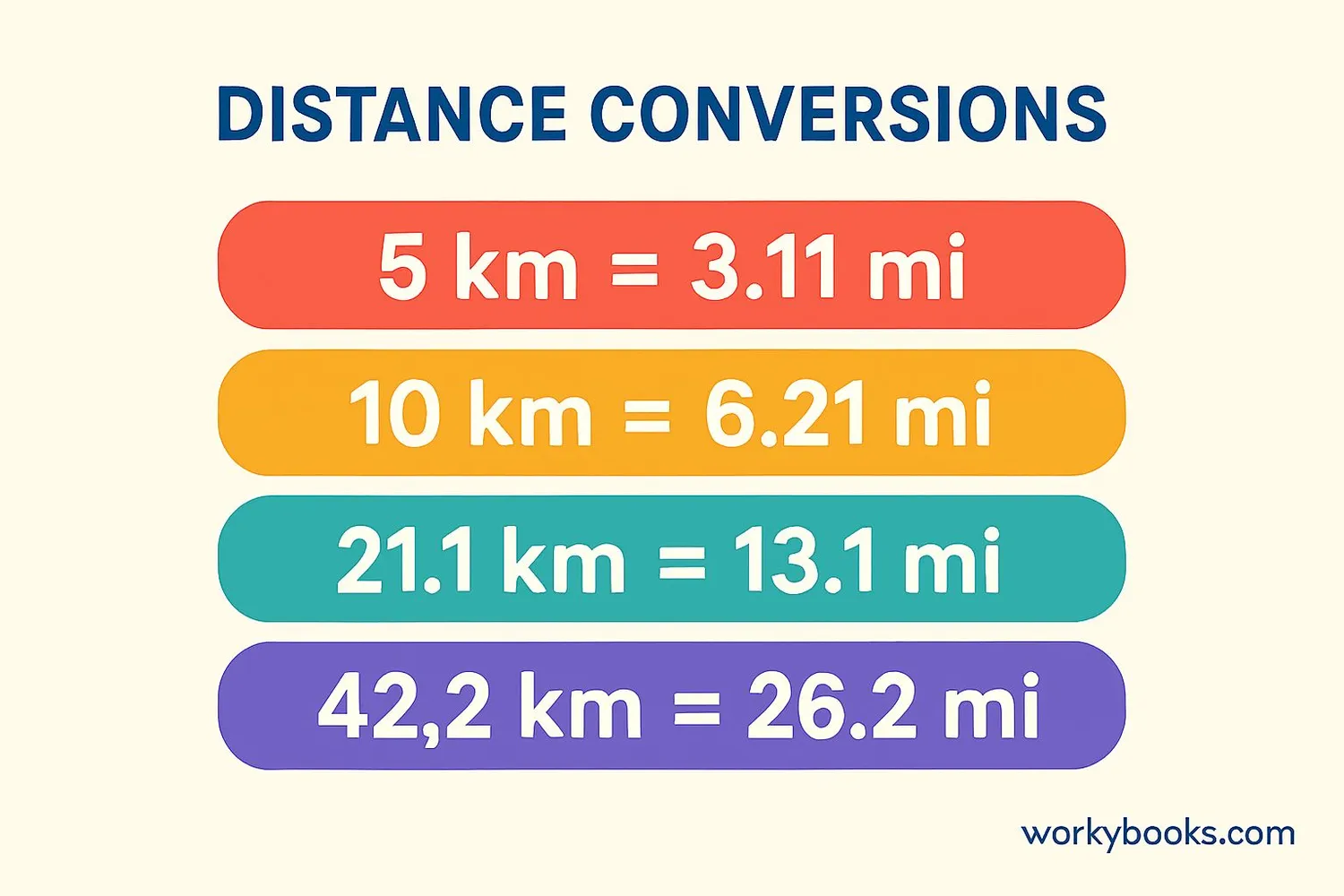
For most practical applications, such as running, walking, or general navigation, rounding to two or three decimal places is sufficient. Therefore, 8.1 kilometers is commonly accepted as 5.03 miles.
The Technical Basis of the Conversion Factor
The exactitude of this conversion relies on the 1959 international agreement that defined the yard as exactly 0.9144 meters. Since a mile is defined as 1,760 yards, the calculation follows a precise logical chain:
- Yard to Meter: 1 yard = 0.9144 meters.
- Mile to Meter: 1,760 yards × 0.9144 meters = 1,609.344 meters.
- Meter to Kilometer: 1,609.344 meters / 1,000 = 1.609344 kilometers.
- Inversion: 1 / 1.609344 = 0.621371192237 miles per kilometer.
This fixed relationship means that every kilometer measurement, including 8.1 km, is part of a static mathematical hierarchy. When you encounter high-precision requirements, such as those found in civil engineering or aviation, utilizing the full constant (0.62137119) is necessary to prevent cumulative errors over longer distances.
Practical Applications for Distance Conversion
Understanding how to convert 8.1 km into miles is highly relevant in various fields of daily life and professional practice.
Fitness and Athletic Training
In the context of athletics, many runners use metric distances for track events or international marathons, while road races in the United States often utilize mile markers. If you are training for a 5-mile run and track your progress in kilometers, knowing that 8.1 km is just slightly over 5 miles allows you to adjust your training intensity effectively.
Automotive and Transportation
Most modern vehicle dashboards can toggle between metric and imperial units. However, in regions where road signage and speed limits are exclusively in kilometers, drivers accustomed to miles often perform mental estimations. Knowing that 8.1 kilometers represents roughly 5 miles is a useful mental shorthand for estimating travel time on secondary roads.
Cartography and Geospatial Data
When analyzing map data, software systems often default to meters or kilometers. Professionals working with GIS (Geographic Information Systems) must ensure their output units match the requirements of the local regulatory or navigation infrastructure. Converting datasets from kilometers to miles is a common task for preparing reports intended for audiences in the United States or the United Kingdom.
Comparative Table of Metric to Imperial Distances
To better visualize how 8.1 kilometers compares to nearby increments, the following table illustrates the linear progression from 7 to 9 kilometers converted into miles.
| Kilometers (km) | Conversion Factor | Miles (mi) |
|---|---|---|
| 7.0 | 0.62137 | 4.35 |
| 7.5 | 0.62137 | 4.66 |
| 8.0 | 0.62137 | 4.97 |
| 8.1 | 0.62137 | 5.03 |
| 8.5 | 0.62137 | 5.28 |
| 9.0 | 0.62137 | 5.59 |
Note: Calculations in the table are rounded to two decimal places.
Common Mistakes in Distance Conversion
Errors in conversion usually stem from using rounded approximations during high-stakes calculations. A common error is using the rough estimate of 0.6 miles per kilometer. Using this simplified ratio for 8.1 kilometers would result in 4.86 miles, an error of nearly 0.17 miles. While this difference might be negligible for a casual walk, it is significant in fields like surveying or precision racing.
Another source of error is confusing the "nautical mile" with the "statute mile." A statute mile is 1,609.344 meters, whereas a nautical mile is exactly 1,852 meters. Always verify which unit of measure is required by your specific project documentation to avoid costly misunderstandings.
Frequently Asked Questions
Why does the conversion factor vary slightly across different calculators?
The variation typically occurs due to the degree of precision allowed by the calculator's programming. Some calculators truncate the conversion factor to 0.62 or 0.621, while others use the full IEEE 754 floating-point standard. For 8.1 km, the difference is minor, but for longer distances, the rounding error compounds significantly.
Is there a fast way to convert 8.1 km to miles without a calculator?
Yes. A common mental math trick is to divide the kilometer value by 8 and then multiply by 5. For 8.1 km, 8.1 / 8 = 1.0125, and 1.0125 × 5 = 5.0625. This provides a very close approximation (5.06) that is sufficient for most daily activities.
Does 8.1 km represent a standard distance in sports?
No, 8.1 km is not a standard standardized track or road racing distance. However, it is a common distance for localized training runs or loop trails in public parks where trail layout dictates the specific kilometer length.
How do I convert miles back to 8.1 km?
To convert miles back to kilometers, divide the mile value by 0.62137 or multiply by 1.60934. In the case of 5.033 miles, you would multiply by 1.60934 to return to your original 8.1 km value.
Are there environmental factors that change the distance?
Physical distance itself remains constant; however, the "effort" distance can vary due to elevation changes. When measuring a path of 8.1 km, remember that the true walking or cycling distance is affected by topography, which is not captured by simple horizontal unit conversion.
Recommendation for Accurate Measurement
When your work involves distances like 8.1 kilometers—whether for construction, mapping, or professional athletic planning—do not rely on mental approximations. Utilize the conversion factor of 0.621371 if you are working with a standard calculator. For repetitive tasks or complex datasets, integrate an automated unit conversion tool within your software suite. Always maintain the original metric units in your primary documentation, using the converted mile value only as a secondary reference to avoid "round-trip" conversion errors that can degrade the integrity of your data.