Grooming a Rottweiler requires the right combination of tools to manage their dense double coat, reduce seasonal shedding, and protect their sensitive skin. The best brushes for Rottweilers typically include a rubber curry brush for daily massage and loose hair removal, a medium-to-fine slicker brush for detangling and capturing undercoat debris, and an undercoat rake for heavy shedding periods, ensuring an efficient routine that keeps their muscular coat sleek and healthy.
Understanding the Rottweiler Coat
Rottweilers possess a distinct double coat consisting of a dense, weather-resistant undercoat and a straight, coarse, medium-length outer guard coat. While they do not have the long, flowing hair of breeds like Golden Retrievers or Huskies, they are surprisingly heavy shedders.
The outer coat provides protection against the elements, dirt, and minor abrasions, while the undercoat insulates the dog against both cold and heat. Because of this dual-layer construction, a single brush type is rarely sufficient for complete maintenance. Using an incorrect tool can scratch the skin with exposed wire pins or fail to penetrate the guard hairs, leaving the dead undercoat trapped against the skin. This trapped undercoat can lead to matting, hot spots, and increased shedding around the home.
Shedding occurs year-round, with heavier shedding cycles happening twice a year during seasonal transitions in the spring and autumn. During these periods, a Rottweiler's coat requires regular intervention to remove the volume of loose fur. Understanding this biological structure helps owners choose implements designed to work with the natural grain of the fur rather than against it.
Key Criteria for Selecting a Rottweiler Brush
Selecting the proper grooming tools for a large, muscular breed involves evaluating several technical and ergonomic factors. A brush that works well for a toy breed will lack the surface area and durability required for a 100-pound working dog.
- Coat Penetration: The pins or bristles must be long enough to reach past the stiff outer guard hairs and engage the soft undercoat without applying excessive pressure that could harm the skin.
- Skin Safety: Look for rounded pin tips, coated wire teeth, or flexible rubber nubs. Rottweilers have short hair in certain areas, such as the face and lower legs, where skin is thin and easily irritated.
- Ergonomics and Durability: Grooming a large dog takes time. Handles with rubberized, non-slip grips reduce hand fatigue, while robust plastic or metal construction ensures the tool withstands regular use.
- Ease of Cleaning: Brushes that accumulate hair quickly can become inefficient mid-groom. Mechanisms like self-cleaning buttons on slicker brushes or wide-spaced teeth on rakes simplify hair removal.
The 5 Best Brushes for Rottweilers
To maintain a Rottweiler's coat efficiently, a well-rounded toolkit is necessary. Below are the five best brushes tailored to the specific needs of this breed, covering daily maintenance, undercoat control, and finishing.
1. Rubber Curry Brush (The Daily Massage and Bathing Tool)
A rubber curry brush is arguably the most versatile and essential tool for a Rottweiler. Made from flexible rubber or silicone, these brushes feature short, thick nubs that massage the skin, stimulate natural oil production, and loosen embedded dirt and dead hair.
- How it works: Used in circular motions, the rubber material acts like a magnet for loose fur through static electricity and friction. It is gentle enough to be used on sensitive areas and can be used during bath time to work shampoo deep into the coat.
- Best for: Daily maintenance, short-coat management, and distribution of natural skin oils.
- Pros: Highly durable, excellent for use on wet or dry fur, provides a soothing massage dogs enjoy, and very easy to clean.
- Cons: Does not pull out deep undercoat during heavy shedding seasons on its own; better paired with a rake or slicker.
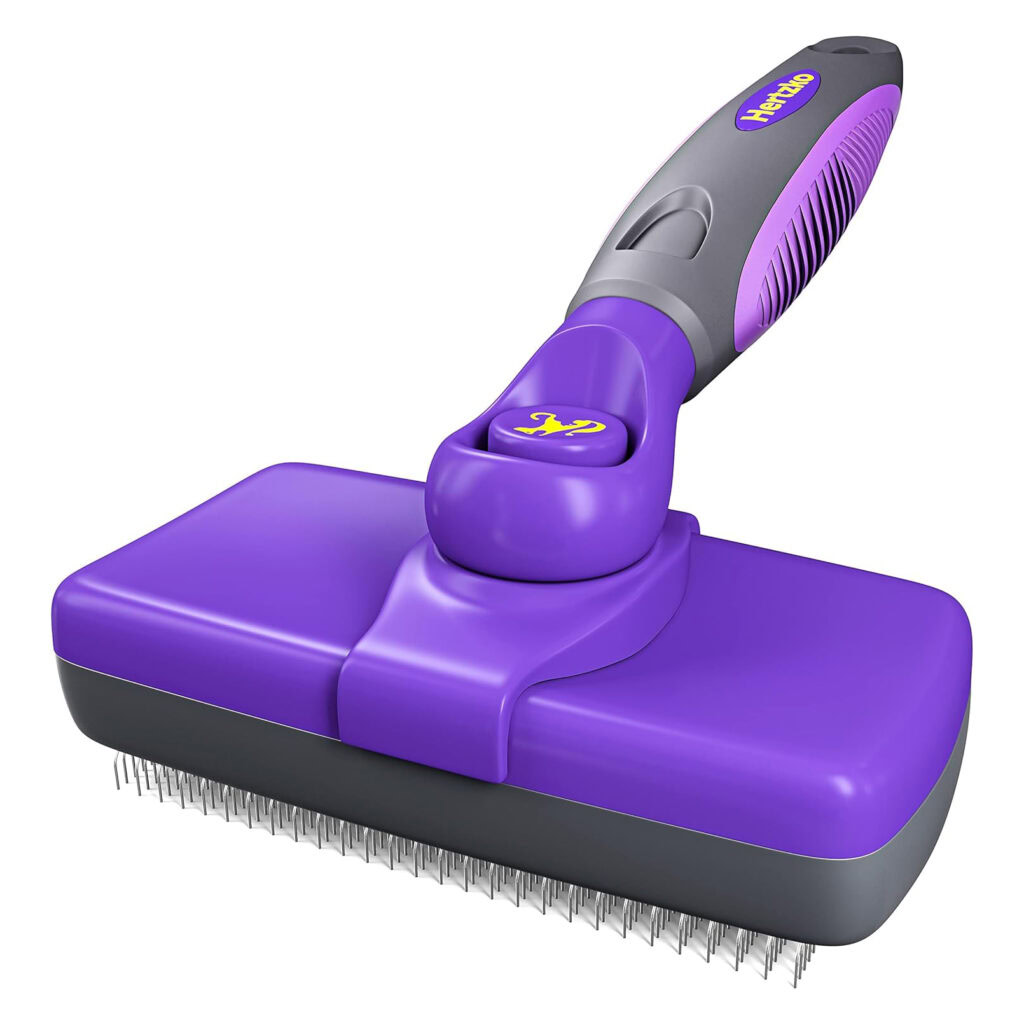
2. Slicker Brush (For Detangling and Loose Undercoat Removal)
A slicker brush features fine, short, wire pins angled closely together on a flat or curved base. For Rottweilers, a medium-to-large slicker brush with coated or polished tips is ideal for capturing loose hairs trapped beneath the outer coat.
- How it works: The angled wires glide through the topcoat, catching loose undercoat fibers before they can drop onto furniture or clothing.
- Best for: Weekly maintenance, capturing loose undercoat debris, and smoothing the topcoat.
- Pros: Highly effective at trapping loose hair; many modern versions feature push-button cleaning mechanisms that retract the pins for easy fur disposal.
- Cons: Can scratch the skin if pressed too hard; requires a gentle hand and should be used with the grain of the fur.
3. Undercoat Rake (For Heavy Seasonal Shedding)
An undercoat rake consists of a row of rounded, stainless steel pins set into a sturdy handle. It resembles a small garden rake designed specifically for dogs with dense double coats.
- How it works: The long, pin-like teeth penetrate deep beneath the coarse guard hairs, gently hooking and pulling out dead undercoat fur that standard brushes cannot reach. The tips of the pins are rounded to prevent scratching the skin.
- Best for: Spring and autumn shedding seasons when undercoat blowouts occur.
- Pros: Drastically reduces shedding by clearing out the deepest layers of trapped fur; saves significant time during peak shedding cycles.
- Cons: Must be used cautiously; aggressive pulling can tug on live hair or irritate the skin if overused in one spot.
4. Bristle Brush (For Finishing and Shine)
A traditional bristle brush uses tightly packed natural fibers, such as boar hair, or stiff synthetic bristles set in a wooden or plastic base. While it does not penetrate a double coat deeply, it serves a specific finishing purpose.
- How it works: The fine bristles sweep across the top layer of the guard coat, catching remaining dust particles and smoothing down the hair cuticles to create a high-gloss finish.
- Best for: Final grooming passes, post-bath touch-ups, and adding a healthy sheen to the coat.
- Pros: Excellent for polishing the coat, gentle on the skin, and great for short-haired facial areas.
- Cons: Ineffective for removing loose undercoat or managing shedding; acts strictly as a finishing tool.
5. Shedding Blade (For Rapid Surface Hair Removal)
A shedding blade is a loop of metal—either solid or toothed—attached to a handle, often designed to be used in either a loop or straight configuration.
- How it works: Drawn smoothly across the coat, the dull edge or blunt teeth act as a squeegee for loose fur, lifting dead hair off the surface of the coat quickly.
- Best for: Quick outdoor maintenance sessions during heavy shedding periods.
- Pros: Covers large surface areas rapidly, highly durable, and very effective at removing surface-level loose hair.
- Cons: Can feel rigid or harsh if used incorrectly; does not replace the need for a rubber curry or slicker brush for detailed grooming.
Comparison of Rottweiler Grooming Tools
| Brush Type | Primary Function | Best Used For | Skin Safety Level | Maintenance |
|---|---|---|---|---|
| Rubber Curry | Massage & Bathing | Daily upkeep, wet/dry brushing | Very High | Rinse with water |
| Slicker Brush | Undercoat & Detangling | Weekly shedding control | Moderate (requires care) | Clean pins regularly / push-button |
| Undercoat Rake | Deep Undercoat Removal | Seasonal shedding "blowouts" | Moderate (use gently) | Wipe clean after use |
| Bristle Brush | Finishing & Shine | Final smoothing and polish | High | Remove trapped dust/hair |
| Shedding Blade | Surface Hair Removal | Fast outdoor de-shedding | Moderate | Wipe clean and dry |
Step-by-Step Grooming Routine for Rottweilers
Establishing a consistent routine ensures your Rottweiler's coat remains healthy while keeping household shedding manageable. Follow these steps for an effective grooming session:
- Preparation: Inspect your dog’s coat for any skin abnormalities, ticks, burrs, or sensitive spots before introducing any tools.
- Loosen and Massage: Begin with the rubber curry brush. Use firm circular motions across the body, shoulders, and hindquarters. This stimulates blood flow, loosens dirt, and brings trapped dead hair to the surface.
- Capture and Detangle: Switch to the slicker brush. Working in the direction of hair growth, gently stroke the coat to catch the loose undercoat brought up by the curry brush. Avoid lingering in one spot to prevent friction burns on the skin.
- Deep De-Shedding (Seasonal): If it is shedding season, use the undercoat rake carefully. Pass it gently through thick areas around the neck, flanks, and rear. Let the weight of the tool do the work rather than pressing down hard.
- Finish and Polish: Conclude the session with the bristle brush to sweep away remaining stray hairs and impart a natural gloss to the coarse outer guard coat.
Common Grooming Mistakes to Avoid
Even with the best tools, improper technique can lead to skin irritation or an ineffective grooming session. Avoid these frequent pitfalls:
- Brushing Against the Grain: While brief back-combing can help locate undercoat debris, finishing with the grain is vital. Brushing exclusively against the grain causes discomfort and tangles the coat.
- Using Excessive Pressure: Pushing metal slicker pins or rake teeth hard against the skin causes micro-abrasions and discomfort. Let the tool's design do the work.
- Neglecting Regular Maintenance: Waiting until heavy matting or extreme shedding occurs makes grooming stressful for both owner and dog. Short, frequent sessions are more effective than sporadic, marathon grooming events.
- Skipping Sensitive Areas: Pay attention to areas behind the ears, under the collar, and the tail base, where friction can cause hair to tangle or trap moisture.
Frequently Asked Questions
Do Rottweilers shed a lot?
Yes, despite their short hair, Rottweilers are heavy shedders. They possess a dense double coat that drops year-round, with major shedding increases occurring twice a year during seasonal transitions. Regular brushing with the appropriate tools is required to manage this hair volume.
How often should I brush my Rottweiler?
A quick session with a rubber curry brush 2 to 3 times a week is ideal for routine maintenance. During peak shedding seasons, you may need to use a slicker brush or undercoat rake daily to keep up with the volume of loose fur.
Can I use a human hairbrush on my Rottweiler?
Human hairbrushes are generally ineffective for Rottweilers. They lack the structural integrity, pin length, and tooth spacing required to penetrate the coarse outer guard hairs and reach the dense undercoat where shedding originates.
Are slicker brushes safe for Rottweiler skin?
Slicker brushes are safe when used correctly with a gentle hand. However, because the wire pins are fine and firm, pressing too hard can scratch the skin. Always choose a slicker brush with coated tips if your dog has particularly sensitive skin.
What is the best way to handle seasonal shedding?
The most effective approach during seasonal shedding is combining a rubber curry brush to loosen fur, an undercoat rake to extract deep dead hair, and a slicker brush to clear away surface debris. Consistency and frequency during these transition weeks are key to success.
Conclusion
Maintaining a Rottweiler’s coat requires understanding the dynamics of their double coat and utilizing a combination of targeted tools. By incorporating a rubber curry brush for daily massage, a slicker brush and undercoat rake for shedding management, and a bristle brush for finishing shine, you can keep your dog’s coat healthy, minimize loose fur around your home, and strengthen your bond through regular care.