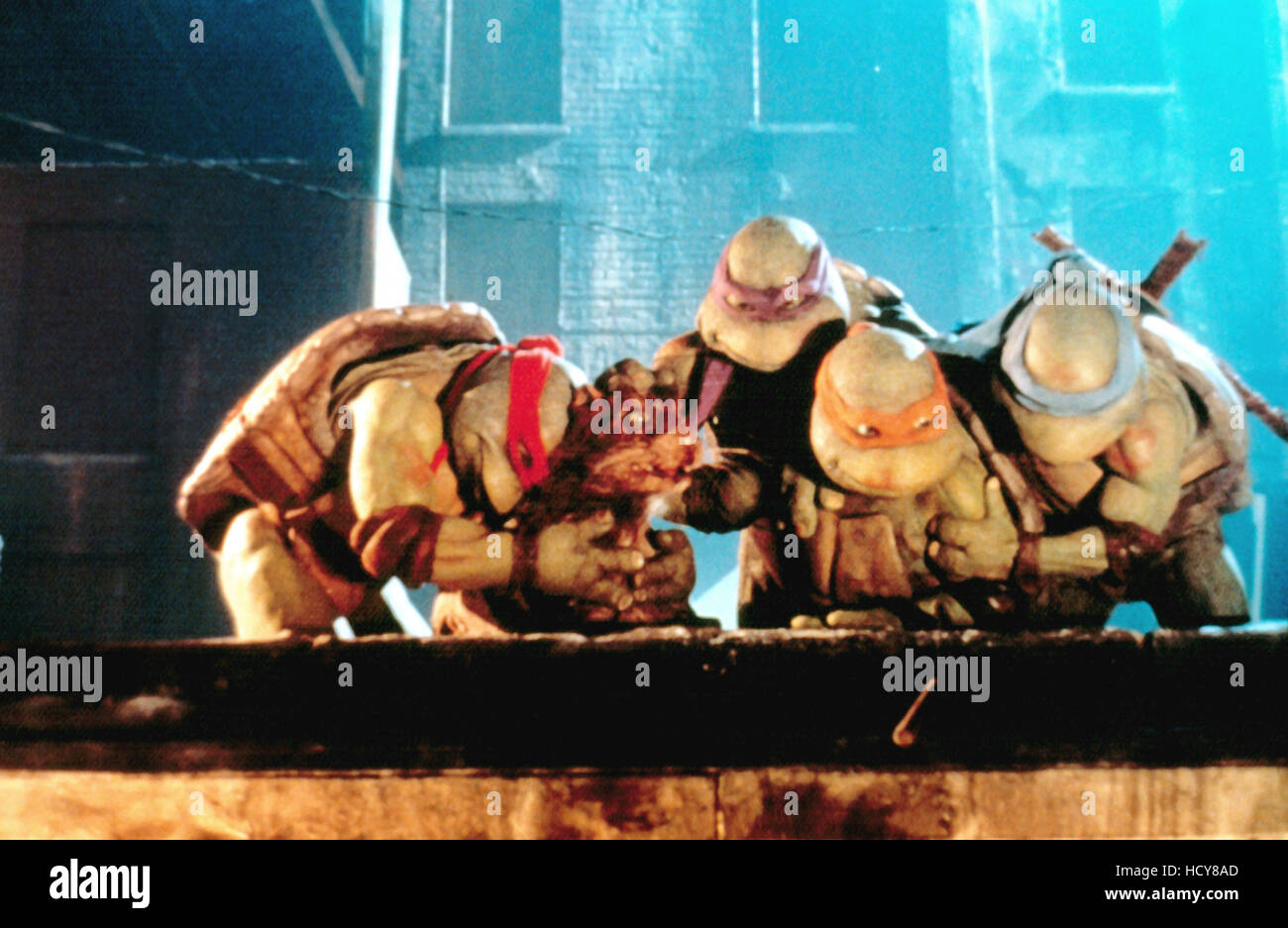
The four men who physically portrayed the Teenage Mutant Ninja Turtles in the 1990 live-action film—Josh Pais, Michelan Sisti, Leif Tilden, and David Forman—have net worths in 2026 ranging from $500,000 to over $5 million. While the film grossed over $200 million, the suit actors primarily earned standard scale wages and stunt fees rather than significant backend points, with their current wealth largely derived from subsequent careers in acting, directing, and stunt coordination.
The 1990 Teenage Mutant Ninja Turtles (TMNT) film remains a landmark in independent cinema. Produced on a modest budget of $13.5 million, it defied industry expectations by grossing over $202 million worldwide. However, the financial reality for the "4 M"—the four men inside the animatronic suits—was vastly different from the film's box office glory. To understand the "exposed" net worth of these performers in 2026, one must look past the green latex and into their decades-long careers in the entertainment industry.
The Financial Architecture of the 1990 TMNT Production
Before examining individual net worths, it is essential to understand the economic context of the 1990 production. Unlike modern superhero blockbusters where lead actors command multi-million dollar salaries and gross-profit participation, TMNT was an independent venture distributed by New Line Cinema.
The performers inside the suits were categorized primarily as "suit performers" and stunt players. At the time, Screen Actors Guild (SAG) weekly minimums were significantly lower than they are today. While these actors underwent grueling physical conditions—including carrying 50-pound animatronic heads and enduring extreme heat—their initial compensation was reflective of character work rather than "A-list" stardom.
Most of the "4 M" did not receive significant residuals compared to the voice actors or the creators, Kevin Eastman and Peter Laird. However, the cult status of the film has provided a steady stream of income through convention appearances and retrospective documentaries, which has bolstered their financial standing over the last 35 years.
Josh Pais: The Financial Breakout (Raphael)
Estimated Net Worth 2026: $5 Million+
Josh Pais holds a unique distinction among the quartet: he was the only actor to provide both the physical performance and the voice for his character, Raphael. This dual role, combined with an incredibly prolific career as a character actor, has made him the most financially successful of the original four.
Career Longevity and Diversification
Pais did not let the "suit actor" label define him. Following the 1990 film, he transitioned into a high-demand character actor in New York and Los Angeles. His resume includes over 100 credits, with significant roles in:
- Ray Donovan: His recurring role as Stu Cogan provided several years of consistent, high-tier television salary.
- Law & Order: Multiple appearances across the franchise, which is known for reliable residual payments.
- Joker (2019): Playing Hoyt Vaughn in a billion-dollar film further elevated his industry standing and quote.
In 2026, Pais continues to earn from his " Pais Method" acting classes and consistent roles in prestige television and film. His net worth is a result of sheer volume and the ability to navigate the transition from a physical performer to a respected "face" in the industry.
Michelan Sisti: From Michelangelo to Directing (Michelangelo)
Estimated Net Worth 2026: $1.5 Million – $2 Million
Michelan Sisti, who portrayed the fun-loving Michelangelo, leveraged his experience with the Jim Henson Creature Shop to build a multifaceted career. While his on-screen face time was limited in the 1990s, his technical expertise in puppet work and physical performance became a valuable asset.
Behind the Camera and Creature Work
Sisti’s financial stability comes from his versatility. He returned for the 1991 sequel, Teenage Mutant Ninja Turtles II: The Secret of the Ooze, and worked on other high-profile creature-heavy projects like Dinosaurs (the TV series).
In the subsequent decades, Sisti moved toward directing and producing. Working in television production often yields more consistent financial returns than mid-level acting. His involvement in the Jim Henson Company’s various projects over the years provided a foundation for a net worth that reflects a successful, steady "working professional" in Hollywood rather than a celebrity.
Leif Tilden: The Creative Path (Donatello)
Estimated Net Worth 2026: $1 Million – $1.5 Million
Leif Tilden provided the physical movements for Donatello in the first two TMNT films. Much like Sisti, Tilden’s net worth is not solely a product of his time as a Ninja Turtle, but rather his evolution into filmmaking and writing.
Transitioning to Independent Film
Tilden shifted his focus to directing and screenwriting in the 2000s and 2010s. Directing independent features such as 1 Mile to You (2017) and writing various projects allows for different revenue streams, including script sales and directing fees.
While the "Turtle money" from 1990 was likely exhausted decades ago, the residuals from the films (which are still frequently broadcast and streamed in 2026) provide a passive income supplement. Tilden’s net worth is representative of a dedicated artist who used a blockbuster start to fund a lifelong career in creative storytelling.
David Forman: The Stunt Professional (Leonardo)
Estimated Net Worth 2026: $800,000 – $1.2 Million
David Forman, the man inside the Leonardo suit, followed a path common among physical performers: the world of high-end stunt coordination and performance.
The Economics of Stunt Work
Stunt performers often earn high daily rates and "stunt adjustments" for dangerous maneuvers. Forman’s career includes work on massive productions like Batman Begins and The Last Samurai.
- Stunt Coordination: Moving into coordination roles increases pay significantly, as coordinators are responsible for the safety and choreography of entire sequences.
- Longevity: Stunt work is physically demanding, and those who can transition into second-unit directing or coordination maintain their earning power much longer than those who rely solely on physical performance.
Forman’s net worth reflects the specialized nature of his skills. While perhaps less "famous" than Josh Pais, his technical contributions to Hollywood’s biggest action films have ensured a stable financial life.
Comparison of the 1990 TMNT Primary Cast Financial Estimates (2026)
| Actor | Role (1990) | Primary Income Source | Estimated Net Worth (2026) |
|---|---|---|---|
| Josh Pais | Raphael (Physical & Voice) | Character Acting / Coaching | $5,000,000+ |
| Michelan Sisti | Michelangelo (Physical) | Directing / Puppet Artistry | $1,750,000 |
| Leif Tilden | Donatello (Physical) | Writing / Directing | $1,200,000 |
| David Forman | Leonardo (Physical) | Stunts / Coordination | $1,000,000 |
| Corey Feldman | Donatello (Voice) | Voice Over / Music / Media | $1,000,000* |
*Note: Corey Feldman's net worth has seen significant fluctuation due to legal battles and independent projects.
The Role of Conventions and the "Nostalgia Economy"
In 2026, a significant portion of the ongoing income for the original Ninja Turtle actors comes from the "Nostalgia Economy." The 1990 film is widely regarded by fans as the definitive version of the characters, far surpassing the Michael Bay-produced reboots in terms of heart and practical effects.
The "4 M" are frequent guests at Comic-Cons and fan expos. A typical weekend at a major convention can generate between $5,000 and $20,000 for a legacy actor through autograph sales, photo ops, and panel appearances. For the TMNT actors, this has become a reliable annual "bonus" that keeps their net worths buoyant despite not having lead roles in current box office hits.
Why the "Exposed" Net Worth Isn't as High as Fans Think
There is a common misconception that being the star of a $200 million movie guarantees lifelong wealth. For the 1990 Ninja Turtles, several factors limited their initial take-home pay:
- Independent Status: New Line Cinema was not the giant it became after Lord of the Rings. Their contracts in 1989/1990 were "lean," often lacking the backend points (percentages of the profit) that stars like Jack Nicholson secured for Batman (1989).
- Anonymity: Because the actors' faces were hidden, they lacked the leverage to negotiate for "star" salaries. They were essentially viewed as highly skilled technicians.
- The Voice Factor: In the first film, three of the four turtles were dubbed by different actors (Corey Feldman, Robbie Rist, and Brian Tochi). This split the "identity" of the character and the potential for endorsement deals.
The Creators: The Real Financial Winners
While the actors have done well for themselves, the true "exposed" wealth of the 1990 TMNT phenomenon lies with the creators, Kevin Eastman and Peter Laird. In 2009, the rights to the franchise were sold to Viacom (Nickelodeon) for approximately $60 million.
Before that sale, the 1990 movie fueled a merchandising empire that generated billions in retail sales. While the "4 M" actors provided the soul of the characters on screen, they were work-for-hire participants in a much larger corporate machine. In 2026, Peter Laird's net worth is estimated to be north of $20 million, while Kevin Eastman, despite some financial ups and downs, remains a wealthy figure in the comic book industry.
Frequently Asked Questions
Did the 1990 Ninja Turtle actors get residuals?
Yes, as SAG members, the actors receive residuals for the 1990 film. However, since the film was produced independently and the actors were not "A-list" stars at the time, their percentage of the television and streaming residuals is relatively small. Most of their current wealth comes from their total body of work rather than just this one film.
Who is the richest actor from the 1990 Ninja Turtles?
Josh Pais is the wealthiest of the four suit actors. His net worth of over $5 million is attributed to his constant work in major films and television series like Ray Donovan, where he was a credited "face" actor rather than a hidden suit performer.
Did Corey Feldman make more than the suit actors?
Initially, yes. Corey Feldman was a major child star in the 1980s and commanded a higher fee for his voice work as Donatello. However, due to various personal and professional challenges, his net worth in 2026 is estimated to be comparable to or even lower than Josh Pais.
How much did it cost to make the 1990 Turtle suits?
The suits were created by Jim Henson's Creature Shop at a cost of roughly $1 million for the set. They were revolutionary for their time, featuring complex facial animatronics controlled by off-site technicians. This high cost of production is part of why the actors’ salaries were kept at a "working-class" level.
Do the actors still receive money from TMNT merchandise?
Generally, no. Most standard acting contracts from that era did not include "likeness" rights for merchandise, especially since their actual faces were not used. The merchandising revenue largely went to Mirage Studios (Eastman and Laird) and later Viacom/Nickelodeon.
Final Recommendation for Fans and Researchers
If you are tracking the financial legacy of the 1990 Teenage Mutant Ninja Turtles, it is important to distinguish between "celebrity wealth" and "professional stability." The "4 M"—Pais, Sisti, Tilden, and Forman—represent a successful class of Hollywood professionals who used a massive cultural moment as a springboard for 30+ year careers.
For those looking to support these actors, attending authorized conventions and purchasing official retrospective media (such as the documentary Turtle Power: The Definitive History of the Teenage Mutant Ninja Turtles) remains the best way to ensure the performers continue to benefit from their iconic roles. In 2026, their financial "exposure" reveals not a story of overnight millions, but of hard-earned, sustainable success in the competitive world of entertainment.