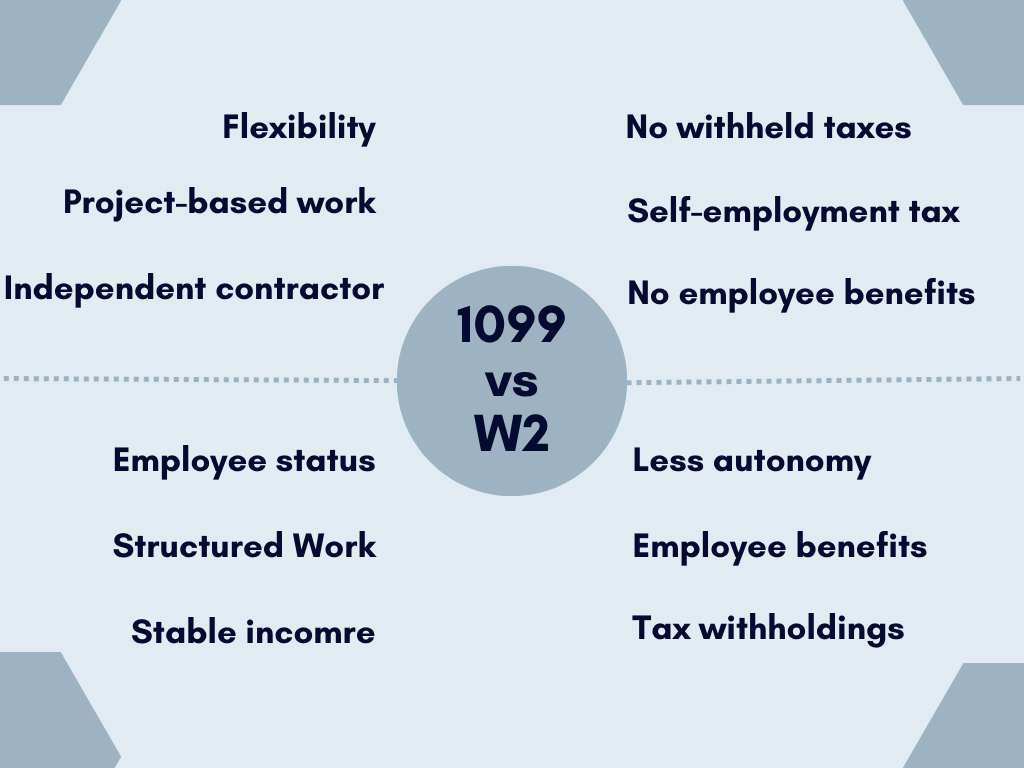
Selecting the right software to manage both W-2 employees and 1099 independent contractors requires balancing tax compliance, automated calculation engines, and distinct reporting workflows. Organizations must prioritize platforms that accurately handle employee payroll withholdings alongside independent contractor payments while maintaining strict adherence to federal, state, and local regulatory reporting deadlines.
Managing a mixed workforce consisting of both traditional W-2 employees and 1099 independent contractors presents unique administrative challenges for businesses of all sizes. While W-2 workers require ongoing payroll processing, tax withholdings, and benefits administration, 1099 contractors typically require streamlined invoice processing, direct payments, and Form 1099-NEC generation at year-end. Utilizing disparate systems for these two worker classifications often leads to data silos, administrative inefficiency, and compliance oversights. Consequently, finding integrated software solutions designed to handle both worker types efficiently has become a top priority for human resources and finance departments.
Evaluating modern compliance and payment platforms requires looking beyond basic feature checklists. Organizations must carefully analyze how a software solution handles legal classification risks, calculates complex multi-state taxes, and integrates with existing general ledger systems. Understanding these core operational pillars ensures long-term operational stability and minimizes the risk of costly IRS or Department of Labor penalties.
1. Compliance and Worker Classification Management
The foundational requirement for any platform handling W-2 and 1099 workflows is robust compliance support. Misclassifying an employee as an independent contractor remains a heavily audited area for regulatory bodies such as the Internal Revenue Service (IRS) and the Department of Labor (DOL). Software solutions cannot make legal classification decisions on behalf of an organization, but the right platform should provide diagnostic tools, questionnaire modules, and recordkeeping capabilities that help HR teams document classification logic.
For W-2 employees, the software must accurately calculate federal income tax, Social Security, Medicare, and applicable state and local payroll taxes. It must also handle statutory requirements such as federal and state unemployment insurance (FUTA and SUTA) contributions. Conversely, for 1099 contractors, the platform must process payments without tax withholdings while tracking cumulative annual disbursements to determine when information reporting is legally mandated.
Form Generation and Regulatory Submissions
At the end of the tax year, administrative burdens peak. Software must seamlessly generate and file the necessary documentation:
- Form W-2 and W-3: For employees, the system must compile earnings and withholdings, generate recipient copies, and support electronic filing with the Social Security Administration (SSA).
- Form 1099-NEC and 1096: For independent contractors paid $600 or more during the calendar year, the system must produce the Nonemployee Compensation form and facilitate electronic filing with the IRS and required state tax agencies.
- State-Specific Reporting: Many jurisdictions mandate separate state-level W-2 and 1099 reconciliations with distinct deadlines and file formats. Advanced software automates these state-specific formatting requirements.
2. Integration Capabilities and Financial Data Flow
A platform that operates in isolation creates manual reconciliation burdens for accounting teams. When evaluating W-2 and 1099 software, decision-makers must examine how smoothly the solution connects with existing enterprise resource planning (ERP) systems, general ledger (GL) software, and time-tracking utilities.
Payroll and contractor disbursements represent significant operational expenses. Automated journal entry syncing ensures that wage expenses, contractor fees, employer tax liabilities, and liability clearing accounts are updated in real time. This integration eliminates manual data entry errors, which frequently occur when moving numbers from a standalone payroll portal into an accounting suite like QuickBooks, Xero, or NetSuite.
API Openness and Data Portability
Organizations with specialized tech stacks should prioritize platforms offering robust Application Programming Interfaces (APIs). An open API allows custom internal systems—such as proprietary project management tools or custom time-tracking apps—to feed hours and project milestones directly into the payroll and disbursement engine. Furthermore, data portability guarantees that if an organization outgrows the software, historical payroll and contractor payment records can be exported cleanly without proprietary lock-in.
3. Pricing Structures, Transparency, and Scalability
Financial predictability is critical when budgeting for administrative software. Vendor pricing models for mixed-workforce platforms vary widely, and hidden fees can quickly inflate operational costs as a business grows. Organizations must dissect fee schedules to understand how costs scale for both W-2 employees and 1099 contractors.
Some platforms charge a flat monthly base fee plus a per-employee or per-contractor fee. Others bundle unlimited 1099 processing into a higher-tier W-2 subscription, while others charge separately per 1099 form filed at year-end. Businesses with fluctuating contractor numbers—such as seasonal enterprises or agencies that scale up teams for specific projects—must pay close attention to whether they are billed for contractors who received no payments during a given billing cycle.
Feature Comparison Matrix
| Consideration Focus | W-2 Employee Requirements | 1099 Contractor Requirements | Software Impact |
|---|---|---|---|
| Tax Processing | Automatic calculation and withholding of federal, state, and local taxes. | No tax withholding; direct gross payment disbursement. | Requires dual-engine calculation logic within a single platform interface. |
| Year-End Filing | Generation and e-filing of Forms W-2/W-3 with the SSA. | Generation and e-filing of Forms 1099-NEC/1096 with the IRS. | Reduces administrative friction during peak tax season deadlines. |
| Cost Scaling | Typically billed on a monthly per-active-employee subscription basis. | Often billed per active contractor, per payment, or per year-end form. | Impacts budgeting accuracy for businesses with seasonal workforce shifts. |
Common Implementation Mistakes to Avoid
Transitioning to a unified W-2 and 1099 software solution requires careful planning. Organizations frequently encounter avoidable pitfalls during migration phases.
The first major mistake is neglecting historical data import. Migrating mid-year requires accurately transferring cumulative earnings, year-to-date tax withholdings, and prior contractor payments into the new system to ensure accurate year-end reporting. Failing to verify historical data prior to go-live almost invariably results in mismatched Form W-2 or 1099 figures, triggering potential IRS notices and costly administrative corrections.
Another frequent error is overlooking user permission controls. Because payroll and contractor files contain sensitive personally identifiable information (PII) and banking details, the software must support role-based access control (RBAC). Restricting financial data access to authorized personnel protects the organization against internal security risks and accidental data exposure.
Frequently Asked Questions
Can a single software platform legally manage both W-2s and 1099s?
Yes. Modern workforce management platforms are specifically designed to handle blended workforces. They utilize distinct ledger logic and calculation profiles to process W-2 payroll with tax withholdings while simultaneously processing gross-pay invoices and disbursements for 1099 independent contractors.
How does software handle independent contractor misclassification risks?
While software cannot legally determine whether a worker is an employee or contractor, many platforms integrate compliance questionnaires, state-specific checklist tools, and audit trails. These features help organizations document their evaluation process under established regulatory tests, such as the IRS common-law rules or Department of Labor guidelines.
Are 1099 filing fees usually included in base subscription costs?
It depends entirely on the vendor. Some payroll providers include 1099 generation and e-filing as part of their standard monthly tier, while others charge an additional fee per contractor or per form filed at the end of the calendar year. Reviewing the complete fee schedule before signing a contract is essential.
What happens if an organization processes a 1099 contractor through W-2 payroll by mistake?
Processing a contractor through W-2 payroll results in incorrect tax withholdings, erroneous issuance of a Form W-2 instead of a Form 1099-NEC, and failure to collect a completed Form W-9. Correcting this mistake requires voiding payroll entries, adjusting accounting ledgers, refunding or reallocating tax withholdings, and filing amended tax returns with the IRS.
Do 1099 software solutions require contractors to create user accounts?
Many modern platforms offer optional contractor self-service portals. These portals allow independent contractors to securely input their tax information (such as submitting a digital Form W-9), upload invoices, and track payment histories, which significantly reduces administrative overhead for internal finance teams.
Next Steps for Selection and Deployment
Begin the software selection process by auditing your current workforce composition, future hiring projections, and existing accounting infrastructure. Request live vendor demonstrations focused specifically on how the platform handles mixed-workforce data entry, multi-state tax compliance, and year-end form generation. Verify that customer support channels are responsive and knowledgeable regarding both employment tax law and independent contractor reporting rules before committing to a long-term software subscription.