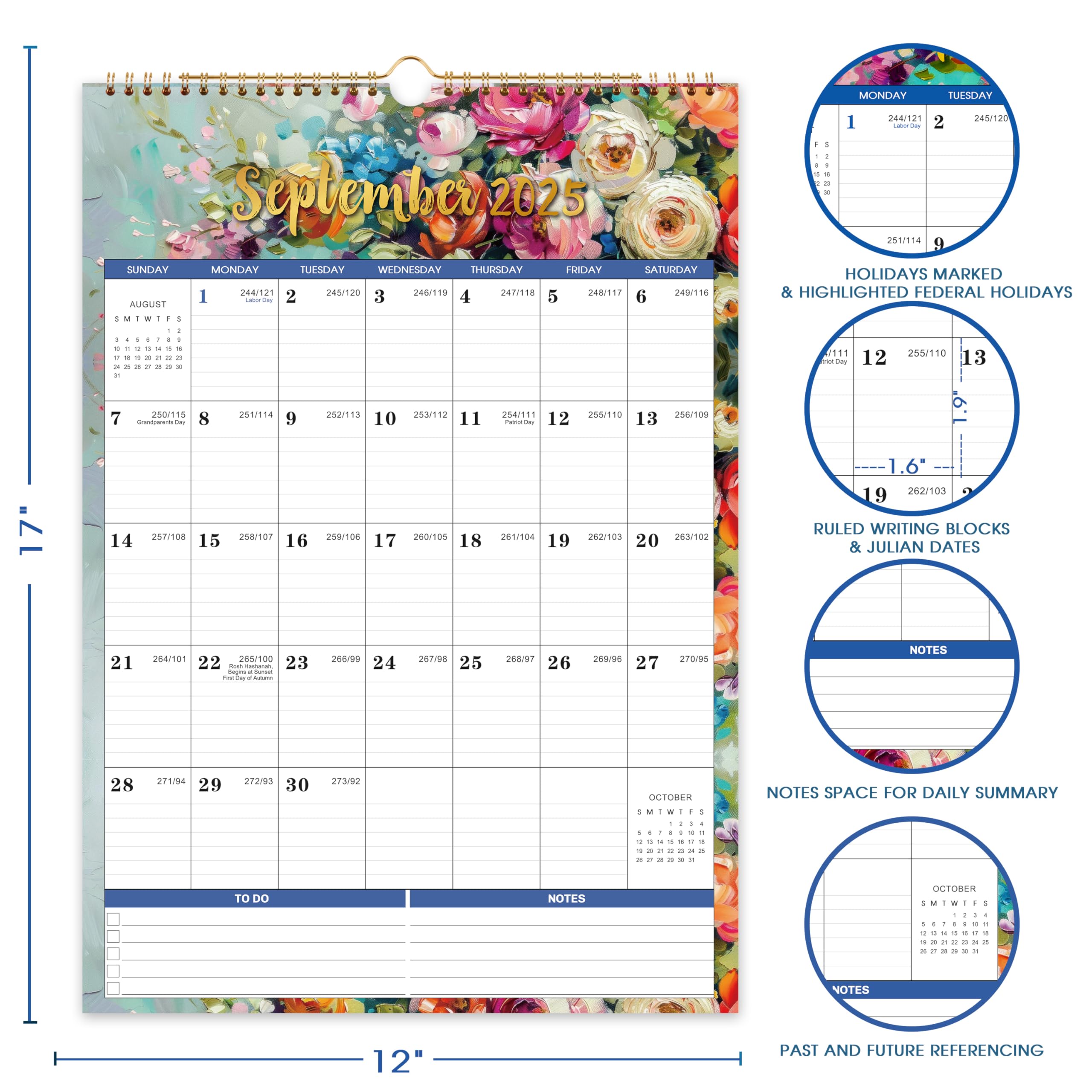
The 2025 and 1937 calendars are not identical. Both are common years with 365 days, but they begin on different days of the week: 2025 started on a Wednesday, while 1937 began on a Friday. Consequently, their dates and days do not align, and a 1937 calendar cannot be reused for 2025.
Basic Structural Data: Common Years Compared
When performing a 2025 1937 calendar comparison, the first technical attribute to examine is the year type. Both 1937 and 2025 are "common years," meaning they contain 365 days and do not include a February 29th. In the Gregorian calendar system, a year is a leap year if it is divisible by 4, except for century years, which must be divisible by 400. Since neither 1937 nor 2025 is divisible by 4, they both follow the standard 365-day format.
However, the "start day" is the most critical factor for those looking to reuse vintage calendars. For a calendar to be perfectly interchangeable, the year must not only have the same number of days but must also start on the same day of the week.
- 1937 Start Day: Friday, January 1.
- 2025 Start Day: Wednesday, January 1.
Because 1937 started two days later in the week than 2025, every single date throughout the year falls on a different weekday. For example, while December 25, 1937, was a Saturday, December 25, 2025, fell on a Thursday. This displacement remains constant throughout the year because neither year contains a leap day to shift the sequence.
The 28-Year Gregorian Cycle and the 88-Year Gap
The mathematical relationship between 1937 and 2025 is governed by the 28-year Gregorian cycle. This cycle is the period after which the days of the week for any given date repeat exactly, accounting for the four-year leap year pattern.
The 28-year cycle exists because there are seven days in a week and a leap year occurs every four years (7 × 4 = 28). If you add 28 years to 1937, you arrive at 1965. If you add another 28 years, you reach 1993. Adding a third 28-year block brings you to 2021. Therefore, the 1937 calendar was a perfect match for 2021, not 2025.
The gap between 1937 and 2025 is exactly 88 years. Mathematically, this is expressed as (28 × 3) + 4. Because 2025 is four years (one leap cycle) past a year that matched 1937 (2021), the days have shifted forward. In a standard four-year period containing one leap year (like 2021–2025, which included the leap year 2024), the calendar shifts by five days (1 + 1 + 1 + 2).
If we take the 1937 start day (Friday) and shift it forward by five days:
- Saturday
- Sunday
- Monday
- Tuesday
- Wednesday
This explains exactly why 2025 began on a Wednesday. It follows the predictable, though complex, rhythm of the Gregorian system.
Day-Date Alignment: Why 1937 Cannot Be Reused for 2025
For collectors of vintage ephemera or those interested in historical "reusable" calendars, the 1937 calendar is functionally useless for 2025. To illustrate the lack of alignment, consider the following key dates in both years:
| Holiday / Date | 1937 Weekday | 2025 Weekday |
|---|---|---|
| New Year's Day (Jan 1) | Friday | Wednesday |
| Valentine's Day (Feb 14) | Sunday | Friday |
| St. Patrick's Day (Mar 17) | Wednesday | Monday |
| Independence Day (July 4) | Sunday | Friday |
| Halloween (Oct 31) | Sunday | Friday |
| Christmas Day (Dec 25) | Saturday | Thursday |
| New Year's Eve (Dec 31) | Friday | Wednesday |
As shown, there is a consistent two-day shift (if counting backward from Friday to Wednesday). If you were to hang a 1937 calendar on your wall in 2025, you would constantly find yourself misidentifying the day of the week. This discrepancy makes the 1937 calendar a historical artifact rather than a functional tool for the 2025/2026 era.
Lunar and Solar Comparison: Eclipses and Phases
Even if two years share the same day-date alignment (which 1937 and 2025 do not), they almost never share the same lunar calendar. The Metonic cycle—the period of approximately 19 years after which the phases of the moon recur on the same days of the year—does not align with the 28-year Gregorian cycle.
Eclipses in 1937
In 1937, there were two solar eclipses:
- June 8, 1937: A total solar eclipse with an exceptionally long duration (over 7 minutes), primarily visible over the Pacific Ocean.
- December 2, 1937: An annular solar eclipse visible from the Pacific and parts of South America.
Eclipses in 2025
By contrast, 2025 featured a different set of celestial events:
- March 14, 2025: A total lunar eclipse.
- March 29, 2025: A partial solar eclipse.
- September 7, 2025: A total lunar eclipse.
- September 21, 2025: A partial solar eclipse.
For more detailed data on historical and future solar events, the NASA Eclipse Web Site provides comprehensive catalogs that demonstrate how these celestial occurrences diverge significantly between the 1930s and the 2020s.
The Mathematics of Calendar Repetition
To understand why 2025 does not match 1937, one can use the Doomsday Algorithm or Zeller's Congruence. These mathematical formulas allow you to calculate the day of the week for any date in history.
In the Gregorian calendar, common years repeat in a pattern of 6-11-11 years. For example, a common year starting on Wednesday (like 2025) will repeat its calendar in:
- 6 years (2031)
- 11 years (2042)
- 11 years (2053)
Looking backward from 2025, the previous years with an identical calendar were 2014, 2003, and 1997. Continuing this backward calculation:
- 1997 - 11 = 1986
- 1986 - 11 = 1975
- 1975 - 6 = 1969
- 1969 - 11 = 1958
- 1958 - 11 = 1947
- 1947 - 6 = 1941
- 1941 - 11 = 1930
Notice that 1937 is skipped in this sequence. This is because 1937 falls into the sequence for years starting on a Friday. The years that share a calendar with 1937 include 1926, 1943, 1954, 1965, 1971, 1982, 1993, 1999, 2010, and 2021.
Historical Context: 1937 vs. 2025
Comparing the "vibe" or historical weight of these two years provides depth beyond mere numbers. While their calendars don't match, both years occurred during periods of significant global transition.
1937: A World in Tension
In 1937, the world was grappling with the tail end of the Great Depression and the escalation of pre-WWII tensions. Franklin D. Roosevelt was inaugurated for his second term on January 20, 1937. Notably, this was the first time an inauguration was held on January 20th following the passage of the 20th Amendment; previously, it had been March 4th.
Other major events of 1937 included:
- The Hindenburg disaster in New Jersey.
- The disappearance of Amelia Earhart over the Pacific.
- The opening of the Golden Gate Bridge in San Francisco.
- The beginning of the Second Sino-Japanese War.
2025: The Modern Era
As we look back from 2026, 2025 stands as a year of technological acceleration and political shifts. Like 1937, 2025 was a U.S. Presidential inauguration year (January 20).
The differences in daily life are stark. In 1937, the "cutting edge" of media was the expansion of radio and the early experimental days of television. In 2025, the global conversation was dominated by generative artificial intelligence, decentralized finance, and commercial space exploration.
How to Find a Matching Calendar for 2025 or 1937
If you possess a vintage 1937 calendar and wish to know when it will actually be useful again, or if you are looking for a historical calendar to use for a future year, you must follow the 28-year rule or use a calculator like those found on Time and Date.
Future Years Matching 1937
The 1937 calendar (Friday start, common year) will be reusable in:
- 2027 (The next occurrence, following the 6-year gap after 2021).
- 2038 (11 years later).
- 2049 (11 years later).
Past Years Matching 2025
If you wanted a vintage calendar for the year 2025, you should have looked for:
- 1913, 1919, 1930, 1941, 1947, 1958, 1969, 1975, 1986, 1997, 2003, or 2014.
The 1930 and 1941 calendars are the closest matches from that specific era to the 2025 layout.
Comparative Technical Summary
The following table summarizes the technical divergence between the two years, highlighting why they cannot be considered equivalent in any chronological capacity.
| Feature | 1937 Calendar | 2025 Calendar |
|---|---|---|
| Year Type | Common Year (365 Days) | Common Year (365 Days) |
| Dominant Start Day | Friday | Wednesday |
| End Day | Friday | Wednesday |
| Easter Sunday | March 28 | April 20 |
| Chinese Zodiac | Year of the Ox | Year of the Snake |
| US Inauguration Day | Wednesday, Jan 20 | Monday, Jan 20 |
| ISO Week 1 Start | Jan 4, 1937 | Dec 30, 2024 |
| Solar Eclipses | 2 | 2 (Partial) |
| Lunar Eclipses | 0 | 2 (Total) |
Common Mistakes in Calendar Comparison
A frequent error is assuming that any two common years separated by a certain number of decades will eventually "sync up." This overlooks the specific placement of leap years. Every 400 years, the Gregorian calendar has exactly 97 leap years, not 100. This subtle adjustment ensures the calendar remains aligned with the Earth's revolution around the sun, but it also creates "breaks" in the simple 28-year cycle at the turn of most centuries (e.g., 1800, 1900, 2100).
However, because the year 2000 was a leap year, the cycle remained unbroken for the transition from the 1900s to the 2000s. This is why the 28-year rule (1937 + 28 + 28 + 28 = 2021) works perfectly for this specific comparison. If you were comparing a year from the 1700s to the 1800s, the calculation would be more complex.
Questions Often Asked About Calendar Cycles
Can I use a 1937 calendar for 2026?
No. While 2026 is also a common year, it starts on a Thursday. As established, 1937 started on a Friday. The 1937 calendar will not be reusable until 2027.
Why do some people think 1937 and 2025 match?
This is often a result of miscalculating the 28-year cycle or confusing 2025 with 2021. Sometimes, social media "facts" claim that years repeat every 88 years, but as our analysis shows, 88 years (3 cycles of 28 plus 4 years) actually results in a 5-day shift in the calendar start day.
How often does a specific calendar layout repeat?
A common year layout (like the one starting on Wednesday) repeats in a 6-11-11 year cycle. A leap year layout only repeats every 28 years. This means common year calendars are much more "reusable" than leap year calendars.
Is the 2025 calendar identical to any other year in the 1930s?
Yes. The year 1930 was a common year starting on a Wednesday, making it a perfect match for the 2025 calendar. If you have a 1930 calendar, it would have worked perfectly for the dates and days of 2025.
Does the 28-year cycle ever fail?
The 28-year cycle is consistent as long as there is a leap year every four years. It fails when a century year (like 1900 or 2100) is reached that is not a leap year. Since 2000 was a leap year, the cycle has been stable since 1901 and will remain so until 2099.
Final Practical Recommendation
If you are a collector looking to acquire or sell a calendar based on its "reusability," you must verify the start day and the year type (common vs. leap). For the 2025 1937 calendar comparison, it is clear that these years do not align. If you missed the opportunity to use your 1937 calendar in 2021, your next opportunity will be in 2027.
For those currently in 2026, note that the 1937 calendar is still not a match; you would need a calendar from 1942, 1953, or 1959 to match the 2026 layout. Always use a verified calendar repetition chart to ensure day-date accuracy before relying on a vintage piece for modern scheduling.