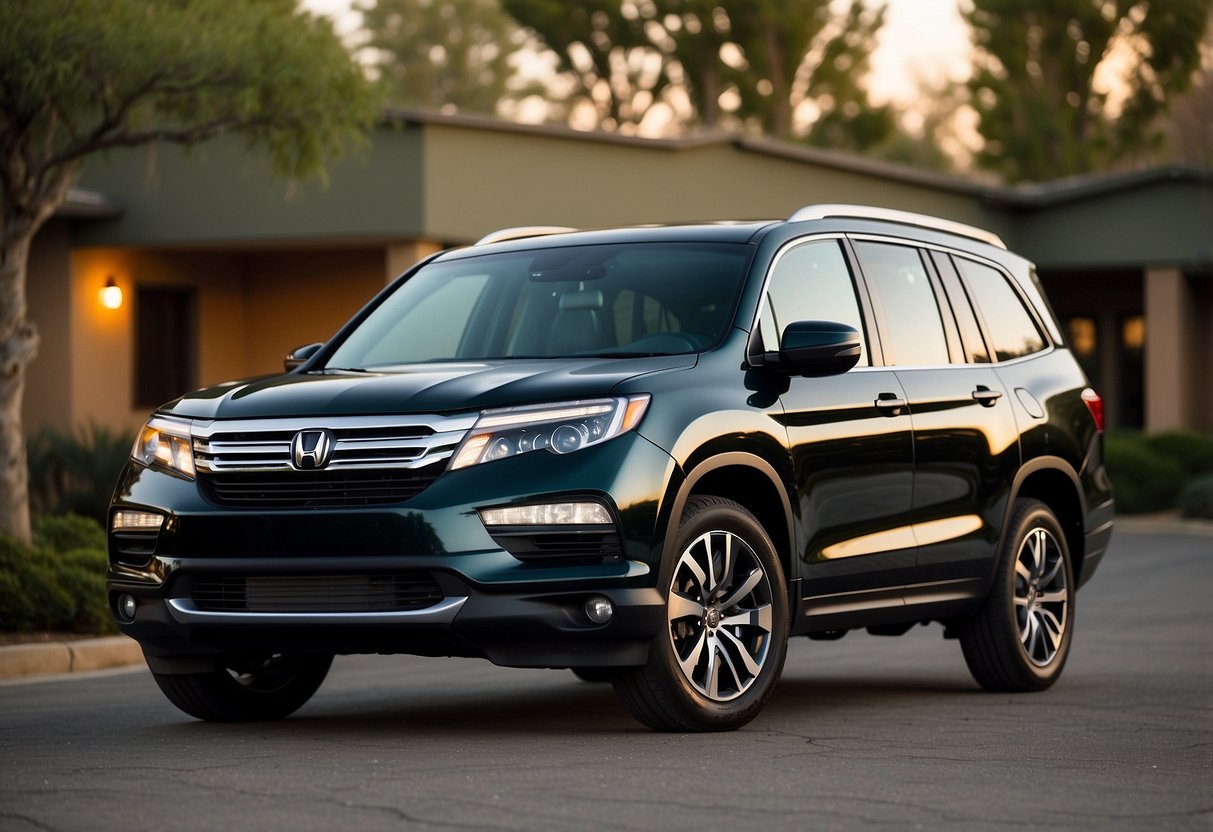
The 2016 Honda Pilot, equipped with the 3.5L V6 Earth Dreams engine, has a total oil capacity of 5.7 US quarts (5.4 liters) when performing a standard oil change including a new filter. For a "dry" engine fill following a complete rebuild or overhaul, the capacity increases to approximately 6.4 US quarts (6.0 liters).
The 2016 model year represented a significant milestone for the Honda Pilot, marking the debut of the third generation (YF5/YF6). This redesign was not merely aesthetic; it introduced a overhauled powertrain that fundamentally changed the maintenance requirements compared to its predecessors. Understanding the 2016 Pilot's oil capacity requires looking at the specific engineering of the J35Y6 engine and how Honda’s approach to lubrication has shifted over the last two decades.
The 2016 Engine: Why 5.7 Quarts Matters
The 2016 Honda Pilot moved away from the boxy design of the second generation, embracing a more aerodynamic profile and a more sophisticated version of the 3.5-liter V6 engine. This iteration, part of the "Earth Dreams" technology suite, utilized Direct Injection (DI) and Variable Cylinder Management (VCM).
Direct injection engines are known for higher internal pressures and a greater tendency for fuel dilution in the oil compared to port-injected engines. To combat this and ensure long-term reliability, Honda increased the oil sump capacity. The previous generation (2009–2015) required only 4.5 quarts of oil. By increasing the capacity to 5.7 quarts in 2016, Honda provided a larger buffer of additives and a greater volume of fluid to manage heat and suspend contaminants.
Viscosity and Oil Type Requirements
For the 2016 Pilot, Honda specifies SAE 0W-20 oil. This low-viscosity lubricant is essential for the tight tolerances of the modern V6 engine and helps the vehicle achieve its fuel economy ratings. While some owners of older vehicles might be tempted to use heavier oils like 5W-30 to "protect" the engine, doing so in a 2016 Pilot can interfere with the VCM system and the delicate timing of the i-VTEC (Intelligent Variable Valve Timing and Lift Electronic Control).
The oil must also carry the API Certification Seal (the "Starbust") and meet the ILSAC GF-5 or higher standard. By 2026, most synthetic oils on the market meet the newer GF-6A standards, which are backward compatible and offer even better protection against low-speed pre-ignition (LSPI) and timing chain wear.
Generational Evolution of Pilot Oil Capacity
The Honda Pilot has seen a steady increase in oil capacity across its four generations. This evolution reflects broader industry trends: longer drain intervals, higher engine operating temperatures, and the transition from SOHC (Single Overhead Cam) to DOHC (Double Overhead Cam) architectures.
| Generation | Model Years | Engine Type | Oil Capacity (with Filter) | Recommended Viscosity |
|---|---|---|---|---|
| First (YF1) | 2003–2008 | 3.5L V6 (J35A4/A6/A9) | 4.5 - 5.3 US Quarts* | 5W-20 |
| Second (YF3/4) | 2009–2015 | 3.5L V6 (J35Z4) | 4.5 US Quarts | 0W-20 / 5W-20** |
| Third (YF5/6) | 2016–2022 | 3.5L V6 (J35Y6) | 5.7 US Quarts | 0W-20 |
| Fourth (YG1) | 2023–Present | 3.5L V6 (J35Y8 - DOHC) | 6.4 US Quarts | 0W-20 |
*Note: Early first-generation models varied slightly based on the specific oil filter size used by the dealership or owner. **Note: 2009–2011 models originally spec'd 5W-20, while 2012–2015 transitioned to 0W-20 for fuel efficiency.
Analysis of the Capacity Jump
The most dramatic jump in capacity occurred between 2015 and 2016. The shift from 4.5 quarts to 5.7 quarts represents a 26% increase in volume. This change was necessitated by the move to direct injection. Because direct injection can lead to carbon buildup on intake valves and potentially higher soot levels in the oil, a larger reservoir helps maintain oil chemistry between service intervals, which are guided by the Honda Maintenance Minder system.
The further increase to 6.4 quarts in the fourth generation (2023+) is attributed to the switch to a Double Overhead Cam (DOHC) design. DOHC engines have more moving parts in the cylinder heads—specifically two camshafts per bank—requiring more oil to be in circulation at any given time to ensure all components are properly lubricated and cooled.
The Role of the Honda Maintenance Minder
In the 2016 Pilot, you no longer follow a fixed mileage schedule (e.g., every 3,000 or 5,000 miles). Instead, the onboard computer monitors engine operating conditions, ambient temperature, and driving habits to calculate "Oil Life" as a percentage.
When the oil life reaches 15%, a "Maintenance Minder" code will appear on the dashboard. For oil changes, you will typically see Main Code A or B:
- Code A: Replace engine oil only.
- Code B: Replace engine oil and filter, and perform various inspections.
Most professional technicians recommend replacing the filter every time the oil is changed, regardless of whether Code A or B appears. Given the 2016 Pilot’s 5.7-quart capacity, the filter holds a significant amount of the total volume, and leaving an old filter can contaminate the fresh oil immediately.
Step-by-Step Oil Change Guidance for the 2016 Pilot
Performing an oil change on the 2016 Pilot is a straightforward task for DIY enthusiasts, but the 5.7-quart capacity requires a larger drain pan than smaller sedans.
Tools and Materials Needed
- 5.7 Quarts of 0W-20 Synthetic Oil: It is often more cost-effective to buy a 5-quart jug and a single 1-quart bottle.
- Oil Filter: Honda OEM (Part No. 15400-PLM-A02) or a high-quality equivalent like Mobil 1 or Bosch.
- Crush Washer: A new 14mm aluminum crush washer for the drain bolt is essential to prevent leaks.
- 17mm Wrench/Socket: For the drain bolt.
- Oil Filter Wrench: The filter is located on the passenger side, accessible through the wheel well or from underneath.
The Procedure
- Warm the Engine: Run the engine for a few minutes to thin the oil, which helps it drain more completely and carry away more contaminants.
- Drain the Oil: Remove the 17mm drain bolt. Ensure your drain pan can hold at least 6 quarts.
- Replace the Crush Washer: Never reuse the old aluminum washer. It is designed to deform once to create a seal. Reusing it often leads to slow drips.
- Remove the Filter: Be prepared for oil to spill from the filter housing. Cleaning the area with brake cleaner afterward prevents "phantom" oil spots on your driveway later.
- Refill: Pour in 5.5 quarts first, let it settle, then check the dipstick. The distance between the lower and upper marks on the Honda dipstick usually represents about one quart. Adjust until the level is at the top dot.
- Reset the Minder: With the vehicle in "On" mode (but engine off), use the steering wheel buttons to navigate to the Oil Life screen, then press and hold the "Enter" or "Reset" button until the life resets to 100%.
Common Mistakes and Troubleshooting
Overfilling
With a specific capacity of 5.7 quarts, many owners simply dump in 6 quarts. While an extra 0.3 quarts is unlikely to cause catastrophic failure, significant overfilling can lead to "windage." This occurs when the crankshaft hits the oil in the pan, frothing it into a foam. Aerated oil does not lubricate effectively and can lead to increased engine wear or pressure issues.
Using the Wrong Filter
The 2016 Pilot uses a relatively small filter for a V6 engine. It is vital to use a filter with a high-quality bypass valve. If the filter becomes clogged and the bypass valve fails to open, the engine will be starved of oil. Conversely, if the bypass valve is too weak, unfiltered oil will circulate through the engine constantly.
Ignoring the Crush Washer
Honda oil pans are made of aluminum. If you reuse a crush washer and try to stop a leak by over-tightening the bolt, you risk stripping the threads in the oil pan. Replacing an oil pan on a 2016 Pilot is an expensive repair that can be avoided with a $1 washer.
High-Mileage Considerations for 2016 Models in 2026
As of 2026, many 2016 Honda Pilots have surpassed the 150,000-mile mark. At this stage in the vehicle's lifecycle, oil consumption can become a factor.
Direct-injected engines from this era can experience carbon buildup on the piston rings, which may lead to slight oil consumption between changes. It is recommended that owners of high-mileage Pilots check their dipsticks every 1,000 miles. If you find the engine is consuming more than a quart every 3,000 miles, you may want to consult a technician regarding a top-tier fuel system cleaner or a specialized high-mileage 0W-20 synthetic oil, which contains seal swellers to prevent external leaks.
Furthermore, ensure the PCV (Positive Crankcase Ventilation) valve is replaced. A clogged PCV valve can increase internal crankcase pressure, forcing oil past gaskets and increasing consumption.
Frequently Asked Questions
Can I use 5W-20 if 0W-20 is not available?
While 5W-20 will not cause immediate engine failure, it is not recommended for the 2016 Pilot. The 0W-20 weight is specifically required for the Variable Cylinder Management (VCM) system to function correctly. Using a thicker oil can cause the system to hesitate when transitioning between three and six-cylinder modes, potentially throwing a check engine light (DTC P3400 or P3497).
How much oil does the 2016 Pilot take without a filter change?
If you only change the oil and leave the old filter, the capacity is approximately 5.4 US quarts (5.1 liters). However, this is not a recommended practice, as the filter contains a significant amount of dirty oil and trapped debris.
Is synthetic oil required for the 2016 Honda Pilot?
Honda does not strictly mandate "full synthetic," but they do mandate 0W-20. Because 0W-20 is almost exclusively available as a synthetic or synthetic blend, you are effectively required to use synthetic oil. Full synthetic is highly recommended for the 2016 Pilot due to the heat generated by the direct injection system.
Why is the oil capacity higher than the previous generation?
The increase from 4.5 to 5.7 quarts was engineered to support the J35Y6 Earth Dreams engine. The larger volume helps manage the higher thermal loads of direct injection and ensures that there is enough oil to maintain lubrication even if some oil is lost to evaporation or minor consumption during long 10,000-mile Maintenance Minder intervals.
How often should I actually change the oil in my 2016 Pilot?
While the Maintenance Minder may allow for intervals up to 7,500 or 10,000 miles depending on driving conditions, many enthusiasts and mechanics recommend a maximum interval of 5,000 miles, especially for vehicles used for towing or frequent short trips in cold climates.
Final Recommendation for Owners
To maintain the longevity of a 2016 Honda Pilot, always adhere to the 5.7-quart capacity and use a high-quality full synthetic 0W-20 oil. As these vehicles age into their second decade of service, the importance of using a fresh crush washer and an OEM-quality filter cannot be overstated. Regular monitoring of the oil level via the dipstick—rather than relying solely on the dashboard percentage—is the best way to ensure the J35Y6 engine remains reliable well past 200,000 miles.
For the most accurate information regarding your specific VIN, always refer to the official Honda Owners Site for digital access to your vehicle's specific manual.