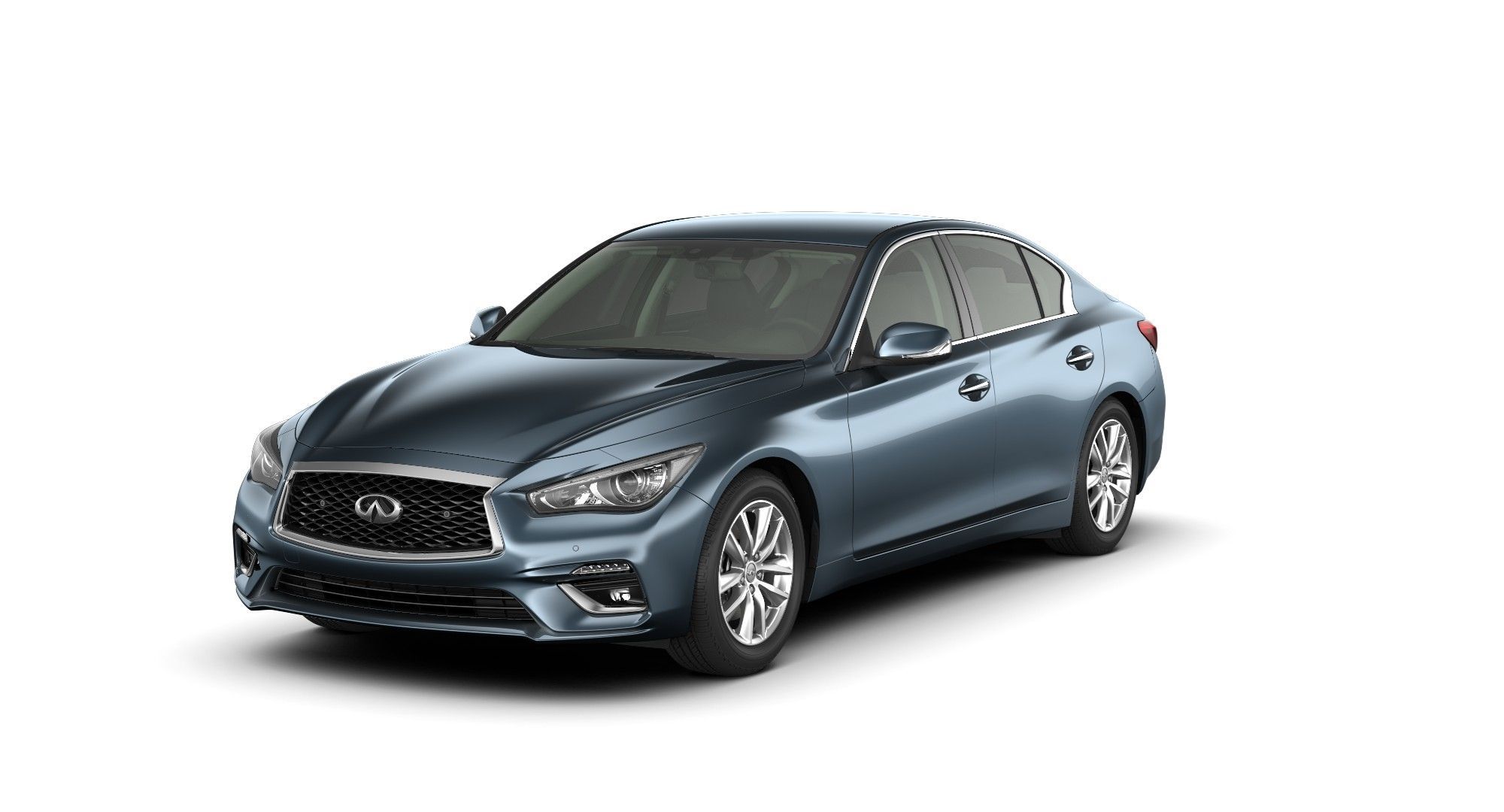
The 2014 Infiniti Q50 AWD represents a pivotal shift in the Japanese luxury brand's lineage, replacing the venerable G37 sedan with a technologically advanced, sleekly styled sports sedan equipped with an intelligent all-wheel-drive system designed to handle diverse weather conditions with composure.
Introduction to the 2014 Infiniti Q50 AWD
When Infiniti rebranded its entire vehicle lineup for the 2014 model year, the mid-size luxury sports sedan formerly known as the G37 adopted the alphanumeric moniker Q50. Positioned to compete directly against German benchmarks like the BMW 3 Series, Audi A4, and Mercedes-Benz C-Class, the 2014 Infiniti Q50 combined striking exterior styling, an overhauled interior, and cutting-edge electronic innovations.
Selecting the Intelligent All-Wheel Drive (AWD) variant added year-round weather confidence without sacrificing the rear-wheel-drive bias expected from a dynamic performance sedan. This overview examines the vehicle's historical context, powertrain engineering, interior technology, driving dynamics, ownership considerations, and how it holds up as a pre-owned purchase.
Historical Context and Lineup Evolution
For the 2014 model year, Nissan’s luxury division faced a crucial branding transition. The outgoing Infiniti G series had built a loyal following for its robust performance and mechanical durability, but the cabin technology and interior materials were beginning to lag behind European competitors. The Q50 was engineered from a clean sheet—though retaining the foundational FM (Front Midship) platform architecture—to reclaim ground in the compact executive luxury segment.
Trims and Configurations
The 2014 Q50 lineup was structured around two primary powertrain choices: a conventional 3.7-liter V6 gasoline engine and a 3.5-liter V6 hybrid system. Each powertrain could be paired with either rear-wheel drive (RWD) or Infiniti's ATTESA E-TS all-wheel-drive system.
The trim hierarchy for the gasoline-powered V6 models included:
- Base (Standard)
- Premium
- Sport
- Hybrid variants (Hybrid Premium and Hybrid Sport) also offered the AWD option.
Powertrain and Mechanical Specifications
At the heart of the standard 2014 Infiniti Q50 AWD is the legendary VQ37VHR 3.7-liter naturally aspirated V6 engine. This powerplant features continuous variable valve event and lift (VVEL) technology to optimize efficiency and high-rev power delivery.
Engine and Transmission Performance
- Displacement: 3.7 liters (3,696 cc)
- Horsepower: 328 hp at 7,000 rpm
- Torque: 269 lb-ft at 5,200 rpm
- Transmission: 7-speed electronically controlled automatic with Downshift Rev Matching (DRM), manual shift mode, and magnesium paddle shifters on Sport trims.
ATTESA E-TS All-Wheel-Drive System
Unlike traditional front-wheel-drive-based AWD systems that react to slip after the fact, the Infiniti ATTESA E-TS (Advanced Total Traction Engineering System for All Electronic Torque Split) utilizes a real-time active torque distribution management system.
Under normal dry driving conditions, the system sends 100 percent of the engine's power to the rear wheels, preserving the classic handling dynamics of a rear-drive sports sedan. When wheel slippage is detected at the rear axle, the electromagnetic clutch pack can instantly redirect up to 50 percent of available torque to the front wheels, ensuring optimal traction in rain, snow, or loose gravel.
Exterior Design and Aerodynamics
The exterior styling of the 2014 Q50 drew heavy inspiration from the Infiniti Essence concept car, introducing a more organic, fluid design language compared to the sharper, more angular lines of the outgoing G37.
- Front Fascia: Features a dramatic double-arch front grille flanked by standard LED headlights and LED daytime running lights.
- Profile: The sweeping roofline merges into a distinct Hofmeister-style kink on the C-pillar, a design flourish outlined by chrome trim that emphasizes the car's athletic proportions.
- Aerodynamics: The body features underbody covers and optimized rear decklid contours that yield a low coefficient of drag ($C_d$) of 0.26 for hybrid models and 0.28 for standard V6 models, enhancing high-speed stability and fuel efficiency.
Interior Cabin, Luxury Features, and Infotainment
Stepping inside the 2014 Q50 revealed a completely redesigned cockpit centered around driver engagement and modern connectivity. Infiniti introduced the Infiniti InTouch dual-touchscreen infotainment system, a pioneering layout for its time.
The Dual-Screen Setup
The center stack housed two capacitive touchscreens:
- Upper 8-inch Screen: Dedicated primarily to navigation mapping, vehicle status, and primary driving telemetry.
- Lower 7-inch Screen: Controls audio sources, climate control settings, smartphone integration, and vehicle customization settings.
While praised for offering a smartphone-like interface, early iterations of the InTouch software occasionally received criticism for slow boot times and complex menu navigation before subsequent software updates smoothed out operation.
Comfort and Materials
Interior appointments included standard leatherette seating surfaces on base models, with genuine leather upgrades on Premium and Sport trims. The front seats utilized Infiniti's zero-gravity-inspired design philosophy, engineered to reduce fatigue during long-distance driving by supporting the lumbar and pelvic regions. Rear legroom offered competitive space for adult passengers, though the AWD floor tunnel slightly encroached on middle-passenger foot placement.
Advanced Safety and Driver-Assist Technologies
The 2014 Q50 served as a technological showcase for Nissan's burgeoning autonomous safety suite. Notable available systems included:
- Direct Adaptive Steering (DAS): A world-first production steer-by-wire system that eliminated the mechanical link between the steering wheel and front wheels under normal driving conditions, translating inputs instantly via electronic actuators. A mechanical backup clutch engaged instantly if system anomalies occurred.
- Active Lane Control (ALC): Works in conjunction with DAS to keep the vehicle centered in its lane against crosswinds and road cambers.
- Predictive Forward Collision Warning (PFCW): Monitors not just the vehicle immediately ahead, but also the vehicle traveling in front of that one, warning the driver of sudden deceleration events.
- Backup Collision Intervention (BCI): Uses rear sonar and radar sensors to detect crossing traffic or stationary objects when reversing, automatically applying the brakes if the driver fails to respond.
Driving Dynamics and Ride Quality
Driving the 2014 Infiniti Q50 AWD reveals a vehicle engineered for grand touring composure rather than raw track-day aggression.
Ride and Handling
- Suspension: Independent double-wishbone front suspension and independent multi-link rear suspension provide a balanced mix of body control and highway compliance. Sport trims feature a stiffer, sport-tuned suspension setup that reduces body roll during aggressive cornering.
- Steering Feel: Models equipped with Direct Adaptive Steering offered adjustable steering effort and ratios via the Infiniti Drive Mode Selector, allowing drivers to tailor steering weight from light (Standard) to heavy and direct (Sport+). Traditional hydraulic-assist steering was retained on certain base configurations.
- AWD Performance: In inclement weather, the ATTESA E-TS system inspires high confidence. Power delivery remains seamless, and the stability control intervention is progressive rather than abrupt.
Fuel Economy and Environmental Ratings
Due to the added weight of the mechanical components required to drive both front and rear axles, the AWD variant incurs a slight fuel economy penalty compared to its rear-wheel-drive counterpart.
| Powertrain & Drivetrain | EPA City (MPG) | EPA Highway (MPG) | EPA Combined (MPG) |
|---|---|---|---|
| 3.7L V6 RWD | 19 | 27 | 22 |
| 3.7L V6 AWD | 19 | 27 | 22 |
| 3.5L Hybrid AWD | 28 | 35 | 30 |
(Note: Official EPA figures for the 3.7L AWD model typically rated around 17 city / 25 highway depending on wheel size and trim package specifics).
Ownership Considerations and Reliability
As a pre-owned purchase, the 2014 Infiniti Q50 AWD generally enjoys a reputation for strong mechanical reliability, anchored by the durability of the VQ37VHR engine. However, buyers should keep several specific maintenance items in mind:
- V6 Engine Durability: The 3.7-liter V6 is robust, capable of exceeding 200,000 miles with regular synthetic oil changes.
- Infotainment Electronics: Early dual-screen InTouch systems can be sluggish. Prospective buyers should verify that software updates have been applied.
- Steering Actuators: Models equipped with Direct Adaptive Steering (DAS) should be inspected for error codes, as replacement of steering actuators out of warranty can be costly.
- AWD Maintenance: The transfer case and differential fluids require periodic inspection and changing, particularly if the vehicle has operated extensively in snowy climates where road salt and moisture accelerate corrosion.
Frequently Asked Questions
Does the 2014 Infiniti Q50 AWD have a timing belt or chain?
The 3.7-liter V6 engine in the 2014 Infiniti Q50 AWD utilizes a timing chain rather than a rubber timing belt. Timing chains are designed to last the lifetime of the engine, provided that regular oil change intervals are maintained to prevent premature wear on the chain guides and tensioners.
Is the 2014 Infiniti Q50 AWD good in heavy snow?
Yes. The ATTESA E-TS all-wheel-drive system is rear-biased for dynamic driving but instantly transfers torque to the front wheels upon detecting slip. When paired with a quality set of dedicated winter tires, the Q50 AWD performs exceptionally well in deep snow, slush, and icy road conditions.
What is the difference between standard steering and Direct Adaptive Steering on the 2014 Q50?
Standard steering uses a conventional mechanical steering column. Direct Adaptive Steering (DAS) is a steer-by-wire system that replaces the mechanical connection with digital signals sent to electronic actuators. DAS allows for customizable steering effort and ratios, though some purists prefer the traditional feedback of mechanical setups.
What common problems should I look out for when buying a used 2014 Q50 AWD?
Common areas to check include software glitches in the dual-screen InTouch infotainment system, valve cover gasket leaks on high-mileage VQ37 engines, and potential software recalibration needs for the Direct Adaptive Steering system if equipped. Always request a comprehensive pre-purchase inspection (PPI).
How does the 2014 Q50 fuel economy compare between RWD and AWD?
The EPA ratings for the 3.7-liter V6 AWD model are very close to the RWD version, typically rated around 17 mpg city and 25 mpg highway. The added weight of the AWD components results in a marginal reduction in real-world efficiency during stop-and-go city driving.
Conclusion and Recommendation
The 2014 Infiniti Q50 AWD delivers a compelling blend of Japanese reliability, strong V6 performance, and secure all-weather capability. While its cabin technology reflects its initial release era, the underlying mechanical platform remains robust and engaging. For buyers seeking a capable, luxurious sports sedan with year-round traction confidence, the Q50 AWD represents a strong value proposition on the pre-owned market. Prospective buyers should prioritize well-maintained models with documented service history and verified software updates.