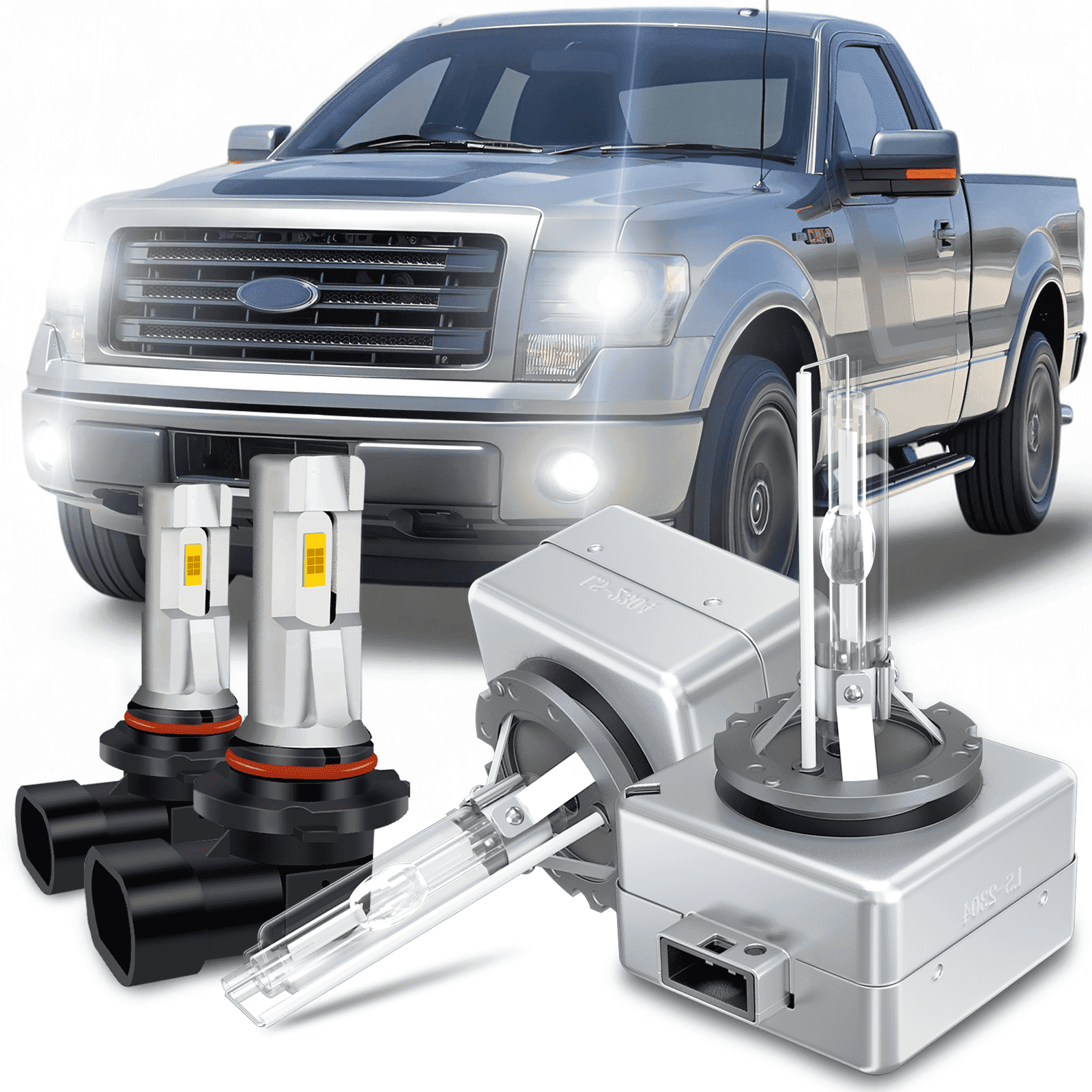
Replacing the headlight bulbs on a 2014 Ford F-150 typically becomes necessary every 500 to 3,000 hours of operation, which translates to roughly 2 to 6 years of average driving for standard halogen bulbs, while premium or aftermarket options vary significantly. Understanding the replacement timeline, factors affecting bulb degradation, and the physical steps required ensures optimal nighttime visibility and prevents sudden lighting failures on the road.
Introduction to the 2014 Ford F-150 Lighting System
The 2014 Ford F-150 represents the final model year of the twelfth generation of America's best-selling pickup truck. Across its various trim levels—from the utilitarian XL and STX to the luxurious Platinum and the off-road-focused SVT Raptor—the vehicle utilized distinct headlight housing configurations. Most standard trims came equipped with factory halogen reflector or projector housings utilizing H13 (9008) dual-filament bulbs for both the low and high beams, while certain higher-end trims or custom packages integrated specialized projector setups.
Because vehicle lighting is a critical safety system governed by federal motor vehicle safety standards, maintaining operational bulbs is not merely a matter of convenience; it is a legal and operational necessity. Over time, the filaments within standard incandescent and halogen bulbs degrade due to thermal cycling, electrical resistance, and vibrational stress inherent to a truck chassis. Establishing a predictable replacement timeline allows vehicle owners to swap out aging components before total failure occurs, minimizing the risk of reduced nighttime visibility or sudden darkness while driving.
Factory Headlight Bulb Lifespan and Degradation Factors
Factory original equipment manufacturer (OEM) halogen bulbs installed in the 2014 Ford F-150 are rated for a specific operational window. Knowing how long these components last requires examining both temporal age and environmental wear factors.
Standard Halogen Bulb Longevity
Standard H13 halogen bulbs generally last between 500 and 1,000 hours of continuous or intermittent use. For the average driver covering roughly 12,000 to 15,000 miles per year—with headlights engaged for a portion of those miles, particularly during winter months or evening commutes—this equates to approximately two to four years of service life.
Heavy-Duty and Long-Life Variants
Automotive lighting manufacturers also produce heavy-duty or long-life halogen alternatives designed to withstand increased vibration and thermal stress. These bulbs can extend the replacement window closer to 1,500 or 2,000 hours, pushing practical longevity toward the four-to-six-year mark. However, long-life halogen bulbs often trade a fraction of their luminous flux (brightness and color temperature intensity) for structural durability.
Key Environmental and Operational Stressors
Several variables accelerate or decelerate the degradation timeline of a 2014 Ford F-150 headlight bulb:
- Vibration and Road Shock: As a pickup truck, the F-150 experiences significant suspension feedback, especially on rough terrain or unpaved roads. Constant high-frequency vibration weakens the tungsten filament inside halogen bulbs over time.
- Electrical System Fluctuations: Alternator output variations, voltage spikes, or a failing battery can subject the bulb filaments to thermal shock, causing premature burnout.
- Housing Moisture and Seal Integrity: If the headlight assembly seal degrades, moisture and condensation can enter the housing. Water contact with a hot quartz-halogen glass envelope causes localized cooling, thermal cracking, or total bulb failure.
- Handling Contaminants: Touching the glass portion of a halogen bulb during installation transfers natural skin oils. These oils create a hot spot on the quartz glass envelope during operation, leading to localized ballooning, quartz devitrification, and premature blowout.
| Bulb Technology Type | Average Lifespan (Hours) | Typical Calendar Lifespan | Relative Brightness | Cost Range |
|---|---|---|---|---|
| Standard OEM Halogen (H13) | 500 – 1,000 hours | 2 – 4 years | Baseline (Standard Amber-White) | Low ($15 – $30 per pair) |
| Heavy-Duty / Long-Life Halogen | 1,200 – 2,000 hours | 4 – 6 years | Baseline to Slightly Lower | Moderate ($25 – $45 per pair) |
| Performance Halogen (High-Output) | 200 – 500 hours | 1 – 2 years | High (Whiter, Increased Range) | Moderate ($30 – $50 per pair) |
| Aftermarket LED Conversion | 30,000+ hours | 10+ years (Theoretical) | Very High (Crisp White) | High ($50 – $150+ per set) |
Recognizing the Signs of Imminent Bulb Failure
Waiting for a headlight to completely burn out often results in driving with compromised visibility or being pulled over by law enforcement. Recognizing the early warning signs of bulb degradation helps vehicle owners adhere to an effective maintenance timeline.
Diminished Luminous Output and Lumen Depreciation
Halogen bulbs do not simply work at 100% capacity until they instantly fail; they experience progressive lumen depreciation. Over hundreds of hours of operation, tungsten evaporates from the filament and deposits on the inside of the glass capsule, darkening it. If you notice that the road ahead appears yellowish, dim, or poorly illuminated compared to when the truck was newer, the bulbs are likely nearing the end of their effective lifecycle, even if both filaments remain intact.
Color Temperature Shifting
As halogen filaments age and thin out, their electrical resistance changes slightly, which can alter the operating temperature of the filament. This often manifests as a shift toward a duller, more amber hue before the filament finally snaps.
Intermittent Flickering and Filament Sagging
When a filament nears structural failure, the microscopic section of tungsten that remains becomes exceptionally thin. Bumping over a pothole or speed bump can cause the sagging filament to temporarily make contact again, resulting in flickering. Flickering is a definitive indicator that replacement is required immediately.
Step-by-Step Headlight Assembly Access and Bulb Replacement
Replacing a headlight bulb on a 2014 Ford F-150 is a straightforward process that does not require specialized mechanical tools. The entire procedure can typically be completed in 15 to 30 minutes using basic hand tools.
Required Tools and Preparation
- Replacement H13 (9008) headlight bulbs (or matching socket type for specific custom assemblies).
- Clean nitrile gloves or lint-free microfiber towels (to avoid touching the glass).
- A 10mm socket wrench or ratchet with an extension bar.
- Isopropyl alcohol and a clean cloth for cleaning any accidental smudges on the bulb glass.
Step 1: Open the Hood and Locate the Headlight Housing
Park the vehicle on a level surface, engage the parking brake, turn off the ignition, and open the hood. Secure the hood with the prop rod. Look behind the headlight assembly on the driver or passenger side to locate the rear of the composite headlight housing. You will see the back of the bulb connector plug and the wiring harness.
Step 2: Disconnect the Electrical Connector
Press down on the locking tab of the electrical wiring harness attached to the base of the headlight bulb. While depressing the tab, gently pull backward to separate the wiring connector from the bulb terminals. If the connector is stubborn due to accumulated road dust or corrosion, gently rock it side to side while pulling, taking care not to pull directly on the thin wires.
Step 3: Remove the Retaining Clip or Twist the Bulb Base
Depending on whether the truck features standard factory housings or certain aftermarket configurations, the bulb is secured either by a quarter-turn mechanism or a metal retaining spring clip.
- For standard factory twist-lock bulbs, firmly grasp the plastic base of the bulb, rotate it counter-clockwise approximately a quarter-turn (roughly 90 degrees), and pull the bulb straight back out of the housing aperture.
- If a metal retainer clip is present, unlatch the spring tension clip by pushing inward and lifting it out of its retaining notch to free the bulb base.
Step 4: Install the New Bulb
Remove the new replacement bulb from its packaging while wearing clean gloves or handling it strictly by its plastic base. Carefully insert the bulb alignment tabs into the matching slots of the headlight reflector bowl, ensuring it seats flush against the mounting surface. Rotate it clockwise a quarter-turn until it locks securely into position (or re-secure the metal retaining clip).
Step 5: Reconnect the Wiring and Test Operation
Push the electrical wiring connector firmly onto the bulb terminals until the locking tab clicks into place. Before buttoning up the engine bay, turn on the truck's headlights and test both low-beam and high-beam functions to ensure correct electrical contact and proper illumination alignment.
Evaluating Upgrade Options: Halogen vs. LED vs. HID
When the replacement timeline arrives, many 2014 Ford F-150 owners consider upgrading beyond standard factory halogen bulbs. Each lighting technology offers distinct trade-offs in terms of installation complexity, cost, beam pattern legality, and longevity.
Halogen Replacements (OEM Specification)
Sticking with OEM-spec halogen bulbs guarantees complete compatibility with the stock reflector housing optics, eliminating the risk of blinding oncoming traffic with scattered light rays. They are inexpensive and require zero electrical modifications or CANbus decoders. However, their lower light output and shorter lifespan remain persistent limitations.
Aftermarket LED Conversions
Light Emitting Diode (LED) replacement bulbs have grown exceptionally popular due to their crisp, modern white color temperature (typically 5000K to 6000K) and massive theoretical lifespan exceeding 30,000 hours. However, installing LED bulbs into a halogen reflector housing designed for a centralized point-source filament can sometimes scatter light improperly, creating glare for other drivers and inconsistent road illumination. Premium LED options engineered with exact focal-point diode placement (mimicking the halogen filament position) perform significantly better in stock housings.
High-Intensity Discharge (HID) Kits
HID systems utilize xenon gas and ballasts to produce intense luminous output. While HIDs provide exceptional distance illumination, installing aftermarket HID kits into a 2014 Ford F-150 halogen housing requires mounting external ballasts and often necessitates projector retrofitting to achieve a legal, controlled cutoff line. Improperly installed HID kits in reflector housings generate severe glare and are generally discouraged for everyday street use.
Common Mistakes and Troubleshooting During Replacement
Even simple automotive maintenance tasks can encounter unexpected hurdles. Avoiding common pitfalls ensures the replacement process goes smoothly and prolongs the life of the new bulbs.
Touching the Quartz Glass Envelope
The single most frequent mistake during halogen bulb installation is touching the glass directly with bare fingers. The natural oils and salt residue left on the glass create a thermal hot spot when the bulb heats up to operating temperatures. This causes the quartz glass to devitrify or weaken, leading to bulb rupture or premature burnout within weeks of installation. Always wipe down the glass with isopropyl alcohol on a clean microfiber towel if touched accidentally.
Ignoring Moisture Inside the Housing
If a bulb burns out prematurely accompanied by a white powdery film or water droplets inside the housing, simply replacing the bulb will not solve the underlying issue. The moisture will attack the new bulb immediately. Inspect the rubber dust cap on the rear of the headlight housing, check the housing vent tubes for blockages, and ensure the rubber O-ring seal is fully seated. Replace damaged housing seals or apply a light coating of dielectric grease to weatherproof the electrical connections.
Incorrect Bulb Orientation
Failing to seat the bulb completely flush or installing it at an incorrect rotational angle will ruin the optical beam pattern, projecting light unevenly across the road or blinding overhead road signs. Ensure the alignment tabs on the plastic collar lock firmly into the housing notches.
Conclusion and Recommended Maintenance Schedule
Maintaining the lighting system on a 2014 Ford F-150 is a vital aspect of vehicle upkeep that directly impacts driving safety. By monitoring the condition of the headlight bulbs, vehicle owners should anticipate replacing standard halogen bulbs every two to three years or approximately every 1,000 hours of operation. Inspecting the headlight assemblies seasonally for lens oxidation, housing moisture ingress, and lumen degradation ensures maximum nighttime visibility. When replacement time arrives, utilizing quality H13 bulbs, handling them without contaminating the glass envelope, and verifying proper beam alignment will keep your truck road-ready for years to come.