A two-day notice is a formal, legally recognized communication window used primarily in tenancy, employment, and contractual agreements to signal an impending action, inspection, entry, or termination. Failing to understand its strict timelines, legal boundaries, and operational requirements can lead to severe penalties, breached contracts, or invalidated legal procedures.
Navigating the mechanics of a short-notice window requires strict adherence to statutory guidelines. Whether a landlord needs to enter a rental unit for emergency repairs, an employer needs to schedule a mandatory meeting, or a service provider is exercising a cancellation clause, the "2 day notice" acts as a critical bridge between legal rights and practical execution. This comprehensive review examines the legal foundations, operational challenges, cross-sector differences, and best practices surrounding a 48-hour notification period.
The Legal Foundation of Notice Periods
Notice periods exist to balance the rights and expectations of involved parties. In the legal framework, time is often calculated meticulously. A "2 day notice" typically means two full calendar days, but statutory interpretations vary regarding weekends, legal holidays, and the precise moment service is rendered.
Legally, the clock usually begins the day after the notice is properly served. For instance, if a written notice is handed directly to a recipient or posted on a door on a Monday afternoon, the 48-hour period begins Tuesday at 12:00 AM and concludes Wednesday at 11:59 PM. Actions or entries generally cannot lawfully take place until Thursday. Jurisdictional statutes dictate whether mailing a notice adds extra days to account for postal delivery times.
Furthermore, the legal validity of a notice relies heavily on the method of delivery. Jurisdictions generally accept personal delivery, certified mail, or secure electronic communication if explicitly permitted by a governing lease or contract. Leaving a notice on a doorstep or sending a casual text message may fail to meet statutory requirements, rendering the notice void and any subsequent action a trespass or a breach of contract.
Sector-Specific Applications of a 2-Day Window
The practical weight of a 48-hour notice changes dramatically depending on the sector in which it is applied.
Residential Tenancy and Landlord-Right-of-Entry
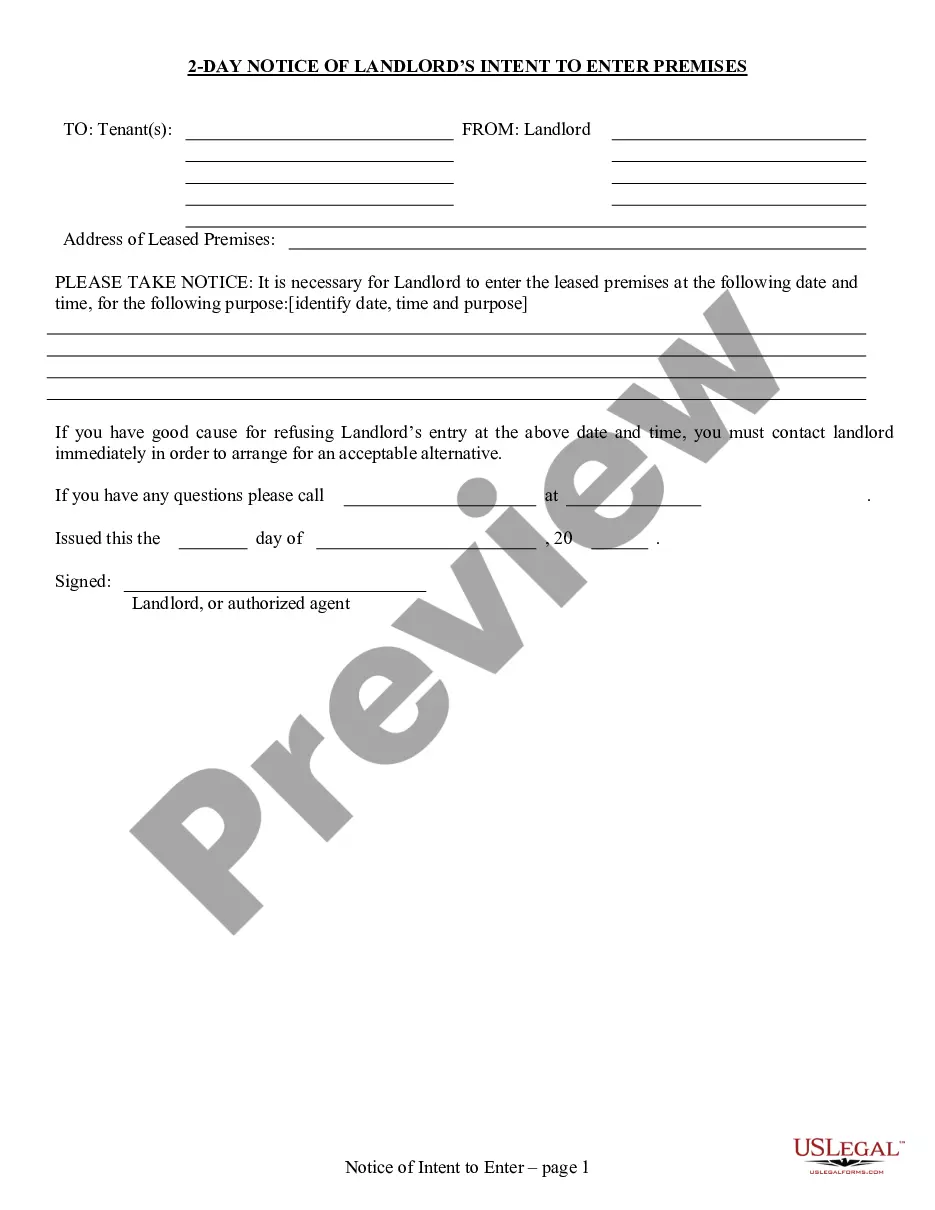
In residential leasing, tenant privacy laws heavily restrict when a landlord can enter a property. While emergencies—such as active water leaks or gas smells—exempt landlords from notice requirements, routine maintenance, non-emergency inspections, and showings to prospective buyers or tenants require advance warning.
A 2-day notice (frequently mandated as 24 or 48 hours depending on state or provincial law) gives tenants reasonable time to secure pets, arrange their schedules, or protect their privacy. If a landlord enters without providing proper notice or without a genuine emergency, the tenant may have legal grounds for breach of the covenant of quiet enjoyment, constructive eviction, or statutory damages.
Employment and Labor Relations
In employment contexts, a two-day notice is rarely sufficient for termination without cause due to labor standards and wrongful dismissal laws, which often require weeks or months of severance or notice. However, a 48-hour notice frequently applies to internal operational shifts, disciplinary hearings, or mandatory company meetings. Employees must review local labor laws and internal employee handbooks to determine whether a short-notice directive complies with employment contracts or collective bargaining agreements.
Commercial Contracts and Service Level Agreements
Within business-to-business environments, short-notice clauses are common in service agreements, vendor contracts, and contractor arrangements. A 2-day notice might be used to invoke a suspension of services, request an emergency audit, or cure a minor breach of contract before escalation.
Legal vs. Practical Implications: A Comparative Breakdown
To fully grasp the impact of a 48-hour notice, it is necessary to weigh the strict legal theory against the messy realities of on-the-ground execution.
| Dimension | Legal Implications | Practical Implications |
|---|---|---|
| Compliance & Validity | Non-compliance with statutory delivery rules voids the notice; actions taken become legally actionable (e.g., trespassing, breach). | Senders often scramble to prove delivery time; recipients feel ambushed or rushed to respond. |
| Time Calculation | Strict adherence to business days vs. calendar days; exclusion of service day and weekends in specific jurisdictions. | Misunderstanding the exact expiration hour leads to premature actions or missed deadlines. |
| Remedies & Recourse | Right to seek injunctions, sue for damages, or declare a contract default. | Strain on relationships, loss of trust, and potential escalation to formal legal disputes. |
| Exceptions | Genuine emergencies override notice requirements across almost all legal frameworks. | Defining an "emergency" is subjective, frequently leading to disputes over whether the short notice was justified. |
Common Pitfalls and Compliance Mistakes
Errors in drafting, serving, or responding to a 2-day notice can disrupt operations and result in liability. Avoiding these frequent missteps protects both rights and timelines.
- Improper Service Method: Relying on informal channels like social media messaging or unverified email addresses instead of legally mandated delivery methods.
- Vague Descriptions: Failing to clearly state the reason for the notice, the exact time of the proposed action, or the specific scope of work or meeting agenda.
- Miscalculating the Timeline: Ignoring rules about excluding weekends or public holidays, leading to an illegally short notice period.
- Ignoring Local Statutory Updates: Assuming standard lease clauses or handbook rules override newly enacted municipal or state tenant/employee protection laws.
- Retaliatory Timing: Issuing short notices immediately after a party asserts a legal right (such as requesting repairs or reporting a violation), which can be legally classified as retaliatory and penalized.
Frequently Asked Questions
Does a 2 day notice mean 48 hours exactly?
Yes, a 2-day notice legally equates to 48 hours, but how those hours are counted depends heavily on local statutes. Many jurisdictions require the calculation to exclude the day the notice was served, weekends, and legal holidays, effectively extending the actual timeline.
Can a landlord enter my apartment with a 2-day notice if I am not home?
In many jurisdictions, yes, provided the notice was served legally, states a valid purpose (such as maintenance or an inspection), and specifies a reasonable window during daylight hours. However, local laws vary, and some regions require tenant consent or physical presence.
What happens if a service notice is delivered via email?
Electronic delivery is only valid if permitted by the governing contract, lease agreement, or specific statutory allowances. If allowed, the delivery timestamp establishes when the 48-hour clock begins, provided the sender can prove receipt.
Is an emergency exempt from the 2-day notice rule?
True emergencies—such as fires, floods, gas leaks, or imminent structural collapses—virtually always exempt parties from advance notice requirements. However, the burden of proof rests entirely on the party claiming the emergency to demonstrate that an immediate threat existed.
What should I do if I receive an invalid or improperly served notice?
Document the date, time, and method of delivery immediately. Consult the governing contract, lease, or local legal aid resources to verify statutory compliance before formally notifying the issuer of the defect in writing.
Recommended Next Actions
If you are preparing to issue a 2-day notice, verify your governing statutes or contract terms to ensure your delivery method and timeline are bulletproof. Keep a dated copy of the written notice and secure proof of service.
If you have received a short notice that feels invasive, improper, or retaliatory, avoid reacting out of emotion. Document the circumstances, review your lease, employment contract, or legal rights, and seek professional legal counsel if the situation threatens your housing, employment, or contractual standing.