The 1976 Evinrude 70hp outboard is a legendary three-cylinder, two-stroke engine that remains highly valued in 2026 for its mechanical simplicity, robust design, and excellent power-to-weight ratio. Maintaining this classic motor requires a systematic approach to ignition timing, fuel system cleanliness, and water pump integrity, ensuring reliable performance for vintage boat enthusiasts and weekend anglers alike.
Engineering Heritage and Design Philosophy
The mid-1970s marked a golden era for Outboard Marine Corporation (OMC), the parent company of Evinrude. The 1976 70hp model was engineered during a period when manufacturers were refining two-stroke technology to balance performance with the growing demand for reliability. By 1976, the 70hp configuration had settled into a proven three-cylinder, loop-charged design.
Unlike earlier cross-flow designs, the loop-charged architecture allowed for more efficient scavenging of exhaust gases and a more precise intake of the fuel-air mixture. This resulted in a motor that was not only more fuel-efficient than its predecessors but also remarkably smooth throughout its RPM range. For owners in 2026, this longevity is a testament to the heavy-duty metallurgy and straightforward mechanical systems that characterized the era.
Pre-Operational Prerequisites and Safety
Before attempting to start or service a 1976 Evinrude 70hp, you must account for the specific technical requirements of a 50-year-old outboard. The most critical factor is the fuel-to-oil ratio. This engine is designed to run on a 50:1 mixture of lead-free gasoline and TC-W3 certified two-stroke marine oil.
Safety Protocol Checklist
- Ventilation: Never run the motor in an enclosed space; carbon monoxide buildup is lethal.
- Cooling System: Never crank or run the engine on land without a dedicated flushing device (earmuffs) supplying constant water pressure to the intake vents. Running these engines dry for even thirty seconds can melt the impeller and cause catastrophic engine overheating.
- Electrical Safety: Disconnect the battery when working on the ignition system or replacing the starter motor to prevent accidental discharge.
The Fuel System: The Heart of the Engine
The most common cause of performance degradation in the 1976 70hp Evinrude is fuel system contamination. Modern ethanol-blended fuels can cause significant issues in older engines, as the ethanol acts as a solvent that degrades aged fuel lines and creates varnish in the carburetors.
Carburetor Maintenance
The engine utilizes three separate carburetors—one for each cylinder. Over time, the internal passages, specifically the high-speed and idle jets, can become obstructed.
- Disassembly: Remove the air silencer assembly to expose the three carburetors.
- Cleaning: Use a dedicated carburetor cleaner and, if available, an ultrasonic cleaning bath. Ensure the float levels are set precisely according to the service manual; incorrect float height will lead to a lean condition, which can cause internal engine damage.
- Sealing: Always replace the gasket sets. Modern ethanol-resistant gaskets are essential for a lasting repair in 2026.
Ignition System and Timing
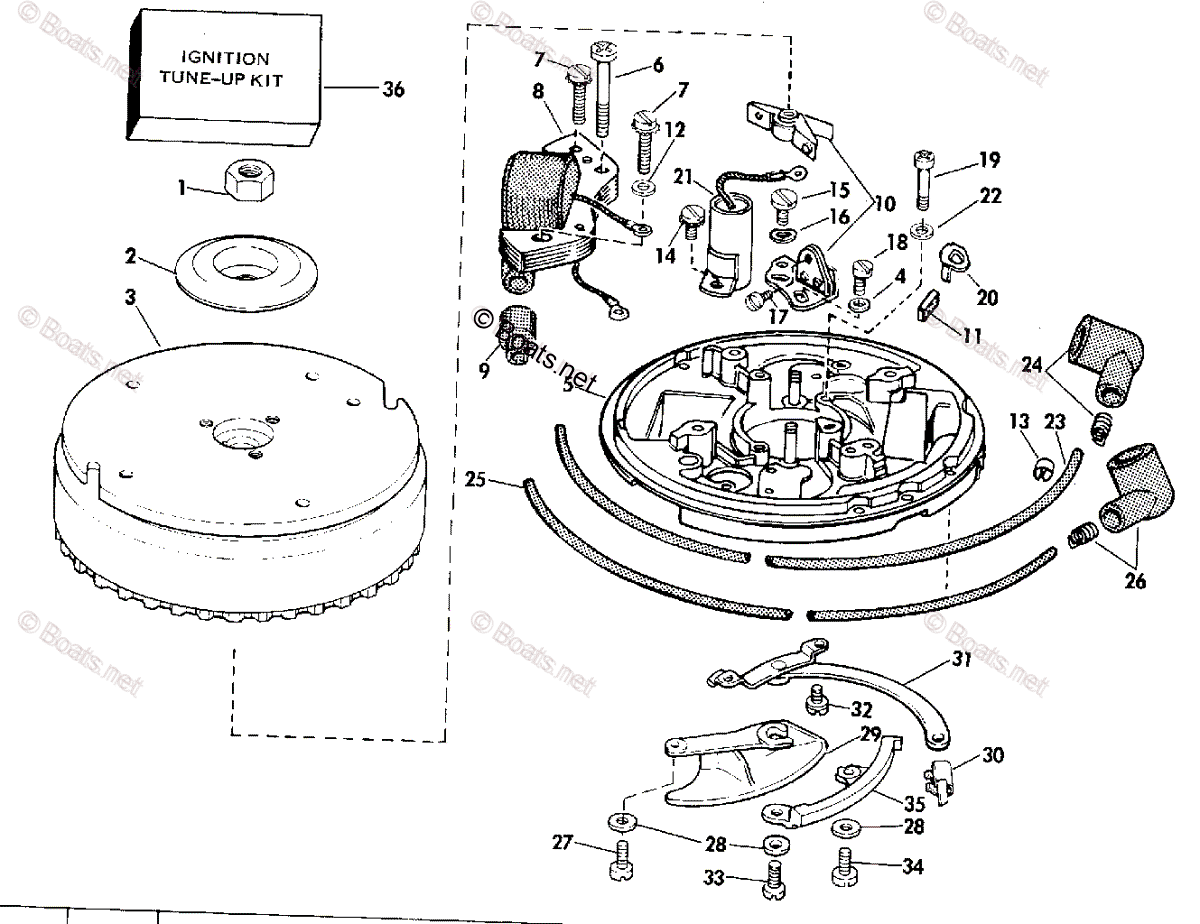
The 1976 model features the OMC "Power Pilot" or early electronic ignition systems. Unlike mechanical breaker-point systems found in much older outboards, this electronic ignition is generally maintenance-free but is sensitive to voltage fluctuations.
If the engine is misfiring or failing to spark, check the stator and the power pack. The stator is responsible for generating the high-voltage current required for the spark plugs. A failing stator often shows signs of melting or leaking "potting compound" (the black epoxy-like substance covering the coils). Testing these components requires a peak-reading voltmeter, as standard digital multimeters often fail to capture the rapid pulses of an outboard ignition system.
Cooling and Water Pump Service
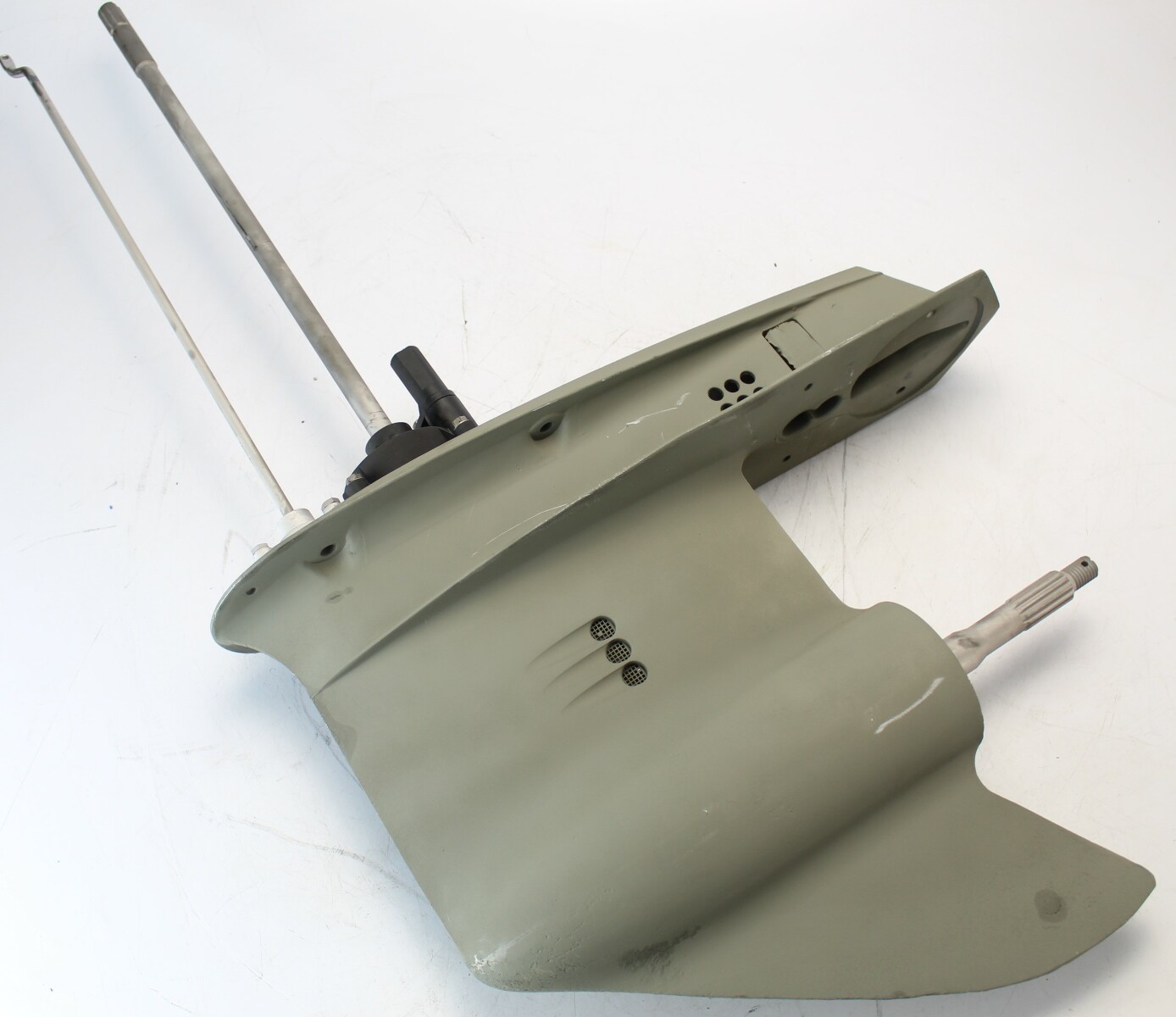
The water pump impeller is a wear item that should be replaced every two seasons, regardless of the number of hours operated. Rubber components dry out and crack over time, and a failed impeller is the primary cause of engine seizures in vintage outboards.
Replacing the Impeller
- Drop the Lower Unit: Remove the bolts securing the gearcase (lower unit) to the midsection. You must also disconnect the shift rod.
- Access the Housing: Once the lower unit is dropped, the water pump housing is located on the driveshaft.
- Installation: Apply a light coat of marine-grade waterproof grease to the new impeller vanes. Ensure the rotation orientation is correct, as forcing the vanes the wrong way during installation will cause immediate failure.
Technical Specifications Comparison Table
| Feature | Specification |
|---|---|
| Engine Type | 3-Cylinder, 2-Stroke |
| Horsepower | 70hp at 5000 RPM |
| Fuel/Oil Ratio | 50:1 |
| Ignition System | Capacitor Discharge (CD) |
| Cooling System | Water-cooled, Thermostat-controlled |
| Weight | Approx. 230–245 lbs |
Troubleshooting Common Issues
When the motor refuses to start or maintain an idle, follow this hierarchy of troubleshooting to avoid unnecessary part replacement:
1. The Engine Turns Over but Won't Start
Check for spark at all three cylinders using a spark gap tester. If there is no spark, inspect the emergency kill switch and the ignition switch. Corrosion in the control box wiring is frequent in motors of this age.
2. The Engine Runs Rough at Low Speed
This is almost always a sign of a dirty idle circuit in one or more of the carburetors. Since the motor relies on a fuel-air mix for lubrication, a clogged idle jet can lean out a cylinder, leading to uneven running and potential scoring of the piston walls.
3. The Engine Overheats
Verify that the "tell-tale" stream (the water discharge from the back of the engine) is steady. If the stream is weak or absent, inspect the intake screens for debris, replace the water pump impeller, and ensure the thermostat is not stuck in the closed position.
Choosing the Right Parts in 2026
In 2026, finding OEM (Original Equipment Manufacturer) parts for a 1976 Evinrude can be challenging. While "New Old Stock" (NOS) parts exist, many owners rely on high-quality aftermarket equivalents. When sourcing components like water pumps, ignition packs, or carburetor kits, prioritize reputable marine-specific manufacturers. Avoid unbranded or generic automotive-grade parts, as they often lack the corrosion resistance required for a marine environment.
Long-term Preservation
To ensure your 1976 Evinrude 70hp lasts for another decade, practice diligent winterization. At the end of every season, flush the engine with fresh water and perform "fogging." Fogging involves spraying a specialized oil into the carburetor intakes while the engine is running until it stalls; this coats the internal bearings and cylinder walls, preventing oxidation during the off-season. Keep the exterior finish waxed to protect the aluminum cowling, and ensure the lower unit gear oil is checked for signs of water intrusion (milky, opaque fluid), which indicates a failing seal.
Frequently Asked Questions
Can I run my 1976 Evinrude 70hp on E10 fuel?
Yes, but with caution. E10 (10% ethanol) fuel can be used, but it is highly recommended to use a fuel stabilizer that specifically counteracts ethanol-related phase separation. Never use E15 or higher, as the alcohol content will degrade the original rubber fuel lines and internal seals rapidly.
What is the correct spark plug for this motor?
The standard recommendation is the Champion QL77JC4 (or equivalent surface-gap or projected-tip plug, depending on specific mid-year production variances). Always verify the gap according to your specific engine serial number to ensure consistent ignition.
Why is there oil dripping from the propeller hub?
This is generally an accumulation of unburned two-stroke oil, which is normal for engines of this era. However, if the fluid is thick, dark gear oil, it indicates a failure of the propeller shaft seal in the lower unit, which requires immediate repair to prevent gear damage.
How do I verify if the thermostat is working?
The thermostat controls the cooling flow to maintain engine temperature. You can test it by removing it and placing it in a pot of water on a stove with a thermometer. It should begin to open at approximately 140°F (60°C). If it remains shut as the water nears boiling, replace it immediately.
Final Recommendation
The 1976 Evinrude 70hp is a robust, capable outboard that rewards the meticulous owner. If you are experiencing persistent performance issues, begin by performing a compression test. A motor with uneven compression between cylinders (usually defined as a greater than 10% variance) may have internal wear that service-level maintenance cannot fix. If compression is healthy, your time is best spent cleaning the fuel system and verifying ignition integrity. With basic care, these motors provide a level of mechanical feedback and reliability that many modern, computer-dependent engines cannot replicate.