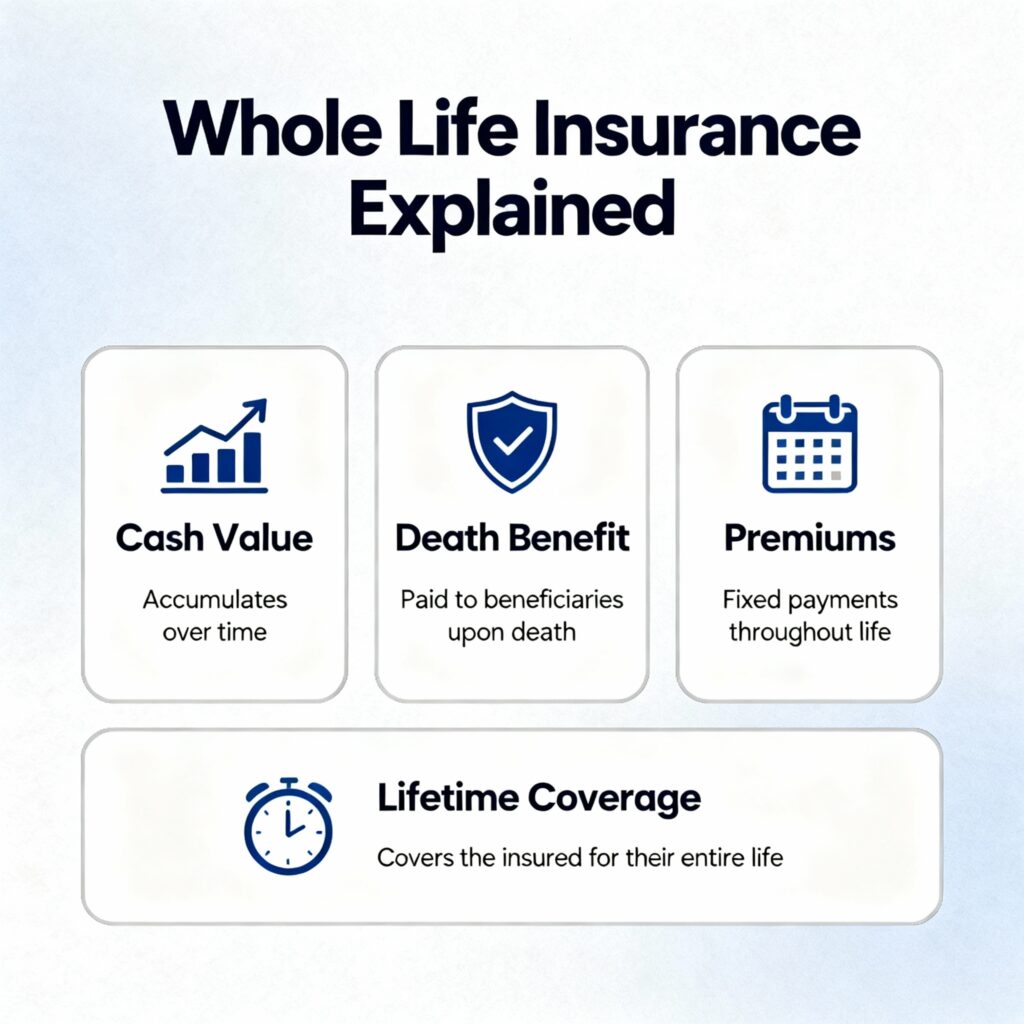
The "1 for 40" reference in whole life insurance describes a specific leverage or cost-to-benefit ratio where, for every $1 unit of annual premium paid, the policyholder secures a death benefit or cash value accumulation equivalent to 40 times that unit under specific underwriting or participating policy conditions. This structure is typically associated with high-early-cash-value policies or specific dividend-reinvestment scenarios in permanent life insurance contracts.
The Mechanics of Whole Life Insurance Leverage
Whole life insurance is a permanent policy that provides coverage for the duration of the insured's life, provided the premiums are paid. Unlike term life insurance, which expires after a set period, whole life policies include a "cash value" component that grows over time. The "1 for 40" terminology is not a standard industry universal constant, but rather a heuristic used by financial planners to describe the efficiency of capital allocation within a policy.
When a policy is structured to provide a "1 for 40" return on premium, it implies that the policyholder is effectively leveraging their premium dollars to secure a death benefit that is 40 times the annual contribution. This often occurs in the context of "Paid-Up Additions" (PUA) or specific high-early-cash-value riders that allow a policy to accelerate its growth phase.
Understanding Premium Allocation
To grasp why this ratio exists, one must look at how an insurance company allocates premiums. A standard whole life policy premium is divided into three primary buckets:
- The Cost of Insurance (COI): The mortality charge based on the insured's age and health status.
- Administrative Expenses: The overhead costs associated with managing the policy and the company.
- Savings/Cash Value Component: The portion that earns interest and dividends, contributing to the "1 for 40" leverage over the long term.
When a policy is optimized for a 1-to-40 ratio, the internal engineering focuses on minimizing the drag of administrative fees and maximizing the portion of the premium that hits the cash value or increases the death benefit directly.
Evaluating the 1-for-40 Context in 2026
As of 2026, the financial environment surrounding life insurance has seen shifts in interest rate environments and dividend scales. Policyholders looking to utilize this specific ratio must consider the current economic climate, as insurers adjust their "participating" status—the ability to pay dividends—based on the performance of their underlying general account assets.
Factors Influencing Your Policy Ratio
- Insured's Health and Age: The younger and healthier the individual, the lower the base Cost of Insurance, which allows more of the premium to function as "leverage" for the death benefit.
- Dividend Interest Rates: Because whole life insurance is a participating product, the "1 for 40" ratio is often realized through the accumulation of dividends. If an insurer has a high dividend interest rate, the compounding effect makes the 40x multiple achievable sooner.
- Policy Riders: Riders such as the Paid-Up Additions rider allow a policyholder to dump extra cash into the policy to buy small amounts of additional, fully paid-up insurance. This is the most common way to push a policy toward a higher death-benefit-to-premium ratio.
Comparison of Insurance Efficiency Structures
The following table compares how different structural elements in whole life insurance contribute to the efficiency of the policy, often reflected in ratios like the one described.
| Feature | Impact on Leverage (e.g., 1:40) | Primary Benefit |
|---|---|---|
| Base Policy Only | Low | Provides long-term stability but slower growth. |
| Paid-Up Additions (PUA) | High | Accelerates cash value and death benefit growth. |
| High Early Cash Value | Medium | Higher liquidity in the first five years of the policy. |
| Dividend Reinvestment | Cumulative | Compounds the growth ratio over decades. |
The Role of Dividends in Achieving Targeted Ratios
It is critical to distinguish between a guaranteed death benefit and a non-guaranteed death benefit. While the base policy is contractually guaranteed, the "1 for 40" outcome often relies on the inclusion of dividends. In 2026, insurance companies publish their dividend scales annually. These scales are based on the actual versus expected mortality, expenses, and investment gains of the company.
If you are sold a policy based on a 1-to-40 ratio, you must review the "ledger" provided by the agent. A ledger is a document showing the projected growth of your policy. Ensure that the ledger shows both "Guaranteed" and "Non-Guaranteed" columns. If the 40x return only appears in the non-guaranteed column, understand that the insurer is not contractually obligated to pay that amount if market conditions change.
Prerequisites for Optimal Policy Performance
Before committing to a policy structured for high leverage, you must ensure that your financial foundation is prepared for the long-term nature of the commitment.
- Stability of Income: Whole life premiums are typically fixed. You must be able to maintain these payments for decades to reach the maturity phase where the 40x leverage is most effective.
- Underwriting Clearance: To get the best ratio, you need the best "rating." If you have health issues, the insurer will charge a higher premium for the same death benefit, which lowers your effective ratio significantly below 1:40.
- Duration Horizon: These policies are not short-term investments. The efficiency usually peaks 20 to 30 years into the policy. Attempting to exit a whole life policy in the first 5–10 years often results in a loss of capital.
Common Pitfalls and Troubleshooting
A common error among policyholders is focusing solely on the death benefit ratio while ignoring the liquidity of the cash value.
Over-funding vs. Under-funding
If you under-fund your policy, the death benefit may lapse. If you over-fund it beyond the IRS-defined limits (Modified Endowment Contract or MEC limits), you lose the tax advantages of the cash value growth. When working with an agent, ensure they are calculating the "MEC limit" based on the 2026 tax code, which dictates how much money you can put into the policy without turning it into a taxable investment vehicle.
Troubleshooting Low Dividends
If your policy is not tracking toward your desired ratio:
- Request an In-Force Illustration: Ask your insurance company for an "in-force illustration" based on current interest rates. This will show you exactly where you stand in 2026 compared to the original projection.
- Review Dividend Options: Check if your dividends are being used to purchase "Paid-Up Additions." If they are being paid out as cash or used to reduce premiums, you are actively dismantling the compounding power that leads to higher ratios.
Professional Advice Limitations
The information provided here is for educational purposes regarding insurance mechanics. It does not constitute financial, tax, or legal advice. Insurance regulations vary by jurisdiction (state or country level), and the specific product offerings from carriers are subject to change. Always consult with a licensed life insurance professional or a fee-only financial planner to review your specific contract documents and tax implications before making a purchase or modifying your current coverage.
Frequently Asked Questions
Is the 1-for-40 ratio guaranteed by the insurance company?
Usually, no. While the death benefit of the base policy is guaranteed, the specific ratio of 40x is often achieved through the non-guaranteed dividend component. You should review your policy ledger to see which portion of the death benefit is guaranteed and which is contingent on future performance.
Can I change my premium payment amount later?
In a standard whole life policy, the base premium is fixed. However, if you have a "Paid-Up Additions" rider, you can often increase or decrease your total contribution (up to the policy's limits) to adjust how quickly the cash value and death benefit grow.
What happens if I stop paying the premiums?
If you stop paying, your policy may enter "reduced paid-up" status, or the insurer may use the cash value to cover the premiums (Automatic Premium Loan). This will negatively impact the policy's ability to reach the 40x ratio and may eventually cause the policy to lapse.
Are the tax benefits of this policy valid in 2026?
Yes. Under current tax laws, the cash value growth in a whole life policy is generally tax-deferred, and the death benefit is typically received by beneficiaries income-tax-free, provided the policy is not classified as a Modified Endowment Contract (MEC).
How do I verify my current death benefit ratio?
Contact your insurance carrier's policyholder service department and request an "in-force ledger." This document will list your current death benefit and your current cumulative premium payments, allowing you to calculate your actual leverage ratio as of the current date.
Recommendation for Policyholders
If you are currently evaluating a policy that promises high leverage, your immediate next step should be to request a "non-guaranteed" versus "guaranteed" comparison ledger from your agent. If the 1:40 ratio is the primary reason for the purchase, have the agent explain exactly which riders or dividend assumptions are required to reach that multiple. Ensure that you have the liquidity to maintain the premium payments for the long term; if you cannot commit to the long-term schedule, this specific high-leverage structure may be unsuitable for your financial goals.