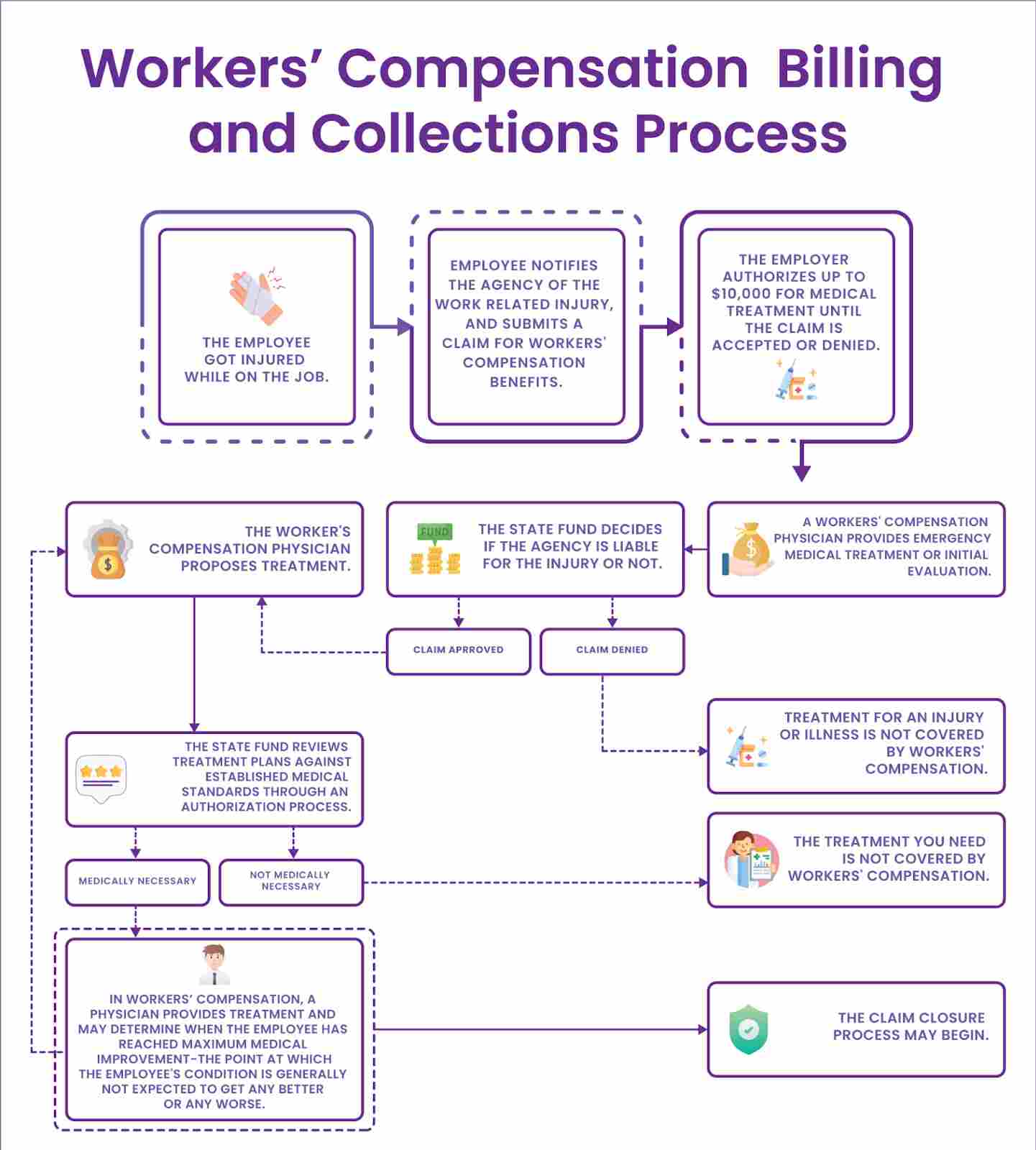
While workers' compensation systems are designed to provide no-fault insurance coverage for workplace injuries, the general rule that an employee cannot sue their employer for negligence shifts dramatically when an intentional tort is involved, creating complex legal boundaries around whether an injured worker can collect standard benefits or must pursue a civil lawsuit instead.
Navigating the aftermath of a workplace injury requires a clear understanding of how the exclusive remedy doctrine interacts with intentional misconduct by an employer. Traditionally, workers' compensation acts were established as a grand bargain: employees gave up their right to sue employers for negligence in exchange for guaranteed, swift medical benefits and partial wage replacement, regardless of who was at fault. However, when an employer moves from ordinary negligence, gross negligence, or recklessness to an intentional act designed to cause harm, the legal landscape shifts. Jurisdictional differences across the United States dictate whether an injured worker remains strictly within the administrative workers' compensation framework or unlocks the right to file a personal injury lawsuit in civil court.
Understanding these statutory boundaries, the strict legal definitions of intentional harm, and the exceptions that allow civil litigation is critical for injured workers, legal professionals, and employers alike. This guide explores the foundational mechanics of workers' compensation exclusivity, the high legal threshold required to prove an intentional tort, and the strategic pathways available when a workplace injury stems from deliberate employer misconduct.
The Foundation of Workers' Compensation and the Exclusive Remedy Rule
To comprehend why an intentional injury complicates a compensation claim, one must first examine the foundational contract of modern labor law: the workers' compensation system. Enacted across all fifty states throughout the 20th century, these legislative frameworks replaced traditional tort litigation for workplace accidents. Under this system, an employee who slips on a wet factory floor, develops carpal tunnel syndrome from typing, or suffers repetitive strain injuries does not need to prove their employer was careless. They simply need to establish that the injury arose out of and in the course of employment.
In exchange for this guaranteed safety net, employees surrender a valuable legal right: the right to sue their employer in civil court for pain and suffering, emotional distress, and full lost wages. This principle is codified as the exclusive remedy rule (or exclusivity provision). Under this doctrine, workers' compensation is deemed the sole and exclusive remedy available to an employee against their employer for an accidental workplace injury.
The Grand Bargain:
- EMPLOYEE GIVES UP:
- Right to sue in court
- Pain & suffering damages
- EMPLOYER GIVES UP:
- Defense of contributory negligence
- Guaranteed no-fault coverage
The exclusive remedy rule promotes judicial economy and provides predictable, swift financial relief. It protects businesses from catastrophic liability bankruptcies resulting from everyday workplace accidents while ensuring workers do not face prolonged, expensive litigation to pay for emergency medical care. However, courts and legislatures recognized early on that this shield was never intended to protect employers who step outside the bounds of ordinary business operations to deliberately inflict physical harm on their workforce.
Defining "Intentional Injury" in the Workplace
When a worker alleges that an employer intentionally injured them, the legal system does not take the accusation lightly. Proving an intentional tort requires crossing a massive evidentiary chasm that separates ordinary workplace negligence from deliberate criminal or civil misconduct.
In tort law, an act is considered intentional when the actor either desires to cause the consequences of the act or believes that the consequences are substantially certain to result from it. In the context of employment law, satisfying this standard is notoriously difficult. Courts generally divide intentional employer misconduct into distinct categories:
1. Actual Intent to Harm (The Direct Assault)
The clearest scenario where an employer steps outside the exclusive remedy protection is when a business owner, manager, or supervisor commits a direct, physical assault against an employee. For example, if a supervisor physically strikes an employee during a dispute over job performance, this constitutes an intentional tort. In these rare instances, the act is so disconnected from the normal risks of employment that courts readily strip away the employer’s workers' compensation immunity, allowing the worker to file both a criminal complaint and a civil lawsuit for battery.
2. Fraudulent Concealment of Disease or Injury
Another recognized exception involves employers who actively deceive workers about known toxic exposures. If an employer discovers that employees are working with a lethal chemical, conceals the medical data, tells workers the environment is safe, and watches them develop terminal illnesses, courts in several jurisdictions have ruled that this fraudulent concealment transforms the employer's conduct into an intentional tort.
3. Removal of Safety Guards and Known Hazards
A heavily litigated grey area involves employers who intentionally remove safety guards from machinery, bypass safety protocols, or order workers to perform tasks under blatantly hazardous conditions. A worker might argue that removing a safety guard makes injury "substantially certain." However, the vast majority of state jurisdictions hold that even gross negligence, extreme recklessness, or egregious safety violations do not legally constitute an intentional injury. If an employer cuts corners to save money, knowing a machine is dangerous, courts typically classify this as reckless negligence—which remains squarely inside the workers' compensation system—rather than an intentional desire to harm.
The "Intentional Tort Exception" Across Jurisdictions
Because workers' compensation laws are state-regulated, there is no single federal rule governing how intentional employer torts are handled. State statutes and supreme court rulings create a patchwork of approaches, ranging from extremely restrictive to relatively permissive for plaintiffs.
| State Approach | Legal Standard | Civil Lawsuit Permitted? | Typical Burden of Proof |
|---|---|---|---|
| Strict Actual Intent | Employer must actively desire to injure the worker. | Only for direct assaults or premeditated harm. | Extremely High (Clear and Convincing) |
| Substantial Certainty | Employer knew injury was substantially certain to occur. | Permitted in select states (e.g., Ohio, West Virginia via specific statutes). | High (Preponderance of Evidence + High Threshold) |
| Gross Negligence / Reckless Exclusivity | Treats extreme disregard for safety as an accident. | No. Worker is strictly limited to enhanced workers' comp penalties. | N/A (Remains in Admin System) |
For example, in states that adhere to the strict "actual intent" doctrine, a worker must prove that the employer harbored a subjective intent to cause injury. If the employer's motive was financial gain, production speed, or cost-cutting—even if reckless—the exclusivity bar remains intact.
Conversely, a small number of jurisdictions historically adopted a "substantial certainty" standard through landmark judicial rulings or legislative acts (such as Ohio's intentional tort statute, R.C. 2745.01). Under these specific statutes, a plaintiff must prove that the employer had actual knowledge of a specific danger and still required the employee to proceed, knowing that injury was a virtual certainty. Even under these broader standards, winning such a case requires extensive documentation, expert engineering testimony, and proof of prior safety violations or ignored regulatory citations from bodies like the Occupational Safety and Health Administration (OSHA).
Can a Worker Collect Workers' Compensation While Pursuing a Lawsuit?
A frequent point of confusion for injured workers is whether they can file for standard workers' compensation benefits while simultaneously exploring or pursuing a civil lawsuit against an employer for an intentional tort.
The short answer is no, you generally cannot maintain conflicting legal positions or receive double recovery for the same injury, though the procedural timeline allows for strategic maneuvering.
- Mutual Exclusivity of Remedies: In many states, filing and accepting workers' compensation benefits acts as an "election of remedies." If a worker formally applies for and accepts workers' compensation awards, the legal system may bar them from later filing a civil lawsuit, operating under the theory that the employee chose their forum.
- The Dual-Capacity and Dual-Persona Doctrines: In rare cases, an employer may wear two hats. For instance, if an employer designs and manufactures industrial presses for the open market, and an employee is injured by a defective press manufactured by their own company, the employee might sue the employer in its capacity as a manufacturer under product liability law, separate from its capacity as an employer. However, courts interpret the dual-capacity doctrine very narrowly.
- Third-Party Liability: It is vital to distinguish between an employer committing an intentional act and a third party (such as a subcontractor, equipment manufacturer, or property owner) causing harm. If a third party intentionally or negligently injures a worker on the job, the worker can collect workers' compensation from their employer and file a separate civil lawsuit against the third party.
Procedural Steps and Strategic Considerations for Injured Workers
When an employee believes an employer’s intentional misconduct caused their injury, navigating the legal system requires precise adherence to procedural deadlines and evidentiary requirements. Moving forward without professional counsel in these complex matters almost invariably leads to dismissal.
- Step 1: Document Everything Immediately. Preserve physical evidence, take photographs of the hazard or machinery, secure text messages, emails, or written orders from management, and obtain contact information for eyewitness coworkers.
- Step 2: File the Official Accident Report. Even if a lawsuit is contemplated, reporting the injury to the employer and filing initial workers' compensation paperwork protects statutory rights and ensures immediate medical bills are covered while legal options are evaluated.
- Step 3: Consult a Qualified Personal Injury or Workers' Compensation Attorney. Because intentional tort exceptions sit at the volatile intersection of administrative law and civil litigation, specialized legal counsel is mandatory. An attorney will analyze state-specific statutes of limitations and case law.
- Step 4: Evaluate the Statute of Limitations. Workers' compensation claims usually carry strict reporting deadlines (often 30 to 90 days) and filing deadlines (typically one to two years). Civil personal injury lawsuits have independent statutes of limitations that run concurrently from the date of the injury.
- Step 5: Assess Collectibility and Insurance Coverage. Standard commercial general liability (CGL) policies often contain exclusions for intentional acts committed by the insured. Even if a worker wins a massive civil judgment against an employer for an intentional tort, collecting that judgment from a dissolved or bankrupt business entity can prove impossible if insurance coverage is disclaimed.
Frequently Asked Questions
Does gross negligence count as an intentional injury?
No. In almost all legal jurisdictions, gross negligence, recklessness, and blatant disregard for safety rules do not elevate an accident to an intentional tort. While the employer's behavior may be morally reprehensible, the law treats it as an extreme form of negligence, keeping the claim strictly within the workers' compensation system. Some states punish gross negligence by increasing the workers' compensation payout by a specific percentage, but it still does not unlock a civil lawsuit.
What if my supervisor physically assaulted me at work?
A direct, unprovoked physical assault by a supervisor or employer is one of the clearest examples of an intentional tort exception. Because a physical assault has no rational relationship to the normal duties of employment, courts generally rule that the exclusive remedy doctrine does not apply, allowing the injured worker to sue the assailant and, in many cases, the employer for negligent hiring, retention, or vicarious liability.
Can I sue my employer if they intentionally exposed me to toxic chemicals?
Generally, exposing workers to toxic substances—even when safety regulations are violated—is treated as an accidental occupational disease covered by workers' compensation. However, if an employer actively falsified safety records, lied to employees about medical test results showing heavy metal poisoning or chemical contamination, and actively concealed the danger to prevent workers from seeking treatment, a few state courts have permitted intentional tort or fraudulent concealment lawsuits.
What happens to my workers' comp benefits if I file a civil lawsuit?
If you file a civil lawsuit against your employer alleging an intentional tort and the court determines that the injury falls under workers' compensation exclusivity, your civil suit will be dismissed, and you will be redirected to the administrative board. Conversely, if you successfully collect workers' compensation benefits first, many jurisdictions will bar you from subsequently filing a civil suit due to the doctrine of election of remedies.
Are employers insured for intentional torts?
Typically, no. Most commercial liability insurance policies and workers' compensation policies contain explicit exclusions denying coverage for intentional, criminal, or fraudulent acts committed by the employer. This means that winning a civil lawsuit against an employer for an intentional tort may result in a judgment against a business that lacks the liquid assets or insurance backing to pay it.
Conclusion and Next Actions
The principle that a worker cannot collect standard civil damages when an employer causes an injury—barring extreme, proven instances of intentional harm—remains a cornerstone of American labor law. While the exclusive remedy rule protects the administrative stability of the workers' compensation system, it creates a formidable barrier for employees who suffer because of egregious, deliberate misconduct. Anyone navigating the aftermath of a severe workplace injury involving suspected foul play or deliberate endangerment must immediately secure medical documentation, preserve all digital and physical evidence, and consult an experienced attorney specializing in workplace tort litigation to evaluate whether their specific jurisdiction recognizes an intentional tort exception.