In 2026, the most effective strategy for Canadian life insurance companies to enhance profitability and market share is the integration of Continuous Behavioral Underwriting (CBU). By moving away from static, point-of-issue risk assessments and adopting real-time data loops from wearable devices and digital health records, carriers can significantly reduce lapse rates and improve mortality outcomes through proactive policyholder engagement.
The Evolution of the Canadian Life Insurance Landscape in 2026
The Canadian life insurance market has entered a transformative era. As of 2026, the traditional model of "set it and forget it" policy management is rapidly becoming obsolete. Carriers are facing a unique set of challenges: an aging demographic in provinces like Quebec and Nova Scotia, a tech-savvy younger generation in urban hubs like Toronto and Vancouver demanding instant gratification, and a regulatory environment that increasingly prioritizes transparency and consumer data rights.
Historically, life insurance companies in Canada relied on paramedical exams—blood draws, urine samples, and physical check-ups—to assess risk. This process was not only expensive, often costing carriers hundreds of dollars per applicant, but also a major point of friction. High "drop-off" rates occurred when applicants faced weeks of waiting for an appointment. The "surprising trick" that has revolutionized the industry in 2026 is not just the digitization of these forms, but the shift toward Continuous Behavioral Underwriting (CBU).
This approach leverages the high penetration of wearable technology and the maturity of provincial digital health gateways to create a living, breathing risk profile. Instead of a one-time snapshot of health, companies now use "the trick" of incentivized data sharing to align the interests of the insurer and the insured.
Defining the "Surprising Trick": Continuous Behavioral Underwriting (CBU)
At its core, CBU is the practice of updating a policyholder's risk profile based on real-time lifestyle data, provided voluntarily in exchange for premium credits or enhanced benefits. While the concept of "telematics" has existed in auto insurance for years, its application in Canadian life insurance was hampered by privacy concerns and data silos until recently.
Shifting from Static to Dynamic Risk Assessment
The "trick" lies in the paradox of data: by asking for more data over time rather than all data at the start, companies reduce the barrier to entry. In 2026, leading Canadian firms are using APIs to connect directly with provincial health records (where permitted) and consumer fitness ecosystems.
This creates a dynamic feedback loop. For example, if a policyholder maintains a consistent cardiovascular exercise routine or demonstrates adherence to a prescribed medication regimen for hypertension, the insurer’s predictive models can adjust the mortality expectation for that specific "cohort of one." This allows the company to offer "loyalty discounts" or "wellness credits" that keep the policyholder engaged.
The Role of Provincial Health Data APIs
Canada's decentralized healthcare system previously made data retrieval a nightmare for underwriters. However, the 2026 landscape features robust interoperability standards. Life insurance companies that have successfully integrated with platforms like the Ontario Health Data Platform or Alberta's Netcare have seen a 40% reduction in underwriting turnaround times. The "trick" here is the move from manual "Attending Physician Statements" (APS) to automated "Electronic Health Records" (EHR) ingestion, which provides a more accurate, longitudinal view of an applicant's health than a single blood test ever could.
Implementing the Strategy: A Roadmap for Canadian Carriers
To successfully implement CBU and automated data integration, life insurance companies must navigate technical, actuarial, and regulatory milestones. This is not merely a software update; it is a fundamental shift in the business model.
1. Infrastructure Modernization and API Integration
The first step is moving away from legacy mainframe systems. In 2026, the most successful Canadian carriers are cloud-native. They utilize microservices architectures that can ingest data from diverse sources—Apple HealthKit, Google Fit, and various EHR providers. The goal is to create a "data lake" where AI models can identify patterns that traditional actuarial tables might miss.
2. Actuarial Model Re-calibration
Traditional mortality tables are based on historical data that may not reflect modern medical advancements or lifestyle changes. The "trick" to making CBU work is the development of Agile Actuarial Models. These models are updated quarterly rather than every five years. They account for the "protective value" of the data itself—the fact that a person willing to share their health data is statistically more likely to be health-conscious and thus represents a lower risk.
3. Consumer Value Proposition and "The Nudge"
To get Canadians to agree to this level of data sharing, insurers must offer tangible value. In 2026, this often takes the form of:
- Premium Volatility Buffers: Protecting policyholders from industry-wide price hikes if they maintain healthy metrics.
- Integrated Wellness Rewards: Partnerships with Canadian retailers or pharmacy chains (e.g., Loblaw/Shoppers Drug Mart) to provide immediate rewards for healthy behaviors.
- Simplified Upgrades: Allowing policyholders to increase their coverage amounts without a new medical exam if their behavioral data remains positive.
Navigating the Regulatory and Privacy Landscape in Canada
A critical component of this "trick" is the strict adherence to Canadian privacy laws, which are among the most stringent in the world. The Office of the Superintendent of Financial Institutions (OSFI) and the various provincial regulators (such as the FSRA in Ontario) have issued clear guidelines on the use of AI and "alternative data" in insurance.
PIPEDA and Provincial Privacy Compliance
Under the Personal Information Protection and Electronic Documents Act (PIPEDA) and its provincial equivalents like Quebec’s Law 25, carriers must ensure "meaningful consent." The trick to compliance in 2026 is Granular Opt-ins. Instead of a blanket "we will track you" clause, successful companies allow policyholders to choose which data points to share (e.g., "I will share my step count but not my sleep data") and provide a clear "Right to be Forgotten" protocol.
OSFI Guideline E-23 and Model Risk Management
OSFI’s Guideline E-23 remains the gold standard for model risk management in 2026. Insurance companies must be able to explain why an AI model made a specific underwriting decision. This "Explainable AI" (XAI) is the secret sauce that allows carriers to use complex behavioral data while remaining compliant. If an insurer cannot explain why a premium was adjusted, they risk heavy fines and reputational damage.
Comparison: Traditional Underwriting vs. Continuous Behavioral Integration
The following table illustrates the operational differences and benefits of adopting the CBU "trick" in the 2026 Canadian market.
| Feature | Traditional Underwriting (Pre-2024) | Continuous Behavioral Integration (2026) |
|---|---|---|
| Data Source | One-time medical exam & APS | Real-time wearables & EHR APIs |
| Time to Issue | 20 to 45 days | Minutes to 48 hours |
| Cost per Policy | High ($500 - $1,200 CAD) | Low ($50 - $150 CAD) |
| Customer Interaction | Once at purchase / during claim | Ongoing monthly/weekly engagement |
| Risk Sensitivity | Static (based on age/gender/smoker status) | Dynamic (lifestyle-adjusted) |
| Lapse Rate Trend | Higher (customer feels disconnected) | Lower (incentivized loyalty) |
| Regulatory Focus | Fairness of initial assessment | Fairness of ongoing AI algorithms |
The Impact on Retention and Mortality Outcomes
Why is this "trick" so effective for the bottom line? It addresses the two biggest profit leakers in life insurance: Lapses and Early Mortality.
Reducing Lapse Rates through Engagement
In the Canadian market, a policy that lapses in the first three years is often a net loss for the carrier due to high acquisition costs and broker commissions. By using behavioral "tricks" like gamification and premium credits, companies keep the policy at the "top of mind." When a customer sees their life insurance app providing value every week (e.g., a $5 coffee card for hitting 50,000 steps), they are far less likely to cancel the policy during a period of financial tightening.
Improving Mortality through Proactive Intervention
The most "surprising" part of this trick is that insurance companies are becoming health partners. In 2026, some Canadian insurers offer "intervention alerts." If a policyholder's wearable data shows signs of atrial fibrillation or a sudden decline in activity levels, the insurer can provide a "nudge" to see a doctor—sometimes even offering a free virtual consultation through a partner like Telus Health. This proactive approach identifies health issues before they become terminal claims, directly improving the company's mortality experience.
Common Mistakes to Avoid in 2026
While the "trick" of behavioral data is powerful, it is easy to mismanage. Canadian carriers must avoid these pitfalls:
- Over-Automation without Human Oversight: While AI can handle 90% of cases, "edge cases" (individuals with rare diseases or unique lifestyles) still require human underwriters. Over-reliance on the algorithm can lead to "anti-selection" or "unfair discrimination" claims.
- Data Insecurity: A single data breach involving provincial health records would be catastrophic. Carriers must employ end-to-end encryption and zero-trust architecture.
- Complex UX: If the process of syncing a watch or approving a data release is difficult, the customer will abandon it. The technology must be "invisible."
- Ignoring the Broker Channel: In Canada, brokers still drive a massive portion of sales. The "trick" must be sold to them as a tool to help their clients get better rates, rather than a way to bypass the advisor.
Frequently Asked Questions
Does this behavioral trick increase the cost of insurance for older Canadians?
No, the goal is not to penalize but to refine risk. While older Canadians may have different baseline health metrics, CBU allows for "age-adjusted" goals. An 80-year-old walking 3,000 steps a day may receive the same premium credit as a 30-year-old walking 10,000 steps. It focuses on improvement and consistency relative to the peer group.
Is my data shared with the Canadian government or employers?
Under PIPEDA and the strict internal governance of Canadian insurers in 2026, data used for underwriting is strictly siloed. It is not shared with employers or the government unless required by a court order. The relationship is strictly between the policyholder and the insurer.
What happens if I stop wearing my tracker or sharing data?
Most "Continuous Behavioral" policies in 2026 are structured with a "Base + Credit" model. If you stop sharing data, you simply lose the "Wellness Credits" and your premium reverts to the standard base rate. It does not result in a cancellation of the policy.
How do companies verify that the data isn't being "gamed"?
Advanced AI in 2026 can detect "anomalous data patterns." For example, if a fitness tracker shows 50,000 steps at 3:00 AM every day with no heart rate elevation, the algorithm flags it as fraudulent. Most devices now use biometric verification (like heart-rate signatures) to ensure the device is being worn by the policyholder.
Are all life insurance companies in Canada doing this in 2026?
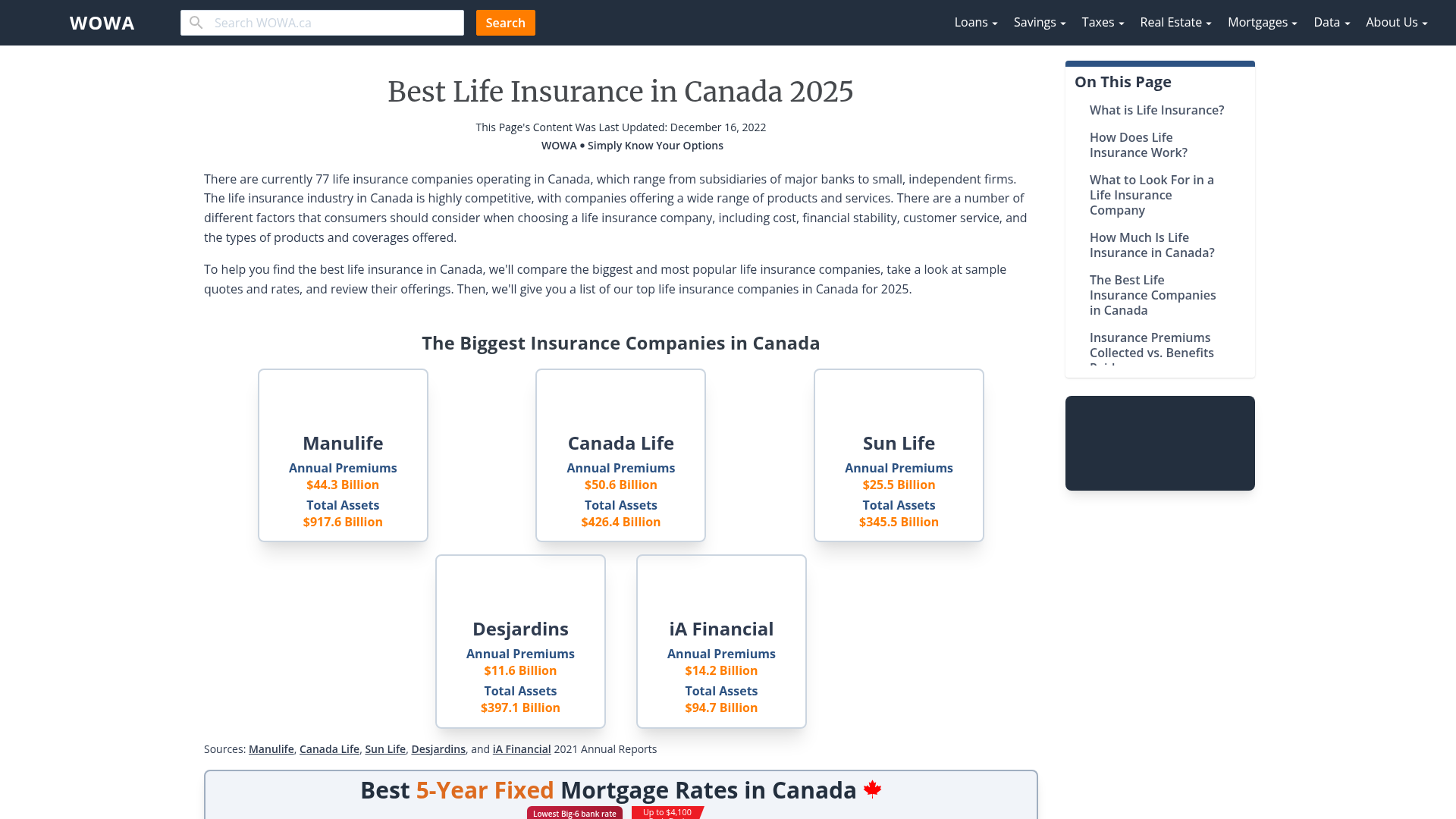
The "Big Three" (Manulife, Sun Life, and Canada Life) have all launched significant behavioral programs, but many mid-sized carriers and "InsurTech" startups are the ones pushing the most innovative "tricks." Adoption is currently at about 65% of the total market volume.
Final Practical Recommendation
For Canadian life insurance companies looking to gain a competitive edge in 2026, the immediate next action should be an Audit of Data Interoperability. Success hinges on the ability to ingest and analyze provincial health data and wearable metrics seamlessly. Carriers should prioritize partnerships with healthcare technology providers and invest in "Explainable AI" frameworks to ensure that their "surprising trick" remains compliant with OSFI and provincial regulations. For consumers, the move is to seek out "Interactive Policies" that reward a healthy lifestyle, as these are projected to be 15-20% cheaper than traditional static policies by the end of the decade.