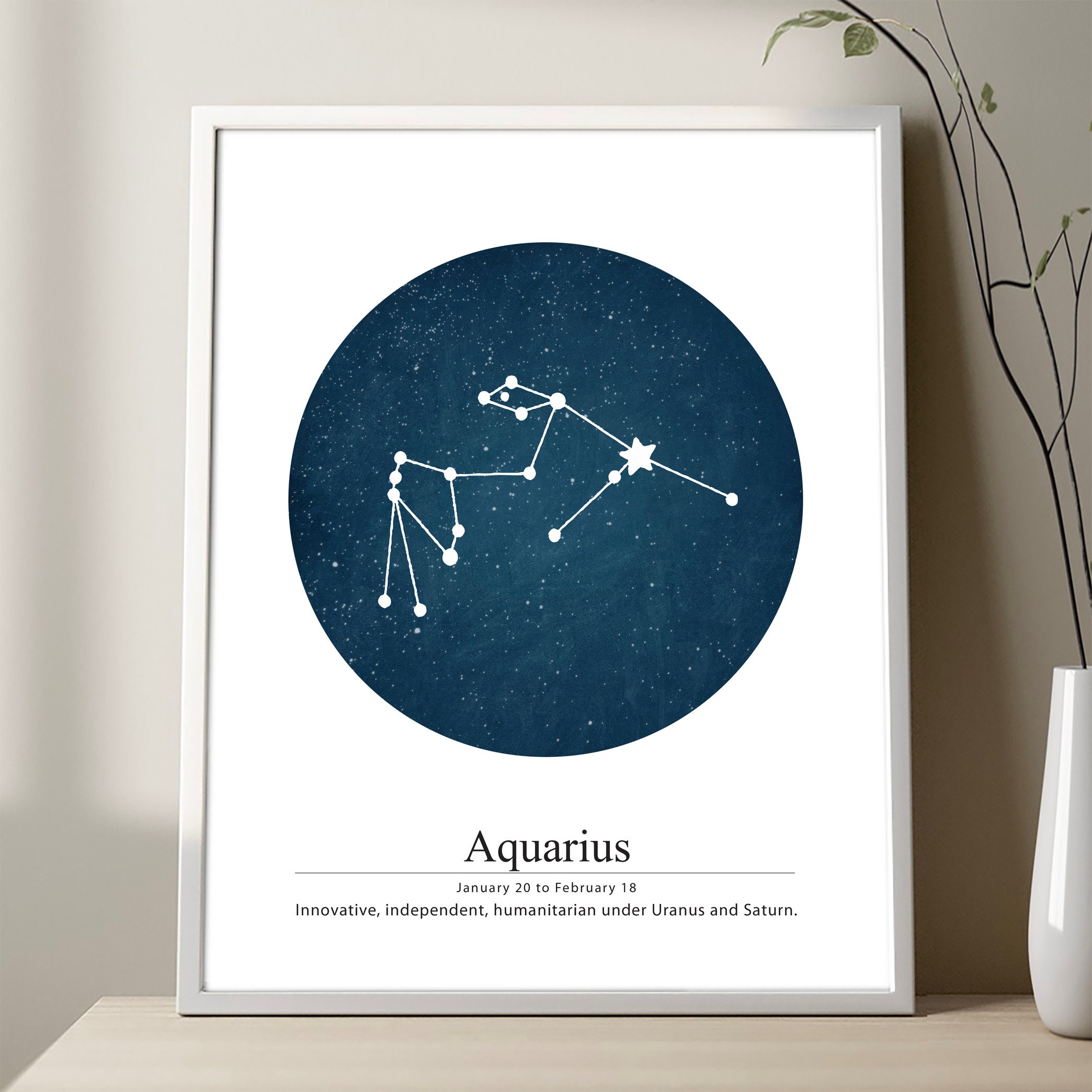
Aquarius is the eleventh astrological sign in the zodiac, traditionally spanning from January 20 to February 18. Represented by the Water Bearer, this fixed air sign is associated with innovation, intellectual independence, and humanitarian values. While its name suggests a water-based element, Aquarius is categorized in Western astrology as an air sign, focusing on mental energy and social connection.
The Astrological Foundation of Aquarius
To understand the definition of Aquarius within the system of Western tropical astrology, one must first distinguish between the sign and the constellation. The zodiac is a belt of space divided into twelve 30-degree segments, starting from the vernal equinox. Aquarius occupies the 300th to 330th degrees of celestial longitude.
Because the Earth undergoes precession—a slow wobbling motion—the astrological signs have gradually shifted away from the constellations for which they were originally named. Consequently, when an astrologer identifies someone as an "Aquarius," they are referring to the position of the Sun at the time of their birth within the tropical zodiac system, not the physical alignment of the Sun with the stars of the Aquarius constellation.
The Air Element and Fixed Modality
In technical astrological terms, every sign is defined by a combination of an element and a "modality" or "quality." Aquarius is defined by two primary characteristics:
- Air Element: Signs of the air element (Gemini, Libra, and Aquarius) are primarily concerned with communication, social structures, abstract thinking, and intellectual exchange. This manifests in the Aquarian tendency to analyze systems, prioritize logic over raw emotion, and seek community-based solutions to problems.
- Fixed Modality: The three modalities—cardinal, fixed, and mutable—describe how a sign expresses its energy. As a "fixed" sign, Aquarius is associated with stability, persistence, and, occasionally, stubbornness. While cardinal signs initiate change and mutable signs adapt to it, fixed signs seek to sustain and solidify ideas or structures.
This unique combination—the airy intellect of a thinker and the fixed determination of a stabilizer—leads to the archetype of the "visionary." The Aquarian is often focused on the long-term sustainability of social ideals rather than the immediate gratification of personal desires.
Planetary Rulership: Saturn and Uranus
One of the most complex aspects of defining Aquarius is its planetary rulership. In traditional astrology, which relies on the visible planets known to the ancients, Aquarius is ruled by Saturn. In modern astrology, which incorporates the outer planets discovered after the invention of the telescope, Aquarius is co-ruled or modern-ruled by Uranus.
The Saturnine Influence (Traditional)
Saturn represents structure, discipline, limitation, and authority. In the context of Aquarius, this explains the sign’s capacity for organizing society, implementing rules, and maintaining a detached perspective. This side of the sign is concerned with duty, the weight of responsibility, and the creation of systems that stand the test of time.
The Uranian Influence (Modern)
Uranus is the planet of radical change, rebellion, innovation, and breakthroughs. Modern interpretations of Aquarius heavily emphasize this influence. Uranus acts as a catalyst, pushing the Aquarian energy to break away from the restrictive structures imposed by Saturn to seek progress and evolution. This tension between Saturn’s order and Uranus’s upheaval defines the core conflict often associated with the sign: the desire to change the system from within.
Key Characteristics and Archetypal Themes
The behavior and temperament associated with Aquarius are rooted in its focus on the "collective." Unlike signs that focus on self-expression (like Leo) or emotional intimacy (like Cancer), Aquarius is often described as detached or objective.
| Characteristic | Primary Manifestation |
|---|---|
| Intellectualism | Prefers logic and objective analysis over subjective emotional arguments. |
| Humanitarianism | Prioritizes the collective good, social reform, and group welfare. |
| Independence | Maintains a strong desire for personal autonomy and intellectual freedom. |
| Innovation | Seeks unconventional paths and futuristic solutions to contemporary issues. |
| Detachment | Often maintains a cool, observational stance in personal and social settings. |
This sense of detachment is often misunderstood as coldness. However, in the context of the sign's history, this distance is a deliberate tool. By stepping back from the immediate emotional fray, the Aquarius can see the "big picture" of a social situation or an organizational problem. This is why the sign is historically associated with scientists, social reformers, and inventors.
The Symbol of the Water Bearer
The image of the Water Bearer (a figure pouring liquid from a vessel) is a potent piece of symbolism. Contrary to the misconception that it represents water, the liquid being poured is meant to be cosmic energy or the "water of life"—divine knowledge and enlightenment—which is poured out for the benefit of humanity.
This imagery underscores the Aquarian purpose: to bring the truth from the higher realms down to the human level. This represents the gift of information and the sharing of insights that can improve the lives of the community. It is a sign of service, but not the self-sacrificing service of a martyr; rather, it is the service of an engineer or visionary who designs a better world for everyone.
Aquarius in Modern Context: 2026 and Beyond
As of 2026, the discussion around Aquarius frequently involves its role in the "Age of Aquarius." This is an astrological concept suggesting that the vernal equinox point is moving into the constellation of Aquarius. Because these cycles are measured in thousands of years, there is no scientific or universally accepted astrological consensus on exactly when this era begins or ends. However, the themes of the age—technological advancement, global connectivity, and the shifting of power from central authorities to decentralized networks—align strongly with the traditional characteristics attributed to the sign.
In modern applications, individuals with strong Aquarius placements (such as the Sun, Moon, or Rising sign) are often found in fields that require high-level networking, technical systems management, and advocacy. Their propensity for "thinking outside the box" makes them effective in environments where legacy systems are failing and new approaches are required.
Common Misconceptions
There are several persistent myths regarding this sign that merit clarification.
Myth 1: Aquarius is a Water Sign. While the iconography involves water, it is fundamentally an air sign. This confusion often leads to incorrect interpretations of Aquarian behavior as being emotionally fluid or overly sentimental. In reality, the sign is cerebral.
Myth 2: Aquarius is anti-social. Aquarius is frequently labeled as the "loner" of the zodiac. While it is true that they value independence, they are actually one of the most socially oriented signs. Their focus is on groups, clubs, and large-scale society rather than one-on-one intimacy, making them appear "distant" even when they are deeply involved in social causes.
Myth 3: Aquarians are unpredictable. While they are influenced by the erratic nature of Uranus, most Aquarians are surprisingly consistent in their core values. Their actions may seem sudden to others, but they are almost always driven by a pre-existing commitment to a specific ideal or logical progression.
Navigating Relationships with Aquarius
If you are interacting with someone who identifies strongly with this sign, it is helpful to understand their need for intellectual stimulation. Aquarius thrives on debate, the exchange of ideas, and the exploration of new technology. They often feel uncomfortable when pressured to express deep, raw emotions on command, as they prefer to process their feelings through an analytical filter.
In professional or collaborative settings, the most effective way to engage an Aquarian is to present a clear, logical objective. They respond well to autonomy and dislike being micromanaged. If you provide them with the space to innovate and the tools to optimize a system, they are typically highly productive and loyal to the project’s success.
Frequently Asked Questions
Why is Aquarius associated with technology and the future? Aquarius is linked to these themes because of its association with the planet Uranus, which governs sudden shifts, lightning-fast change, and scientific discovery. The sign's natural inclination toward logic and systems-thinking also makes it naturally suited for engineering, programming, and futuristic social planning.
What is the difference between an Aquarius Sun, Moon, and Rising sign? The Sun sign represents the core identity and ego. The Moon sign represents the internal emotional landscape and private self. The Rising sign (or Ascendant) represents the "mask" one wears and the way one interacts with the world. An Aquarius Rising individual often presents as cool, objective, and somewhat aloof to strangers, regardless of their other personality traits.
Are all people born between January 20 and February 18 the same? No. Astrology uses a natal chart, which accounts for the exact time, date, and location of birth. The Sun sign is only one component. The positions of the other planets (like Mercury, Venus, and Mars) and the houses of the zodiac in an individual's chart create a highly complex, unique profile that differs significantly between any two people born within the same 30-day window.
Why is Saturn considered a ruler of Aquarius? Saturn is the traditional ruler because it represents the principles of boundaries, structure, and endurance. In the ancient view, these were necessary to channel the airy, sometimes erratic energy of the sign into something useful for society. Without the discipline of Saturn, the innovations of Aquarius might never materialize into concrete reality.
How does an Aquarius handle conflict? Aquarians typically approach conflict by attempting to depersonalize the issue. They will often try to turn an emotional argument into a debate about principles or facts. While this can sometimes be frustrating for more emotional signs, it allows the Aquarian to reach a solution without being clouded by personal biases.
Moving Forward with Your Understanding
If you are looking to explore the role of Aquarius in your own life, the most productive next step is to obtain a copy of your full natal chart. Knowing your Sun sign is merely the beginning. By identifying where the sign of Aquarius sits in your specific chart—specifically which "house" it occupies—you can determine which area of your life (e.g., career, relationships, personal transformation) is most influenced by the Aquarian themes of innovation and humanitarian reform. This will move your understanding from a general definition to a practical tool for self-awareness and decision-making.