Andy Kaufman was an American entertainer and performance artist whose career challenged the boundaries of comedy, reality, and social norms. His Wikipedia entry serves as a central repository for his complex biography, documenting his rise to fame on Taxi, his controversial wrestling career, and the enduring conspiracy theories surrounding his death in 1984.
The fascination with Andy Kaufman persists in 2026, not merely as a nostalgic look at a 20th-century performer, but as a study of a man who treated his entire life as a medium for art. To understand Kaufman, one must look past the "comedian" label—a term he famously detested—and examine the deliberate manipulation of audience expectations that defined his professional existence. This guide provides a comprehensive overview of his life, his most significant characters, and the technical details of his documented history.
The Identity of Andy Kaufman: Artist vs. Comedian
Born on January 17, 1949, in New York City, Andrew Geoffrey Kaufman spent his childhood in Great Neck, Long Island. From an early age, he exhibited a penchant for performing, though not in the traditional sense. While most children performed for applause, Kaufman performed to observe the reaction of his audience, often intentionally inducing discomfort or confusion.
Kaufman’s professional identity was rooted in his rejection of the "comedian" moniker. He preferred the title "song and dance man," a nod to the vaudevillian era where performers were expected to entertain through a variety of talents rather than just telling jokes. This distinction is crucial for anyone researching his life via Wikipedia or archival records. Kaufman rarely, if ever, told a standard "setup and punchline" joke. Instead, he created scenarios that forced the audience to question what was real.
His early work in New York City clubs involved reading The Great Gatsby aloud until the audience left, or playing a record of the Mighty Mouse theme song and only participating when the lyrics "Here I come to save the day!" were sung. These acts were designed to test the patience and temperament of the crowd, a precursor to the "anti-comedy" movement that would gain traction decades later.
Formative Years and the "Foreign Man"
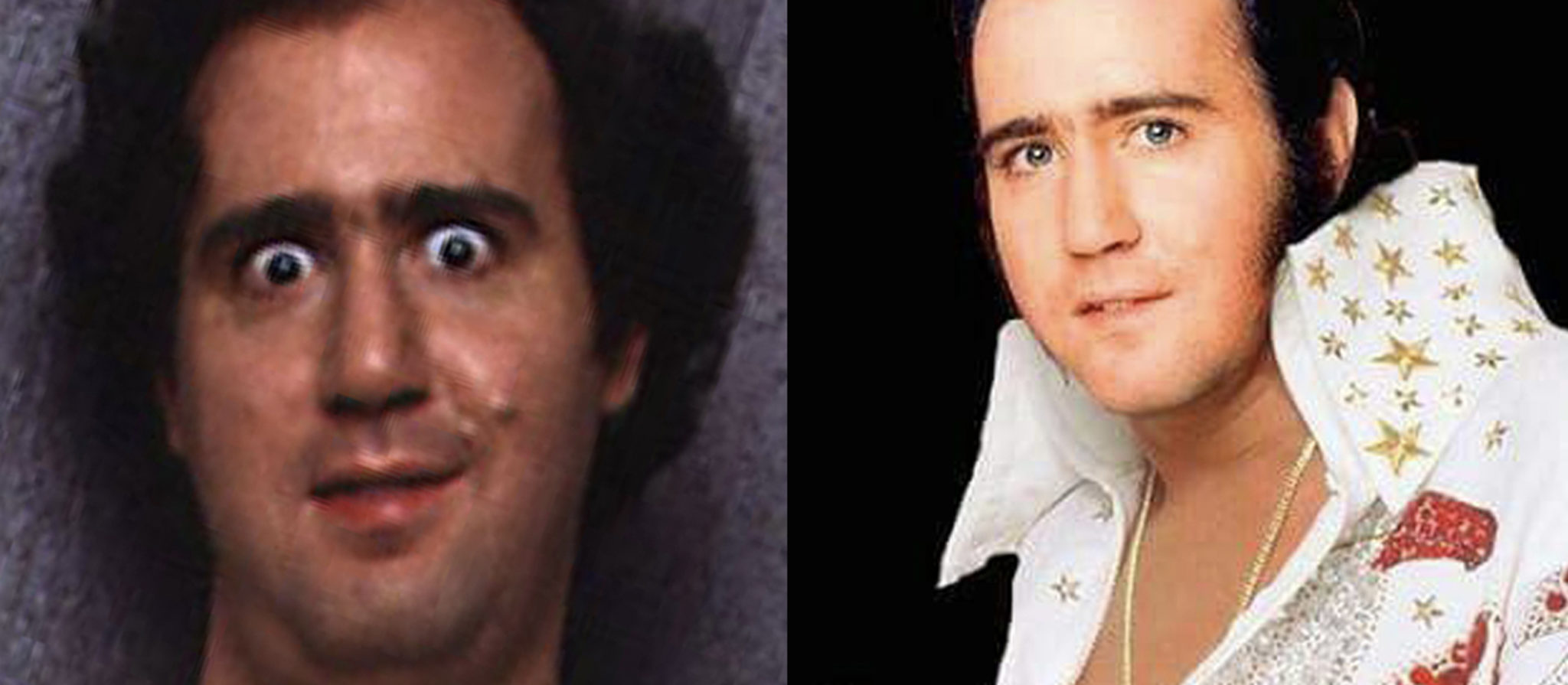
The foundation of Kaufman's national fame was a character known simply as "Foreign Man." Speaking in a high-pitched, timid voice and claiming to be from a fictional island in the Caspian Sea, the character would attempt to perform celebrity impressions, all of which were intentionally terrible. The only exception was his impression of Elvis Presley, which was widely considered one of the best and most accurate of the era.
This juxtaposition—the failure of the character followed by a moment of undeniable brilliance—became a hallmark of Kaufman’s style. It created a psychological loop for the audience: they felt pity, then annoyance, and finally, awe. This character caught the attention of television producers, leading to his casting on the premiere episode of Saturday Night Live in 1975.
The Breakthrough of Taxi and Latka Gravas
Despite his desire to remain an avant-garde performer, Kaufman's most significant commercial success came from the ABC sitcom Taxi. The producers, enamored with the Foreign Man character, invited Kaufman to join the cast. Kaufman was initially hesitant, fearing that the constraints of a sitcom would stifle his creativity.
He eventually agreed to the role of Latka Gravas, the lovable but eccentric mechanic, under strict conditions. One of these conditions was that his "friend" Tony Clifton be allowed to guest star on the show. In reality, Tony Clifton was another of Kaufman’s characters—an obnoxious, untalented, and abusive lounge singer. Kaufman insisted that Clifton was a real person and refused to break character, even during contract negotiations. When "Clifton" was eventually fired from the Taxi set for disruptive behavior, Kaufman maintained a straight face, pretending to be as surprised as everyone else.
Performance Art as Confrontation
By the late 1970s, Kaufman began to move away from the "lovable" Latka persona and toward more confrontational performance art. He realized that the same audience that cheered for Latka could be manipulated into genuine anger. This led to his foray into professional wrestling and his self-proclamation as the "Intergender World Heavyweight Champion."
The Intergender Wrestling Gimmick
Kaufman began offering $1,000 to any woman who could pin him in a wrestling match. He leaned into the role of a "heel" (a wrestling villain), delivering sexist tirades that incensed audiences across the United States. This was not merely a skit; Kaufman took it to the professional circuits, most notably in Memphis, Tennessee.
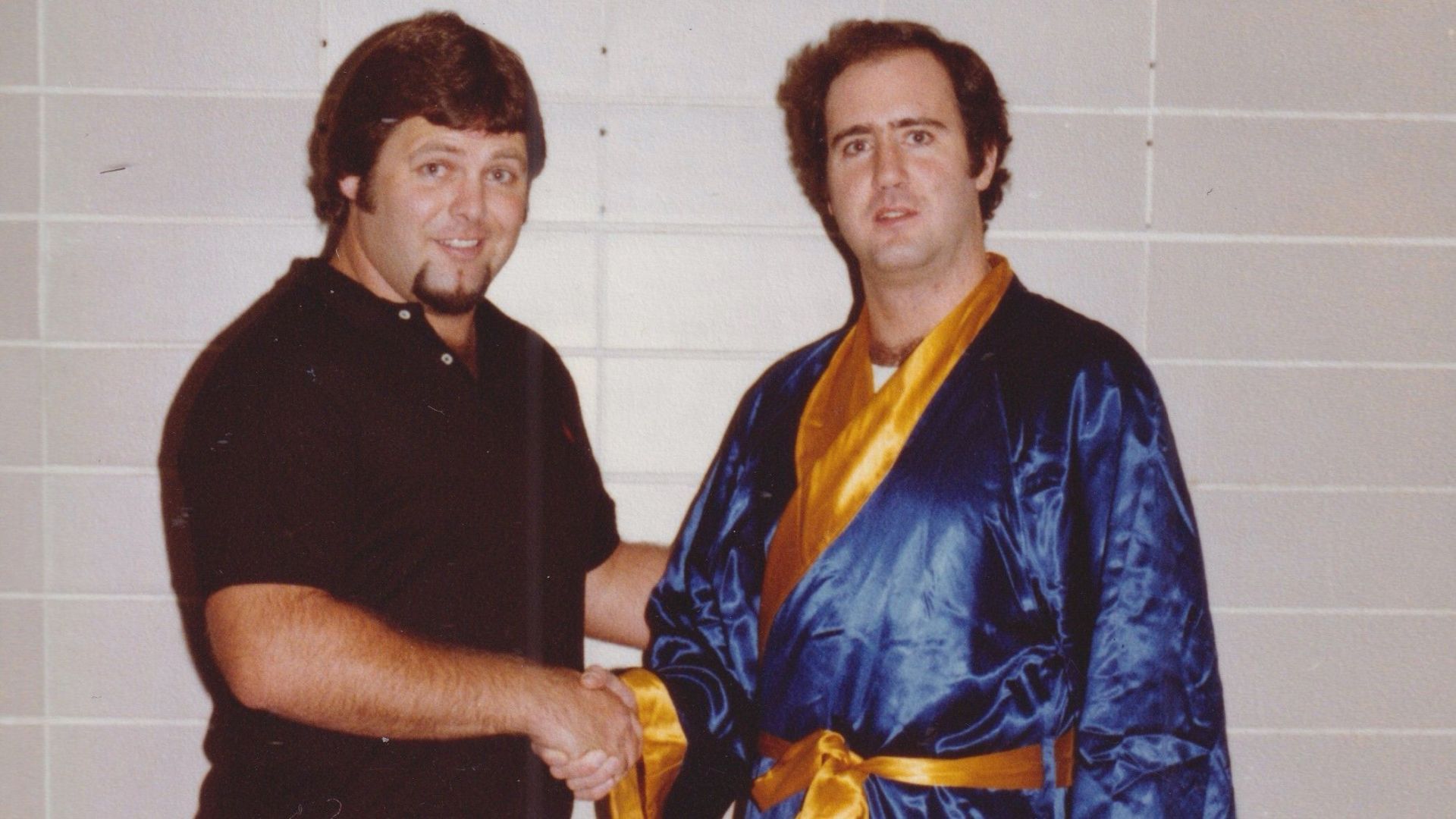
The most famous aspect of this era was his feud with professional wrestler Jerry "The King" Lawler. The rivalry culminated in a televised match where Lawler performed a "piledriver" on Kaufman, resulting in a supposedly broken neck. Kaufman wore a neck brace for months afterward. The climax of this narrative occurred on Late Night with David Letterman in 1982, where Lawler slapped Kaufman off his chair, leading to a profanity-laced tirade from Kaufman. It was only years after Kaufman's death that Lawler revealed the entire feud, including the Letterman incident, was a carefully orchestrated "work" or staged event.
The Saturday Night Live Ban
Kaufman’s relationship with Saturday Night Live (SNL) eventualy soured as his acts became increasingly bizarre and unpopular with the general public. In 1982, he suggested that the show hold a live call-in vote to determine whether he should ever be allowed to appear on the program again. By a vote of 169,186 to 122,703, the audience voted him off. While many believed this was another of Kaufman’s stunts, he was never invited back to the show during his lifetime. This event is often cited in media studies as an early example of interactive television and the "cancel culture" that would become prevalent in the 21st century.
The Mystery of May 16, 1984: Analyzing the Death Records
The most persistent topic surrounding Andy Kaufman is the nature of his death. According to official records and his Wikipedia biography, Kaufman died of large-cell carcinoma (a rare form of lung cancer) on May 16, 1984, at Cedars-Sinai Medical Center in Los Angeles. He was 35 years old.
The Cancer Diagnosis and Treatment
Kaufman, a non-smoker and a practitioner of Transcendental Meditation (TM), began experiencing a persistent cough in late 1983. By the time the cancer was diagnosed, it had already metastasized. He sought alternative treatments, including "psychic surgery" in the Philippines, but his health rapidly declined. His death was a shock to the public, partly because he had kept his illness secret from almost everyone except his closest family and friends.
The Persistence of Hoax Theories
The reason the "Andy Kaufman is alive" theory persists in 2026 is due to Kaufman’s own history of staging elaborate hoaxes. He had frequently discussed the idea of faking his own death as the ultimate piece of performance art. He reportedly told friends that if he were to do it, he would return 20 years later.
When 2004 passed without a revelation, the timeline was pushed to 30 years, then 40. Various sightings and "clues" have been debunked over the decades:
- The 2013 Claim: A young woman appeared at the Andy Kaufman Awards claiming to be his daughter and stating that he was still alive. This was later revealed to be an actress hired by Kaufman’s brother, Michael, as a prank or "tribute" to Andy’s style.
- The Death Certificate: Skeptics often point to perceived irregularities in his death certificate, though medical professionals and investigators have repeatedly confirmed the document's authenticity.
- The Tony Clifton Sightings: Since Bob Zmuda (Kaufman’s writing partner) and others have performed as Tony Clifton both before and after 1984, sightings of the character are often mistaken for proof that Kaufman is alive.
| Aspect | Fact / Documented Record | Common Myth / Hoax Theory |
|---|---|---|
| Cause of Death | Large-cell carcinoma (Lung Cancer) | Staged disappearance to live in secrecy. |
| Date of Death | May 16, 1984 | He is waiting for the "perfect moment" to return. |
| The Letterman Slap | A staged "work" between Kaufman and Lawler. | A genuine physical assault and legal dispute. |
| Tony Clifton | A character played by Kaufman, Zmuda, and others. | A separate, real person who "outlived" Kaufman. |
| Elvis Impression | Praised by Elvis Presley himself as his favorite. | It was a lip-sync or a different performer. |
Navigating the Andy Kaufman Wikipedia Entry and Digital Archives
For researchers and fans, the Andy Kaufman Wikipedia page is a living document. Because Kaufman’s life was so deeply entwined with performance, the "Talk" pages of his Wikipedia entry are often filled with debates regarding the veracity of certain events.
When searching for "Andy Kaufman Wikipedia," it is important to distinguish between confirmed historical events and the "lore" of his career. Reliable biographies, such as Lost in the Funhouse by Bill Zehme, provide much of the primary source material used by Wikipedia editors. Furthermore, the 1999 biopic Man on the Moon, starring Jim Carrey, while stylistically accurate, takes several creative liberties that are often mistaken for historical fact by casual readers.
Key Resources for Fact-Verification:
- The Andy Kaufman Home Page: Often maintained by his family or estate, providing archival footage.
- The Jerry Lawler Memoirs: Crucial for understanding the technical "behind-the-scenes" of the Memphis wrestling era.
- Medical Records and Public Filings: Confirmation of his treatment at Cedars-Sinai and his interment at Beth David Cemetery in Elmont, New York.
Enduring Legacy and Cultural Impact
As of 2026, Andy Kaufman’s influence is visible across the entire spectrum of modern entertainment. The concept of the "unreliable performer"—someone who intentionally alienates their audience—has become a staple of modern comedy.
- Sacha Baron Cohen: Characters like Borat and Bruno owe a direct debt to Kaufman’s "Foreign Man" and "Tony Clifton." The commitment to never breaking character, even in high-stakes real-world situations, is a Kaufmanesque trait.
- The Eric André Show: The use of chaos, physical discomfort, and the deconstruction of the talk-show format are modern iterations of Kaufman’s work on Late Night and Fridays.
- Social Media Hoaxes: In an era of "clout" and viral marketing, Kaufman is often seen as the grandfather of the modern prank culture, though his work was generally considered more intellectual and focused on the nature of truth rather than simple shock value.
Kaufman’s legacy is not just in the characters he played, but in the questions he forced his audience to ask. By refusing to give the audience what they wanted—or even what they expected—he highlighted the performative nature of all human interaction.
Frequently Asked Questions
Did Andy Kaufman actually die in 1984?
Yes. Despite numerous conspiracy theories and his own stated interest in faking his death, all official records, including death certificates and eyewitness accounts from family and medical staff, confirm he passed away from lung cancer on May 16, 1984. The persistent rumors are a testament to his success as a performance artist who blurred the lines of reality.
Who was the real Tony Clifton?
Tony Clifton was a fictional character created by Andy Kaufman. While Kaufman was the primary performer, his partner Bob Zmuda and even his brother Michael Kaufman occasionally wore the prosthetics and performed as Clifton to help maintain the illusion that Clifton was a real, separate person.
Why was Andy Kaufman banned from Saturday Night Live?
Kaufman was banned after a live call-in segment in 1982 where the audience was asked to vote on whether he should stay or go. The "Go" votes won by a significant margin. While Kaufman facilitated the vote himself as a stunt, the show’s producers honored the result and did not book him again before his death.
Was the feud with Jerry Lawler real?
The animosity was scripted, but the physical toll was often real. While Lawler and Kaufman were actually collaborators, they kept the secret for over a decade. The famous slap on the David Letterman show was a planned event designed to generate publicity and maintain the "kayfabe" (the illusion of reality) of the wrestling world.
What was the significance of the "Mighty Mouse" act?
The Mighty Mouse act was one of Kaufman's earliest "anti-comedy" pieces. By standing still for most of the song and only lip-syncing the chorus, he challenged the audience's role as passive consumers. It was an exercise in tension and release, forcing the audience to wait for a "payoff" that was intentionally minimal.
Final Recommendation for Researchers
If you are investigating the life of Andy Kaufman for academic or professional purposes, avoid relying solely on the primary Wikipedia summary. Instead, examine the References and External Links sections of the page. These often lead to original interviews, court documents from the wrestling era, and contemporary reviews from the 1970s that capture the genuine confusion and anger Kaufman’s performances elicited. To truly understand Kaufman, one must look at the reactions of those who didn't know it was an act—that is where his true art resided.