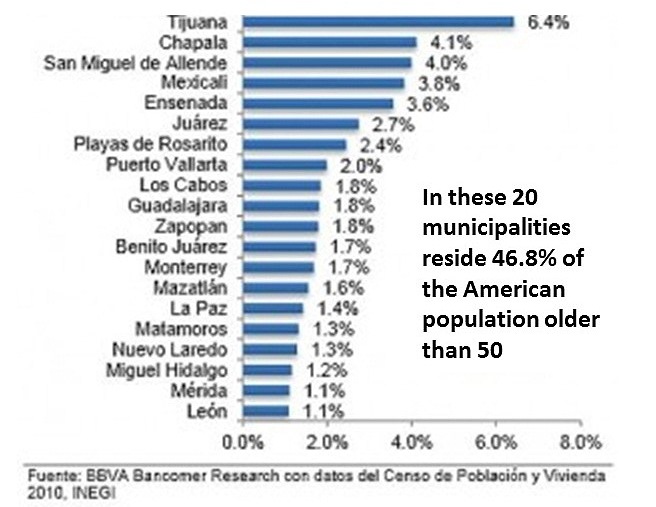
For American citizens living in Mexico, the process involves securing a legal residency permit—either Temporary or Permanent—based on financial solvency or family ties. Residents must comply with U.S. worldwide tax reporting while navigating Mexican immigration laws, healthcare systems, and property regulations like the fideicomiso bank trust for coastal real estate.
Living in Mexico as a U.S. citizen has evolved significantly by 2026. While the "digital nomad" era of the early 2020s brought a surge of remote workers, the current landscape is defined by more structured immigration enforcement and a more stabilized, albeit higher, cost of living. Whether you are retiring to Lake Chapala, working remotely from Mexico City, or opening a business in the Riviera Maya, understanding the legal and financial framework is essential for a successful transition.
Legal Residency: Navigating the 2026 Requirements
The days of "visa runs"—perpetually exiting and re-entering Mexico on 180-day tourist permits—have largely come to an end due to stricter digitized tracking at ports of entry. For American citizens looking to stay long-term, obtaining formal residency is the primary requirement.
Residente Temporal (Temporary Resident)
The Temporary Resident visa is designed for those planning to stay between one and four years. It does not grant the right to work for a Mexican entity unless a specific work permit is requested, but it is the standard choice for remote workers and retirees.
To qualify in 2026, applicants must demonstrate financial solvency. The Mexican government calculates these thresholds based on the Daily Minimum Wage or the UMA (Unit of Measure and Update). For 2026, a single applicant generally needs to show an average monthly bank balance of approximately $55,000 to $65,000 USD over the last 12 months, or a monthly tax-free income (from pensions or investments) of roughly $3,300 to $4,000 USD over the last six months. These figures vary slightly depending on the specific Mexican consulate in the United States.
Residente Permanente (Permanent Resident)
Permanent residency is intended for retirees or those with close family ties in Mexico. Unlike the temporary version, it never expires and grants the right to work. American citizens can apply for this status directly if they meet higher financial thresholds (typically 20-25% higher than temporary requirements) or after holding a Temporary Resident card for four consecutive years.
The "Canje" Process
Securing a visa sticker at a Mexican consulate in the U.S. is only the first step. Upon entering Mexico, you have 30 days to visit an Instituto Nacional de Migración (INM) office to exchange your visa for a physical residency card. This process, known as canje, involves fingerprinting and a formal registration in the National Registry of Foreigners.
Financial Obligations: US and Mexican Taxation
One of the most complex aspects for American citizens living in Mexico is the dual-taxation environment. The United States is one of the few countries that taxes its citizens on worldwide income, regardless of where they reside.
U.S. Tax Reporting (IRS)
Even if you live in Mexico full-time, you must file a U.S. federal tax return annually. However, several mechanisms exist to prevent double taxation:
- Foreign Earned Income Exclusion (FEIE): For 2026, the IRS allows qualifying expats to exclude a significant portion of their foreign-earned income from U.S. taxation (often exceeding $120,000 USD).
- Foreign Tax Credit (FTC): This allows you to claim a credit for taxes paid to the Mexican government (SAT) against your U.S. tax liability.
- FBAR and FATCA: If your Mexican bank accounts exceed $10,000 USD at any point in the year, you must file a FinCEN Form 114 (FBAR). Failure to do so can result in severe penalties.
Mexican Tax Obligations (SAT)
If you earn income from Mexican sources, such as a local business or rental property, you must obtain a RFC (Registro Federal de Contribuyentes). As of 2026, Mexico has increased its oversight of foreign residents, requiring the RFC for many basic activities, including opening certain bank accounts or selling a vehicle. For comprehensive guidance on bilateral tax treaties, residents should consult the Internal Revenue Service (IRS) Publication 54, the Tax Guide for U.S. Citizens and Resident Aliens Abroad.
Healthcare Systems for American Expats
Healthcare in Mexico is a tiered system consisting of public social security and a robust private sector. American citizens generally find private healthcare to be of high quality and significantly more affordable than in the U.S., though Medicare does not provide coverage in Mexico.
- Private Healthcare: Most Americans opt for private insurance or pay out-of-pocket. Major cities like Guadalajara, Monterrey, and Mexico City boast JCI-accredited hospitals. A standard specialist consultation in 2026 typically costs between $800 and $1,500 MXN (roughly $45–$85 USD).
- IMSS (Instituto Mexicano del Seguro Social): This is the public healthcare system funded by employer and employee contributions. Foreign residents can apply for "IMSS Voluntario" for an annual fee, though it often involves long wait times and covers only basic services with some pre-existing condition exclusions.
- Private Insurance Policies: Many expats purchase international policies or Mexico-specific private plans. These are essential for catastrophic coverage, as private hospitals often require a credit card deposit or proof of insurance before admission.
Real Estate: Buying and Renting in 2026
The legalities of owning property depend entirely on the location. In the interior of the country, American citizens can own property "fee simple" (direct deed). However, different rules apply in the "Restricted Zone."
The Fideicomiso
The Restricted Zone includes any land within 50 kilometers (31 miles) of the coast or 100 kilometers (62 miles) of international borders. Under the Mexican Constitution, foreigners cannot own land directly in these areas. Instead, Americans use a fideicomiso, a long-term bank trust. The bank holds the legal title, but the American citizen is the beneficiary and retains all rights of ownership, including the right to sell, lease, or pass the property to heirs.
Rental Markets
Renting remains the most common entry point. In 2026, many landlords in popular expat hubs like San Miguel de Allende or Tulum require a fiador (a guarantor who owns local property) or an extensión de responsabilidad (an insurance-backed rental bond) if a guarantor isn't available.
| Expense Category | Monthly Estimate (USD) - Modest | Monthly Estimate (USD) - Comfortable |
|---|---|---|
| Rent (2BR Apartment) | $800 - $1,200 | $1,800 - $3,500 |
| Utilities (Electric, Water, Gas) | $60 - $100 | $150 - $250 |
| Groceries | $350 - $500 | $700 - $900 |
| Private Health Insurance | $100 - $200 | $300 - $500 |
| Dining & Entertainment | $300 - $500 | $800 - $1,500 |
| Total Estimated Monthly Budget | $1,610 - $2,500 | $3,750 - $6,650 |
Safety and Security Considerations
Safety for American citizens in Mexico is highly regional. While many areas are as safe as U.S. metropolitan zones, others face challenges related to cartel activity.
The U.S. Department of State maintains a color-coded advisory system for every Mexican state. American residents are encouraged to register with the Smart Traveler Enrollment Program (STEP) to receive emergency updates. Common-sense security measures, such as avoiding night driving on rural highways and using toll roads (cuotas) instead of free roads (libres), remain standard advice in 2026.
Daily Logistics: Banking and Driving
Banking
While many expats keep their primary funds in U.S. banks (using Charles Schwab or similar for fee-free ATM withdrawals), a local bank account is helpful for paying utility bills and taxes. To open one, you generally need your residency card, proof of address (comprobante de domicilio), and your passport.
Driving and Temporary Import Permits (TIP)
American citizens can bring a U.S.-plated vehicle into Mexico under a Temporary Import Permit (TIP), which is usually tied to the duration of their visa. However, if you become a Permanent Resident, you are no longer eligible to drive a foreign-plated car and must either export the vehicle or go through a formal "nationalization" process, which can be costly and restricted by the vehicle’s year and model.
Frequently Asked Questions
Can I live in Mexico with just a U.S. passport?
Technically, you can stay for up to 180 days as a tourist, but this is at the discretion of the immigration officer. You cannot work, open certain bank accounts, or legally "live" in the country long-term without a residency permit. In 2026, immigration officials have become much stricter about denying long stays to those without formal residency.
Does the 180-day tourist visa still exist in 2026?
Yes, but it is no longer guaranteed. Many travelers are granted only 7, 15, or 30 days upon arrival if they cannot show a return flight or a legitimate tourism itinerary. The Mexican government encourages anyone staying longer than 180 days to apply for Residente Temporal status.
Do I lose my U.S. citizenship if I become a permanent resident?
No. Obtaining residency in Mexico—or even Mexican citizenship later on—does not result in the loss of your U.S. citizenship. The U.S. recognizes dual nationality, though you must always enter and exit the United States using your U.S. passport.
Can I use my U.S. health insurance in Mexico?
Most U.S. domestic plans and Medicare do not cover non-emergency services in Mexico. Some "PPO" plans may offer out-of-network reimbursement for emergencies, but you will almost always have to pay the Mexican hospital upfront and seek reimbursement from your provider later.
How has inflation affected the cost of living for Americans in 2026?
While Mexico remains cheaper than most of the U.S., inflation and the strengthening of the Mexican Peso (MXN) have narrowed the gap. Real estate prices in expat-heavy areas have seen significant increases, and imported goods are often priced higher than they are in the United States.
Final Recommendations for Prospective Residents
If you are an American citizen planning to live in Mexico, your first step should be to visit a Mexican consulate in the United States to begin the Residente Temporal process. Attempting to navigate residency while already inside Mexico is significantly more difficult and often requires leaving the country to restart the application.
Furthermore, engage a qualified cross-border tax professional. The penalties for failing to report foreign assets to the IRS are steep, and proactive planning can help you maximize the Foreign Earned Income Exclusion. Finally, prioritize learning Spanish; while many expat enclaves are English-friendly, basic fluency is the key to navigating the legal and medical systems with confidence and respect.