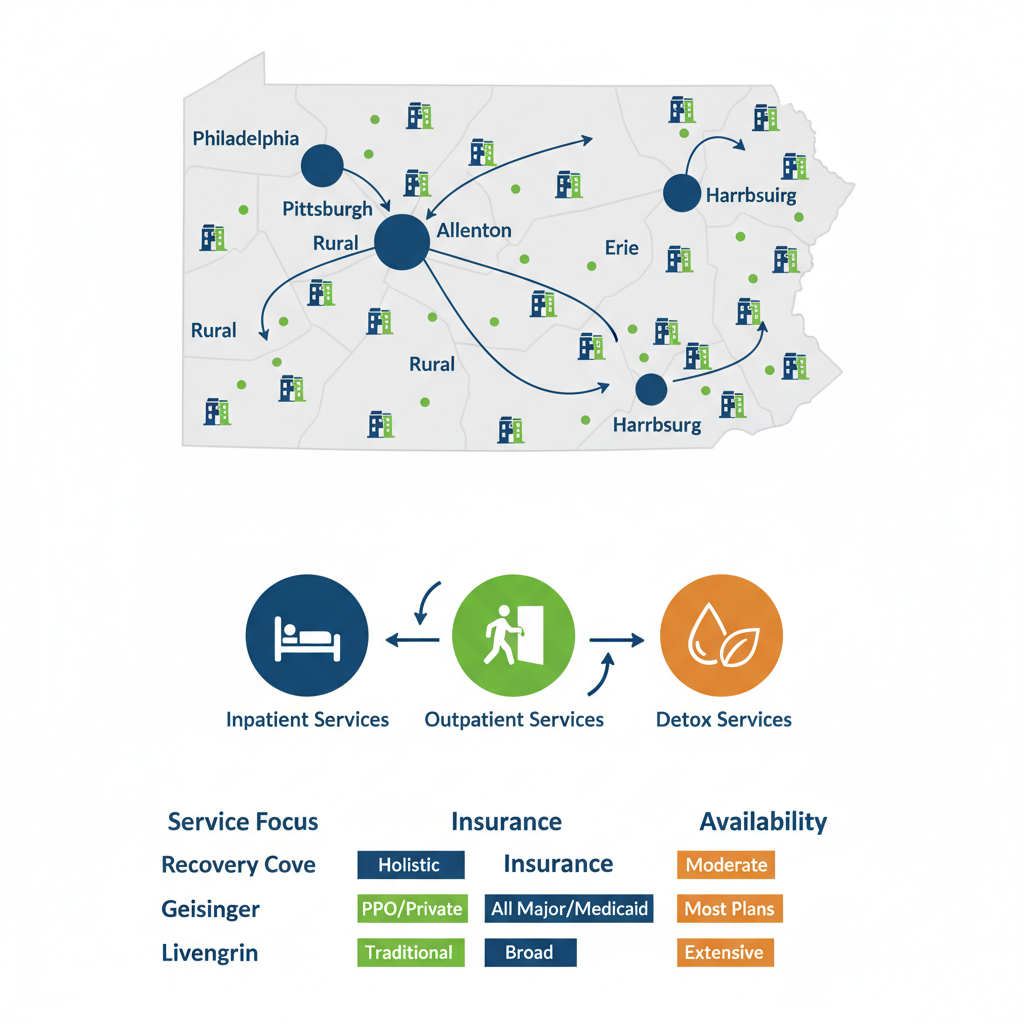
Finding the right alcohol rehabilitation program in Pennsylvania requires understanding the state’s licensing standards, levels of care, and payment pathways. Treatment options range from medically managed detoxification and residential facilities to intensive outpatient programs, with resources coordinated through county-level single county authorities and state agencies like the Pennsylvania Department of Drug and Alcohol Programs.
Navigating the landscape of alcohol rehabilitation in Pennsylvania can feel overwhelming for individuals and families facing substance use disorders. Whether you are looking for support for yourself or a loved one, understanding how the treatment system operates in the Keystone State is essential for making informed decisions. Pennsylvania features a robust, multi-tiered behavioral health infrastructure regulated by state agencies, funded through a mix of public and private insurance, and delivered by community-based and private providers.
This guide examines the clinical levels of care available across Pennsylvania, explores public and private payment mechanisms, details the regulatory standards enforced by state authorities, and outlines how to access specialized care when immediate help is required.
The Regulatory Framework of Pennsylvania Treatment Facilities
Alcohol rehabilitation facilities in Pennsylvania do not operate in a regulatory vacuum. The Commonwealth maintains strict oversight of addiction treatment providers to ensure patient safety, clinical efficacy, and ethical operations. Understanding these regulations helps patients and families verify that a facility meets legal and professional standards.
The Role of the Department of Drug and Alcohol Programs (DDAP)
The primary state agency responsible for licensing and regulating addiction treatment in Pennsylvania is the Pennsylvania Department of Drug and Alcohol Programs (DDAP). Established as an independent cabinet-level agency, DDAP licenses drug and alcohol treatment facilities under the Pennsylvania Code (specifically Title 28, Chapters 704 and 711).
DDAP conducts routine inspections, investigates complaints, and enforces compliance with health, safety, and clinical standards. Facilities must renew their licenses periodically, demonstrating that their staff maintain proper credentials, physical facilities meet building and safety codes, and clinical protocols align with evidence-based practices.
Facility Licensing and Public Data
When researching a facility, prospective clients can verify its licensure status through the DDAP website or by contacting the agency directly. Licensed facilities are categorized by the specific levels of care they are authorized to provide. A facility licensed for outpatient care cannot legally provide inpatient residential treatment unless it holds a separate license for that tier.
In addition to state licensing, reputable rehabilitation centers often seek national accreditation from independent bodies such as The Joint Commission or the Commission on Accreditation of Rehabilitation Facilities (CARF). Accreditation signifies that a facility adheres to rigorous, internationally recognized standards of quality and continuous improvement.
--
Levels of Care in Alcohol Rehabilitation
Addiction is a chronic medical condition with varying degrees of severity. Consequently, Pennsylvania treatment centers utilize the American Society of Addiction Medicine (ASAM) criteria to place individuals into the appropriate clinical intensity level. The continuum of care spans several distinct stages.
- Medical Detoxification (Inpatient hospital or specialized unit)
- Inpatient / Residential Treatment (24/7 supervised living)
- Partial Hospitalization Programs (PHP - Day treatment)
- Intensive Outpatient Programs (IOP - Structured weekly sessions)
- Outpatient Services & Recovery Housing (Ongoing support)
1. Medically Managed Detoxification
For individuals with severe alcohol dependence, abrupt cessation can trigger delirium tremens, seizures, and other life-threatening withdrawal symptoms. Medically managed detoxification provides 24/7 medical supervision and pharmacological interventions (such as benzodiazepines or tapering protocols) to safely manage withdrawal. Detoxification typically lasts between three to seven days and serves as a stabilization bridge, not a standalone treatment for addiction.
2. Inpatient and Residential Treatment
Following detoxification, residential treatment offers a structured, 24-hour therapeutic environment free from environmental triggers. Patients live on-site and participate in individual counseling, group therapy, behavioral modifications, and educational workshops. Residential programs vary in duration, typically ranging from 30 to 90 days, depending on clinical necessity and individual progress.
3. Partial Hospitalization Programs (PHP)
Partial Hospitalization Programs represent a step down from residential care or a step up from traditional outpatient services. PHP clients spend significant time at a treatment facility—often 20 or more hours per week across five days—participating in clinical therapies, medical monitoring, and psychiatric support, but they return home or to a sober living environment in the evenings.
4. Intensive Outpatient Programs (IOP)
Intensive Outpatient Programs provide flexible yet structured care, typically requiring 9 to 20 hours of programming per week. This level of care allows individuals to maintain employment, attend school, or manage family responsibilities while receiving comprehensive addiction counseling, relapse prevention training, and peer support.
5. Traditional Outpatient Services and Recovery Housing
Outpatient services involve regular, scheduled sessions (usually one to three hours per week) with a licensed therapist or counselor. To support long-term recovery, many individuals transition into Pennsylvania Recovery Houses, which are safe, substance-free shared living environments often certified by the Pennsylvania Alliance of Recovery Residences (PARR).
Comparing Treatment Setting Options in Pennsylvania
Choosing the right treatment setting depends on clinical assessment, medical history, personal obligations, and financial resources. The table below compares the primary rehabilitation settings available in the Commonwealth.
| Treatment Setting | Time Commitment | Medical Supervision | Ideal For | Typical Cost Structure |
|---|---|---|---|---|
| Medically Managed Detox | 24/7 (3–7 days) | High (Round-the-clock medical staff) | Severe physical dependence, high risk of dangerous withdrawal | High; heavily covered by insurance if deemed medically necessary |
| Residential / Inpatient | 24/7 (30–90 days) | Moderate to High (On-site nursing and clinical staff) | Chronic relapse history, unstable home environments | Moderate to High; varies by amenities and insurance network status |
| Partial Hospitalization (PHP) | 20+ hours / week | Moderate (Daily clinical and medical check-ins) | Step-down care, patients needing high structure without 24/7 residence | Moderate; billed per diem or per session to insurance |
| Intensive Outpatient (IOP) | 9–20 hours / week | Low (Clinical monitoring, referral for medical needs) | Working professionals, individuals with strong home support systems | Moderate; lower than residential due to absence of room and board |
| Traditional Outpatient | 1–3 hours / week | Minimal (As-needed psychiatric/medical referrals) | Maintenance phase, mild use disorders, post-treatment aftercare | Low to Moderate; often copay-based per individual session |
Financial Considerations, Insurance, and Public Funding
The cost of alcohol rehabilitation varies widely based on the level of care, facility amenities, and geographic location. Fortunately, federal and state laws mandate coverage parity, and Pennsylvania maintains robust public funding mechanisms for residents who lack private insurance.
Private Insurance and HealthChoices
Under the federal Mental Health Parity and Addiction Equity Act and the Affordable Care Act (ACA), most commercial health insurance plans sold in Pennsylvania are required to cover substance use disorder treatment services at parity with medical and surgical benefits.
Additionally, Pennsylvania operates HealthChoices, the state’s managed care program for Medicaid beneficiaries. Medicaid covers comprehensive behavioral health services, including detoxification, inpatient care, outpatient treatment, and medication-assisted treatment (MAT), often with little to no out-of-pocket cost for eligible low-income residents.
Single County Authorities (SCAs)
For individuals who are uninsured, underinsured, or lack the financial means to pay for private care, Pennsylvania utilizes a county-based administrative system. Every county in Pennsylvania is served by a Single County Authority (SCA).
SCAs are government agencies or designated nonprofits responsible for planning, funding, and coordinating drug and alcohol prevention, intervention, and treatment services within their jurisdictions. If an individual cannot afford treatment, contacting their local SCA can connect them to state-funded treatment slots, sliding-scale payment options, and case management services.
Medication-Assisted Treatment (MAT) in Pennsylvania
Medication-Assisted Treatment combines FDA-approved medications with counseling and behavioral therapies to treat substance use disorders. While MAT is most commonly associated with opioid use disorder, certain medications are also utilized to support individuals recovering from severe alcohol use disorder.
- Naltrexone (Vivitrol): An opioid receptor antagonist available in daily oral form or as a once-monthly extended-release injection. It blocks the euphoric and rewarding effects of alcohol and helps reduce heavy drinking days and overall cravings.
- Acamprosate (Campral): Prescribed to help restore the normal balance of brain neurotransmitters (specifically GABA and glutamate) that are disrupted by chronic alcohol use, reducing the emotional distress and physical discomfort associated with post-acute withdrawal.
- Disulfiram (Antabuse): An aversion therapy medication that produces an acute sensitivity to ethanol, causing unpleasant physical reactions (such as flushing, nausea, and tachycardia) if alcohol is consumed.
Pennsylvania encourages the integration of MAT within licensed treatment facilities, and the state Department of Drug and Alcohol Programs works closely with healthcare providers to expand access to these evidence-based pharmacotherapies.
Frequently Asked Questions About Alcohol Rehabilitation in Pennsylvania
How do I find a licensed alcohol rehabilitation facility in Pennsylvania?
You can search for licensed providers directly through the Pennsylvania Department of Drug and Alcohol Programs (DDAP) website using their online facility locator. Additionally, the SAMHSA Behavioral Health Treatment Services Locator provides a comprehensive, searchable database of licensed public and private programs across the Commonwealth.
Does Pennsylvania Medicaid cover alcohol rehab?
Yes. Pennsylvania’s Medicaid program, known as Medical Assistance or HealthChoices, provides comprehensive coverage for alcohol rehabilitation services. Covered services typically include medical detoxification, inpatient residential treatment, partial hospitalization, outpatient counseling, and medication-assisted treatment, provided the services are deemed medically necessary and delivered by a DDAP-licensed provider.
What is a Single County Authority (SCA), and how can it help me?
A Single County Authority is a local administrative agency designated by DDAP to manage publicly funded drug and alcohol services within a specific county or multi-county region. SCAs coordinate intake, assessments, referrals, and funding for individuals who are uninsured, underinsured, or unable to pay for treatment out of pocket.
Can I be forced into alcohol rehab in Pennsylvania?
Pennsylvania law provides a legal mechanism for involuntary commitment for substance use treatment under Act 53 (The Drug and Alcohol Abuse Control Act). Act 53 allows a parent, spouse, legal guardian, or adult child to petition the court for the involuntary treatment of an individual (including adults and minors) who is deemed dangerous to themselves or others as a result of drug or alcohol abuse. The process requires a medical evaluation and a court hearing.
What should I look for when evaluating a private rehab facility?
When evaluating a private facility, verify that it holds a current license from the Pennsylvania Department of Drug and Alcohol Programs and maintains national accreditation from organizations like The Joint Commission or CARF. Additionally, inquire about the staff-to-client ratio, the credentials of the clinical team (such as licensed professional counselors or certified alcohol and drug counselors), the availability of dual-diagnosis mental health care, and the structure of their post-treatment discharge planning.
Next Actions and Immediate Support
If you or someone you know is experiencing a crisis related to alcohol use or withdrawal, immediate help is available.
- For Medical Emergencies: If an individual is unresponsive, experiencing seizures, or showing signs of severe acute distress, call 911 immediately and inform responders that it is an alcohol-related medical emergency.
- For Statewide Help and Referrals: Contact the Pennsylvania Department of Drug and Alcohol Programs Toll-Free Helpline at 1-800-662-HELP (4357), available 24 hours a day, 7 days a week, to connect with local treatment resources, crisis intervention, and SCA intake coordinators.
- For Local Public Funding: Locate your county’s Single County Authority (SCA) online to inquire about state-funded treatment slots and immediate case management services if you lack insurance coverage.
Disclaimer: This article is for informational and educational purposes only and does not constitute medical, legal, or professional healthcare advice. Always consult a qualified medical professional or licensed addiction specialist for individualized clinical assessment and treatment recommendations.