Adolescence-limited antisocial behavior refers to a developmental pattern where individuals engage in rebellious, delinquent, or rule-breaking activities only during their teenage years. Unlike life-course-persistent offenders, these individuals typically lack a history of childhood aggression and successfully transition into pro-social, law-abiding adult roles as they gain access to legitimate adult status and responsibilities.
The Developmental Taxonomy of Antisocial Behavior
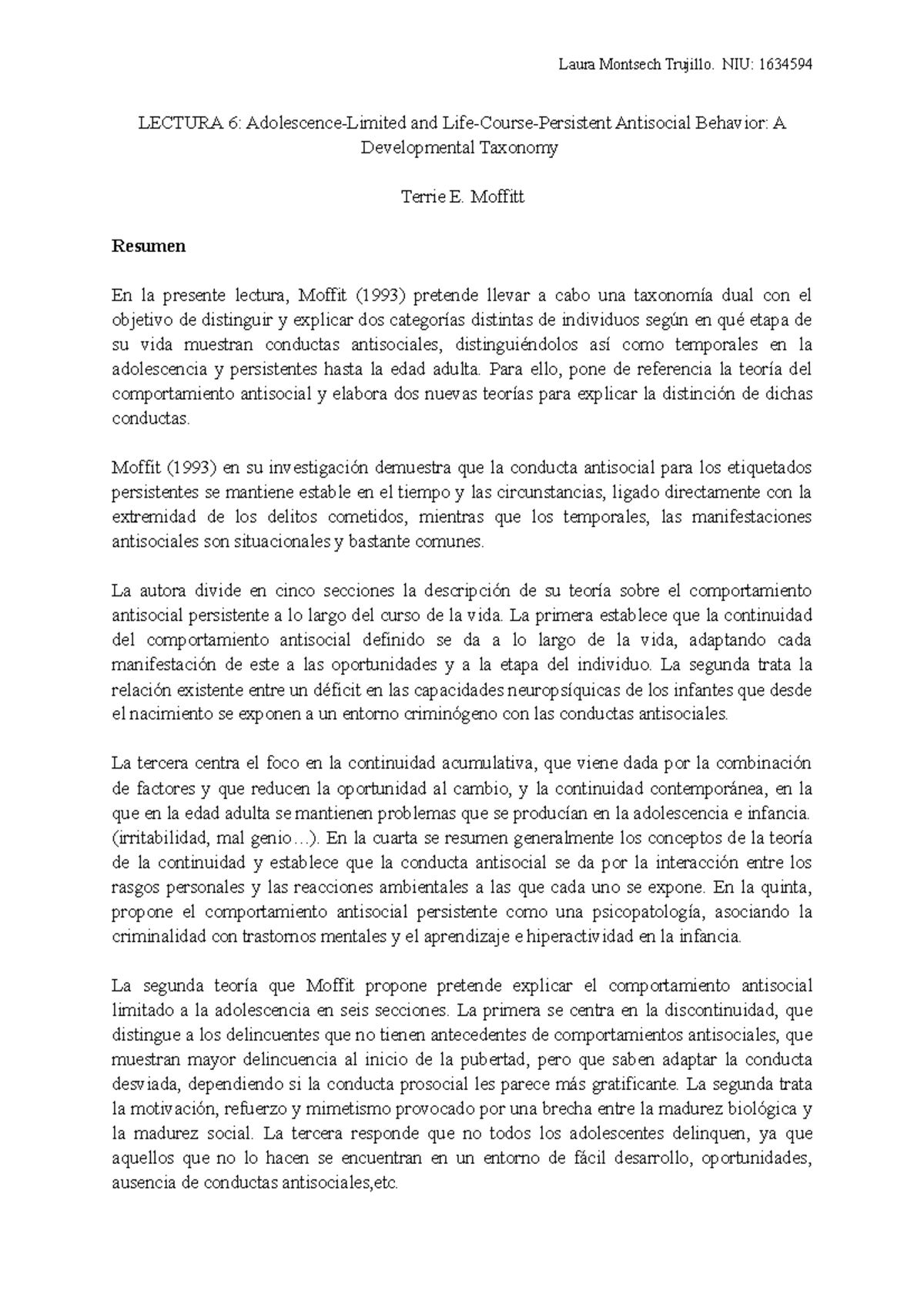
To understand adolescence-limited (AL) antisocial behavior, one must look to the seminal work of psychologist Terrie Moffitt. In 1993, Moffitt proposed a developmental taxonomy that remains the gold standard for classifying delinquent behavior. This framework distinguishes between two primary groups: Life-Course-Persistent (LCP) offenders and Adolescence-Limited (AL) offenders.
The distinction is not merely academic; it is foundational for clinical psychology, criminology, and the legal system. While LCP offenders exhibit antisocial tendencies that begin in early childhood and continue throughout their lives due to neurocognitive deficits and environmental risks, AL offenders are generally "normal" children who experience a temporary spike in delinquency during puberty.
By 2026, longitudinal data from the Dunedin Multidisciplinary Health and Development Study—which has followed participants for over five decades—has reinforced that these two paths are etiologically distinct. AL behavior is considered a common, almost normative part of the adolescent experience in many industrialized societies, whereas LCP behavior is a rare, pathological condition affecting roughly 5% to 10% of the population.
The Maturity Gap: The Primary Driver of AL Behavior
The most compelling explanation for why otherwise well-adjusted children suddenly engage in antisocial behavior during their teens is the "Maturity Gap." This concept describes the disconnect between biological maturity and social maturity.
In modern society, the age of puberty has trended younger, while the age of economic and social independence has shifted older. By mid-adolescence, individuals possess adult-like physical capabilities and biological drives, yet they are restricted by law and custom from exercising adult autonomy. They cannot vote, they cannot work in most high-level professions, and they remain under the authority of parents and teachers.
This gap creates a state of frustration. Adolescents see the "adult world" and want to prove their independence. Antisocial behavior—such as underage drinking, truancy, or minor theft—becomes a way to "mimic" adult autonomy and rebel against the perceived constraints of childhood. In this context, delinquency is not a sign of a broken moral compass but rather a misguided attempt to claim adult status.
Social Mimicry and the Role of Peer Influence
If AL teenagers are not inherently antisocial, why do they start breaking rules? The answer lies in social mimicry.
Within any high school or social circle, there is often a small group of Life-Course-Persistent (LCP) peers. These individuals appear independent, fearless, and "grown-up" because they have long ignored societal rules. To an AL teenager stuck in the maturity gap, the LCP peer looks like a role model for autonomy.
AL teenagers begin to mimic the behaviors of LCP peers to achieve the same perceived status. This explains why AL delinquency is almost always a group activity. While LCP offenders may commit crimes alone, AL offenders are driven by peer dynamics. They seek approval, belonging, and a sense of "coolness" that comes from defying authority.
The Mechanism of Social Reinforcement
During the adolescent years, the brain's reward system—specifically the ventral striatum—is highly sensitive to social feedback. Research into neurodevelopment shows that the presence of peers increases the "reward value" of risky behaviors. For an AL adolescent, the thrill of a shared delinquent act often outweighs the long-term consequences, primarily because their prefrontal cortex (responsible for executive function and impulse control) is still maturing.
Distinguishing AL from Life-Course-Persistent Behavior
Recognizing the difference between these two groups is critical for parents, educators, and the justice system. Misidentifying an AL teenager as a lifelong criminal can lead to "net-widening" and unnecessary incarceration, which might actually prolong their delinquency.
| Feature | Adolescence-Limited (AL) | Life-Course-Persistent (LCP) |
|---|---|---|
| Onset | Puberty / Mid-Adolescence | Early Childhood (3-5 years) |
| Childhood History | Pro-social, normal development | Neurocognitive deficits, aggression |
| Frequency | High (Common) | Low (Rare) |
| Motivation | Maturity Gap / Social Status | Neuropsychological / Biological |
| Type of Offense | Status offenses, minor theft, drug use | Violent crime, chronic theft, aggression |
| Social Context | Strongly influenced by peers | Often commits crimes alone or as a leader |
| Desistance | Stops in early adulthood (20-25) | Continues throughout the lifespan |
| Recovery | High potential for "bounce back" | High risk of recidivism and social failure |
The Role of Neurobiology in 2026
By 2026, advances in functional MRI (fMRI) studies have provided a clearer picture of the AL brain. We now understand that the "temporary" nature of AL behavior is closely tied to the Dual Systems Model.
This model suggests that the socio-emotional system (seeking rewards and peer approval) develops early in puberty, while the cognitive control system (planning and self-regulation) continues to develop until the mid-20s. AL offenders are essentially operating with a high-powered engine but underdeveloped brakes. Once the "brakes" (prefrontal cortex) are fully functional in their early 20s, the motivation for antisocial behavior diminishes, and the individual naturally desists from crime.
Why Do AL Offenders Stop? The Process of Desistance
One of the most defining characteristics of adolescence-limited antisocial behavior is desistance. As these individuals enter their early 20s, the "maturity gap" closes. They gain access to legal adult roles: they can get jobs, marry, enter the military, or complete higher education.
At this point, the costs of antisocial behavior begin to outweigh the benefits. A criminal record or a night in jail is no longer a "badge of honor" among peers; it is a threat to their career and social standing. Because AL offenders have a foundation of pro-social skills developed during a normal childhood, they are capable of holding jobs and maintaining healthy relationships—skills that LCP offenders often lack.
The "Snares" That Prevent Desistance
While most AL offenders stop their behavior naturally, some fall into "snares." A snare is a consequence of adolescent delinquency that traps the individual in a criminal trajectory. Examples include:
- Incarceration: Being placed in prison with LCP offenders can lead to "criminal learning" and social stigma.
- Addiction: Drug use that began as social mimicry can turn into a biological dependency.
- Unplanned Parenthood: Early pregnancy can disrupt education and economic stability.
- Permanent Criminal Records: Legislation that fails to seal juvenile records can prevent future employment.
Implications for the Juvenile Justice System
The recognition of AL behavior has led to significant shifts in how the legal system treats young offenders. As of 2026, many jurisdictions have adopted "Raise the Age" policies, ensuring that 18- and 19-year-olds are treated with a focus on rehabilitation rather than purely punitive measures.
Rehabilitative vs. Punitive Approaches
For AL offenders, heavy-handed punishment is often counterproductive. If an AL teenager is placed in a high-security detention center, they are separated from pro-social influences and forced into close contact with LCP offenders. This can inadvertently turn an "adolescence-limited" trajectory into a "life-course" trajectory.
Effective interventions for AL behavior include:
- Diversion Programs: Keeping minor offenders out of the formal court system.
- Restorative Justice: Focusing on repairing the harm caused to the victim rather than just punishing the offender.
- Mentorship: Connecting youth with pro-social adults who can provide guidance through the maturity gap.
- Skills Training: Helping teens find legitimate ways to exercise autonomy and earn social status.
Common Misconceptions About AL Behavior
Despite decades of research, several myths persist about teenagers who "act out."
Myth 1: It's always the parents' fault. While parenting style matters, AL behavior is often driven more by peer dynamics and biological development than by poor home environments. Even children from stable, loving homes can fall into AL delinquency due to the maturity gap.
Myth 2: "Once a criminal, always a criminal." This is the most dangerous misconception. The vast majority of teenagers who engage in minor illegal acts will grow up to be law-abiding citizens. Labeling them as "criminals" early on can be a self-fulfilling prophecy.
Myth 3: AL behavior is harmless. While it is "normal" in a statistical sense, it is not without risk. AL offenders can still hurt themselves or others, and as mentioned, they can get caught in "snares" that have lifelong consequences. The goal should be to manage the behavior without destroying the youth's future.
Frequently Asked Questions
What is the most common age for adolescence-limited antisocial behavior to peak?
The frequency of AL behavior typically peaks between the ages of 15 and 18. This is the period when the maturity gap is widest and peer influence is at its strongest. By age 21, most individuals show a significant decline in delinquent activities as they transition into adult roles.
Can a child be an "Abstainer" and never engage in antisocial behavior?
Yes. Moffitt identified a third, very small group called "Abstainers." These are individuals who never engage in delinquency. Surprisingly, abstainers often have smaller social circles and may be perceived as less "socially successful" during high school, as they do not participate in the typical peer-driven rebellions of adolescence.
How can I tell if a teenager is an AL offender or an LCP offender?
The most significant indicator is the age of onset. If a child was aggressive and defiant at age 5 or 6 (biting, hitting, frequent tantrums), they may be on an LCP path. If the child was generally well-behaved until age 13 or 14 and then began acting out, they are likely an AL offender.
Does AL behavior include violent crime?
Generally, no. AL behavior usually involves "status offenses" (things that are only illegal because of the person's age, like truancy) or non-violent crimes like petty theft, vandalism, or drug experimentation. Violent, predatory, or highly aggressive behavior is much more characteristic of the Life-Course-Persistent group.
Is the maturity gap worse in the 21st century?
Yes. Because our society requires more years of education and specialization, the age at which an individual becomes "economically independent" has moved from the late teens to the mid-to-late 20s. This extends the period of the maturity gap, potentially lengthening the window for AL behavior.
Practical Recommendation for Parents and Educators
When dealing with adolescence-limited antisocial behavior, the primary goal should be minimizing long-term harm. Because the behavior is likely to pass on its own as the brain matures and life circumstances change, the focus should be on ensuring the teenager does not fall into "snares" that limit their adult opportunities.
- Maintain Communication: Keep the lines of dialogue open. Harsh, authoritarian crackdowns often push AL teens further toward their LCP peers.
- Monitor Peer Groups: While you cannot choose your child's friends, you can encourage involvement in extracurricular activities, sports, or hobbies where they can interact with pro-social peers.
- Avoid Premature Labeling: Avoid calling a teenager a "thug," "criminal," or "bad seed." Internalizing these labels can lead them to adopt a deviant identity.
- Seek Professional Assessment: If you are unsure whether the behavior is AL or a more serious LCP pattern, consult a developmental psychologist who specializes in adolescent behavior. They can help distinguish between temporary rebellion and deeper-seated psychological issues.