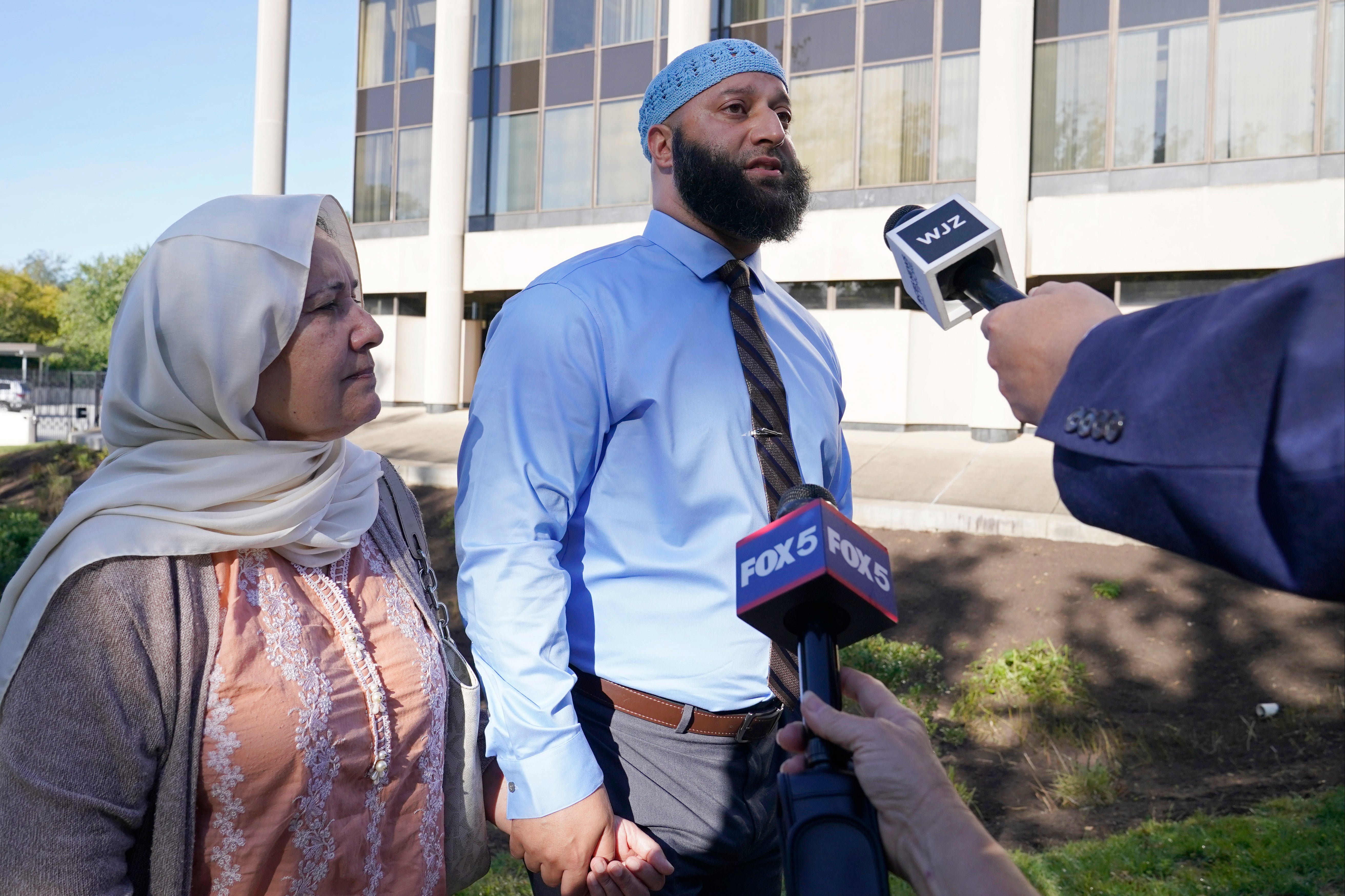
Adnan Syed was released from prison on September 19, 2022, after a Baltimore City judge vacated his conviction for the 1999 murder of Hae Min Lee. While the Maryland Supreme Court later reinstated the conviction on procedural grounds in 2024, Syed has remained free as the legal process continues into 2026.
The legal saga of Adnan Syed is one of the most scrutinized cases in American history. What began as a local criminal investigation in Baltimore in 1999 evolved into a global conversation about the fallibility of the justice system, the power of investigative journalism, and the complex tension between the rights of the accused and the rights of victims' families. As we look at the landscape in 2026, the case serves as a landmark study in post-conviction relief and prosecutorial discretion.
The 1999 Investigation and Initial Conviction
The journey began on January 13, 1999, when Hae Min Lee, a popular senior at Woodlawn High School in Baltimore County, disappeared. Her body was found nearly a month later in Leakin Park. The investigation quickly shifted toward her ex-boyfriend, Adnan Syed, following an anonymous tip and the testimony of an acquaintance, Jay Wilds.
The Prosecution’s Case
In 2000, the State of Maryland’s case rested primarily on two pillars: the testimony of Jay Wilds and cell tower "pings." Wilds claimed that Syed had confessed to the murder and that he had helped Syed bury Lee’s body. To corroborate this, the prosecution used records from Syed’s newly acquired Nokia cell phone. They argued that the cell tower data placed Syed in the vicinity of Leakin Park at the time of the burial.
The Original Sentence
The jury found Syed guilty of first-degree murder, robbery, kidnapping, and false imprisonment. He was sentenced to life in prison plus 30 years. For the next 14 years, Syed’s appeals followed a standard, largely unsuccessful trajectory through the Maryland court system. His primary arguments focused on the "ineffective assistance of counsel" provided by his original attorney, Maria Cristina Gutierrez, who was later disbarred and passed away in 2004.
The Media Catalyst: The Serial Phenomenon
The trajectory of Syed’s legal journey changed permanently in 2014 with the release of the podcast Serial, hosted by Sarah Koenig. The podcast meticulously re-examined the evidence, highlighting inconsistencies in Jay Wilds’ testimony and the reliability of the cell tower data. It also introduced the public to Asia McClain, a classmate who claimed she was with Syed in the Woodlawn Public Library at the exact time the prosecution alleged the murder took place.
Impact on Post-Conviction Relief
While a podcast cannot legally overturn a conviction, the public pressure and the discovery of new investigative leads provided Syed’s legal team, led by C. Justin Brown and later the Innocence Project Clinic at the University of Maryland, with the resources and momentum needed to push for renewed hearings. In 2016, Judge Welch vacated Syed’s conviction and ordered a new trial, citing the defense’s failure to cross-examine the state’s cell tower expert about the reliability of incoming call data.
However, this victory was short-lived. The Maryland Court of Appeals (the state’s highest court at the time) eventually reversed the decision in 2019, ruling 4-3 that while Syed’s counsel was deficient in not contacting Asia McClain, it likely didn't change the outcome of the trial. Syed remained in prison, and his legal options appeared to be exhausted.
The 2022 Motion to Vacate: A Turning Point
The most significant shift in the case occurred not through a standard appeal, but through a collaborative review by the Baltimore City State’s Attorney’s Office. Under the leadership of Marilyn Mosby and Becky Feldman (chief of the Sentencing Review Unit), the state conducted a year-long reinvestigation of the case.
Discovery of the "Brady Violation"
The pivotal factor in the 2022 release was the discovery of a Brady violation. Under the Supreme Court ruling in Brady v. Maryland, the prosecution is legally required to disclose any evidence that might be favorable to the defense. The reinvestigation uncovered notes in the original case file regarding two "alternative suspects."
These suspects were known to the police in 1999 but were never disclosed to Syed's defense team. One of the suspects had a motive to kill Lee and had allegedly threatened her, while the other was linked to the location where Lee’s car was found.
DNA Testing Breakthroughs
In addition to the Brady violation, the state utilized "touch DNA" testing on Lee's clothing and belongings—technology that was not available in 1999. In October 2022, the State’s Attorney’s Office announced that DNA from multiple individuals was found on Lee’s shoes, but none of it matched Adnan Syed.
Chronology of Adnan Syed’s Legal Milestones
| Year | Event | Legal Outcome |
|---|---|---|
| 1999 | Arrest of Adnan Syed | Charges filed for first-degree murder. |
| 2000 | Initial Trial and Sentencing | Convicted; sentenced to Life + 30 years. |
| 2014 | Serial Podcast Premiere | Global attention and new evidence come to light. |
| 2016 | Post-Conviction Hearing | Judge Welch vacates conviction; State appeals. |
| 2019 | MD Court of Appeals Ruling | Conviction reinstated; new trial denied. |
| 2022 | Motion to Vacate (Sept) | Syed is released from prison after 23 years. |
| 2022 | Nolle Prosequi (Oct) | All charges are dropped by the State’s Attorney. |
| 2023 | Appellate Court Ruling | Conviction reinstated on procedural grounds (Victim's rights). |
| 2024 | MD Supreme Court Ruling | Reinstatement upheld; case remanded for new hearing. |
| 2026 | Current Status | Syed remains free pending ongoing legal proceedings. |
The Reinstatement of Conviction: Procedural vs. Substantive Justice
The legal journey took a complex turn in early 2023. Hae Min Lee’s brother, Young Lee, filed an appeal arguing that the Baltimore City Circuit Court had violated his rights as a victim's representative. He claimed the state had not provided him with "adequate notice" of the vacatur hearing, as he was only given one business day's notice and had to attend via Zoom rather than in person.
The Maryland Supreme Court Decision (2024)
In a decision that sparked intense debate among legal scholars, the Maryland Supreme Court ruled in August 2024 that the lower court had indeed erred. The court found that the rights of the victim’s family to attend and participate in the hearing are not merely symbolic but are mandated by state law.
Consequently, the court reinstated Syed’s conviction. It is crucial to note that this reinstatement was based on procedural errors regarding the notification of the Lee family, not on the merits of Syed’s innocence or the validity of the DNA evidence. The court ordered a "do-over" of the vacatur hearing to ensure the Lee family could participate meaningfully.
Adnan Syed’s Life and Role in 2026
As of 2026, Adnan Syed continues to live and work as a free man, despite the technical reinstatement of his conviction. Since his release in late 2022, he has been employed by Georgetown University’s Prisons and Justice Initiative, where he works as a program associate. His role involves supporting legal efforts for others who may have been wrongfully convicted, bringing his lived experience to the forefront of criminal justice reform.
The Legal Limbo
The current state of the case in 2026 represents a unique "legal limbo." Because the charges were dropped in October 2022 (a move known as nolle prosequi), and the subsequent reinstatement of the conviction was procedural, the state must now decide how to proceed with the mandated new hearing. The Baltimore City State’s Attorney’s Office must balance the findings of the 2022 reinvestigation with the Supreme Court's mandate to respect the Lee family’s procedural rights.
The Enduring Impact on Maryland Law
The Syed case has forced a re-evaluation of several key aspects of the Maryland legal system, specifically:
- Victims’ Rights Statutes: The 2024 ruling strengthened the requirements for how and when victims must be notified of significant changes in a defendant’s status.
- The Vacatur Act (Criminal Procedure § 8-301.1): This law, which allowed the state to move to vacate Syed’s conviction, has come under intense scrutiny. Advocates argue it is an essential tool for correcting past mistakes, while critics suggest it needs more stringent oversight to prevent political influence.
- Prosecutorial Accountability: The role of the State’s Attorney in admitting past errors (such as Brady violations) has become a model for Conviction Integrity Units across the country.
Frequently Asked Questions
Why was Adnan Syed released if his conviction was later reinstated?
Syed was released because the court found that the original trial was fundamentally unfair due to the suppression of evidence (the Brady violation). When the conviction was reinstated in 2024, it was done so on procedural grounds regarding victim notification. The courts allowed him to remain free while the new hearings were scheduled because he was not considered a flight risk or a danger to the community.
What is a Brady violation, and how did it affect this case?
A Brady violation occurs when the prosecution fails to give the defense evidence that could help the defendant's case. In Syed’s journey, the discovery that police had notes about two other potential suspects who were never disclosed to his lawyers was the primary reason his conviction was vacated in 2022.
Is Adnan Syed considered innocent in 2026?
Legally, the situation is complex. The state dropped the charges in 2022 based on DNA evidence that excluded him. However, the procedural reinstatement of his conviction in 2024 means that, on paper, the conviction exists until a new, procedurally correct hearing is held. Syed maintains his innocence, and the DNA evidence remains a powerful hurdle for any future prosecution.
Who is the "alternative suspect" mentioned in the 2022 motion?
The names of the two alternative suspects have not been officially released to the public by the State's Attorney's office to protect the integrity of the ongoing investigation. However, it was confirmed that one of the individuals had a history of violence against women and had a connection to the location where Hae Min Lee’s body was found.
Can Adnan Syed be sent back to prison?
While theoretically possible if a new trial were held and he was convicted again, it is highly unlikely. The State’s Attorney’s Office previously stated they no longer have confidence in the original conviction due to the DNA evidence and the Brady violations. The current legal proceedings are focused on the rights of the victim's family to be heard, rather than a push to re-incarcerate Syed.
Recommendations for Following the Case
For those looking to understand the technical nuances of the legal journey, it is recommended to review the official filings from the Appellate Court of Maryland and the Maryland Supreme Court. These documents provide the clearest picture of the tension between procedural law (victim notification) and substantive law (evidence of innocence).
As we move through 2026, the resolution of this case will likely set the final precedent for how Maryland handles the vacatur of long-standing convictions. To stay updated, follow reputable legal news outlets or the official updates from the Maryland Judiciary.