Adjustment disorder is a compensable mental health condition under workers' compensation when a specific workplace stressor or physical injury triggers emotional or behavioral symptoms that impair a worker’s ability to function. To qualify for benefits in 2026, a claimant must provide clinical evidence that the workplace was the predominant cause of the disorder.
Adjustment disorder occupies a unique space in the intersection of employment law and clinical psychology. Unlike chronic conditions such as Generalized Anxiety Disorder (GAD) or permanent conditions resulting from severe trauma like Post-Traumatic Stress Disorder (PTSD), adjustment disorder is defined by its relationship to a specific, identifiable stressor. In the context of workers' compensation, this stressor must be work-related, and the resulting psychological symptoms must exceed what is considered a "normal" reaction to the event.
Navigating a claim for adjustment disorder requires an understanding of both the medical criteria used for diagnosis and the legal thresholds required for a "compensable" injury. Because mental health claims are scrutinized more heavily than physical ones, employees and employers alike must understand the nuances of causation, medical evidence, and jurisdictional variations.
Clinical Definition and Diagnostic Criteria
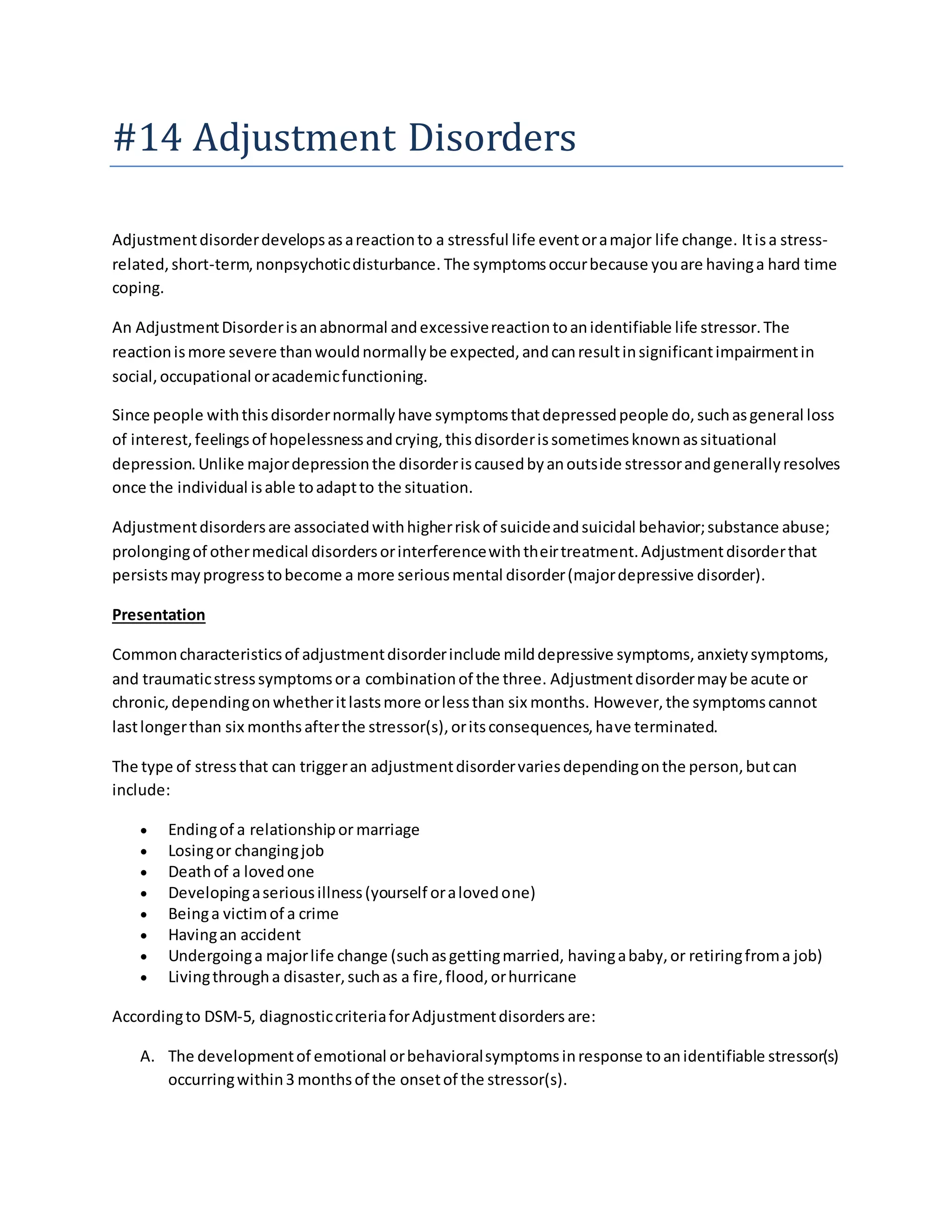
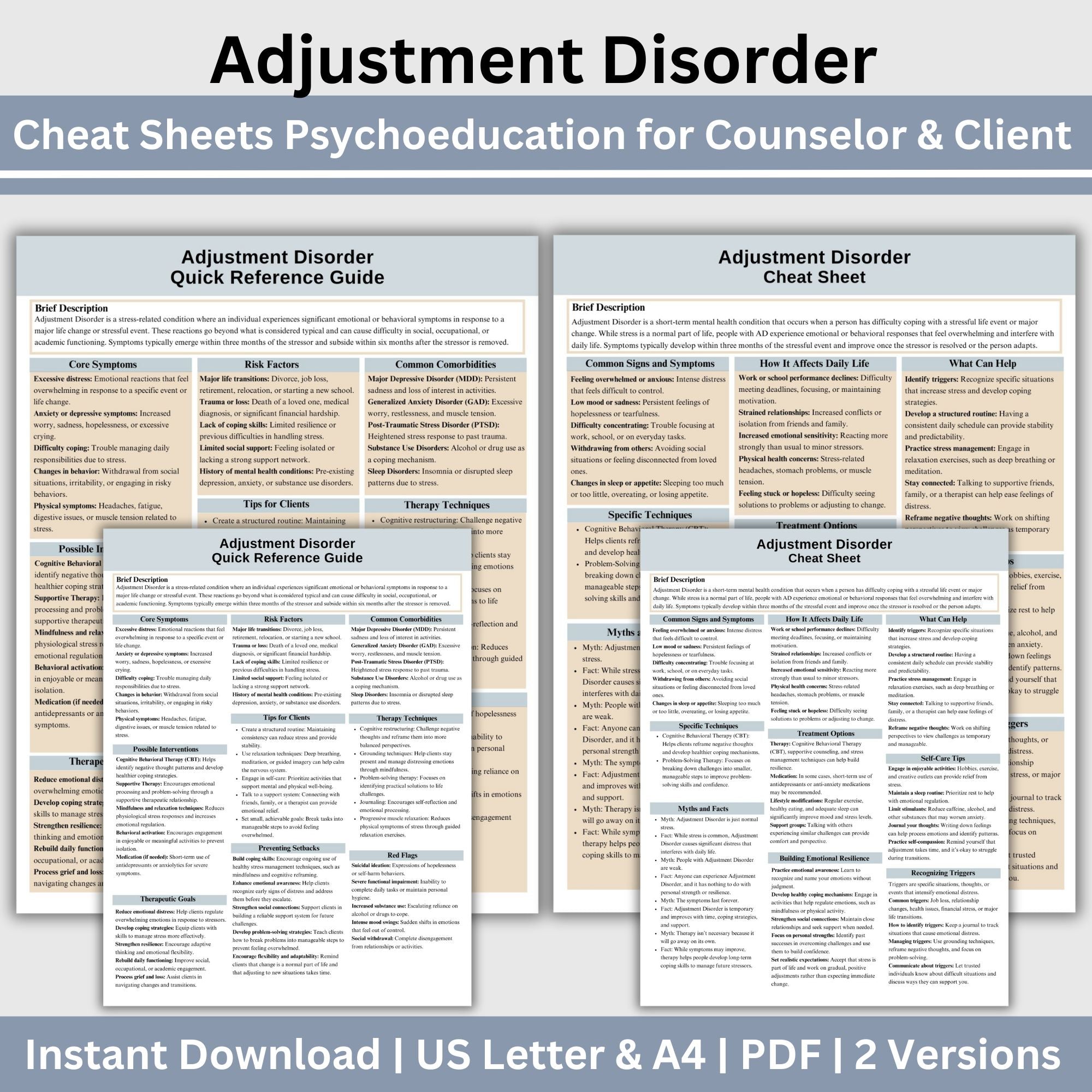
To understand how adjustment disorder fits into a workers' compensation claim, one must first look at the diagnostic criteria. As of 2026, the DSM-5-TR remains the primary authority for mental health diagnoses in the United States. Adjustment disorder is characterized by the development of emotional or behavioral symptoms in response to an identifiable stressor occurring within three months of the onset of the stressor.
These symptoms must be clinically significant, as evidenced by one or both of the following:
- Marked distress that is out of proportion to the severity or intensity of the stressor, taking into account the external context and the cultural factors that might influence symptom expression and severity.
- Significant impairment in social, occupational, or other important areas of functioning.
In a workers' compensation setting, the "occupational functioning" aspect is critical. If a worker can no longer perform their duties, attend meetings, or interact with colleagues due to their emotional state, they may meet the threshold for a disability claim. The disorder must not meet the criteria for another mental disorder and must not be an exacerbation of a pre-existing mental health condition, although "aggravation" of a pre-existing condition is a separate legal theory in many jurisdictions.
The Nexus of Work and Mental Health
A central challenge in adjustment disorder claims is proving the "nexus" or connection between the workplace and the condition. Workers' compensation systems generally categorize psychological injuries into three distinct types:
Physical-Mental Claims
These are the most common and generally the easiest to prove. In a physical-mental claim, a worker suffers a physical injury (e.g., a crushed hand or a fall) which then leads to a psychological condition like adjustment disorder. The stressor is the physical pain, the loss of mobility, or the sudden change in lifestyle necessitated by the injury. Because there is a clear physical "event," insurers are less likely to contest the psychological fallout.
Mental-Physical Claims
These occur when psychological stress leads to a physical ailment, such as high blood pressure or a heart attack. While adjustment disorder involves emotional symptoms, it can manifest physically through insomnia, fatigue, or stress-induced digestive issues.
Mental-Mental Claims
These are the most complex and highly litigated. A mental-mental claim involves a psychological injury caused by a psychological stressor, with no physical injury involved. Examples include witnessing a traumatic event at work, enduring chronic workplace harassment, or being subjected to an extraordinary workload. Most states have raised the bar for these claims, requiring the worker to prove that the workplace stress was "extraordinary" or the "predominant" cause of the disorder.
The "Predominant Cause" Standard in 2026
By 2026, most jurisdictions have standardized the "predominant cause" rule for psychiatric injuries. This means that for a claim of adjustment disorder to be successful, the worker must prove that work-related factors were responsible for more than 50% of the condition.
Some states, such as California, have specific Labor Code requirements (e.g., Section 3208.3) that mandate a higher threshold for psychiatric claims compared to physical ones. This is designed to prevent fraudulent claims or claims based on routine personnel actions. In these jurisdictions, if a worker’s adjustment disorder is caused by a mix of personal problems (divorce, financial stress) and work problems, a medical evaluator must "apportion" the cause. If the work portion is less than 51%, the claim may be denied entirely.
Common Workplace Stressors for Adjustment Disorder
While adjustment disorder can stem from many sources, several recurring themes appear in workers' compensation litigation:
- Sudden Changes in Job Roles: A worker being demoted or transferred to a high-pressure department without adequate training.
- Workplace Bullying or Harassment: Systematic exclusion or verbal abuse by supervisors or peers.
- Hostile Work Environment: A culture of fear or excessive surveillance that exceeds standard management practices.
- Post-Injury Reintegration: The stress of returning to work with light-duty restrictions or facing skepticism from management after a physical injury.
- Secondary Trauma: Common in first responders or healthcare workers who witness the suffering of others, leading to an inability to cope with daily work tasks.
The Role of Medical Evidence and Evaluations
Because adjustment disorder is a "subjective" injury—meaning it cannot be seen on an X-ray or MRI—medical evidence is the cornerstone of the claim. A diagnosis from a licensed psychiatrist or psychologist is mandatory.
The evaluation process typically involves:
- Clinical Interview: A deep dive into the worker’s history, including family life, prior mental health history, and the specific timeline of workplace stressors.
- Psychometric Testing: Tools like the MMPI-3 (Minnesota Multiphasic Personality Inventory) are often used to validate the sincerity of symptoms and rule out "malingering" (faking an illness for financial gain).
- Review of Records: The evaluator will look at personnel files, emails, and prior medical records to see if the symptoms align with the reported stressors.
In contested cases, the worker may be required to undergo an Independent Medical Examination (IME) or, in states like California, a Qualified Medical Evaluation (QME). These are third-party doctors tasked with providing an unbiased opinion on whether the adjustment disorder is truly work-related.
Employer Defenses: The "Good Faith Personnel Action"
One of the most significant hurdles for a worker claiming adjustment disorder is the "Good Faith Personnel Action" defense. Most workers' compensation laws protect employers from liability if the worker’s stress is a reaction to a legitimate management decision.
Legitimate actions typically include:
- Standard performance reviews and critiques.
- Disciplinary actions for policy violations.
- Layoffs or department closures due to economic necessity.
- Denial of a promotion or a transfer request.
If an employer can prove that the adjustment disorder was triggered by a "good faith, non-discriminatory personnel action," the claim is usually barred. The rationale is that management must be allowed to manage without the fear of a lawsuit every time a worker receives a negative review. To circumvent this defense, the worker must prove that the action was taken with malice, was discriminatory, or was handled in a way that falls outside the bounds of normal employment practices.
Benefits and Compensation for Adjustment Disorder
If a claim is accepted, the worker is entitled to several types of benefits:
Medical Treatment
This includes therapy sessions (usually Cognitive Behavioral Therapy or CBT), psychiatric consultations, and medications (such as SSRIs or anti-anxiety meds). In 2026, many workers' compensation insurers are also covering digital therapeutics and tele-mental health services to increase access to care.
Temporary Disability (TD)
If the adjustment disorder prevents the worker from doing their job, they receive a portion of their lost wages (typically two-thirds of their average weekly wage) while they are in treatment and unable to work.
Permanent Disability (PD)
In cases where the adjustment disorder results in lasting psychological impairment that doesn't fully resolve, the worker may receive a permanent disability rating. This translates into a monetary settlement based on their "whole person impairment" (WPI) percentage.
Vocational Rehabilitation
If the worker cannot return to their specific employer because the environment is the primary stressor, they may be eligible for a voucher or fund to help them retrain for a different career in a less stressful environment.
Comparing Psychological Conditions in Workers' Comp
The following table highlights the differences between adjustment disorder and other common mental health claims in a workers' compensation context.
| Feature | Adjustment Disorder | Post-Traumatic Stress Disorder (PTSD) | Major Depressive Disorder (MDD) |
|---|---|---|---|
| Primary Trigger | Specific, identifiable stressor (work change, harassment). | Exposure to actual or threatened death, serious injury, or violence. | Can be triggered by stress or biological factors; not always situational. |
| Timeframe | Within 3 months of stressor onset. | Symptoms often persist for years; can have delayed onset. | Persistent for at least 2 weeks; often chronic or episodic. |
| Burden of Proof | Predominant cause (usually >50%). | Often lower threshold for first responders; otherwise high. | High threshold; requires heavy apportionment for pre-existing history. |
| Typical Treatment | Short-term therapy, CBT, situational adjustments. | Long-term trauma therapy (EMDR), specialized medication. | Long-term medication management and psychotherapy. |
| Claim Complexity | Moderate; often contested via "Good Faith" defense. | High; requires proof of a specific "trauma" event. | High; very difficult to prove work is the sole or primary cause. |
Maximum Medical Improvement (MMI) and Settlements
A claim for adjustment disorder typically moves toward a "settlement" once the worker reaches Maximum Medical Improvement (MMI). This is the point at which the condition is stable and unlikely to improve significantly with further treatment.
For adjustment disorder, MMI is often reached sooner than for other mental health conditions because the disorder is, by definition, a reaction to a situation. If the situation is resolved (e.g., the worker leaves the toxic job or the physical injury heals), the symptoms often subside. A final medical report will outline the worker’s future medical needs and any permanent work restrictions, which form the basis of the final settlement.
Frequently Asked Questions
Can I file a claim if my adjustment disorder is caused by a heavy workload?
Yes, but it is challenging. You must prove that the workload was "extraordinary" and not just a standard part of the job. If everyone in your department has the same workload and only you are reacting this way, the insurer may argue that the reaction is personal rather than work-related.
Does a pre-existing anxiety condition disqualify me?
No, but it complicates the claim. The insurer will likely "apportion" part of your disability to your pre-existing condition. You would only be compensated for the "aggravation" or "exacerbation" caused specifically by the workplace stressor.
How long do I have to file an adjustment disorder claim?
Statutes of limitations vary by state, but generally, you must report the injury to your employer within 30 to 90 days of realizing the condition is work-related. In many mental health cases, the "date of injury" is the date you first sought medical help or missed work due to the symptoms.
What happens if my claim is denied?
If denied, you have the right to appeal through your state’s Workers’ Compensation Appeals Board or Commission. This usually involves a hearing before an Administrative Law Judge (ALJ) where you and your attorney can present medical evidence and witness testimony.
Is adjustment disorder considered a "permanent" injury?
Usually no. Adjustment disorder is often viewed as a temporary condition that resolves once the stressor is removed or the individual develops better coping mechanisms. However, if the impairment persists despite treatment, a permanent disability rating can be assigned.
Practical Recommendations for Workers
If you believe you are suffering from adjustment disorder due to workplace conditions, documentation is your strongest asset. Keep a detailed log of specific incidents, including dates, times, and witnesses. Seek medical attention immediately; a gap between the stressor and your first doctor's visit is often used by insurers to argue that the condition is not work-related.
Consulting with a workers' compensation attorney who specializes in psychological injuries is highly recommended. These cases involve complex legal "presumptions" and evidentiary standards that differ significantly from standard physical injury claims. By 2026, the integration of psychiatric expertise and legal strategy is more important than ever for ensuring that mental health is treated with the same clinical and legal seriousness as physical health in the workplace.