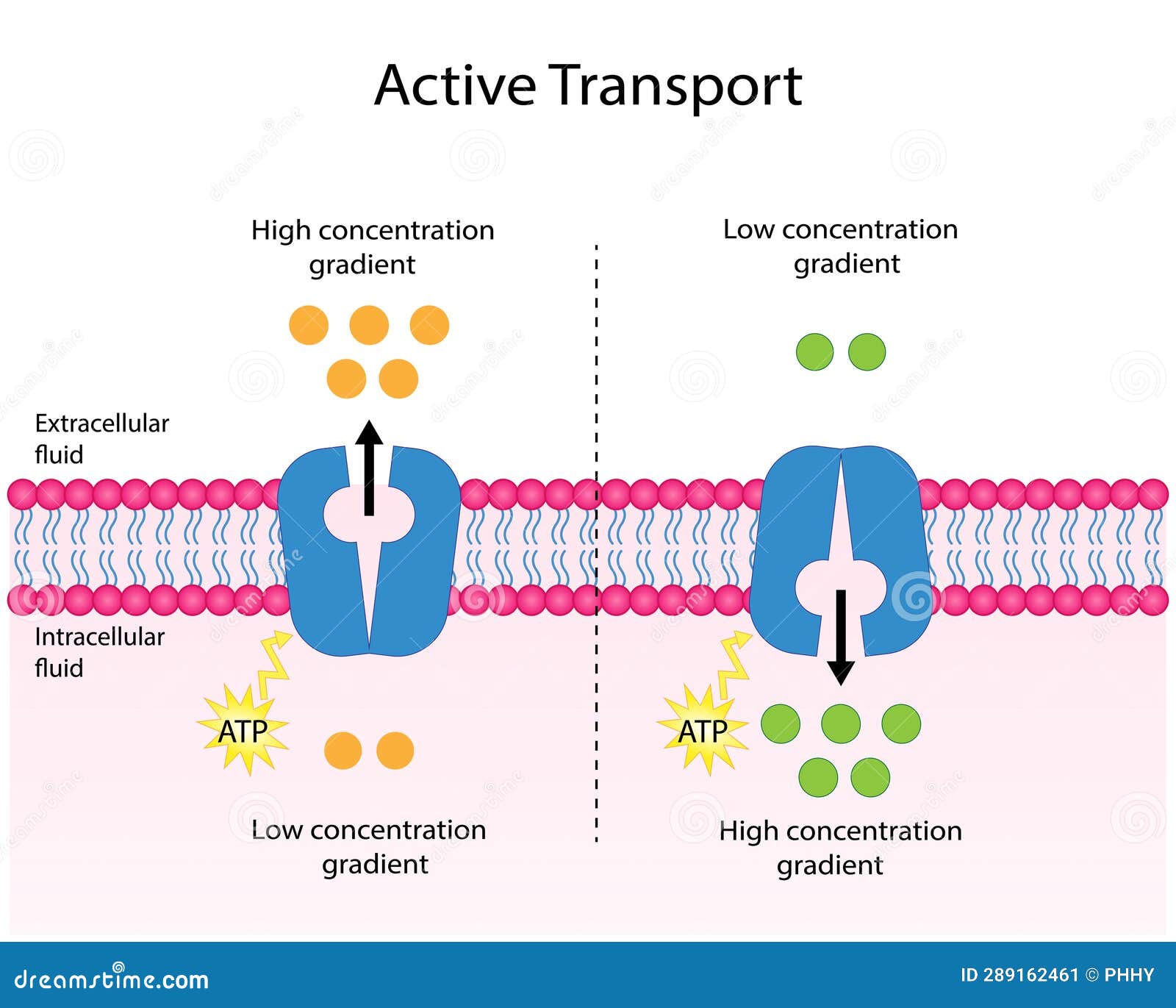
Active transport pumps are specialized membrane proteins that move ions and molecules across a cell membrane against their electrochemical gradient. By utilizing energy—typically in the form of adenosine triphosphate (ATP)—these molecular machines maintain the precise internal chemical environment required for cellular homeostasis, signal transduction, and metabolic regulation.
The Fundamental Necessity of Active Transport
To understand active transport, one must first recognize the concept of a concentration gradient. In nature, substances naturally tend to diffuse from areas of high concentration to areas of low concentration until equilibrium is reached. If cells relied solely on passive diffusion, their internal chemical composition would eventually match their external environment, a state that is incompatible with life.
Active transport is the process of forcing specific solutes into or out of the cell against this natural "flow." This requires an investment of metabolic energy. Without these pumps, cells could not concentrate nutrients, expel toxic metabolic byproducts, or maintain the resting membrane potentials necessary for nerve impulses and muscle contractions.
Primary Energy Sources: Primary vs. Secondary Active Transport
The distinction between types of active transport lies in the source of energy used to fuel the movement of particles.
Primary Active Transport
In primary active transport, the protein pump directly hydrolyzes ATP to obtain the energy required for transport. The most iconic example is the Sodium-Potassium Pump (Na+/K+-ATPase). This enzyme is ubiquitous in animal cells; it pumps three sodium ions out of the cell and two potassium ions into the cell for every molecule of ATP consumed. This continuous cycle creates a high sodium concentration outside the cell and a high potassium concentration inside, establishing the electrochemical gradient essential for excitability in neurons and muscle cells.
Secondary Active Transport
Secondary active transport, or co-transport, does not use ATP directly. Instead, it utilizes the potential energy stored in an existing electrochemical gradient—a gradient that was originally established by primary active transport. A common mechanism is the symporter, where a protein allows an ion (like sodium) to flow down its gradient while simultaneously "hitching a ride" for a second substance (like glucose) moving against its own gradient.
Key Membrane Pumps and Their Biological Roles
The diversity of pumps in the cell membrane reflects the complexity of physiological functions. Below is a summary of the most critical classes of active transport pumps.
| Pump Type | Primary Substrates | Primary Function |
|---|---|---|
| Na+/K+-ATPase | Sodium (out), Potassium (in) | Maintains resting membrane potential |
| H+-ATPase (Proton Pump) | Hydrogen ions (protons) | Acidifies lysosomes and regulates pH |
| Ca2+-ATPase | Calcium ions | Maintains low cytosolic calcium levels |
| ABC Transporters | Various (ions, drugs, lipids) | Efflux of toxins and metabolic waste |
The Role of Calcium Pumps (Ca2+-ATPase)
Calcium ions act as crucial secondary messengers in cells, signaling everything from muscle contraction to neurotransmitter release. However, high levels of cytosolic calcium are toxic to cell structures. Ca2+-ATPases are high-affinity pumps that keep calcium concentrations in the cytoplasm roughly 10,000 times lower than those in the extracellular fluid or within the endoplasmic reticulum. By sequestering calcium, these pumps ensure that signal-induced calcium "spikes" remain localized and controllable.
Proton Pumps and pH Homeostasis
Proton pumps (H+-ATPases) are vital for maintaining the acidic environment within organelles like lysosomes and vacuoles. By actively pumping protons into these compartments, the cell creates an optimal environment for digestive enzymes to function without damaging the rest of the cytoplasm. In plants, proton pumps also drive the uptake of nutrients by creating a proton motive force across the plasma membrane.
The Structural Mechanics of a Molecular Pump
How does a protein actually "pump" a molecule? The answer lies in conformational changes. An active transport protein typically possesses a specific binding site for its target molecule. When the molecule binds, the protein triggers an ATP-dependent shape change.
In the case of the sodium-potassium pump, the protein alternates between two main states: the E1 state, which is open to the inside of the cell, and the E2 state, which is open to the outside. When ATP is hydrolyzed, a phosphate group attaches to the pump (phosphorylation), inducing the shift from E1 to E2. Once the ions are released on the other side, the phosphate group is removed (dephosphorylation), and the pump resets to its original shape. This cyclic "power stroke" is the mechanical foundation of all primary active transport.
Challenges and Limitations: The Cost of Homeostasis
Active transport is remarkably expensive for a cell. It is estimated that in many animal cells, the Na+/K+-ATPase alone consumes 20% to 40% of the total cellular ATP production at rest. In highly active tissues, such as neurons in the brain, this energy expenditure is even higher.
Because of this high energy demand, cells are highly sensitive to metabolic disruptions. If oxygen levels drop—limiting the production of ATP via cellular respiration—these pumps begin to fail. As the gradients collapse, the cell loses its ability to regulate its volume, often leading to swelling (due to osmotic water influx) and eventually cell death. This vulnerability is a primary reason why tissues with high metabolic rates, such as the brain and heart, are most susceptible to damage during ischemia or toxic insult.
Troubleshooting and Clinical Relevance
In clinical settings, "troubleshooting" active transport often involves understanding how drugs interact with these pumps.
- Cardiac Glycosides: Drugs like digoxin, used to treat heart failure, work by inhibiting the Na+/K+-ATPase in heart muscle cells. By slowing the pump, the drug indirectly increases intracellular sodium, which in turn leads to a buildup of calcium. This increase in calcium enhances the strength of cardiac contractions.
- Chemotherapy Resistance: ABC transporters, particularly the P-glycoprotein, can actively pump chemotherapy drugs out of cancer cells. This is a common mechanism of multi-drug resistance; the cell essentially "cleans out" the toxic medication before it can cause the damage needed to kill the tumor.
- Genetic Channelopathies: Mutations in the genes encoding transport pumps lead to various diseases. For instance, specific mutations in ion pumps are linked to rare forms of familial hemiplegic migraine and other neurological disorders, as the neurons fail to maintain the gradients necessary to silence or fire signals effectively.
Frequently Asked Questions
What is the main difference between active and passive transport? The main difference is the requirement for energy. Passive transport relies on the kinetic energy of particles moving down a gradient (diffusion), whereas active transport requires cellular energy (ATP) to move particles against a gradient.
Why do cells need to maintain such specific ion concentrations? The specific ion concentrations create the "battery" of the cell. By maintaining high sodium outside and high potassium inside, the cell creates an electrochemical potential. This potential is required for nerve impulses, muscle fiber shortening, and the secondary transport of nutrients like amino acids.
Can active transport occur without ATP? Yes, via secondary active transport. This relies on the energy stored in electrochemical gradients created by primary active transport. While it doesn't use ATP directly at the site of the secondary pump, it is still "active" because the process relies on the energy-expensive maintenance of the original gradient.
How does a cell know which way to pump a molecule? The specificity is hardwired into the structure of the pump protein. A pump has a binding site that only recognizes a specific shape and charge. Furthermore, the phosphorylation and conformational changes are programmed to occur only when the correct substrate is bound, ensuring the pump does not operate in reverse under normal conditions.
What happens if a cell runs out of energy for its pumps? The cell will experience "gradient collapse." Without the sodium-potassium pump, sodium will accumulate inside the cell, causing water to follow via osmosis, leading to cellular swelling and lysis. Additionally, electrical signaling will cease, and secondary transport mechanisms (such as glucose absorption) will stop functioning.
Moving Forward: The Future of Membrane Transport Research
Ongoing research in 2026 continues to explore the high-resolution structural dynamics of these pumps using cryo-electron microscopy. Scientists are working to identify precise inhibitory binding sites on these proteins to develop more specific drugs that could address antibiotic resistance, cancer progression, and neurodegenerative diseases. Understanding these pumps is not merely an exercise in cell biology; it is the study of the primary engines that allow complex life to exist. For researchers and students, the focus should remain on how these proteins bridge the gap between pure chemistry and biological function, as they represent the most sophisticated "nanomachinery" currently identified in biological systems.