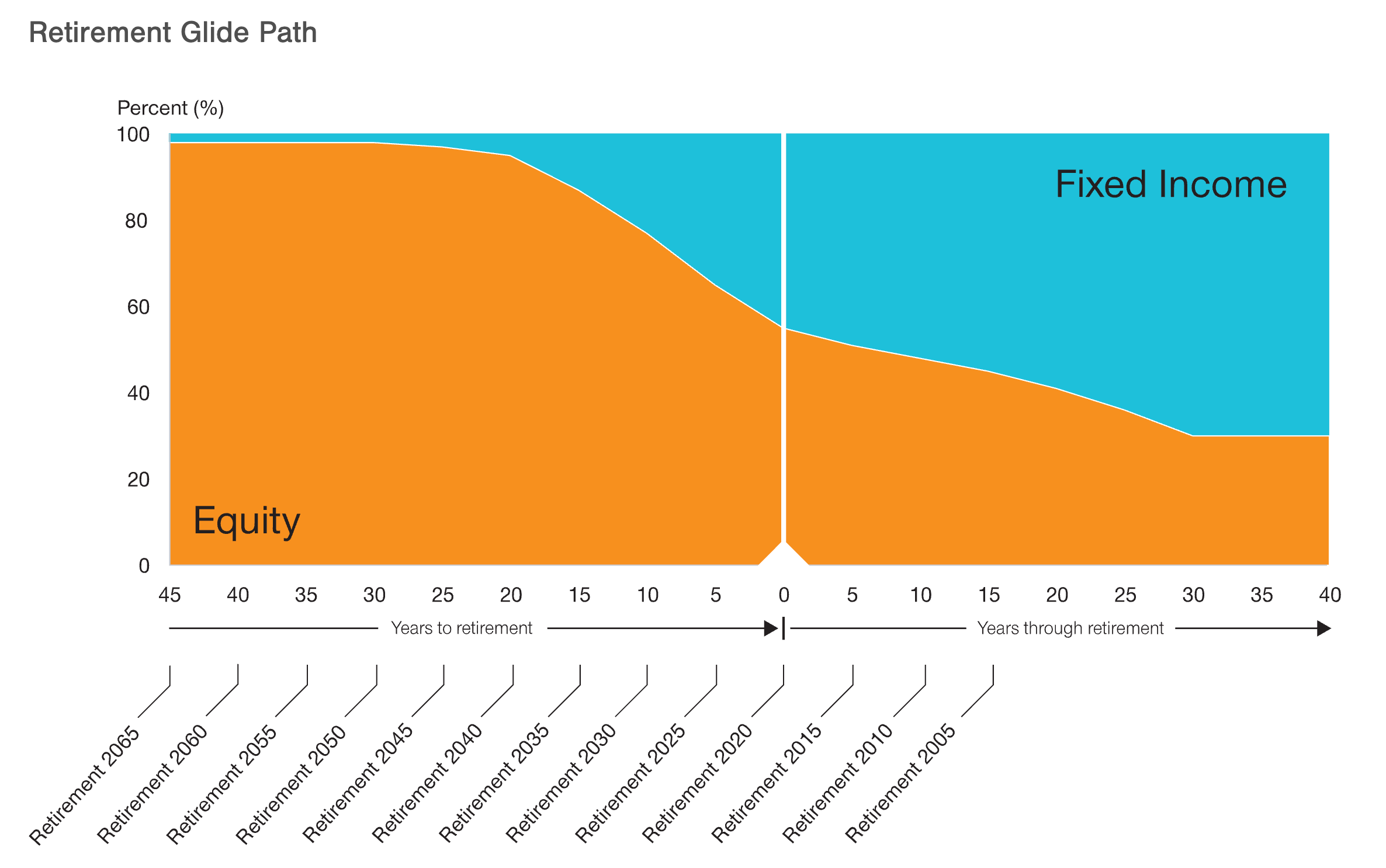
The American Funds 2015 Target Date Retirement Income Fund (AABTX) is a mutual fund designed for investors who retired near the year 2015. As of 2026, the fund has completed its primary "glide path" transition and now functions as a conservative income-oriented vehicle, focusing on capital preservation and steady distributions through a diversified portfolio of underlying American Funds.
The American Funds 2015 Target Date Retirement Income Fund, specifically the Class A shares (AABTX), represents a mature stage in the lifecycle of target-date investing. Managed by Capital Group, one of the world's largest and most experienced investment management firms, this fund was originally marketed to individuals who were approximately 65 years old in 2015. Now, eleven years past its target date, AABTX has reached its "landing point." This means its asset allocation is no longer aggressively shifting from stocks to bonds but has instead settled into a stable, conservative posture designed to support retirees well into their 70s and 80s.
The Strategy Behind AABTX: A "Through" Retirement Approach
Understanding AABTX requires an understanding of Capital Group’s "through" retirement philosophy. While some target-date funds (TDFs) reach their most conservative point exactly at the target year (an "to" retirement strategy), American Funds designs its glide path to continue evolving for several years past the target date.
By 2026, AABTX has fully transitioned into its terminal allocation. The primary objective has shifted entirely from wealth accumulation to a dual focus on inflation protection and current income. Because retirees in 2026 may still have two decades or more of life expectancy, the fund does not abandon equities entirely. Instead, it maintains a significant but minority stake in dividend-paying stocks to hedge against the eroding effects of inflation, while the majority of the portfolio is anchored in high-quality fixed-income securities.
The fund operates as a "fund of funds." Rather than buying individual stocks and bonds directly, the managers of AABTX allocate assets among other institutional-grade American Funds. This structure allows for multi-layered diversification, as each underlying fund is managed by different teams with specific mandates, such as global growth, investment-grade bonds, or flexible income.
Portfolio Composition and Asset Allocation in 2026
In 2026, the asset allocation of AABTX is characterized by its stability. While market fluctuations will cause minor daily shifts, the target weights are designed to minimize volatility. Typically, a 2015 vintage fund at this stage of its lifecycle holds approximately 30% to 40% in equities and 60% to 70% in fixed income and cash equivalents.
Equity Component: The Search for Yield and Growth
The equity portion of AABTX is not focused on high-growth tech stocks or speculative ventures. Instead, it prioritizes "Value" and "Equity Income" styles. Common underlying holdings include:
- American Mutual Fund: Focuses on high-quality, dividend-paying companies and capital conservation.
- Washington Mutual Investors Fund: Prioritizes companies with a consistent track record of dividend payments.
- Capital World Growth and Income Fund: Provides exposure to non-U.S. blue-chip companies to ensure geographic diversification.
Fixed-Income Component: The Portfolio Anchor
The majority of the AABTX portfolio is dedicated to bonds. In the current 2026 economic environment, these holdings serve to dampen the volatility of the equity market and provide the necessary liquidity for shareholder distributions. Key underlying bond funds often include:
- The Bond Fund of America: A core holding focusing on diverse, investment-grade corporate and government bonds.
- Intermediate Bond Fund of America: Designed to reduce interest rate risk by focusing on shorter-duration securities.
- American Funds Mortgage Fund: Provides exposure to government-backed mortgage securities for additional yield.
Fee Structure and Share Class Considerations
AABTX refers specifically to the Class A shares of the 2015 retirement fund. For investors, understanding the cost of ownership is critical, as fees directly impact the "net" income received during retirement.
Class A shares are traditional "load" shares. This means they typically carry a front-end sales charge (commission). For American Funds, this charge can be as high as 5.75% for small investments, though it is often reduced or waived entirely for larger accounts (breakpoints) or for investments made through specific employer-sponsored retirement plans.
| Fee Type | Approximate Percentage (Class A) | Description |
|---|---|---|
| Management Fee | 0.30% - 0.45% | Paid to Capital Group for fund oversight and selection. |
| 12b-1 Distribution Fee | 0.25% | Fees used for marketing and agent compensation. |
| Other Expenses | 0.05% - 0.15% | Administrative, legal, and audit costs. |
| Total Annual Operating Expense | 0.60% - 0.85% | The total cost deducted from fund assets annually. |
| Maximum Sales Charge | 5.75% | The front-end "load" (waived for many institutional/401k plans). |
In the context of 2026, many investors may find the 0.25% 12b-1 fee and the potential sales load to be higher than passive index-based target-date funds (such as those from Vanguard or Schwab). However, proponents of AABTX argue that the active management of the underlying funds provides superior downside protection, which is the paramount concern for a retiree who stopped working over a decade ago.
Performance Analysis: 2015 to 2026
Evaluating AABTX in 2026 requires looking at how it handled the decade following its target date. Between 2015 and 2026, the global economy faced significant shifts, including periods of rising interest rates, inflationary spikes, and varying equity market cycles.
As a 2015 target-date fund, AABTX was designed to "de-risk" significantly during the 2010s. Consequently, it likely trailed the S&P 500 during the bull market runs of the late 2010s. However, its value is truly tested during market corrections. Because of its heavy weighting in bonds and defensive equities, AABTX typically exhibits a much lower "beta" (volatility) than the broader market.
For a retiree in 2026, the success of AABTX is measured not by whether it "beat the market," but by whether it maintained a stable share price while providing a consistent yield. If the fund successfully protected the principal through the market volatility of the early 2020s while allowing for a 3% to 4% annual withdrawal rate, it has fulfilled its mandate.
Suitability: Is AABTX Right for You in 2026?
AABTX is specifically tailored for a narrow demographic, yet it remains a popular holding for several reasons.
Who Should Consider AABTX?
- Retirees aged 75-85: Those who retired around 2015 and need a "set-it-and-forget-it" solution that manages risk automatically.
- Conservative Investors: Even if you didn't retire in 2015, AABTX functions as a low-risk balanced fund. If your goal is capital preservation over growth, this allocation is appropriate.
- Long-term American Funds Loyalists: Investors who prefer the "Capital System" of multiple managers and active oversight may find the slightly higher fees worth the potential for reduced downside.
Who Should Look Elsewhere?
- Cost-Conscious Investors: If you are comfortable rebalancing your own portfolio or prefer low-cost ETFs, the expense ratio of AABTX may seem high.
- Investors Needing High Growth: If you are in your 70s but have significant other assets and want to leave a large legacy to heirs, AABTX may be too conservative.
- Active Traders: As a mutual fund with a target-date mandate, AABTX is not designed for frequent trading or tactical market timing.
Risks and Limitations
While AABTX is conservative, it is not "risk-free." Investors must be aware of the specific risks inherent in a mature target-date fund in 2026.
- Interest Rate Risk: Since the fund is heavily weighted toward bonds (60%+), it is sensitive to interest rate changes. If the Federal Reserve or global central banks raise rates in 2026 to combat persistent inflation, the principal value of the bond holdings in AABTX will decline.
- Inflation Risk: While the 30-40% equity stake provides some protection, a period of hyper-inflation could outpace the fund's growth, reducing the purchasing power of the retiree's monthly distributions.
- Active Management Risk: Unlike an index fund, AABTX relies on the human judgment of Capital Group’s managers. While they have a strong historical track record, there is always the risk that their specific fund selections underperform their respective benchmarks.
- No Guarantees: Unlike an annuity or a bank CD, the principal in AABTX is not insured or guaranteed. It is possible to lose money, even in a fund this conservative.
Comparing AABTX to Competitors
By 2026, the "2015" vintage of target-date funds is a crowded field. Comparing AABTX to its peers reveals the differences in the American Funds philosophy.
- Vanguard Target Retirement 2015 (VTXVX): Vanguard’s offering is purely passive, utilizing index funds. It generally has a much lower expense ratio (often below 0.10%). However, it may have a slightly different equity/bond split depending on their specific glide path "landing" philosophy.
- Fidelity Freedom 2015 (FFVFX): Fidelity’s 2015 fund is also actively managed but tends to use a different mix of asset classes, sometimes including more exposure to commodities or international small-caps than American Funds.
- T. Rowe Price Retirement 2015 (TRRGX): T. Rowe Price is known for having a higher equity allocation "through" retirement than many peers, which might offer more growth potential but higher volatility than AABTX.
Practical Management: Next Steps for Investors
If you currently hold AABTX in 2026, or are considering it for a conservative portion of your portfolio, several actions are recommended:
- Review the Distribution Schedule: Ensure your withdrawals are aligned with your RMDs (Required Minimum Distributions) if the fund is held in an IRA or 401(k).
- Evaluate Fee Impact: If you are paying a full 5.75% load for new investments in AABTX, consult a financial advisor to see if you qualify for a "load-waived" share class (like Class F-2 or F-3) through a fee-based platform.
- Assess Total Portfolio Balance: Ensure that AABTX doesn't make your overall portfolio too conservative. If you have other significant bond holdings, you might be over-exposed to interest rate risk.
- Stay Informed on the Underlying Funds: Because AABTX is a "fund of funds," its health depends on the performance of the underlying American Funds. Periodically review the performance of core holdings like the Bond Fund of America and American Mutual Fund.
Frequently Asked Questions
Is AABTX still a good investment if I am just now retiring in 2026?
AABTX was designed for those who retired in 2015. However, if you are retiring in 2026 and have a very low tolerance for risk, the asset allocation of AABTX (roughly 35/65 stocks to bonds) might be exactly what you need. It essentially functions as a conservative "income" fund now.
What happens to AABTX after 2026?
The fund does not "close." It will continue to exist as the American Funds 2015 Target Date Retirement Income Fund. Eventually, American Funds may merge several of its older target-date vintages (like 2010, 2015, and 2020) into a single "Retirement Income Portfolio" once their glide paths have all reached the same terminal allocation.
How often does AABTX pay dividends?
Target-date funds typically pay dividends and capital gains annually or semi-annually. However, many retirees set up an automatic withdrawal plan that sells a certain number of shares monthly to create a "synthetic" paycheck.
Can I lose my principal in AABTX?
Yes. Although it is a conservative fund, the value of the stocks and bonds within the fund fluctuates daily. Market crashes or significant interest rate hikes can cause the share price to drop.
What is the difference between AABTX and other American Funds 2015 share classes?
AABTX is the "Class A" version. Other versions include Class C (usually higher ongoing fees, no front-end load), Class F-1/F-2 (for fee-based advisors), and Class R shares (for 401k plans). The underlying investments are identical across all share classes; only the fee structure and minimum investment requirements differ.
Final Recommendation
For the retiree in 2026, AABTX remains a stalwart option for those seeking a professionally managed, conservative income solution. Its strength lies in the "Capital System" of management and its disciplined approach to the retirement glide path. While it may carry higher costs than index-based alternatives, the value of active management during the "income" phase of retirement—where capital preservation is paramount—cannot be overlooked. Investors should verify their current fee structure and ensure this fund's 60-70% bond weighting aligns with their broader financial plan and tolerance for interest rate fluctuations.