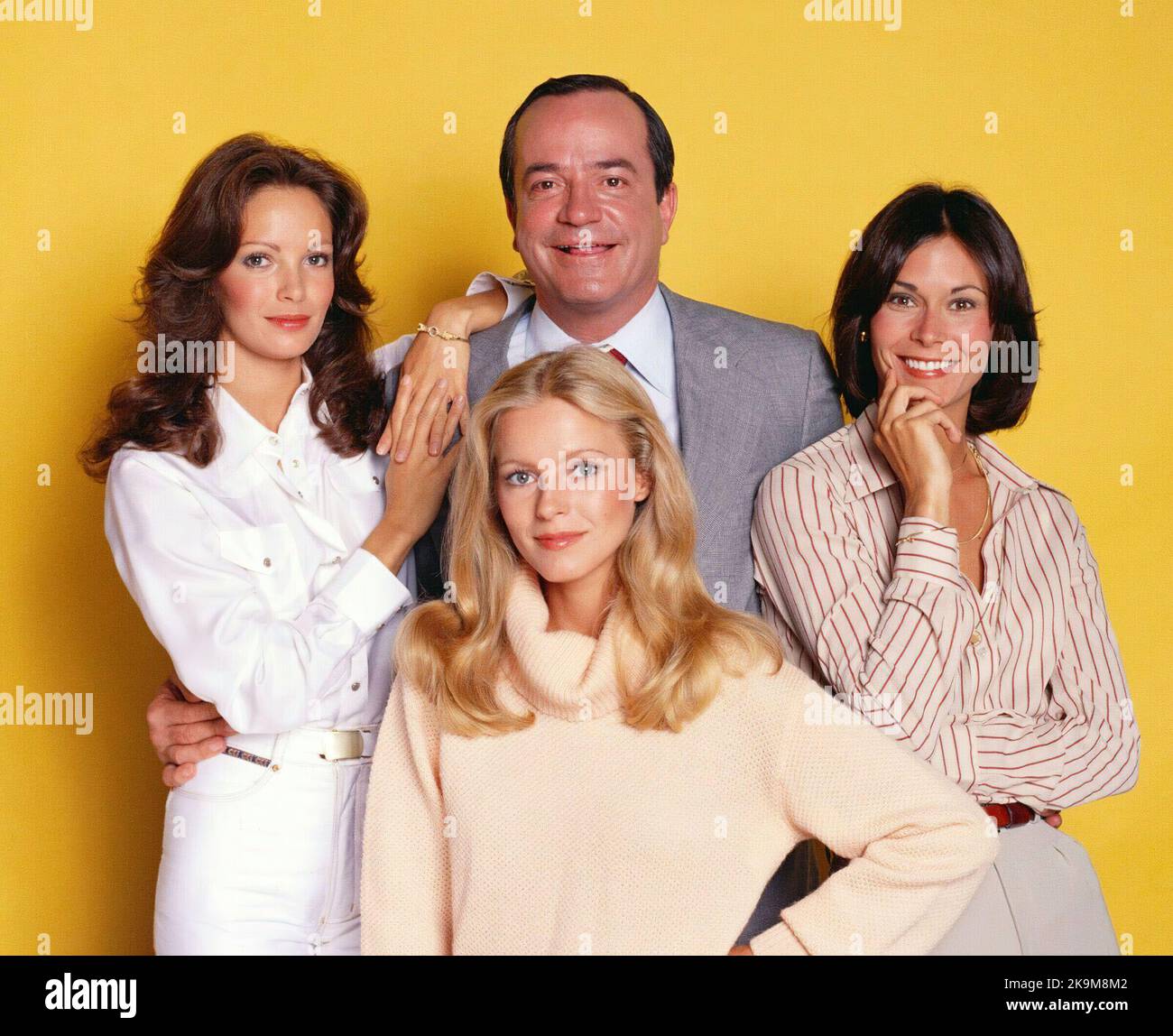
While several actresses cycled through the series, the definitive 70s icon who starred in Charlie's Angels is Farrah Fawcett, whose portrayal of Jill Munroe launched a global phenomenon. She was joined by original co-stars Jaclyn Smith and Kate Jackson, who together defined the show’s peak cultural influence during the late 1970s.
The television landscape of the mid-1970s was forever altered on September 22, 1976, when Charlie’s Angels premiered on ABC. Produced by the legendary duo Aaron Spelling and Leonard Goldberg, the show introduced a trio of "beautiful, glamorous, and female" private investigators working for the mysterious, unseen Charles Townsend. While the premise was simple, the impact of the lead actresses—specifically the original trio—created a template for female-led action television that persists in 2026.
The Farrah Fawcett Phenomenon: The Definitive 1970s Icon
Farrah Fawcett was the breakout star of Charlie's Angels, despite only appearing as a series regular for the first season. Her impact on the decade was so profound that she became more than just a television actress; she was a cultural archetype. Fawcett’s appeal was a combination of athletic California beauty, a megawatt smile, and a revolutionary hairstyle that defined the hair industry for a decade.
The Jill Munroe Character and the "Farrah-Flip"
As Jill Munroe, Fawcett played the most athletic and visually striking member of the team. However, it was her hair—the layered, feathered "Farrah-flip"—that became a global obsession. In 1976 and 1977, hair salons across the United States reported that the "Farrah" was the most requested cut in history. This aesthetic dominance was solidified by her iconic red swimsuit poster, which was released just before the series debuted. By the end of the 1970s, the poster had sold over 12 million copies, making it the best-selling pin-up in history.
The Contract Dispute and Departure
Fawcett’s status as a 70s icon was complicated by her early departure from the show. After only one season, she sought to leave the series to pursue film roles. This resulted in a high-profile legal battle with ABC and Aaron Spelling. The settlement required her to return for six guest appearances over the third and fourth seasons, a move that kept her image tied to the franchise even as she transitioned into more serious dramatic work, such as the 1984 film The Burning Bed.
Jaclyn Smith: The Only Constant Angel
While Fawcett provided the initial spark, Jaclyn Smith was the enduring face of the franchise. Smith played Kelly Garrett, the only character to remain with the series for its entire five-season run, from 1976 to 1981. In the context of 1970s television, Smith represented a different kind of icon: one of stability, classic elegance, and eventual business acumen.
Kelly Garrett: The Emotional Core
Kelly Garrett was often portrayed as the most sensitive and "street-smart" of the Angels, having grown up in an orphanage. Smith’s performance provided a grounded counterweight to the more flamboyant Jill Munroe and the intellectual Sabrina Duncan. Because of her longevity on the show, many fans from the 1970s identify Smith as the quintessential Angel.
Pioneering the Celebrity Brand
In the decades following the show, specifically starting in 1985, Jaclyn Smith revolutionized how 70s icons monetized their fame. She launched a clothing and home collection with Kmart, a move that was initially criticized by her peers but eventually became the blueprint for celebrity lifestyle brands. By 2026, her business model is studied as one of the first successful examples of a female entertainer transitioning into a retail mogul, proving that her influence extended far beyond the 1970s television screen.
Kate Jackson: The "Smart Angel" and Creative Force
Kate Jackson, who played Sabrina Duncan, was the catalyst for the show’s existence. Before Charlie's Angels, Jackson was already a established star from her work on The Rookies. It was Jackson who reportedly suggested the title of the show (originally titled The Alley Cats) and influenced the characterization of the leads to move beyond mere "damsels in distress."
The Intellectual Lead
Sabrina Duncan was the "smart one," often seen as the tactical leader of the group. Jackson’s portrayal was less about glamour and more about competence, which resonated with a segment of the audience looking for more substantial female representation. Despite the show often being categorized as "Jiggle TV"—a term coined by NBC executive Paul Klein to describe the overt sexualization of the characters—Jackson fought for scripts that highlighted the Angels' investigative skills.
The Kramer vs. Kramer Opportunity
A defining moment in Jackson’s career occurred during her time on Charlie's Angels when she was offered the role of Joanna Kramer in the film Kramer vs. Kramer. Due to the rigid filming schedule of the series, Aaron Spelling refused to release her to do the movie. The role eventually went to Meryl Streep, who won an Academy Award for it. This tension eventually led to Jackson’s departure from the series at the end of the third season, marking a shift in the show's dynamic.
Cheryl Ladd: Successfully Replacing an Icon
One of the greatest challenges for Charlie's Angels was finding a replacement for Farrah Fawcett in Season 2. The task fell to Cheryl Ladd, who played Kris Munroe, the younger sister of Jill Munroe. In many ways, Ladd was the 70s icon who proved the show's format was stronger than any single star.
Ladd’s introduction was handled with a self-aware narrative; her character was often compared to her famous "sister" within the show’s dialogue. Ladd brought a fresh, bubbly energy that helped maintain the show’s high ratings, proving that the "Angels" brand could survive cast changes. She remained with the series until its cancellation in 1981, cementing her own place in 1970s pop culture history.
The Cultural Impact of the 1970s Angels
To understand why these women became such massive icons, one must look at the socio-political climate of the 1970s. The show debuted in the wake of the Second Wave Feminist movement. While critics argued that the show was exploitative, many viewers saw women who were financially independent, physically capable, and held positions of authority (even if they still reported to a man).
The "Jiggle TV" Controversy vs. Empowerment
The term "Jiggle TV" remains the primary technical critique of the series. Critics argued that the show’s producers specifically wrote scenes to ensure the actresses were in bikinis, braless, or in suggestive clothing to boost male viewership. However, in retrospectives through 2026, many cultural historians argue that the "Angels" were proto-feminist icons. They drove fast cars, handled firearms, and solved crimes in a world where women were rarely allowed to do so on screen.
Fashion and Aesthetics
The 70s icons of Charlie's Angels dictated global fashion. Beyond the hair, the show popularized:
- High-waisted bell-bottom jeans.
- Safari-style jackets and jumpsuits.
- The "no-makeup" makeup look.
- Wrap dresses and silk blouses.
Comparison of the Original Charlie's Angels Cast
The following table highlights the core differences and contributions of the primary 70s icons associated with the series.
| Actress | Character | Tenure | Signature Trait | Post-Angels Legacy |
|---|---|---|---|---|
| Farrah Fawcett | Jill Munroe | 1976–1977 (Series Regular) | Iconic hair and athleticism | Dramatic actress; The Burning Bed |
| Jaclyn Smith | Kelly Garrett | 1976–1981 (Entire Run) | Elegance and longevity | Business mogul; Kmart partnership |
| Kate Jackson | Sabrina Duncan | 1976–1979 | Intelligence and leadership | Scarecrow and Mrs. King star |
| Cheryl Ladd | Kris Munroe | 1977–1981 | Bubbly, sisterly energy | Prolific TV movie actress and singer |
The Later Angels: 1979–1981
As the 1970s transitioned into the early 80s, the show attempted to refresh the cast further. Following Kate Jackson’s departure, Shelley Hack was cast as Tiffany Welles, a sophisticated, police-trained Angel. Hack, who was already a famous model for Revlon's "Charlie" perfume, was intended to bring a high-fashion edge to the series. However, she lasted only one season.
The final Angel to join the original series was Tanya Roberts, who played Julie Rogers in the fifth season. Roberts brought a more "street" background to the team, but by 1981, the cultural appetite for the format had waned, and the series was cancelled. Despite their shorter tenures, both Hack and Roberts are considered part of the extended circle of 70s/80s television icons.
The Technical Production of a 70s Phenomenon
The success of these icons was not accidental. Aaron Spelling and Leonard Goldberg utilized a specific "formula" for the show that maximized the visibility of the stars.
- The "Tease" Opening: Every episode began with a high-action or high-glamour hook that featured the Angels in disguise.
- Location Scouting: The show heavily featured luxurious Southern California locations, which added to the aspirational lifestyle the 70s icons represented.
- Wardrobe Budgets: The wardrobe budget for Charlie's Angels was reportedly one of the highest on television at the time, ensuring that the icons were always at the forefront of fashion.
- Guest Stars: The show served as a revolving door for other 70s icons and upcoming stars, including Kim Basinger, Tommy Lee Jones, and Jamie Lee Curtis, which kept the series culturally relevant.
Frequently Asked Questions
Who was the most famous star of Charlie's Angels?
Farrah Fawcett is widely considered the most famous star of the original series. Although she only stayed for one full season, her image became synonymous with the 1970s. Her hairstyle and red swimsuit poster became global landmarks of pop culture, overshadowing her later dramatic work and even the show itself.
Why did Farrah Fawcett leave Charlie's Angels after one season?
Farrah Fawcett left to pursue a career in film, believing that the rigid schedule of a television series limited her growth as an actress. Her departure led to a massive $7 million lawsuit for breach of contract, which was eventually settled by her agreeing to return for several guest appearances in later seasons.
Which Angel appeared in the most episodes?
Jaclyn Smith appeared in the most episodes. She was the only actress to remain with the series for all 115 episodes across its five-season run. Because of this, her character, Kelly Garrett, is often seen as the "heart" of the team and the most developed character in the franchise.
Was Kate Jackson really the one who came up with the name "Charlie's Angels"?
Yes. According to television historians and interviews with the cast, the show was originally titled The Alley Cats. Kate Jackson disliked the name and, while looking at a painting of three angels in the office of producer Aaron Spelling, suggested they be called "Charlie's Angels."
What is the legacy of these 70s icons in 2026?
In 2026, the original Angels are celebrated as pioneers of female-led action entertainment. Farrah Fawcett is remembered for her massive cultural impact and her later advocacy for cancer research. Jaclyn Smith is viewed as a retail pioneer, and Kate Jackson is recognized for her early efforts to bring more intellectual depth to female television roles.
Continuing the Legacy
For those looking to explore the history of these 70s icons, the original series remains available on various streaming platforms and in high-definition remastered formats. Understanding the impact of Farrah Fawcett, Jaclyn Smith, and Kate Jackson requires looking beyond the "jiggle" and recognizing the massive shift they caused in how women were marketed, cast, and celebrated in global media. Whether through their fashion, their business ventures, or their groundbreaking television roles, these women remain the definitive icons of the 1970s.