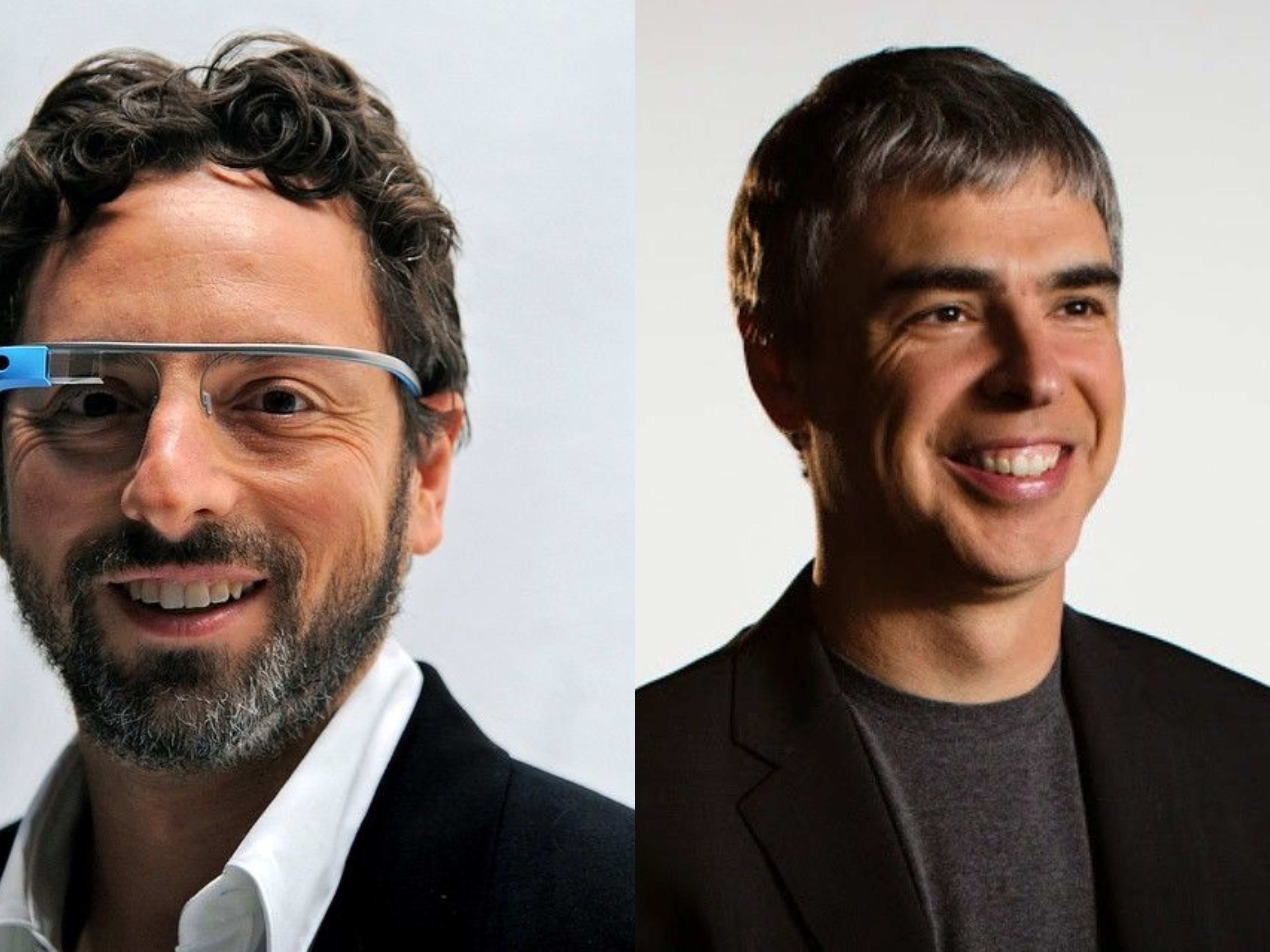
Sergey Brin amassed his early multimillion-dollar fortune primarily through the explosive growth, venture capital funding rounds, and eventual public offering of Google, the search engine he co-founded with Larry Page in 1998. While his net worth eventually climbed into the hundreds of billions of dollars, tracing the trajectory of his initial wealth accumulation reveals a fascinating narrative of academic innovation, strategic venture capital backing, and the unprecedented scaling of internet infrastructure at the turn of the millennium.
The Academic Origins at Stanford University
Long before managing multibillion-dollar portfolios, venture funds, and philanthropic initiatives, Sergey Brin was a doctoral student in computer science at Stanford University. Arriving via a Bachelor of Science degree from the University of Maryland at College Park, Brin met Larry Page during a campus orientation tour in 1995. This meeting served as the catalyst for one of the most successful entrepreneurial partnerships in modern technological history.
The Backrub Project and Search Algorithmic Foundations
Initially, Brin and Page collaborated on a research project known as Backrub. The project aimed to analyze web links to understand the importance and relationship of different web pages. This academic research eventually evolved into a radically new search engine architecture called Google.
Unlike existing portals that relied heavily on keyword matching or human-edited directories, the Google architecture evaluated the "backlinks" pointing to a website. This gave rise to the PageRank algorithm, named jointly after Larry Page and the concept of ranking pages.
- Core Innovation: Analyzing citation importance across the web rather than mere keyword frequency.
- Scalability: Designing a modular server architecture using inexpensive commodity hardware.
- Academic Environment: Leveraging Stanford’s computer science facilities and mentorship from faculty members like Professor Rajeev Motwani and Terry Winograd.
Transitioning from Academia to Commercial Enterprise
By 1998, the search engine outgrew the Stanford server infrastructure. The bandwidth and computational demands of indexing the rapidly expanding World Wide Web made it clear that the project could no longer remain a simple university experiment. Brin and Page needed external capital to purchase server hardware, secure commercial office space, and hire engineering talent.
Securing Angel Investment and Early Venture Capital Funding
The turning point that transformed Sergey Brin from a graduate student into an entrepreneur with liquid capital occurred in the summer of 1998. Andy Bechtolsheim, a co-founder of Sun Microsystems, evaluated a quick demonstration of the search engine and immediately recognized its superior performance compared to existing market solutions.
The Famous $100,000 Check
Bechtolsheim wrote a check for $100,000 made out to "Google Inc." before the legal entity even existed. This required Brin and Page to scramble to open a corporate bank account to cash the check. This initial infusion of capital, combined with contributions from family, friends, and angel investors, totaled approximately $1 million.
| Investor / Source | Approximate Contribution | Impact on Early Operations |
|---|---|---|
| Andy Bechtolsheim | $100,000 | Enabled immediate corporate formation and equipment purchases. |
| Family and Friends | ~$900,000 | Funded initial salaries, server upgrades, and Menlo Park garage rent. |
| Kleiner Perkins & Sequoia Capital | $25 million (1999) | Provided institutional backing and scaling capital ahead of the IPO. |
Moving Out of the Garage
With the initial seed funding secured, Google Inc. officially incorporated in September 1998. The team moved out of their Stanford dorm rooms and into a modest garage in Menlo Park, California, rented from Susan Wojcicki, who would later become the CEO of YouTube. During this phase, Brin focused heavily on the engineering side, search quality, and user interface design, while Page focused on the underlying architecture and business strategy.
Institutional Round and the Path to the 2004 IPO
As the dot-com boom accelerated, Google quickly became an indispensable tool for internet users worldwide. However, the true acceleration of Brin’s personal wealth occurred during the Series A venture capital round in 1999 and the subsequent Initial Public Offering (IPO) in August 2004.
The 1999 Venture Capital Infusion
In June 1999, Google announced a $25 million funding round led by prominent Silicon Valley venture capital firms Sequoia Capital and Kleiner Perkins Caufield & Byers. As part of this financing agreement, established executives like Eric Schmidt were eventually brought in to provide operational guidance, while Brin retained a massive equity stake as a co-founder.
Reaching the $50 Million Milestone and Beyond
Through the late 1990s and early 2000s, valuation assessments of Google climbed precipitously. By the time the company prepared for its public offering, private secondary market valuations and institutional funding rounds had pushed the estimated worth of co-founders Sergey Brin and Larry Page well past the $50 million threshold, making them paper millionaires multiple times over.
When Google finally went public on August 19, 2004, at an opening price of $85 per share, Brin’s net worth skyrocketed overnight into the billions. He suddenly controlled millions of Class B super-voting shares, cementing his status among the wealthiest individuals globally.
Evolution of Sergey Brin's Asset Management and Wealth Structure
Achieving a multi-million dollar valuation in the early days of Google established the foundation for a highly diversified and complex financial footprint. As his wealth transitioned from startup equity to public stock and alternative investments, Brin structured his assets to support both personal ventures and philanthropic initiatives.
The Alphabet Restructuring
In 2015, Google underwent a major corporate restructuring, creating Alphabet Inc. as a parent holding company. Sergey Brin served as the President of Alphabet until December 2019, when he officially stepped down from executive management while maintaining his position as a controlling shareholder and member of the Board of Directors. This structural shift allowed him to focus on exploratory projects, often referred to as "moonshots," through Google X (now simply X).
Diversification and Venture Investments
While Alphabet stock remains the primary pillar of his financial portfolio, Brin's early fortune enabled significant diversification into other sectors:
- Aviation and Technology: Investments in advanced airship development companies like LTA Research (lighter-than-air aircraft).
- Real Estate: Acquisition of properties in California and various high-profile locations.
- Philanthropy: Funding scientific research focused on Parkinson’s disease, climate change, and education through structured philanthropic vehicles.
Common Misconceptions Regarding Early Tech Fortunes
Analyzing the financial history of Silicon Valley pioneers often invites myths regarding how quickly fortunes are realized. It is a common misconception that founders cash out substantial sums during early funding rounds. In reality, during the 1998 seed and 1999 venture rounds, Brin and Page retained nearly all of their equity rather than selling shares for personal cash, betting entirely on the long-term growth of the enterprise.
Another frequent misunderstanding involves the distinction between liquid cash and paper wealth. The early millions attributed to Brin prior to 2004 were largely illiquid equity valuations tied directly to the private valuation of Google Inc., meaning their realizable value depended entirely on the company's eventual commercial success and public market reception.
Summary of Financial Milestones
- 1998 (Inception): Seed funding of $100,000 from Andy Bechtolsheim establishes the corporate framework.
- 1999 (Venture Scale): $25 million investment from Sequoia and Kleiner Perkins cements the company’s market valuation.
- Early 2000s: Private secondary valuations push paper net worth past the $50 million milestone.
- August 2004 (IPO): Public market debut transforms equity into multi-billion-dollar liquid wealth.
Frequently Asked Questions
How much did Sergey Brin invest of his own money to start Google?
Sergey Brin and Larry Page did not invest significant personal capital, as graduate students typically lack substantial financial resources. Instead, they relied on small contributions from family, faculty members, and a critical $100,000 angel investment from Andy Bechtolsheim in 1998 to launch the company.
When did Sergey Brin officially become a millionaire?
Brin’s net worth crossed the multi-million-dollar threshold during the late venture capital funding rounds of the early 2000s, specifically as institutional investors drove private valuations higher ahead of the 2004 initial public offering.
Did Sergey Brin sell his shares during the 2004 IPO?
During the August 2004 IPO, Brin and co-founder Larry Page retained the vast majority of their Class B super-voting shares, choosing to maintain long-term control over the company rather than cashing out large blocks of equity immediately.
What was the role of the PageRank algorithm in building his fortune?
The PageRank algorithm provided the technological differentiation that allowed Google to outperform incumbent search engines like AltaVista and Yahoo. This technical superiority drove massive user adoption, which in turn attracted advertisers and venture capital funding.
How is Sergey Brin's wealth managed today?
His wealth is managed through a combination of large holdings in Alphabet Inc. stock, diversified private equity investments in technology and transportation ventures, and structured philanthropic foundations supporting medical research and environmental causes.
Conclusion and Next Actions
Tracing the trajectory of Sergey Brin's early fortune demonstrates the vital interplay between academic research, strategic angel investment, and disciplined equity retention. For those studying entrepreneurial finance or technology history, examining these foundational steps highlights why retaining equity during early growth phases remains a cornerstone of modern venture creation. To explore this topic further, review primary corporate filings from the 2004 Google IPO prospectus or study early computer science papers published out of Stanford University regarding web link analysis.