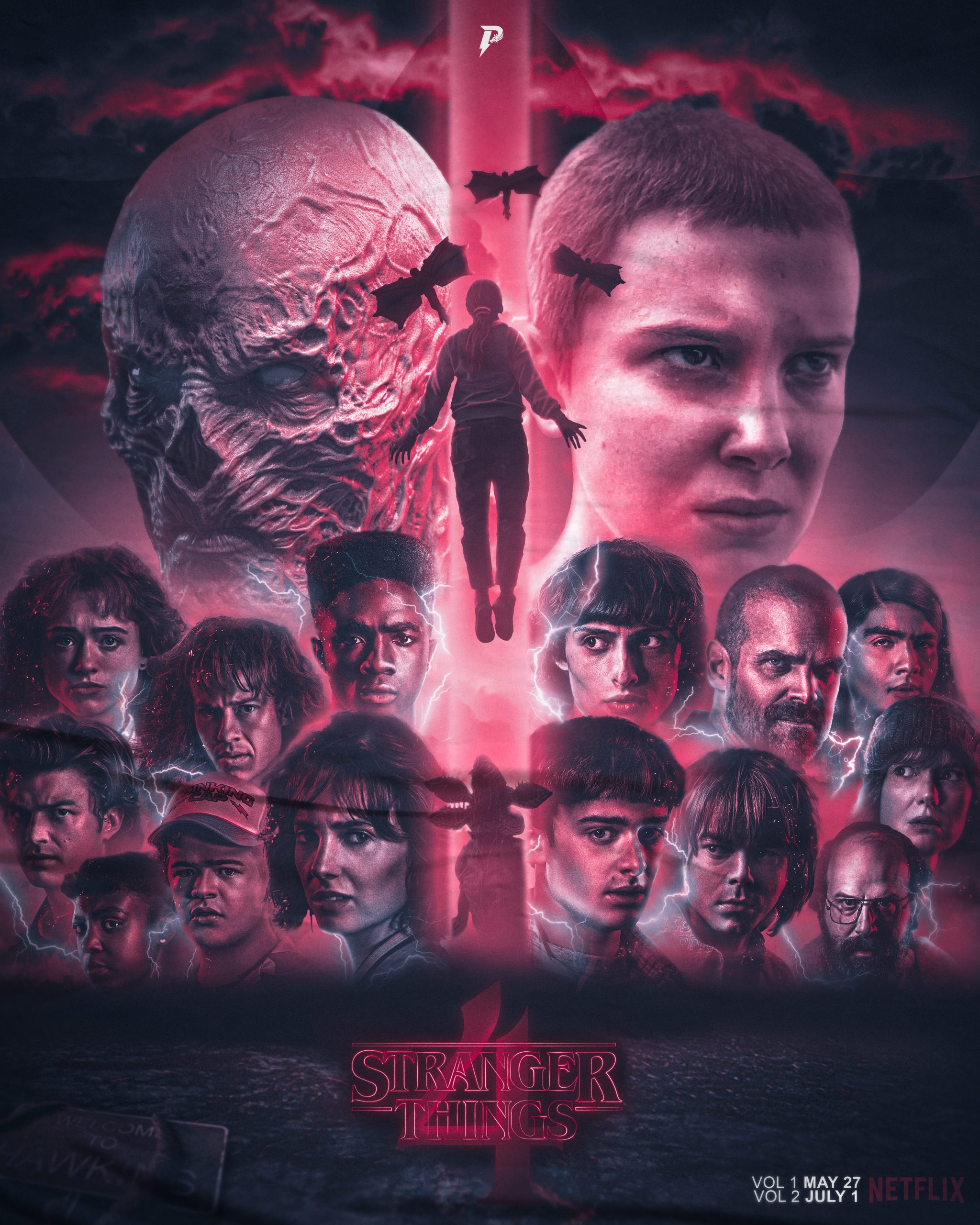
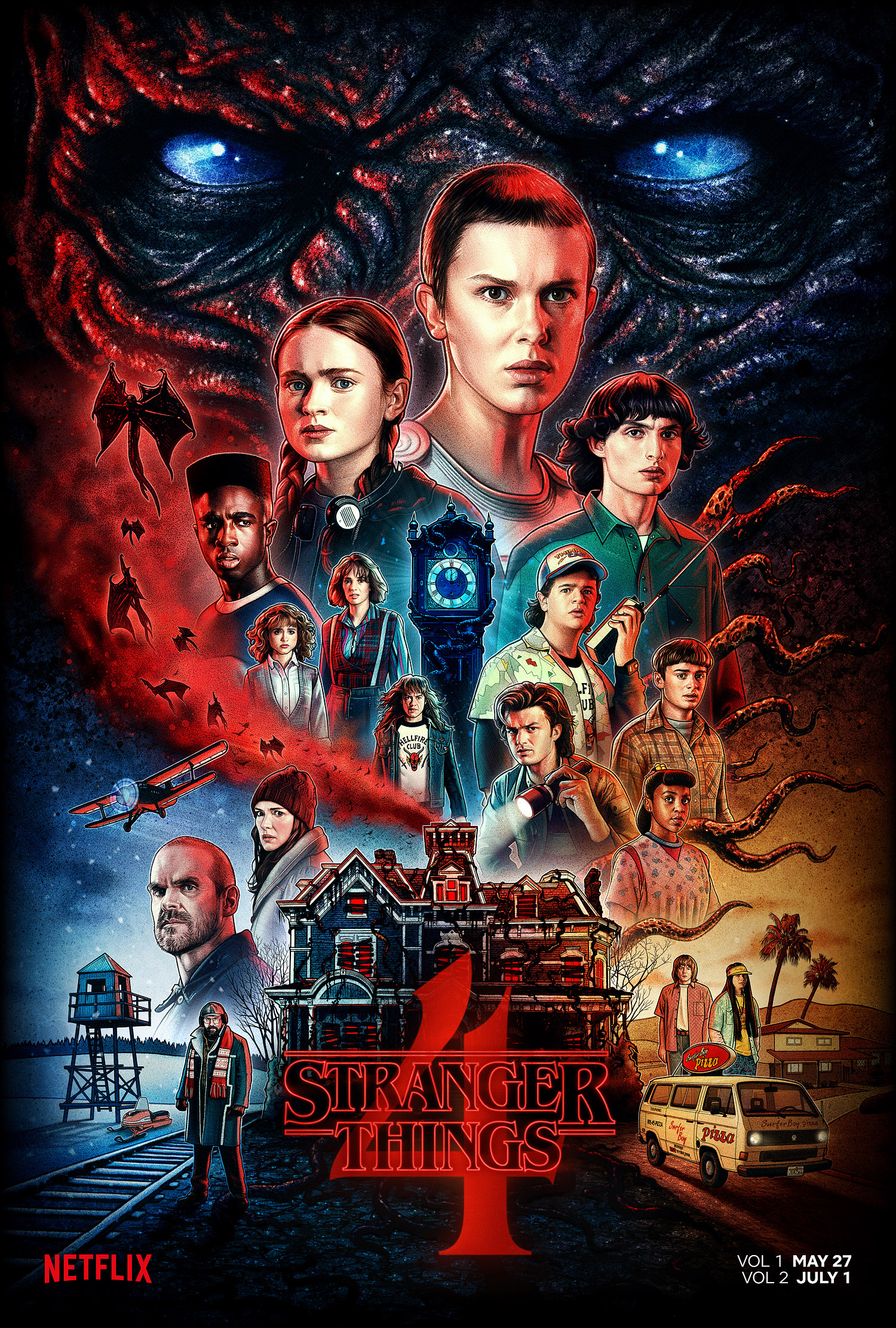
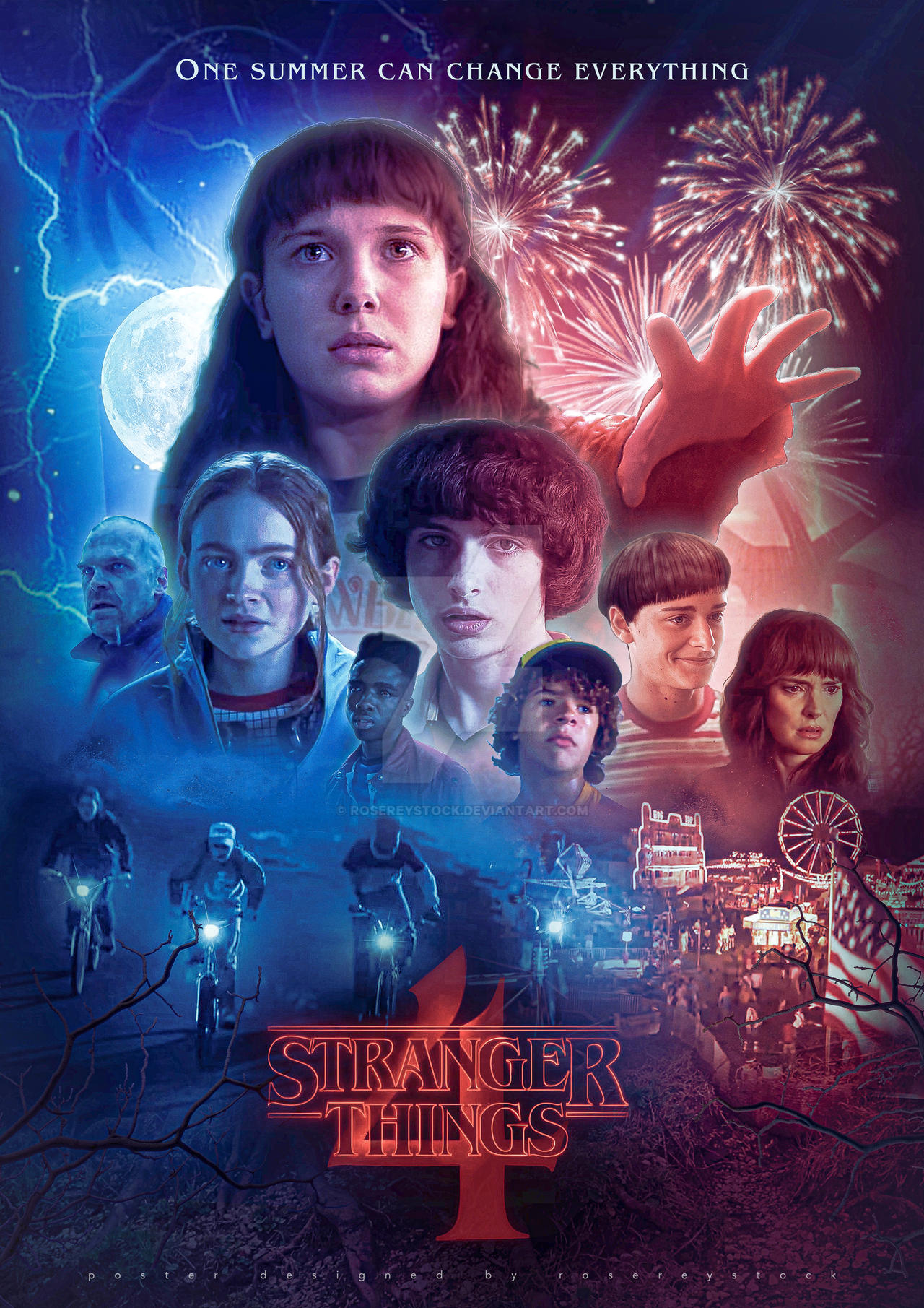
The fourth season of Stranger Things, released by Netflix in two volumes during the summer of 2022, serves as the expansive penultimate chapter of the Duffer Brothers’ sci-fi saga. It introduces the formidable villain Vecna, shifts the setting across multiple global locations, and features significantly longer, cinematic runtimes that explore the origin of the Upside Down.
The Scale and Ambition of Season 4
By the time 2026 arrived, the fourth season of Stranger Things remained a landmark in streaming history, noted specifically for its departure from the "kids on bikes" trope toward a more mature, psychological horror framework. Production for this season was notoriously complex, spanning several years due to the global pandemic and a significantly increased budget. Reports indicated that Netflix invested roughly $30 million per episode, a figure that reflected the season’s visual effects requirements and its globe-trotting narrative.
The season was divided into two parts: Volume 1, consisting of seven episodes, premiered on May 27, 2022, while Volume 2, containing the final two feature-length episodes, arrived on July 1, 2022. This strategy was designed not only to accommodate the lengthy post-production process but also to sustain cultural conversation throughout the summer. The decision paid off, as Season 4 became one of the most-watched English-language series in Netflix history, amassing billions of viewing hours.
Narrative Structure: A Tale of Three Cities
Unlike previous seasons confined largely to the town of Hawkins, Indiana, Season 4 fragments the core cast into three distinct geographic threads. This "splitting the party" mechanic allowed the writers to explore different sub-genres of 1980s cinema simultaneously.
The Hawkins Arc: Supernatural Slasher
Back in Hawkins, the remaining teenagers—Dustin Henderson, Lucas Sinclair, Max Mayfield, Nancy Wheeler, Steve Harrington, Robin Buckley, and newcomer Eddie Munson—confront a series of gruesome, ritualistic murders. This thread operates as a supernatural slasher mystery. The investigation centers on the Creel House, a dilapidated Victorian mansion with a dark history that serves as a bridge between the real world and the Upside Down. The Hawkins group remains the emotional core of the season, particularly as they navigate the social pressures of high school and the literal threat of a new entity dubbed "Vecna."
The California Arc: Coming of Age and Conspiracy
Eleven, Will Byers, Jonathan Byers, and Mike Wheeler find themselves in Lenora Hills, California. This storyline focuses on Eleven’s struggle to adapt to life without her powers and the social isolation of being an outsider. However, the narrative shifts gears when Dr. Sam Owens and a reluctant Dr. Martin Brenner return to recruit Eleven for the Nina Project. This project is a specialized sensory deprivation tank designed to help Eleven recover her memories and abilities by "reliving" her time at Hawkins Lab in 1979. This arc provides the essential backstory for the series, revealing the truth about the other test subjects and the catalyst for the opening of the original gate.
The Russia Arc: The Prison Break
The third thread follows Joyce Byers and Murray Bauman as they travel to the snowy wastes of Kamchatka, Russia, to rescue Jim Hopper. Hopper, who survived the explosion at the end of Season 3, is held in a Soviet labor camp. This storyline leans heavily into Cold War espionage and survival horror, featuring a captive Demogorgon that the Soviet military uses for "training" prisoners. While physically removed from the main threat in Hawkins, this arc eventually converges thematically as the characters realize the Upside Down's influence has spread globally.
The Introduction of Vecna (Henry Creel)
The defining element of Season 4 is the antagonist, Vecna. Unlike the Mind Flayer—a nebulous, eldritch cloud—Vecna is a humanoid entity with a clear consciousness, a personal history, and a terrifying method of execution. Portrayed by Jamie Campbell Bower, Vecna targets individuals harboring deep-seated trauma, guilt, or depression. He psychically invades their minds, subjects them to horrifying hallucinations, and eventually kills them in a ritual that opens a "micro-gate" to the Upside Down.
The revelation that Vecna is actually Henry Creel (Subject One) is the season's primary narrative pivot. By connecting the villain to Eleven’s origin story, the show unified several seasons of lore. Henry Creel was the first child experimented on by Dr. Brenner. After a massacre at the lab in 1979, Eleven defeated him, inadvertently pushing him through a rift and into the dimension that would become the Upside Down. There, he reshaped the chaotic environment into the hive mind we recognize, positioning himself as the "five-star general" of the Mind Flayer.
Technical Achievements and Cinematic Runtimes
Season 4 is frequently discussed in the context of its technical specifications. The Duffer Brothers opted for a much larger scope, which resulted in episodes that functioned more like independent films. The season finale, "The Piggyback," clocked in at approximately 2 hours and 22 minutes, making it one of the longest single episodes of television ever produced.
The visual effects saw a massive upgrade, particularly in the rendering of the "Mindscape"—the red, fractured psychological realm where Vecna confronts his victims. The use of practical effects remained a priority; Jamie Campbell Bower spent up to eight hours in a makeup chair to apply the prosthetic suit for Vecna, ensuring a tactile, repulsive quality that CGI often struggles to replicate.
| Episode Number | Title | Director | Runtime (Approx.) |
|---|---|---|---|
| 1 | The Hellfire Club | The Duffer Brothers | 76 Minutes |
| 2 | Vecna's Curse | The Duffer Brothers | 77 Minutes |
| 3 | The Monster and the Superhero | Shawn Levy | 63 Minutes |
| 4 | Dear Billy | Shawn Levy | 77 Minutes |
| 5 | The Nina Project | Nimród Antal | 74 Minutes |
| 6 | The Dive | Nimród Antal | 73 Minutes |
| 7 | The Massacre at Hawkins Lab | The Duffer Brothers | 98 Minutes |
| 8 | Papa | The Duffer Brothers | 85 Minutes |
| 9 | The Piggyback | The Duffer Brothers | 142 Minutes |
The Cultural Resurgence of Kate Bush and Metallica
One of the most remarkable aspects of Season 4 was its impact on the music industry. The use of Kate Bush's 1985 song "Running Up That Hill (A Deal with God)" became a central plot point. In the episode "Dear Billy," the song is used as a tether to save Max Mayfield from Vecna’s psychic grasp. Following the episode's release, the track surged to the top of global charts, introducing a new generation to Bush's work and breaking several Guinness World Records for the time taken for a song to reach Number 1.
Similarly, the Season 4 finale featured a high-stakes sequence where Eddie Munson performs a "most metal" rendition of Metallica's "Master of Puppets" atop a trailer in the Upside Down. This sequence achieved similar viral status, further cementing the show's ability to blend 80s nostalgia with high-stakes modern storytelling. These musical choices were not merely aesthetic; they were integrated into the mechanics of the world-building, where music serves as a bridge for the human brain to resist the influence of the Upside Down.
Character Development and the Eddie Munson Factor
While the original cast members—particularly Millie Bobby Brown (Eleven) and Sadie Sink (Max)—received critical acclaim for their emotional depth, it was the newcomer Eddie Munson, played by Joseph Quinn, who became the breakout star of the season. Eddie, the leader of the Dungeons & Dragons-themed "Hellfire Club," represented the "Satanic Panic" era of the 1980s. His character arc, transitioning from a misunderstood outcast and "coward" to a hero who sacrifices himself for a town that hates him, resonated deeply with the audience.
The season also significantly deepened the character of Max Mayfield. Her journey through grief following the death of her brother, Billy, became the emotional anchor of the Hawkins storyline. The "Dear Billy" episode is widely regarded by critics as one of the best in the series, highlighting the intersection of supernatural horror and the very real psychological effects of PTSD.
Critical Reception and Award Recognition
Season 4 was a critical success, often cited as a return to form after the more divisive third season. Reviewers praised its darker tone and the high stakes, though some criticized the long runtimes and the pacing of the California and Russia arcs. On the awards circuit, the season was a powerhouse. At the 74th and 75th Primetime Emmy Awards, the season secured numerous nominations and wins, particularly in technical categories such as Sound Editing, Stunt Coordination, and Prosthetic Makeup.
The performance of the ensemble cast was also highlighted. While many expected Sadie Sink or Millie Bobby Brown to secure major acting wins, the competitive nature of the drama categories meant the show was often recognized more for its collective achievement and production design than for individual acting trophies.
Setting the Stage for the Final Season
The conclusion of Season 4 left the series in a state of unprecedented tension. For the first time in the show's history, the protagonists did not achieve a clean victory. Although Vecna was wounded, his plan to merge the Upside Down with the real world succeeded. The final shots of the season showed the "snow" of the Upside Down falling over a scorched Hawkins, with the gates wide open.
This cliffhanger transitioned the narrative into the fifth and final season. From the perspective of 2026, Season 4 is viewed as the "Empire Strikes Back" of the series—the dark second act where the heroes are beaten back, the world is fundamentally changed, and the true nature of the enemy is finally understood. It bridged the gap between a small-town mystery and an apocalyptic epic.
Frequently Asked Questions
Is Season 4 the final season of Stranger Things? No, Season 4 is the penultimate season. The Duffer Brothers confirmed early in production that the story would conclude with Season 5. While Season 4 sets the stage for the endgame by opening the gates between dimensions, the final resolution of the conflict with Vecna and the Mind Flayer is reserved for the fifth season.
How many episodes are in Season 4? There are a total of nine episodes. These were released in two separate volumes: Volume 1 contained episodes 1 through 7, and Volume 2 contained episodes 8 and 9. Despite the low episode count compared to some other series, the total runtime is significantly longer than previous seasons due to the extended length of each episode.
Who is the main villain in Season 4? The primary antagonist is Vecna, also known as Henry Creel or One. He is a powerful psychic who was the first subject of the Hawkins National Laboratory experiments. Unlike the more animalistic monsters of previous seasons, Vecna is a sentient, speaking villain who seeks to "evolve" the world by destroying the barrier between the Upside Down and Earth.
Do I need to watch the previous seasons to understand Season 4? Yes, Season 4 is heavily serialized and relies on the viewer's knowledge of the characters' histories, Eleven’s origins, and the events of the Starcourt Mall battle in Season 3. It specifically draws on lore established in Season 1 regarding the Hawkins Lab, making a full re-watch of the series beneficial for understanding the various callbacks and character motivations.
What happened to Max at the end of Season 4? In the season finale, Max is technically killed by Vecna to complete his ritual. However, Eleven uses her powers to restart Max’s heart. As of the end of the season, Max is in a deep coma in the hospital, and Eleven is unable to find her consciousness in the "Void," leaving her ultimate fate uncertain as the story moves into the final chapter.
Practical Recommendation for Viewers
For those revisiting the fourth season or watching it for the first time in 2026, it is highly recommended to view the season on a display that supports 4K HDR (Dolby Vision) with a capable sound system. The season was mastered with high-end cinematic standards, and the intricate sound design—particularly the "clock" chimes associated with Vecna—is essential to the atmosphere. Given the length of the episodes, particularly Volume 2, viewers should approach the final episodes as feature films rather than standard television segments.