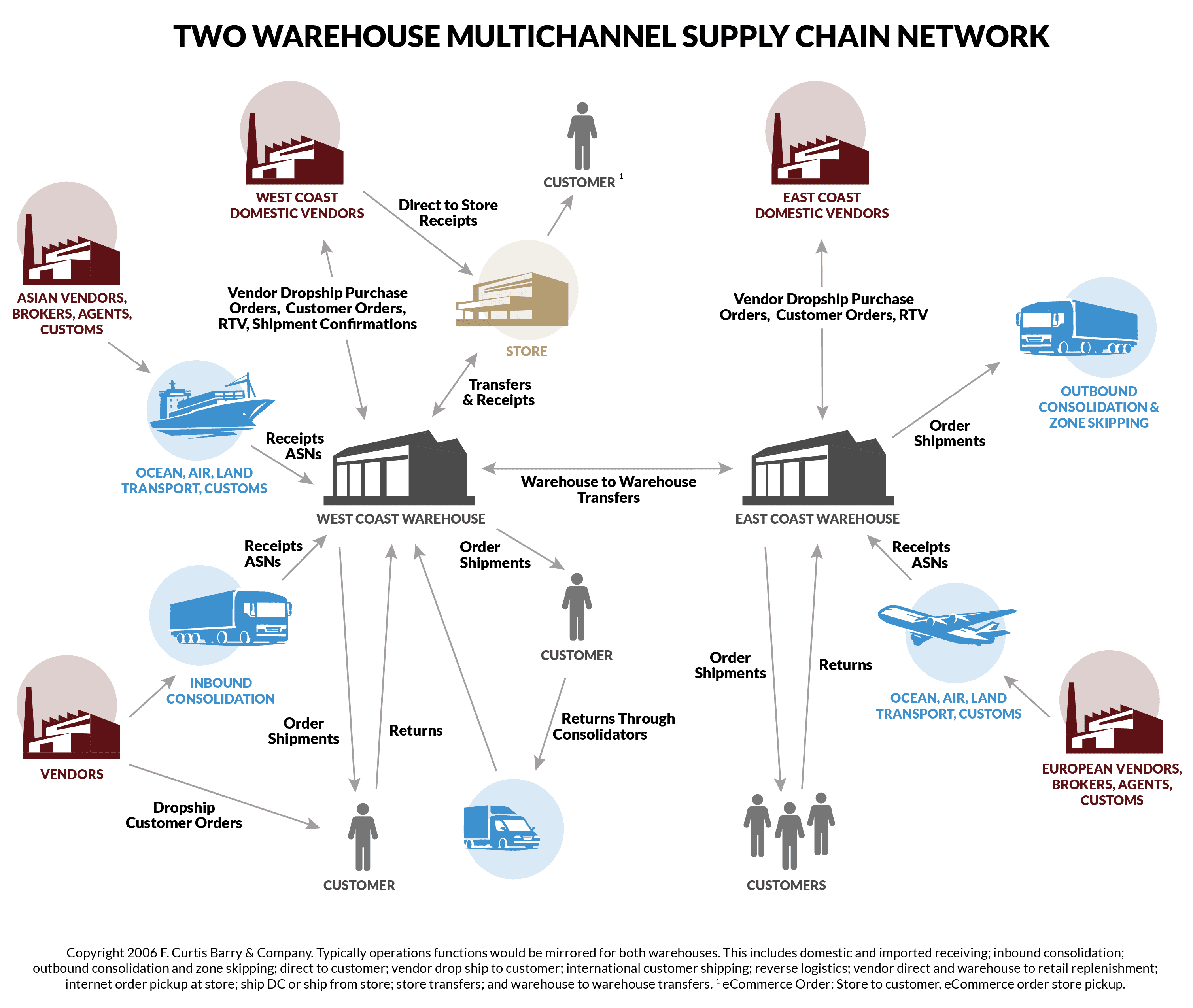
Partnering with a third-party logistics (3PL) vendor provides businesses with scalable warehousing, specialized transportation management, and advanced fulfillment infrastructure without the capital expenditure of owning facilities. Success depends on aligning operational goals, establishing clear performance metrics, integrating technology systems, and maintaining transparent communication channels.
Modern supply chain management requires organizations to navigate volatile market demands, rising customer expectations for rapid delivery, and complex global logistics networks. For many growing e-commerce brands, manufacturers, and distributors, handling fulfillment in-house eventually becomes a bottleneck that drains capital and operational bandwidth. Entering into a 3PL vendor partnership offers a strategic alternative to build resilience and scalability. However, selecting and managing an outsourced logistics provider is not a set-it-and-forget-it transaction; it requires a structured approach to governance, technical integration, and cultural alignment.
Understanding the 3PL Ecosystem and Core Capabilities
Before initiating a search for a logistics partner, stakeholders must understand the spectrum of services modern 3PL vendors provide. The logistics industry has evolved far beyond basic warehousing and pick-and-pack services. Today's providers often act as comprehensive supply chain architects.
Third-party logistics providers generally fall into distinct tiers based on their service breadth and asset ownership. Asset-based 3PLs own their warehouses, trucks, and equipment, offering stability and deep control over physical resources. Non-asset-based 3PLs act as intermediaries, coordinating networks of carriers and warehouse operators to secure competitive rates and flexible capacity. Many modern providers operate on a hybrid model, combining proprietary facilities with vetted partner networks.
Organizations typically outsource specific operational pillars:
- Warehousing and Storage: Inventory management, pallet racking, bulk storage, and climate-controlled environments for sensitive goods.
- Value-Added Services (VAS): Kitting, bundling, customized packaging, labeling, quality inspection, and reverse logistics management.
- Transportation and Freight Management: Full Truckload (FTL), Less Than Truckload (LTL), parcel shipping, drayage, and last-mile delivery orchestration.
- Technology and Visibility: Warehouse Management Systems (WMS), Transportation Management Systems (TMS), and customer portal integrations that provide real-time inventory tracking.
Defining Organizational Requirements and Objectives
The foundation of a successful 3PL partnership is an exhaustive internal audit. Organizations must clearly define their current operational baseline, pain points, and future growth projections before drafting a Request for Proposal (RFP).
Quantifying Volume and SKU Profiles
Logistics providers price their services and design their warehouse layouts based on granular data. Businesses must evaluate their Stock Keeping Unit (SKU) velocity, analyzing which items move quickly and which sit as slow-moving inventory. Understanding average order volume, seasonal peaks, dimensional weight, and fragility helps potential partners accurately scope labor and space requirements.
Mapping Geographical Distribution
Where are the end customers located? If a business experiences high demand on both coasts, partnering with a 3PL that operates a single midwestern facility may drive up last-mile transit times and shipping costs. Multi-node fulfillment strategies—utilizing regional 3PL hubs—can drastically reduce transit days and shipping zones, translating directly to cost savings and improved customer satisfaction.
Evaluating and Selecting the Right 3PL Partner
Evaluating potential vendors demands a rigorous vetting process that looks beyond initial pricing proposals. A low-cost provider that consistently misses delivery windows or damages inventory can destroy brand equity far faster than the money saved on fulfillment fees.
Cultural and Operational Alignment
A 3PL acts as an extension of your brand. When an end customer opens a package, their perception is shaped by the fulfillment execution, even if a third party packed the box. Companies should assess whether the vendor's communication style, responsiveness, and problem-solving approach align with their internal corporate culture.
Technology Stack and Integration Capabilities
Modern supply chains run on data. A prospective 3PL must demonstrate seamless integration capabilities with existing enterprise resource planning (ERP) systems, shopping cart platforms (such as Shopify, Magento, or WooCommerce), and accounting software. Application Programming Interfaces (APIs) and Electronic Data Interchange (EDI) protocols must allow for two-way synchronization of order statuses, inventory counts, and tracking numbers in real time.
Scalability and Network Flexibility
As a business grows, its logistics needs will shift. Evaluate whether the 3PL has the physical capacity to absorb seasonal volume surges—such as holiday peaks—without service degradation. Inquire about their network expansion plans and whether they can support international shipping, customs clearance, and cross-border trade if global expansion is part of your strategic roadmap.
Key Comparison Factors for 3PL Evaluation
When comparing multiple third-party logistics vendors, decision-makers should evaluate providers across several standardized operational and financial dimensions.
| Evaluation Criterion | What to Examine | Potential Risk of Poor Performance |
|---|---|---|
| Technology Integration | API/EDI compatibility, WMS robustness, real-time inventory visibility dashboards. | Stockouts, delayed order transmission, manual data entry errors, lack of visibility. |
| Pricing Structure | Transparency of storage fees, pick-and-pack rates, receiving costs, and hidden accessorial charges. | Budget overruns, unexpected margin erosion during peak volume periods. |
| Geographic Footprint | Proximity of warehouses to core customer bases, carrier hubs, and port facilities. | Extended transit times, higher shipping zones, increased last-mile costs. |
| SLA and Performance Metrics | Guaranteed order accuracy rates, on-time shipping percentages, and inventory shrinkage limits. | Customer churn, negative reviews, financial penalties for missed retail compliance. |
| Value-Added Services | Capabilities for kitting, custom packaging, returns processing (reverse logistics), and quality checks. | Inability to scale marketing promotions, inefficient handling of returned inventory. |
Structuring the Service Level Agreement (SLA)
Once a vendor is selected, the relationship must be governed by a robust Service Level Agreement (SLA). The SLA translates operational expectations into enforceable standards with clear financial incentives or penalties.
Critical Metrics to Include
- Order Accuracy: Typically expected to exceed 99%, measuring the percentage of orders picked, packed, and shipped without error.
- On-Time Shipping (OTS): The percentage of orders dispatched from the warehouse within the agreed-upon cutoff window (e.g., same-day shipping for orders placed before 2:00 PM).
- Inventory Accuracy: The variance between physical stock counts in the warehouse and digital records in the WMS, usually verified through regular cycle counts.
- Receiving Turnaround Time: The duration required for the 3PL to unload, inspect, and log inbound shipments into available inventory.
Dispute Resolution and Exit Strategies
A comprehensive contract must outline clear procedures for dispute resolution, liability limits for damaged or lost goods, and termination clauses. If the partnership fails to meet expectations, an orderly exit strategy ensures that inventory can be transferred to a new provider without halting business operations.
Implementation, Integration, and Onboarding
The onboarding phase—often spanning 30 to 90 days—is where strategic plans transition into physical reality. Effective project management during this phase prevents operational disruption.
Phase 1: Technical Integration and Testing
Before any inventory moves, engineering and IT teams must establish and thoroughly test the data pipelines between the business's sales channels and the 3PL’s WMS. Conducting sandbox testing with mock orders ensures that inventory decrements correctly, tracking numbers flow back to storefronts, and exception alerts trigger appropriately.
Phase 2: Inbound Freight and Initial Stocking
The initial transfer of inventory requires meticulous coordination. SKUs must be properly barcoded, labeled, and packaged according to the 3PL’s facility specifications. Establishing clear inbound shipping guidelines prevents receiving delays and ensures accurate baseline cycle counts.
Phase 3: Pilot Launch and Fine-Tuning
Many organizations utilize a phased rollout, directing a fraction of total order volume through the new 3PL during the first week. This allows operations teams to identify friction points, refine packing protocols, and adjust labor workflows before scaling to full operational capacity.
Ongoing Governance and Relationship Management
A 3PL partnership requires continuous oversight to maintain high performance. Establishing a regular cadence of communication ensures both parties remain aligned on operational goals and market changes.
Performance Reviews and Scorecards
Hold monthly or quarterly business reviews (QBRs) with the 3PL account management team. Review performance scorecards against established SLAs, analyze root causes for any missed metrics, and discuss upcoming promotional campaigns or volume forecasts. Transparent forecasting allows the 3PL to adequately staff their warehouses and secure carrier capacity ahead of time.
Continuous Improvement Initiatives
The logistics landscape changes rapidly, driven by technological advancements and shifting consumer expectations. Collaborate with your 3PL partner to identify opportunities for efficiency gains, such as adopting automated packaging machinery, optimizing SKU slotting within the warehouse to reduce pick times, or integrating more sustainable packaging materials.
Frequently Asked Questions
How do 3PL vendors typically structure their pricing models?
Most 3PLs utilize a modular pricing structure based on consumption. Common cost categories include inbound receiving fees (charged per pallet, carton, or unit), storage fees (calculated by pallet position, cubic footage, or bin space), and fulfillment fees (base pick fees plus additional charges per picked item). Additional costs may apply for long-term storage, specialized packaging materials, and freight transportation.
What is the difference between a 3PL and a 4PL?
A third-party logistics (3PL) provider executes physical supply chain operations such as warehousing, packing, and shipping. A fourth-party logistics (4PL) provider acts as an integrator who manages multiple 3PLs, carriers, and technology platforms on behalf of the client, providing a single point of contact and high-level strategic oversight for the entire supply chain network.
How long does it take to transition inventory to a new 3PL?
A standard onboarding and integration timeline typically ranges from 4 to 12 weeks. The duration depends on the complexity of the tech stack integration, the volume and variety of SKUs, the physical distance required for inventory transfer, and the operational readiness of both the client and the vendor.
How should businesses handle peak season volume surges with a 3PL?
Successful peak season preparation relies on proactive communication. Businesses should share accurate sales forecasts and historical promotional data with their 3PL at least three to six months in advance. Clear agreements on labor scaling, overtime policies, and carrier allocations ensure the facility can handle high volumes without violating SLA thresholds.
What precautions should be taken to protect inventory from loss or damage?
Contracts should clearly define the 3PL's liability limits for lost, stolen, or damaged inventory. Businesses should verify that the provider maintains comprehensive warehouse legal liability insurance, and companies should consider purchasing supplemental cargo or inventory insurance for high-value goods while stored off-site.
Conclusion and Next Actions
Partnering with a 3PL vendor transforms supply chain operations from a fixed operational burden into a flexible, scalable asset. To initiate this journey, begin by auditing your current fulfillment metrics, defining your SKU and geographical requirements, and drafting a comprehensive RFP. Engage prospective partners with a focus on technological integration, cultural alignment, and transparent SLA commitments. By investing time upfront in rigorous selection and structured governance, organizations can build resilient partnerships that drive long-term business growth.