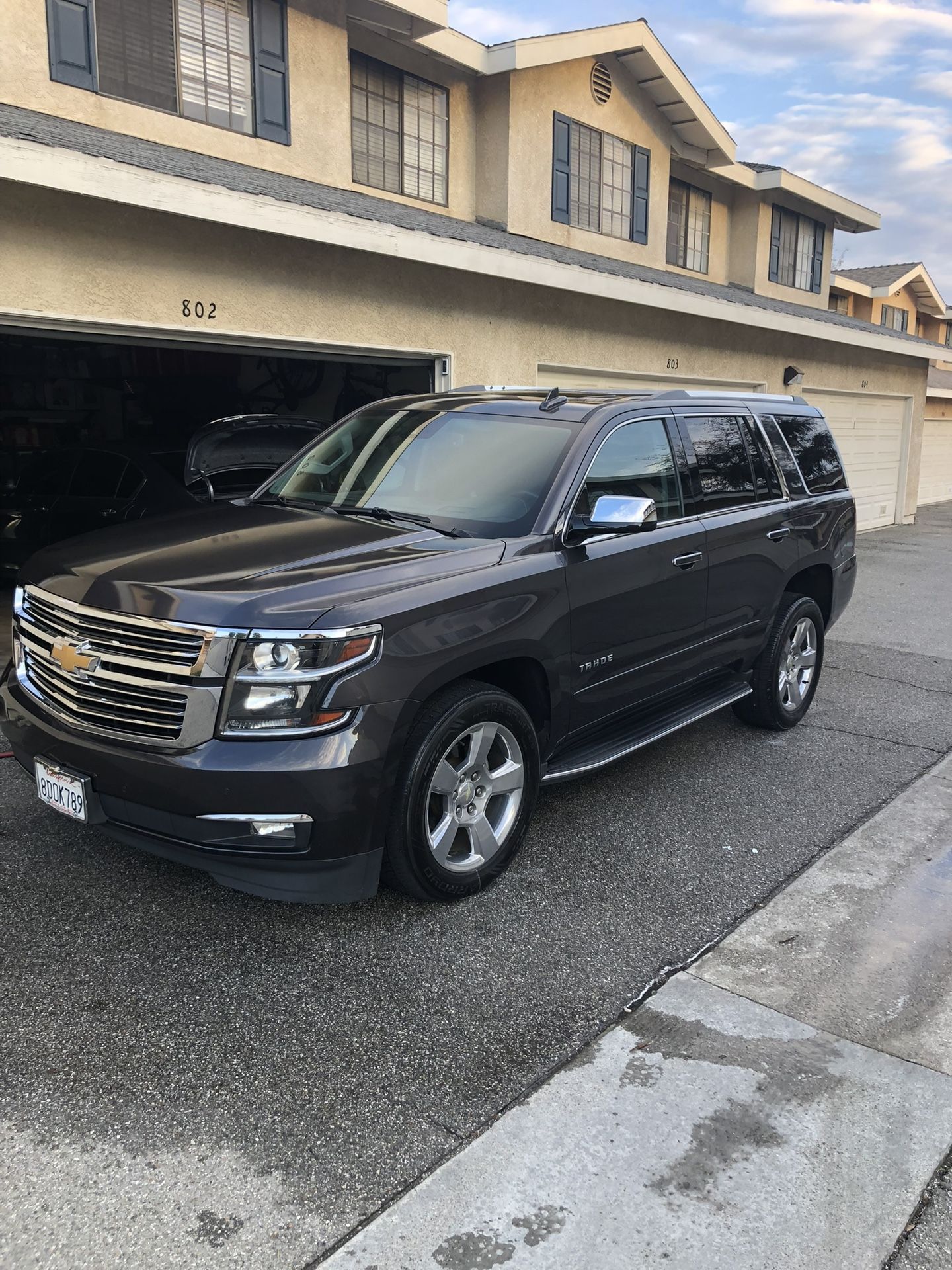
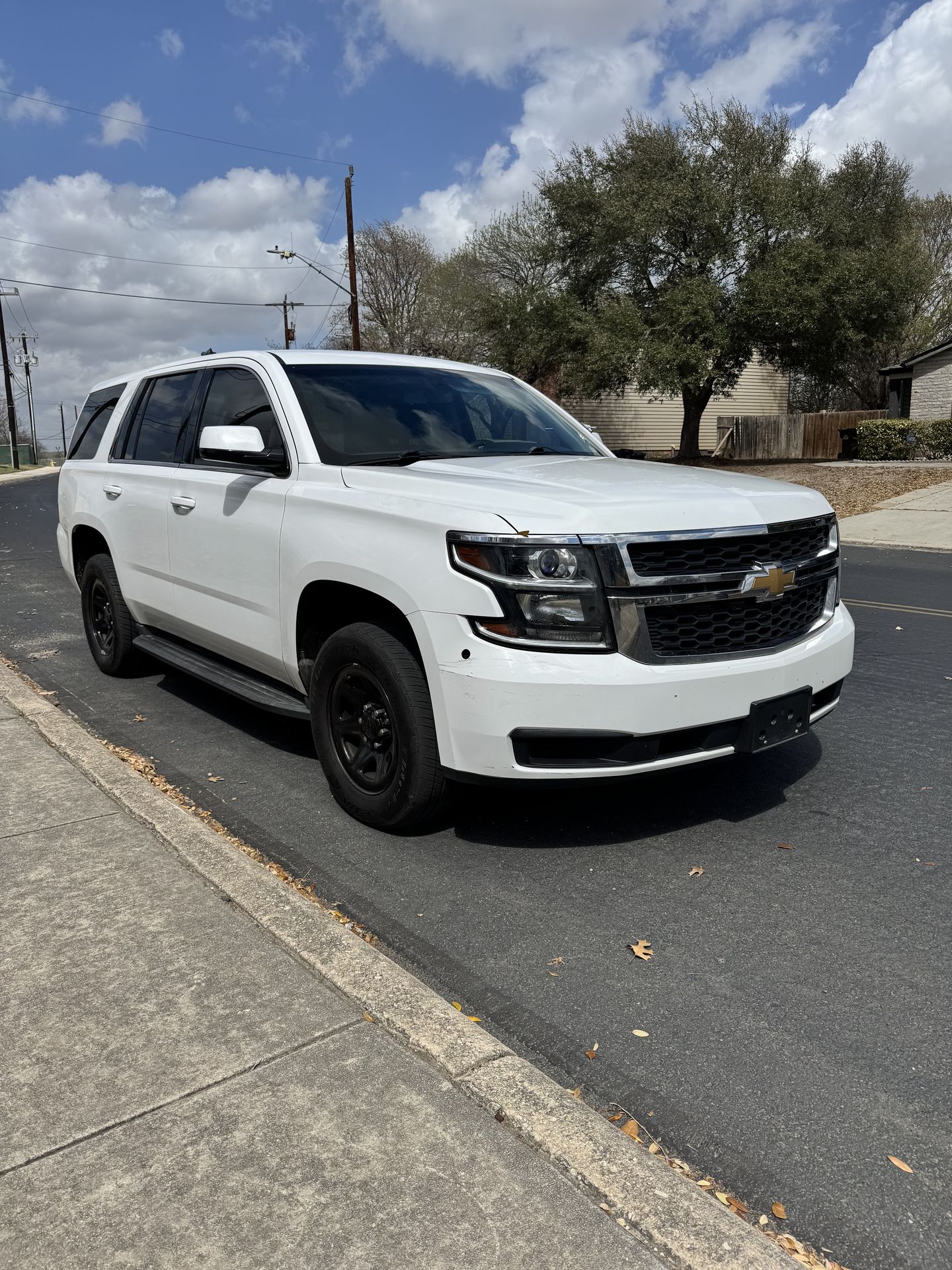
The 2017 Chevrolet Tahoe is a traditional full-size, body-on-frame SUV built for heavy-duty family transport, towing, and long-distance cruising. Powered by a standard 355-horsepower 5.3-liter V8 engine and offering up to 8,600 pounds of towing capacity, the 2017 Tahoe balances muscular truck capability with a refined, quiet interior. While its tight third-row seating and potential long-term transmission and valve train wear warrant careful evaluation on the used market, it remains a top contender in the full-size SUV segment.
Overview and Key Changes for the 2017 Model Year
The 2017 Chevrolet Tahoe represents the third model year of the SUV’s fourth generation (produced from 2015 through 2020 on General Motors' K2UC platform). Built on a truck chassis derived from the Chevrolet Silverado, the 2017 Tahoe emphasizes structural rigidity, towing stability, and passenger isolation from road harshness.
| Specification | Detail |
|---|---|
| Engine | 5.3L EcoTec3 V8 (L83) |
| Power Output | 355 hp @ 5,600 RPM | 383 lb-ft @ 4,100 RPM |
| Transmission | 6-Speed Automatic (Hydra-Matic 6L80) |
| Standard Drivetrain | Rear-Wheel Drive (2WD); Optional 4WD |
| Max Towing | 8,600 lbs (2WD) | 8,400 lbs (4WD w/ Max Pack) |
| Seating Capacity | 7 to 9 Passengers (Depending on Trim/Bench) |
| EPA Fuel Economy | 16 City / 23 Hwy (2WD) | 16 City / 22 Hwy (4WD) |
Chevrolet introduced several noteworthy updates for 2017:
- Trim Rebranding: The top-tier LTZ trim was officially renamed Premier, aligning Chevrolet’s luxury designation across its truck and SUV line.
- Enhanced Safety Tech: Low-Speed Forward Automatic Braking was added to the available Enhanced Driver Alert Package (standard on Premier, optional on LT).
- Standard Driver Monitoring: General Motors made its Teen Driver system standard across all trim levels, allowing owners to configure speed warnings, volume limits, and track driving habits via a report card feature.
- Active Aero Shutters: Programmable active front grille shutters became standard equipment, closing automatically at highway speeds to reduce aerodynamic drag and improve real-world fuel economy.
- Upgraded Infotainment Connectivity: The rear-seat entertainment system was overhauled to support HDMI and MHL connections, allowing passenger video streaming from external devices.
Engine Performance, Powertrain, and Driving Dynamics
5.3-Liter EcoTec3 V8 Engine
Every 2017 Chevrolet Tahoe is powered by General Motors' 5.3-liter EcoTec3 V8 (L83). Built with an aluminum block and heads, this engine relies on a overhead valve (OHV) pushrod architecture augmented by modern engine management tech:
- Direct Fuel Injection: Delivers high-pressure fuel directly into the combustion chamber for optimal combustion efficiency.
- Variable Valve Timing (VVT): Adjusts camshaft timing continuously to balance low-end torque with high-RPM efficiency.
- Active Fuel Management (AFM): Deactivates four of the eight cylinders under light engine loads (such as flat highway cruising) to reduce fuel consumption.
The 5.3L V8 generates 355 horsepower at 5,600 RPM and 383 lb-ft of torque at 4,100 RPM. Acceleration is strong for a vehicle weighing over 5,300 pounds, launching the Tahoe from 0 to 60 mph in roughly 6.7 seconds. Power delivery is predictable, with immediate throttle response off the line.
Engine Architecture: 5.3L V8 L83
- Direct Fuel Injection: Optimized Fuel Atomization
- Variable Valve Timing: Broader Torque Curve
- Active Fuel Management: Deactivates Cylinders (V8 to V4)
Transmission and Drivetrain Options
Power is routed through General Motors' Hydra-Matic 6L80 six-speed automatic transmission. The transmission features tap-up/tap-down manual shift control located on the column shifter, alongside a dedicated Tow/Haul mode that recalibrates shift points to prevent gear hunting under load.
Buyers can choose between two drivetrain configurations:
- Rear-Wheel Drive (2WD): Standard on all trims, offering lower curb weight and higher maximum towing capacity.
- Four-Wheel Drive (4WD): Utilizes an electronic transfer case. Standard 4WD models feature a single-speed transfer case (AutoTrac) offering 2WD, Auto, and 4WD High modes. Models equipped with the optional Max Trailering Package gain a two-speed transfer case with a dedicated low-range setting (4WD Low) for off-road navigation and steep boat ramp pulls.
According to official testing published on fueleconomy.gov, the 2017 Tahoe RWD earns an EPA rating of 16 mpg city, 23 mpg highway, and 19 mpg combined. Selecting four-wheel drive drops the highway rating slightly to 22 mpg while retaining 16 mpg city and 18 mpg combined.
Ride Quality and Suspension Dynamics
The 2017 Tahoe utilizes a short-and-long arm (SLA) front suspension with coil-over shocks and a multi-link rear suspension with a solid rear axle.
- Standard Suspension (LS and LT): Delivers a compliant, traditional truck-based ride. It absorbs large highway dips with ease, though smaller road imperfections and broken pavement create subtle jitter through the solid rear axle.
- Magnetic Ride Control (Premier): Replaces traditional fluid dampers with magnetorheological shocks containing fluid that changes viscosity instantly when subjected to a magnetic field. Reading the road surface every millisecond, Magnetic Ride Control significantly reduces body roll during cornering and suppresses rear-axle hop over unpaved or damaged roads.
Towing Capacity and Real-World Payload Realities
The Tahoe's body-on-frame layout makes it a capable tow vehicle. However, towing performance varies depending on the differential ratio and factory packages installed.
| Drivetrain | Standard Axle (3.08 Ratio) | Max Trailering Pack (3.42 Ratio) |
|---|---|---|
| 2WD (Rear-Wheel Drive) | 6,600 lbs | 8,600 lbs |
| 4WD (Four-Wheel Drive) | 6,400 lbs | 8,400 lbs |
The Max Trailering Package (Option Code NHT)
To achieve maximum tow ratings, the Tahoe must be equipped with the factory Max Trailering Package. This package replaces the standard fuel-economy-tuned 3.08:1 rear axle ratio with a steeper 3.42:1 axle ratio, dramatically improving off-the-line pulling power. The package also adds:
- An integrated trailer brake controller mounted on the dash left of the steering wheel.
- Heavy-duty air-leveling rear suspension that automatically pumps up under heavy tongue weight to keep the vehicle level.
- Enhanced engine cooling capacity, including an auxiliary external transmission oil cooler.
Payload Limits
While trailer towing numbers are high, buyers should closely monitor Gross Vehicle Weight Rating (GVWR) and payload capacity. Payload for the 2017 Tahoe ranges between 1,600 and 1,720 pounds depending on options. Passenger weight, cargo inside the cabin, and trailer tongue weight (which should equal 10% to 15% of the total loaded trailer weight) count against this total payload limit.
Interior Comfort, Cargo Space, and Infotainment Technology
Cabin Layout and Seating Configurations
The 2017 Chevy Tahoe seats up to nine passengers, though most configurations accommodate seven or eight:
- 9-Passenger Setup: Available exclusively on the base LS trim equipped with the optional 40/20/40 split front bench seat.
- 8-Passenger Setup: Standard on LS and LT trims, featuring bucket seats up to front and a 60/40 split-folding second-row bench.
- 7-Passenger Setup: Standard on Premier and optional on LT, swapping the second-row bench for dual heated captain's chairs with an open center aisle for third-row access.
Seating Layouts:
- 9-Seat: Front Bench (3) | 2nd-Row Bench (3) | 3rd-Row Bench (3) (LS Only)
- 8-Seat: Bucket Front (2) | 2nd-Row Bench (3) | 3rd-Row Bench (3) (Standard LS/LT)
- 7-Seat: Bucket Front (2) | Captain Chairs (2) | 3rd-Row Bench (3) (Standard Premier / Opt LT)
Front-seat passengers enjoy 45.3 inches of legroom and generous shoulder width, supported by thick seat cushioning designed for long highway stints.
The second row offers 39.0 inches of legroom, providing comfortable accommodation for adults. However, the third row remains a limiting factor. Because the Tahoe uses a solid rear axle with floor-mounted power-fold mechanisms, the footwell floor is high, forcing adult knees upward. The third row’s 24.8 inches of legroom makes it best suited for children or short trips.
| Dimension Metric | Measurement |
|---|---|
| Front Legroom | 45.3 in |
| Second-Row Legroom | 39.0 in |
| Third-Row Legroom | 24.8 in |
| Cargo Space Behind 3rd Row | 15.3 cu ft |
| Cargo Space Behind 2nd Row (Folded) | 51.6 cu ft |
| Maximum Cargo Space (All Folded) | 94.7 cu ft |
| Load Floor Height | 36.0 in (Elevated Deck) |
Cargo Limitations
The fourth-generation Tahoe introduced power flat-folding second- and third-row seats, eliminating the need to physically remove heavy seats. However, to create a flat floor, GM raised the rear cargo deck height significantly.
- Cargo volume behind the 3rd row is relatively tight at 15.3 cubic feet—enough for luggage upright or grocery bags.
- Folding the third row expands space to 51.6 cubic feet.
- Folding both back rows expands maximum cargo volume to 94.7 cubic feet.
- Owners seeking massive luggage space behind the third row should evaluate the long-wheelbase Chevrolet Suburban, which offers 39.3 cubic feet behind the third row.
MyLink Infotainment and Driver Assistance Tech
The 2017 Tahoe comes equipped with an 8-inch Chevrolet MyLink touchscreen display. The interface responds quickly to touch commands and features hardware buttons below the screen for volume and tuning.
Key Infotainment & Connectivity Tech:
- Apple CarPlay & Android Auto Integration (Standard)
- 8-Inch MyLink Touchscreen with Motorized Storage Cavity
- 4G LTE Wi-Fi Hotspot Capability (Subscription Required)
- Teen Driver Monitoring & Vehicle Speed Speed Limiters
- Up to 7 USB Ports & 110-Volt AC Electrical Outlet
- Available Rear Entertainment System with HDMI / MHL Support
A notable feature is the motorized touchscreen storage box: pressing a physical button raises the touchscreen vertically to reveal a hidden illuminated compartment with an internal USB port for securing valuables.
Apple CarPlay and Android Auto integration come standard across all trims, allowing seamless smartphone navigation, calling, and music streaming. Available audio systems include a standard 6-speaker arrangement, a 9-speaker Bose audio system (LT), and a 10-speaker Bose Centerpoint Surround Sound system (Premier).
2017 Chevy Tahoe Trim Level Breakdown
The 2017 Tahoe is offered in three primary trim levels: LS, LT, and Premier.
| Trim Level | Standard Key Features | Optional Packages & Standout Equipment |
|---|---|---|
| LS (Base) | • Cloth Seating (Seats 8 or 9)• 18-Inch Alloy Wheels• Tri-Zone Automatic Climate• 8-Inch MyLink Touchscreen• Remote Vehicle Starter System | • Driver Alert Package (Rear Park Assist, Lane Keep Assist, Forward Collision Alert)• Max Trailering Package (3.42 Axle, Controller)• 40/20/40 Split Front Bench (Seats 9) |
| LT (Mid-Tier) | • Leather Seats (1st & 2nd Row)• Heated Front Bucket Seats• Power Liftgate• 9-Speaker Bose Audio System• Enhanced Driver Alert Package | • Luxury Package (Keyless Open, Heated 2nd Row, Power Tilt/Telescopic Wheel, Power Fold 3rd)• Rear-Seat Blu-ray/DVD Entertainment System• 20-Inch Wheel Upgrades• Second-Row Captain's Chairs (Seats 7) |
| Premier (Luxury) | • Magnetic Ride Control• 12-Way Heated/Ventilated Seats• 10-Speaker Bose Centerpoint• HID Headlamps & LED DRLs• Blind Spot & Cross-Traffic | • Sun, Entertainment, Destinations Package• Adaptive Cruise Control w/ Auto Braking• Power-Retractable Assist Steps• 22-Inch Premium Wheels• Head-Up Display (HUD) |
LS Trim Features
The base LS trim focuses on essential capability. Standard features include tri-zone automatic climate control, remote vehicle start, keyless entry, rear parking sensors, rearview camera, 18-inch aluminum wheels, cloth upholstery, and an 8-way power driver seat.
LT Trim Features
The mid-tier LT trim adds leather seating surfaces for the front and second rows, 10-way power front seats with heating, a 9-speaker Bose sound system, universal home remote, power liftgate, safety alert seat, lane keep assist, and forward collision alert. The LT is the most popular trim on the used market due to its balanced feature set.
Premier Trim Features
Replacing the former LTZ trim, the Premier adds top-tier luxury amenities:
- Magnetic Ride Control suspension.
- Heated and ventilated 12-way power front seats with memory.
- Heated second-row captain's chairs and power-folding 60/40 third-row bench.
- High-Intensity Discharge (HID) headlights.
- Side Blind Zone Alert with Lane Change Alert and Rear Cross Traffic Alert.
- 20-inch polished aluminum wheels (22-inch optional).
- Navigation system standard.
Reliability, Known Mechanical Issues, and Maintenance
While the 2017 Tahoe engine platform is capable of reaching high mileage, several well-documented mechanical patterns affect fourth-generation K2UC models. Used car buyers should inspect these specific areas before purchasing.
| Component | Common Failure Symptoms |
|---|---|
| 6L80 Transmission | Torque converter shudder, hard shifts, fluid overheating |
| AFM Lifters | Ticking noise, engine misfire, excessive oil consumption |
| A/C Condenser | Loss of cold air, visible fluid leak on condenser seam welds |
| Magnetic Ride Dampers | Fluid leaking on shocks, harsh ride quality, suspension code errors |
1. Active Fuel Management (AFM) Lifter Failure
The 5.3L L83 V8 uses specialized oil-actuated deactivating lifters on cylinders 1, 4, 6, and 7 to execute V4 mode. Over time, mechanical failure can occur:
- Symptom: Metallic ticking or tapping sound from the upper valve train under the hood, engine misfire codes (P0300 through P0308), or erratic oil consumption.
- Mechanism: Internal locking pins inside the AFM lifters can stick or fail, causing the lifter to collapse and fail to pump back up. In severe cases, a stuck lifter damages the camshaft lobe, requiring an engine teardown.
- Prevention & Remediation: Many owners install aftermarket electronic AFM disablers that keep the engine in V8 mode constantly, reducing valve train wear cycles. Permanent fixes involve complete physical AFM delete kits (replacing lifters, camshaft, and recalibrating the engine control module).
2. 6L80 Transmission Torque Converter Shudder and Failure
The 6-speed 6L80 automatic transmission is susceptible to torque converter clutch wear.
- Symptom: A vibration or "rumble strip" sensation between 35 mph and 60 mph under light throttle, slipping gears, or harsh 1-2 downshifts.
- Mechanism: The internal clutch lining on the factory torque converter can wear down, releasing metallic debris into the transmission fluid. This debris clogs the valve body and damages internal pump wear surfaces.
- Solution: Flush transmission fluid at strict 45,000-mile intervals. If shudder appears, replacing the torque converter with an upgraded aftermarket unit and installing a lower-temperature thermal bypass valve (which allows transmission fluid to flow to the cooler at lower temperatures) prevents thermal breakdown.
3. Air Conditioning Condenser Cracks
A common issue across 2015–2017 GM full-size trucks and SUVs involves factory air conditioning condensers.
- Symptom: Complete loss of air conditioning cooling, accompanied by green refrigerant dye or oily residue at the top corner welds of the condenser.
- Mechanism: Thermal stress and road vibration cause hairline stress cracks along the weld seams connecting the receiver-drier tube to the main condenser body.
- Solution: Replacement with an updated, reinforced aftermarket or late-model OEM condenser unit, followed by vacuum evacuations and system recharging.
4. Magnetic Ride Control Damper Leaks (Premier Trim)
While Magnetic Ride Control provides exceptional ride isolation, magnetorheological shocks have a finite service life.
- Symptom: Fluid weeping down the shock body, bouncy ride over bumps, or dashboard "Service Suspension System" warning codes.
- Failure Window: Typically between 70,000 and 110,000 miles.
- Replacement Cost: Factory replacement magnetic dampers are significantly more expensive than standard twin-tube shocks. Some owners choose aftermarket passive-suspension conversion kits (installing standard shocks alongside electronic bypass modules to clear dashboard error lights).
Comparative Analysis: 2017 Tahoe vs. Key Competitors
To evaluate the 2017 Tahoe accurately, compare it against its primary full-size SUV rivals from the same production period: the 2017 Ford Expedition and its sister vehicle, the 2017 GMC Yukon.
| Specification / Metric | 2017 Chevrolet Tahoe | 2017 Ford Expedition | 2017 GMC Yukon Denali |
|---|---|---|---|
| Base Engine | 5.3L V8 | 3.5L Twin-Turbo V6 | 6.2L V8 |
| Horsepower | 355 hp | 365 hp | 420 hp |
| Torque | 383 lb-ft | 420 lb-ft | 460 lb-ft |
| Transmission | 6-Speed Automatic | 6-Speed Automatic | 8-Speed Automatic |
| Rear Suspension Type | Solid Axle | Independent Rear (IRS) | Solid Axle |
| Max Towing Capacity | 8,600 lbs | 9,200 lbs | 8,400 lbs |
| Cargo Behind 3rd Row | 15.3 cu ft | 18.6 cu ft | 15.3 cu ft |
| Third-Row Legroom | 24.8 in | 37.7 in | 24.8 in |
2017 Ford Expedition
The Ford Expedition relies on an Independent Rear Suspension (IRS) layout rather than a solid rear axle. This design difference gives the Expedition two key advantages: a significantly lower floor height in the rear (providing 37.7 inches of adult-friendly third-row legroom) and smoother handling over bumpy roads. Furthermore, Ford’s 3.5-liter twin-turbo EcoBoost V6 delivers more low-end torque (420 lb-ft) and higher overall towing (9,200 lbs). However, many truck buyers still prefer the traditional V8 exhaust note, simpler naturally aspirated mechanics, and overall cabin design of the Chevy Tahoe.
2017 GMC Yukon / Yukon Denali
Built on the same K2XX body architecture, the GMC Yukon shares core body panels, doors, and interior layouts with the Tahoe. The key distinction lies in trim packages. While standard Yukon models utilize the same 5.3L V8 and 6-speed transmission as the Tahoe, the flagship Yukon Denali features a larger 6.2-liter V8 (420 hp, 460 lb-ft) paired with an 8-speed automatic transmission, offering a noticeable performance upgrade over any 2017 Tahoe variant.
Pre-Purchase Inspection Checklist for Used Buyers
When examining a used 2017 Chevrolet Tahoe, follow this inspection checklist to catch potential mechanical issues:
Cold Engine Start Test: Listen for metallic lifter tick near valve covers.
Transmission Shift Evaluation: Feel for shuddering between 35-60 mph under light throttle.
Air Conditioning Function Test: Check maximum cooling output; inspect condenser welds.
Rear Air Suspension Verification: Listen for leveling compressor operation under load.
Touchscreen digitizer test: Test all areas of screen for responsiveness/ghost inputs.
Cold Engine Start Inspection: Start the engine after it has sat cold overnight. Listen closely for top-end metallic ticking sounds that persist for more than a few seconds, which indicates lifter bleed-down or valvetrain wear.
Transmission Drive Cycle Test: Take the vehicle on a test drive that includes highway merging and steady-state cruising between 35 mph and 60 mph. Watch for tachometer needle fluctuations under steady throttle, which signals torque converter clutch slipping.
Inspect the A/C Condenser: Look through the front grille with a flashlight. Inspect the top left and right corners of the aluminum condenser for oil wetness or dark dirt accumulation (indicating a refrigerant leak).
Check Dashboard Electronics and Touchscreen: Test the motorized screen mechanism up and down multiple times. Verify that Apple CarPlay and Android Auto establish a stable connection and that touch controls respond across the entire glass surface without "ghost touch" glitches.
Inspect Shock Absorbers (Premier Trims): If inspecting a Premier model, look for fluid leaking down the body of the Magnetic Ride shocks and confirm that no suspension warning messages appear on the instrument cluster display.
Verify Tow Package Equipment: Check the glovebox option code sticker for code NHT to confirm the presence of the 3.42 rear axle ratio and full 8,600-lb towing capacity.
Frequently Asked Questions
Is the 2017 Chevrolet Tahoe a reliable vehicle long term?
The 2017 Tahoe is mechanically durable overall, with engine blocks and structures capable of exceeding 200,000 miles with proper upkeep. However, long-term owner satisfaction requires proactive maintenance of known failure points: servicing transmission fluid every 45,000 miles to preserve the torque converter, replacing the A/C condenser if stress cracks form, and monitoring engine oil levels to mitigate AFM lifter wear.
Does the 2017 Chevy Tahoe support Apple CarPlay and Android Auto?
Yes. Apple CarPlay and Android Auto compatibility come standard across all 2017 Tahoe trim levels (LS, LT, and Premier) through the standard 8-inch Chevrolet MyLink touchscreen interface. Connection requires plugging a compatible smartphone into one of the designated USB ports.
What safety ratings did the 2017 Chevy Tahoe receive?
The National Highway Traffic Safety Administration (NHTSA) awarded the 2017 Chevrolet Tahoe an overall rating of 4 out of 5 stars. It earned 5 stars in frontal crash tests, 5 stars in side crash tests, and 3 stars in the rollover resistance evaluation (a standard score for tall, high-center-of-gravity body-on-frame SUVs).
What is the difference between the 2017 Tahoe LT and Premier trims?
The LT trim is a well-equipped mid-tier option with leather upholstery, a 9-speaker Bose stereo, heated front seats, power liftgate, and basic driver assistance features. The Premier trim adds luxury and performance upgrades, including Magnetic Ride Control suspension, ventilated front seats, heated second-row seats, power-folding third-row seats, HID headlights, blind-spot monitoring, 20-inch wheels, and premium 10-speaker Bose surround sound.
How much can a 2017 Tahoe tow without the Max Trailering Package?
Without the Max Trailering Package (which includes the 3.42 rear axle ratio), a 2017 Tahoe equipped with the standard 3.08 rear axle ratio has a maximum towing capacity of 6,600 pounds for 2WD models and 6,400 pounds for 4WD models. Installing an aftermarket hitch receiver does not raise these limits, as the axle ratio remains the limiting factor.
Final Verdict and Buyer Guidance
The 2017 Chevrolet Tahoe remains an excellent option on the used market for families requiring genuine body-on-frame truck capability, strong towing performance, and a comfortable, quiet highway ride. Its 5.3-liter V8 engine provides dependable power, while standard technology like Apple CarPlay and Teen Driver keeps the cabin modern and connected.
Who should buy it:
- Drivers who regularly tow travel trailers, boats, or horse trailers weighing between 5,000 and 8,000 pounds.
- Buyers who prefer the proven mechanics and simple maintenance profile of a naturally aspirated V8 engine.
- Long-distance commuters who want superior cabin isolation and relaxed highway tracking.
Who should consider alternatives:
- Families who frequently carry adults or teenagers in the third row (who will find more room in a 2017 Ford Expedition or Chevrolet Suburban).
- Drivers prioritizing maximum fuel economy or tight urban maneuverability.
When shopping for a used 2017 Tahoe, prioritize vehicles with documented oil change histories, verified transmission fluid services, and clean suspension components. Securing an LT trim with the optional Max Trailering Package offers the optimal combination of daily comfort, interior luxury, and heavy-duty utility.